
Publius Quinctilius Varus: The Roman Official History Remembered for One Catastrophe
Publius Quinctilius Varus is remembered for the disaster of AD 9, when three Roman legions were destroyed in the Teutoburg Forest. Yet long before that defeat, he had risen to the centre of Augustan power, holding major commands and shaping the administration of the early Empire.

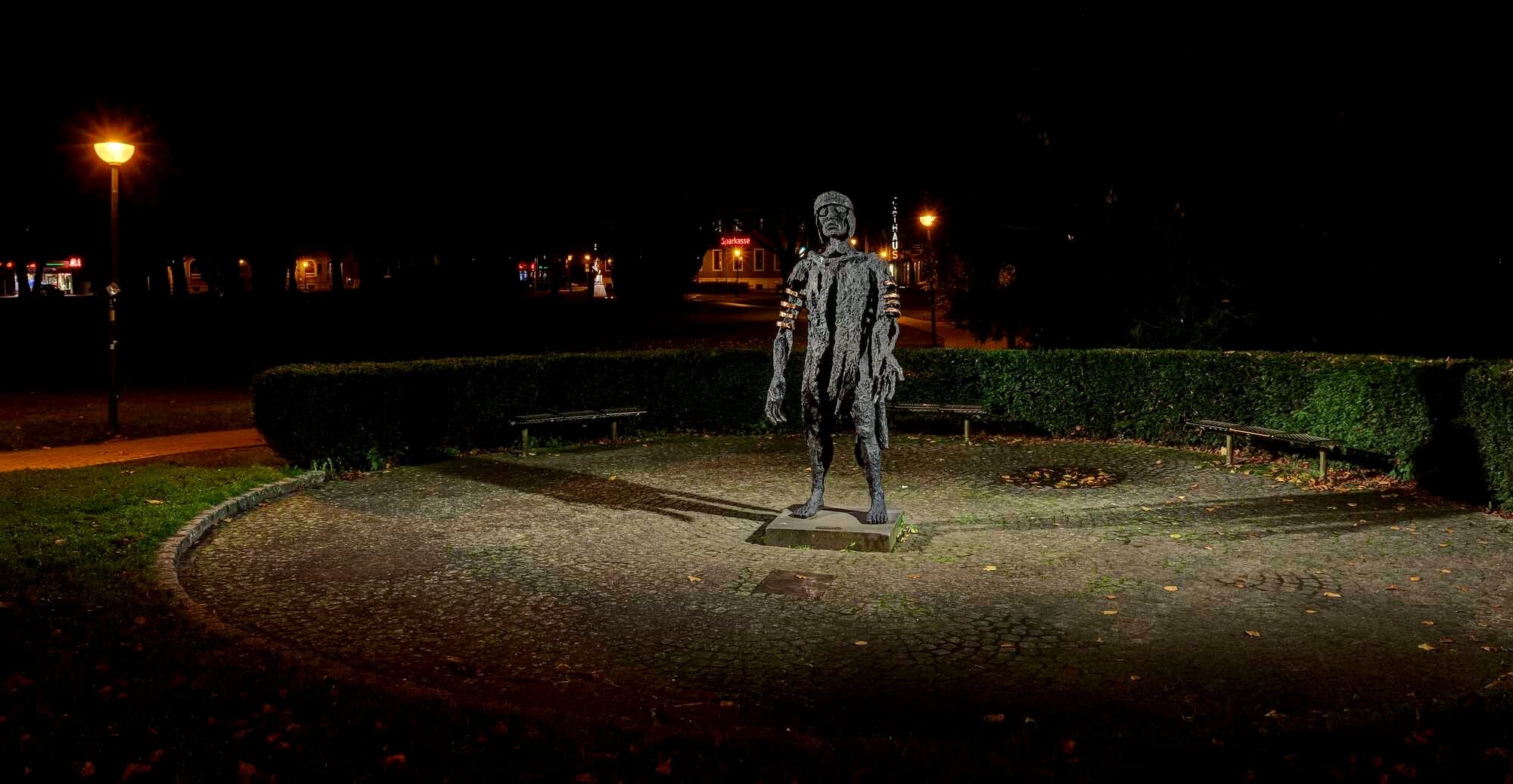
Some figures in Roman history are remembered not for the span of their careers but for a single catastrophic moment. For Publius Quinctilius Varus, that moment came in AD 9 with the destruction of three Roman legions in the forests of Germania. The defeat in the Teutoburg Forest ensured that Varus’ name would be permanently tied to one of the most shocking military defeats of the Roman world.
The Man Behind the “Varian Disaster”
Certain moments in Roman history were so consequential that the individuals associated with them became inseparable from the event itself. Everything else in their careers faded into the background. For Publius Quinctilius Varus, that defining moment was the defeat in the Teutoburg Forest in AD 9. The scale of the catastrophe ensured that his name would forever be linked to what later sources called the Clades Variana – the “Varian Disaster.”
Without that defeat, Varus might have remained a relatively obscure senator of the early imperial period, known primarily to specialists. Instead, he became one of the most notorious figures of the Augustan age, remembered less for decades of public service than for the destruction of three legions in Germania.
Yet the near-universal assignment of blame to Varus, both in ancient narratives and in much of modern scholarship, has increasingly been questioned. Re-examination of the literary evidence, combined with archaeological research at the probable battlefield site in Germany, has complicated the traditional picture.
Rather than an incompetent commander inexplicably entrusted with a crucial frontier command, Varus emerges as an experienced official with a substantial political and administrative record.
Recent scholarship has also explored how the Julio-Claudian regime framed and interpreted military defeat, and how narratives of responsibility were shaped in the aftermath. Within this broader context, Varus’ reputation has begun to shift. While the disaster in the Teutoburg Forest remains central to his historical legacy, it no longer automatically defines him as uniquely inept.
A fuller reconstruction of his career – drawing on literary testimony and material evidence – reveals a figure who operated near the centre of early imperial power, held major provincial commands, and carried significant administrative responsibilities before his final campaign in Germania.
Placed within the arc of his life, the defeat of AD 9 appears not as the isolated act of a reckless commander, but as the culmination of complex political, military, and frontier dynamics in the Augustan world.
Prestige Without Power: The Quinctilii Varii
Publius Quinctilius Varus was born into the gens Quinctilia, specifically the branch known as the Quinctilii Varii, a patrician family of Rome. As members of the patrician order, the family belonged to the traditional ruling elite. In theory, adult male members possessed the right to sit in the Senate and were expected to pursue public office as part of their civic duty.
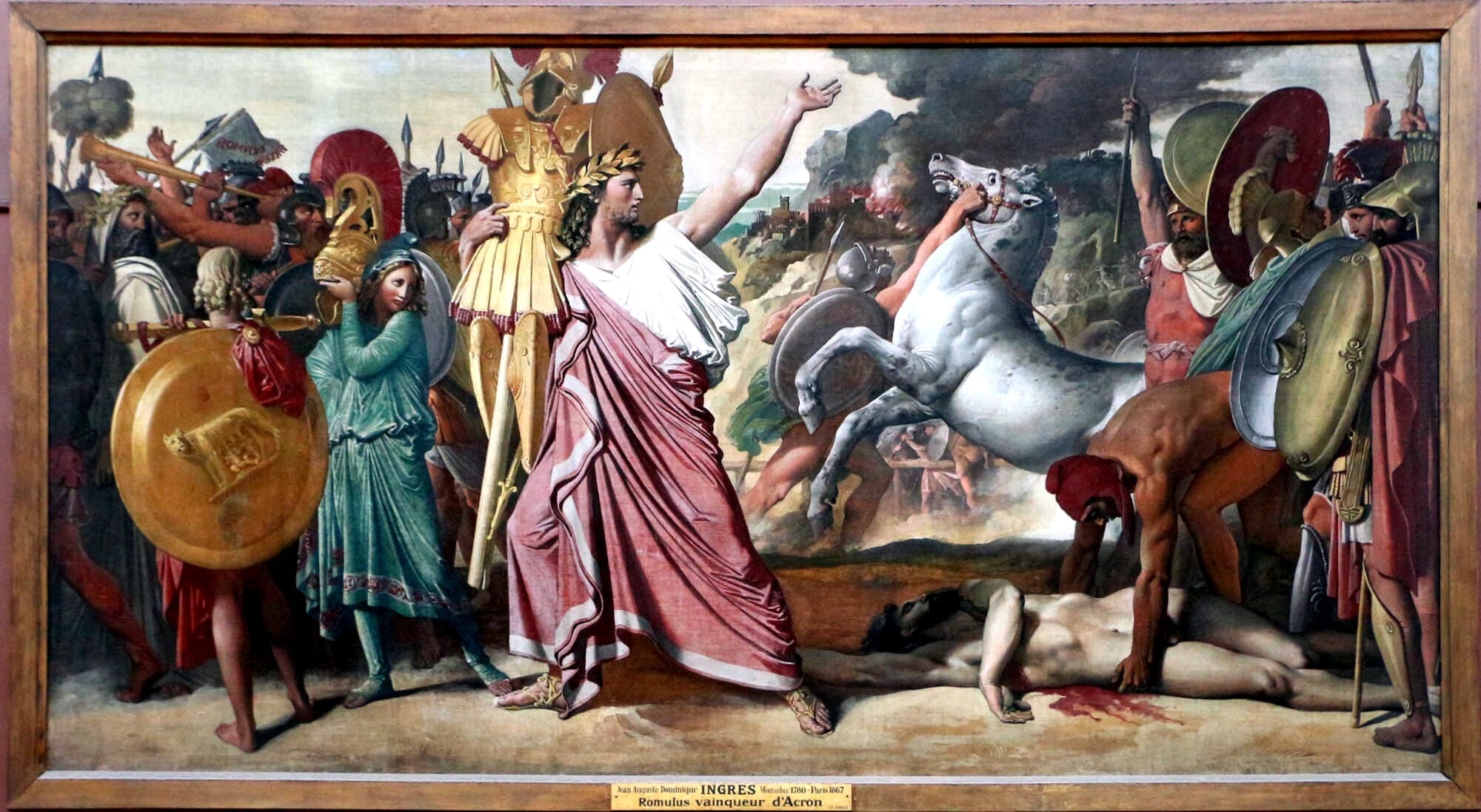
In Roman tradition, the patricians were regarded as descendants of the earliest political community of the city. According to legend, when Romulus founded Rome in 753 BC, he appointed one hundred leading men as patres (“fathers”), forming the first Senate. Their descendants were said to have inherited both prestige and political authority. Over the course of the early Republic, patrician families became associated with wealth, high office, and privileged access to power.
Below the patricians stood the equestrian order – wealthy citizens whose name derived from their ability in earlier periods to equip themselves for cavalry service. Although equestrian rank could be inherited, it depended upon maintaining a required level of property, verified by the census.
Beneath both patricians and equestrians were the plebeians, who comprised the majority of Rome’s free population. While legally eligible for certain offices, most plebeian families lacked the wealth and influence necessary for sustained political advancement.
By the later Republic, however, not all patrician houses retained the prominence their ancestry suggested. Many ancient families preserved their formal status while losing political influence and material strength. Prestige increasingly depended not only on lineage but on recent achievement – particularly the attainment of high magistracies such as the consulship.
The Quinctilii Varii belonged to this category of distinguished but diminished houses. The family traced its origins deep into Rome’s early history and was counted among its most ancient clans. Yet by the late Republican period it had become known more for its antiquity than for contemporary power.
For centuries, members of the family had failed to secure the consulship – one of the chief markers of political importance. By the time Varus was born, more than four hundred years had passed since a Quinctilius had held that office.
Although the family retained senatorial status and a respected name, it no longer ranked among the leading political forces of Rome. Its members continued to participate in public life, and the heads of the household maintained their seats in the Senate, but the family lacked recent achievements capable of elevating its standing within the competitive aristocratic hierarchy.
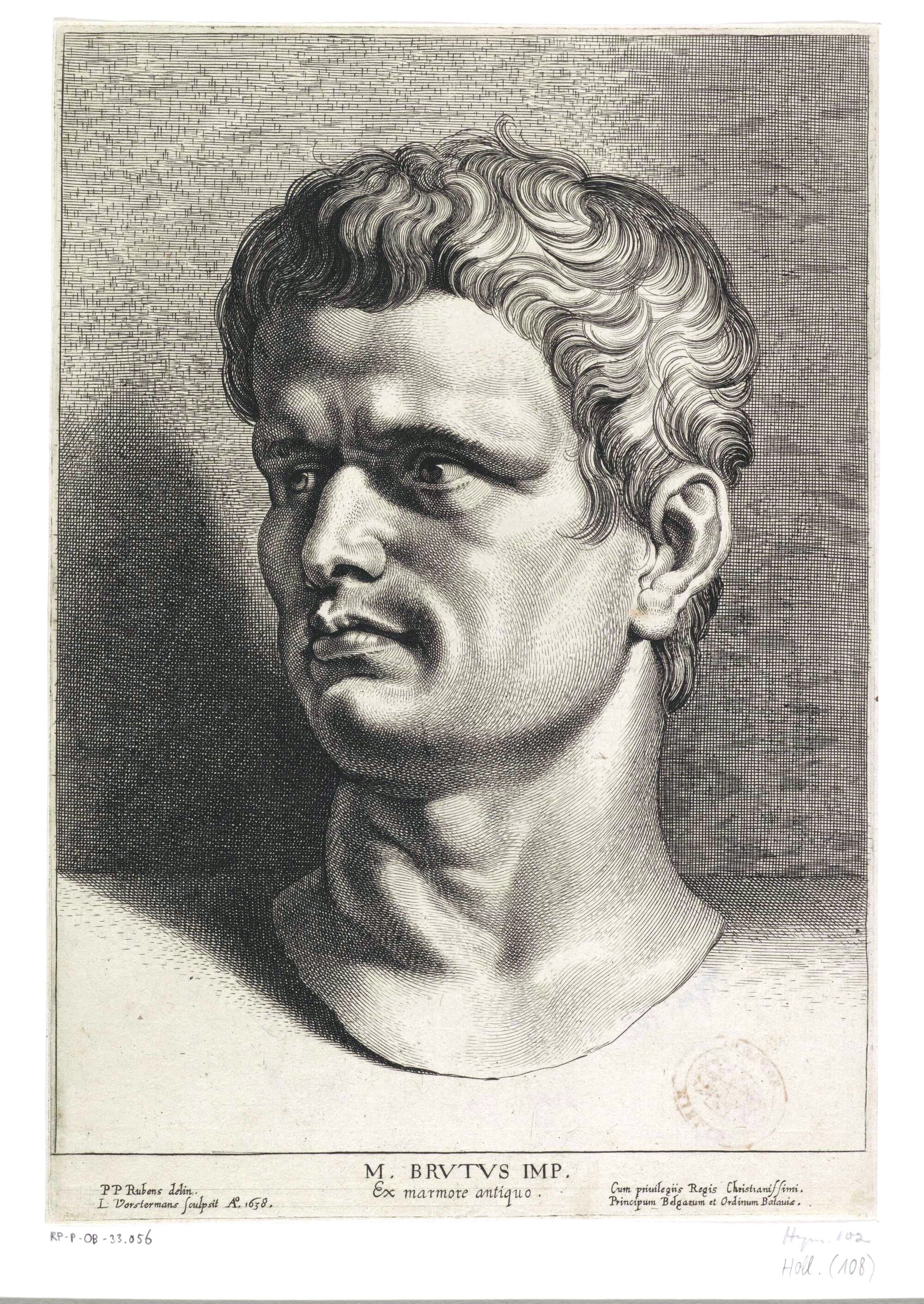
Even so, the Quinctilii Varii remained sufficiently embedded within the elite to take part in the major conflicts of the late Republic. Sextus Quinctilius Varus, the father of Publius, was involved in the struggles that reshaped Roman politics – first in the conflict between Julius Caesar and Pompey the Great, and later in the confrontation between Marcus Junius Brutus and Gaius Cassius Longinus on one side and Octavian and Mark Antony on the other.
Thus, Varus was born not into obscurity, but into an ancient patrician lineage whose formal prestige outstripped its recent political record. His later ascent within the Augustan regime would, in part, represent a revival of that family name within the transformed structures of imperial Rome.
An Old Name on the Margins of Power
Family lineage carried real weight in Roman public life. Ancestry shaped political expectations, social standing, and even religious practice. The Quinctilii Varii, into whom Publius Quinctilius Varus was born, belonged to one of Rome’s most ancient patrician clans.
Their first clear appearance in the historical record dates to 453 BC, when a Sextus Quinctilius Varus held the consulship – the highest office of the Republic and the culmination of the cursus honorum, the structured sequence of magistracies that defined aristocratic careers.
In theory, patrician males followed a predictable path: military service in youth, followed by progression through offices such as quaestor, aedile, and praetor before becoming eligible for the consulship in their early forties. Two consuls were elected each year, and attainment of that office marked both personal distinction and family prestige.
Yet for the Quinctilii Varii, early prominence did not translate into sustained influence. By the late Republic, no member of the family had achieved the consulship in more than four centuries. Although still patrician in status and entitled to senatorial participation, the family had become known more for antiquity than for achievement. Scattered references place members in minor magistracies and occasional military commands, but without lasting political impact.
One possible ancestor, a Publius Quinctilius Varus who served as praetor during the Second Punic War, fought against the Carthaginian commander Mago Barca in 203 BC. According to Livy’s account, he took an active role in battle and led a cavalry charge that nearly ended in disaster when Roman horses panicked at the sight of war elephants.
Though the Romans ultimately prevailed, the episode suggests that members of the family did participate in significant military roles. Whether this earlier Varus was a direct ancestor or from a collateral branch remains uncertain.
Other late Republican Quinctilii appear sporadically in the record – one as a pontifex in the 70s BC, another as praetor and later proconsul in Hispania. These notices confirm continued participation in public life but do not indicate renewed prominence. By the time of Publius Quinctilius Varus’ birth, the family retained its patrician dignity but stood far from the centre of political power.
Varus’ Parents and Possible Imperial Connections
More revealing than distant ancestors are the circumstances of Varus’ immediate family. His father, Sextus Quinctilius Varus, held the quaestorship by 49 BC, marking his formal entry into the senatorial career path. His advancement, however, coincided with the outbreak of civil war between Julius Caesar and Pompey the Great, a conflict that reshaped the Roman political order. Sextus’ political trajectory unfolded amid these upheavals, and he would later be involved in the struggles that followed Caesar’s assassination.
Little is securely known about Varus’ mother. No definitive source names her, but she likely came from an elite background. A plausible – though not universally accepted – identification suggests she may have been a daughter of Gaius Claudius Marcellus Minor from an earlier marriage, making her connected by marriage to Octavia Minor, the sister of Augustus. If correct, this would have placed Varus within the extended orbit of the emerging imperial family.
Such a connection would not have made him a direct member of the Julio-Claudian house, but it would have situated him on its periphery at a formative moment in Roman history. In a period when political advancement increasingly depended upon proximity to Octavian – later Augustus – even indirect ties could prove significant. This possible maternal link may help explain the patronage Varus later received and his integration into the early imperial regime.
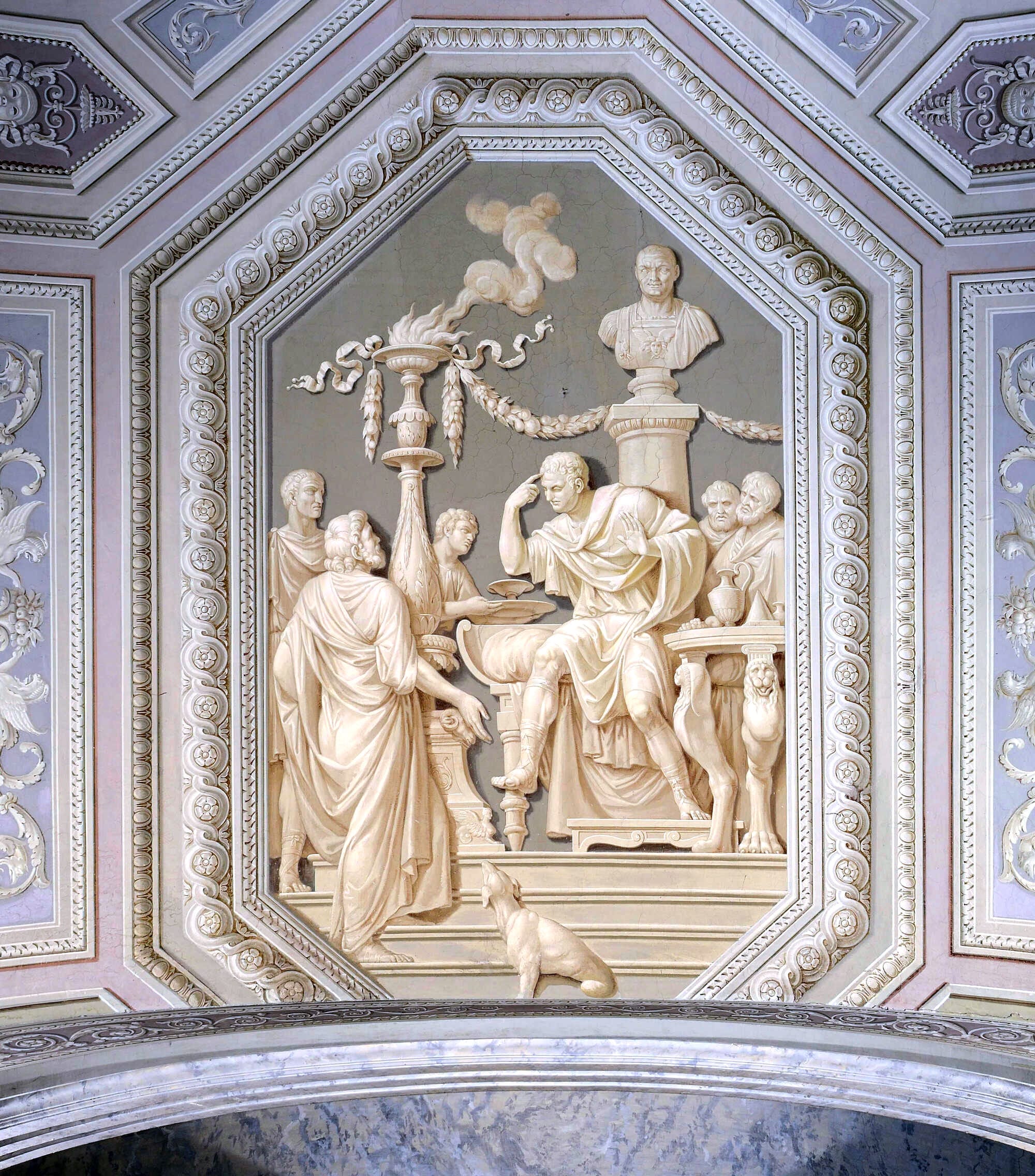
Whether or not this identification is secure, it is clear that Varus was born into an ancient patrician lineage that had lost much of its former distinction. His later career would represent not merely personal advancement, but a partial restoration of a family name that had long stood at the margins of power.
From Fatherless Patrician to Augustan Insider
Born in the mid–to–late 40s BC, Publius Quinctilius Varus entered the world with little to suggest an exceptional future. His patrician name was ancient, but his family’s recent record was modest, and his father’s repeated alignment with the anti-Caesarian cause could have left Varus politically exposed from childhood.
That danger sharpened in 42 BC, when his father died by suicide after Philippi, leaving Varus very young and effectively without a clear protector from within his immediate household.
What followed is largely undocumented. Varus disappears from the historical record until the early 20s BC, when he emerges already moving within the structures of public life. The most plausible reconstruction is that he and his sisters were taken into another household under a guardian who could preserve their property, supervise Varus’ education, and—crucially—provide the personal networks needed for advancement.
A later family association with Tivoli, and a possible Quinctilius Varus connected with the arts there, has sometimes been proposed as part of that background, though firm evidence is limited.
Varus’ childhood unfolded during the final convulsions of the Republic: the uneasy partnership of Octavian and Antony, renewed violence, and the slow narrowing of power toward a single ruler. By the time Varus came of age, the political world had shifted.
Careers no longer depended primarily on old republican alliances, but on proximity to the new regime. Augustus also faced a practical problem: decades of civil war had reduced the pool of eligible elites. Excluding the sons of former enemies was neither workable nor desirable. Instead, the early Principate created pathways for young aristocrats to enter public life earlier, gain military experience, and attach themselves to the imperial order.
Varus benefited from this landscape. However compromised his father’s legacy may have been, Varus appears to have built his future by aligning with Octavian’s regime and taking advantage of Augustus’ efforts to replenish and stabilise the governing class. The result was a trajectory that broke with his family’s recent pattern: Varus advanced quickly, eventually reaching the consulship—something no Quinctilius Varus had achieved for centuries—and later even entering the imperial family by marriage.
Before the Teutoburg disaster defined his name, Varus’ rise looked like a success story of the early Principate. The surviving evidence is scattered, but a clear pattern emerges: early exposure to hard campaigning, unusually close access to Augustus, and a fastening web of elite marriages that pulled his family into the imperial orbit.
A likely tribuneship in Spain during the brutal Cantabrian campaigns may have brought him into Augustus’ view; by 22–19 BC he is hand-picked as one of only two quaestors to accompany the emperor on a major eastern tour, where he sees imperial rule at work—rewarding cities, punishing unrest, and turning diplomacy into propaganda through the return of the Parthian standards.
Back in Rome, he keeps climbing—while his sisters’ marriages link him to Augustus’ kin and closest friends, placing Varus ever closer to the centre of power. By the mid-teens BC, he is no longer a marginal patrician from a faded line, but a known Augustan insider whose trajectory points directly toward the consulship in 13 BC.
The Defeat That Defined a Career
The events of AD 9 rank among the most devastating military defeats in Roman history. In the late summer or early autumn of that year, while serving as governor of Germania, Publius Quinctilius Varus commanded the Roman forces stationed along the Rhine.
During a march to suppress what was reported to be a regional uprising, a column of three legions – likely the Seventeenth, Eighteenth, and Nineteenth – supported by auxiliary units, advanced deep into wooded terrain.
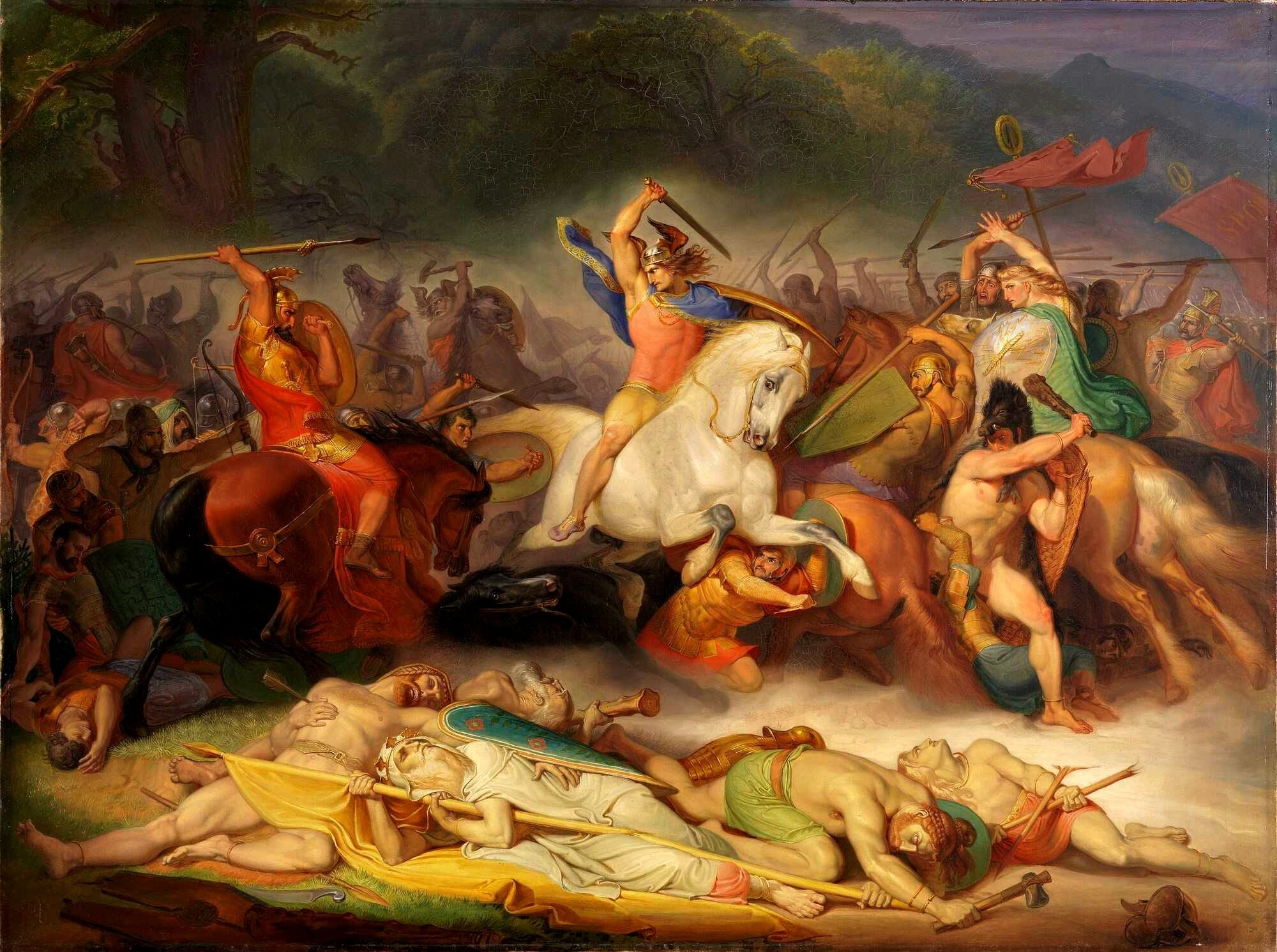
Over the course of three or four days, the force was caught in a prolonged ambush. The legions were virtually annihilated, their standards captured, and their commander killed alongside much of his staff. The destruction was nearly total. Survivors were either slain or taken captive, and the symbolic loss of the legionary eagles carried profound psychological weight.
The assault had been orchestrated by Arminius, a German chieftain who had previously served in the Roman army and possessed Roman citizenship. Familiar with Roman tactics and command structures, he exploited both the terrain and Roman assumptions about the stability of the region. In the immediate aftermath, fears spread that Germanic forces might press westward across the Rhine, prompting alarm even in Rome itself.
For centuries, the engagement has been characterised as a decisive turning point – “the battle that stopped Rome.” It has often been portrayed as the moment when Roman ambitions to incorporate Germania permanently collapsed. Yet subsequent Roman campaigns in the region complicate that interpretation, suggesting that the consequences were more nuanced than later tradition implied.
The scale and drama of the defeat ensured Varus’ enduring notoriety. Yet in many accounts, attention focuses overwhelmingly on the ambush itself, leaving Varus as a shadowy figure within the very event that bears his name. His earlier career is frequently treated as incidental, or ignored altogether.
This imbalance obscures the fact that Varus had once stood close to the centre of Augustan power. Though not born into the foremost ranks of the aristocracy, he rose steadily within the imperial system. He held the consulship, governed major provinces, commanded legions, accumulated wealth, and forged connections within the imperial family, reportedly marrying into it and maintaining close ties with both Augustus and Tiberius. His appointment to the Rhine command in AD 7 represented the culmination of an established political and administrative career.
Nevertheless, ancient narratives often depict him as ill-suited to military leadership – an administrator overwhelmed by frontier realities, negligent of warnings, and responsible for his own downfall. Modern assessments have frequently echoed this verdict, portraying him as capable in legal and civil administration but deficient in command.
Such judgements, however, rarely integrate the broader trajectory of his career. The portrait of Varus as uniquely incompetent sits uneasily beside the record of sustained advancement and imperial trust that preceded AD 9. A fuller evaluation requires placing the disaster within the wider framework of his life and of Augustan frontier policy, rather than allowing a single event to define the whole.
Varus in the Ancient Record
By modern standards, Publius Quinctilius Varus is sparsely documented. No contemporary biography survives, and most literary references to him arise only in connection with the disaster of AD 9. These accounts tend to focus on the defeat itself rather than on Varus as a historical figure. As a result, much of his earlier life must be reconstructed indirectly – through scattered literary notices and, increasingly, through inscriptions, coinage, and archaeological discoveries that have clarified aspects of his military postings, civic offices, and marital alliances.
Such evidence has begun to place Varus more firmly within the administrative and political structures of the Augustan regime. His proximity to imperial power, and his integration into the imperial family, help explain why he was entrusted with the Rhine command in AD 7 – and why the catastrophe that followed reverberated so deeply in Rome.
Literary evidence for his career before AD 9 is limited. One notable exception concerns his governorship of Syria, where he intervened during the final years of King Herod’s rule and subsequently suppressed unrest following Herod’s death. These events are described by Flavius Josephus in both the Antiquities and the Jewish War.
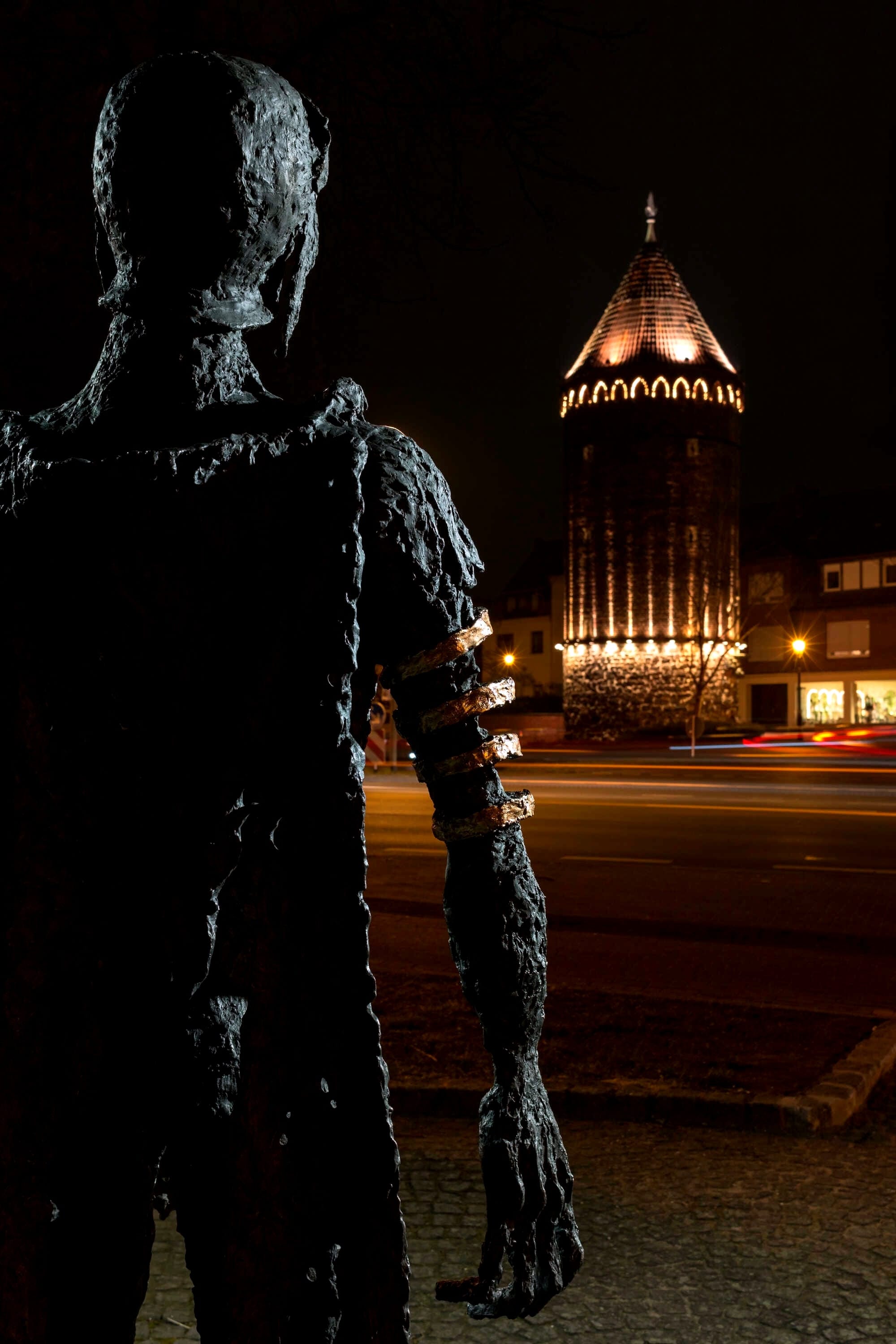
Although Varus occupies only a secondary role within Josephus’ broader narrative, his actions left a lasting impression; later Jewish tradition even referred to the uprising he quelled as the “War of Varus.” Aside from a brief and hostile remark by Velleius Paterculus, who accused him of financial misconduct in Syria, other literary testimony about this period is scarce. Much of his earlier cursus honorum is known instead from inscriptions and coin issues bearing his name.
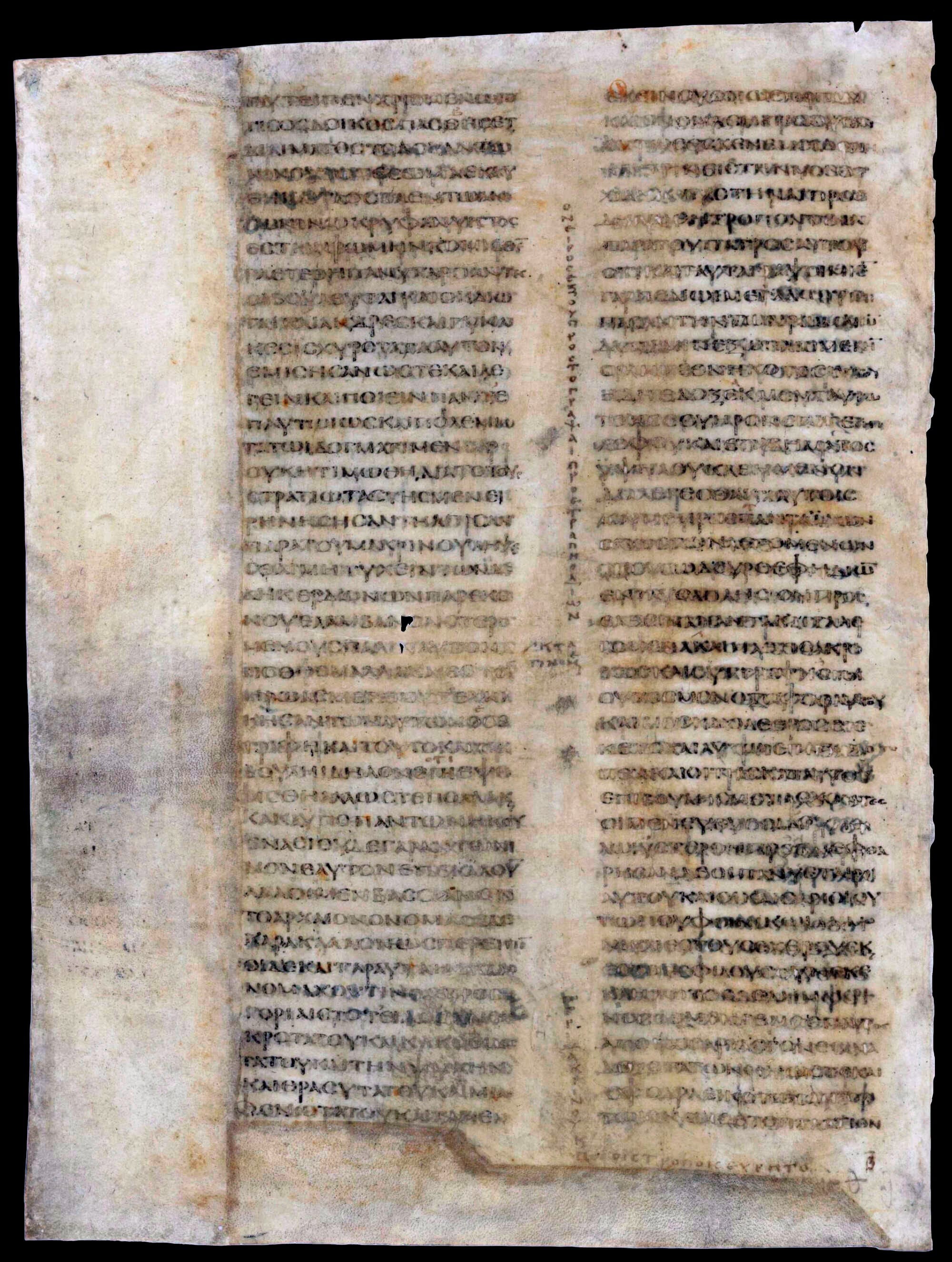
The defeat in Germania, however, ensured Varus’ prominence in historical writing. Four principal surviving narratives address the episode: those of Velleius Paterculus, Tacitus, Florus, and Cassius Dio. Each contributes a distinct perspective, though none provides a fully detailed or consistent account.
Velleius, writing within two decades of the battle and himself a former officer who had served in Germany under Tiberius, offers the earliest extant narrative. His proximity to the events and to the imperial regime lends his account immediacy, yet it also introduces potential bias. Tiberius emerges favourably in his version of events, while Varus appears culpable and ill-judging. The description of the battle itself is comparatively brief and lacks tactical detail, but Velleius provides valuable contextual continuity for the years surrounding AD 9.
Tacitus, writing about a century later in the Annals, does not narrate the battle directly. Instead, he describes the visit of Germanicus to the battlefield in AD 15. His vivid depiction of the site – littered with bones and remnants of fortifications – offers powerful imagery and fragmentary recollections from survivors.
Yet Varus himself remains marginal in this narrative, overshadowed by the focus on Germanicus and the political tensions of the early Tiberian principate. Tacitus’ broader attitudes toward imperial power and oppression may also colour his portrayal of Rome’s relationship with the Germanic tribes.
Florus, writing in roughly the same period, provides a brief and dramatic sketch. His emphasis lies less on strategy and more on the suffering of captured soldiers. Although less overtly hostile to Varus than Velleius, Florus neither reassesses nor challenges the established narrative of culpability.
The most detailed surviving account comes from Cassius Dio in the early third century. His narrative uniquely describes the engagement as unfolding over several days, comments on terrain and weather, and attempts a more structured chronology of events. Even so, the conclusion of his account is partially lost, and his distance from the events – nearly two centuries removed – inevitably limits his evidentiary basis. Dio adds little about Varus’ character beyond what earlier traditions had already shaped.
One significant loss to the historiography is the Bella Germaniae of Pliny the Elder, a multi-volume history of Rome’s wars in Germany. Written within living memory of the disaster and by a man who had served in the region, it might have preserved invaluable testimony, perhaps even drawing on surviving veterans. Yet the work has not survived, and later historians may have drawn upon it without preserving its detail.
Across the surviving narratives, the focus rests overwhelmingly on the defeat itself and on assigning responsibility. Varus is frequently depicted as ineffective, corrupt, or naïve – an administrator unsuited to frontier command who ignored warnings about conspiracy. The battle is typically framed as a Roman failure rather than as a strategic triumph engineered by Arminius. Even when Arminius receives acknowledgment for his role, Varus remains cast in the shadow of incompetence.
Beyond the major narratives, references in authors such as Strabo, Seneca the Elder, and others show that the disaster quickly became a cultural shorthand within Roman literature. The mere mention of Varus and his lost legions required no explanation. The episode had entered collective memory – not only as a military catastrophe, but as a symbol of imperial vulnerability. ("Publius Quinctilius Varus. The Man Who Lost Three Roman Legions in the Teutoburg Disaster" by Joanne Ball))
Rethinking the “Disaster” – Was Teutoburg Really a Turning Point?
For centuries, the defeat of Publius Quinctilius Varus in AD 9 has often been described as the moment that ended Roman ambitions in Germany. According to the traditional interpretation, Rome had been steadily advancing its control eastward from the Rhine toward the Elbe, and the destruction of three legions in the Teutoburg Forest abruptly halted a project of conquest that had seemed close to completion.
In this view, the battle demonstrated the impossibility of subduing the Germanic tribes and forced the empire to retreat permanently to the Rhine frontier.
Modern scholarship has increasingly questioned whether the situation was ever so clear-cut. Some historians have argued that the dramatic narrative surrounding the battle owes as much to later literary interpretation as to the realities of Roman strategy. The surviving accounts of the campaign—written decades or even centuries after the events—often present contradictory descriptions of both the scale of Roman control in Germany and the circumstances of the defeat.
Attempts to reconcile these narratives into a single coherent story have proved difficult, suggesting that the traditional reconstruction may rely too heavily on problematic sources.
In particular, the assumption that Rome had already effectively conquered the region east of the Rhine before AD 9 has been challenged. Archaeological and logistical considerations indicate that Roman control there may have been far more limited and experimental than later writers imply.
While Roman armies certainly campaigned repeatedly across the Rhine during the reign of Augustus, the infrastructure normally associated with the creation of a permanent province—large administrative centres, a dense network of roads, and long-term garrison installations—appears far less developed than one might expect if a full provincial system had already been established.
From this perspective, Roman operations in Germany may have been aimed less at annexation than at managing the frontier. Military expeditions could demonstrate Roman power, punish hostile tribes, and encourage alliances with groups willing to cooperate with Rome. Such a strategy would create a buffer zone beyond the Rhine without requiring the heavy administrative and military commitments that provincial incorporation demanded.
If this interpretation is correct, the defeat of Varus takes on a somewhat different meaning. The destruction of three legions was undeniably a severe shock to Roman prestige and military confidence. Yet it may not represent the sudden collapse of a nearly completed conquest. Instead, it marked the failure of a frontier strategy that relied on cooperation with local elites—most notably Arminius, whose betrayal turned Roman expectations into catastrophe.
Seen in this light, the aftermath of Teutoburg did not necessarily force Rome to abandon a viable plan of expansion. Rather, it exposed the limits of Roman influence in a region where political control depended on unstable alliances and difficult terrain. The Rhine frontier that emerged in the following decades may therefore reflect a strategic decision about where Roman power could most effectively be maintained, rather than the simple consequence of a single battlefield defeat. ("The Varus Episode" by W. A. Oldfather)
In the end, the disaster of AD 9 ensured that Varus’ name would never escape the shadow of Teutoburg. Yet the surviving evidence reveals a figure far more complex than the incompetent governor portrayed in many ancient narratives. Before the ambush in the forests of Germania, Varus had risen steadily within the Augustan system, serving as consul, provincial governor, and trusted imperial official. When viewed within the broader trajectory of his life and the uncertain realities of Rome’s northern frontier, the Varian Disaster appears less as the failure of a single man and more as the violent collision between Roman expansion and the political landscape of Germania.

About the Roman Empire Times
See all the latest news for the Roman Empire, ancient Roman historical facts, anecdotes from Roman Times and stories from the Empire at romanempiretimes.com. Contact our newsroom to report an update or send your story, photos and videos. Follow RET on Google News, Flipboard and subscribe here to our daily email.
Follow the Roman Empire Times on social media: