
Montenegro’s Roman City Had a Forum Long Before Diocletian
A study of Doclea’s forum and basilica in Montenegro places their main construction in the first century CE, before later work in Diocletian’s era.

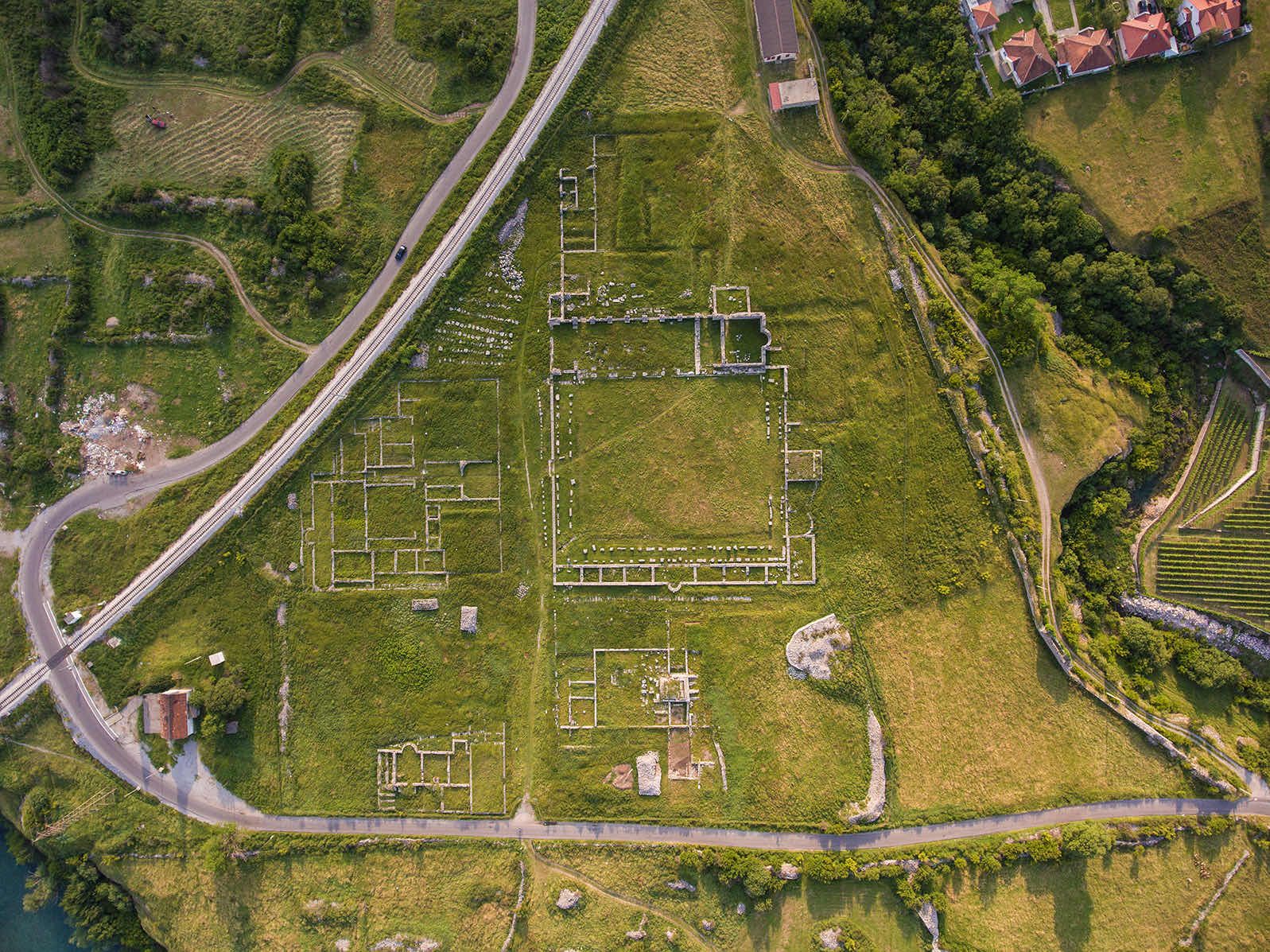
A new study of Roman Doclea, near Podgorica in Montenegro, places the main construction of its forum and basilica in the first century CE. That is around two centuries before the late third- and early fourth-century work associated with Diocletian’s era. The researchers describe a civic center built and altered in several phases, rather than one created in a single imperial campaign.
Published online on 29 September 2026 in the Journal of Roman Archaeology, the study combines standing walls, architectural fragments and records from early excavations. Its proposed sequence gives the oldest monumental phase a much larger place in Doclea’s history. Later builders appear to have changed the basilica and added new decoration, but much of the complex was already there.
Earlier interpretations have linked the ruins with Diocletian, in part through a local tradition that called the site an “imperial palace.” The new analysis finds substantial building activity in his period but no inscription connecting the forum-basilica specifically to the emperor. It also makes clear why a precise building chronology remains difficult: most of the city has not been excavated, and many pieces have been moved.
A Roman civic center beside the main street
Doclea stood near the meeting of the Morača and Zeta rivers, on routes between the Adriatic coast and the Balkan interior. Its location offers another example of how Roman roads connected provincial cities. The city occupied about 25 hectares within Roman Dalmatia. Its known remains include a forum, a basilica, baths, temples, houses and surrounding burial grounds, although archaeological work has exposed only a little more than one fifth of its area.
The forum formed a square about 66.6 by 55.5 metres, with rooms along its northern and eastern sides. A long building with an apse occupied the western side and is generally identified as the civic basilica. Entrances on the south connected the square to the decumanus maximus, the city’s principal east-west street. The basilica opened towards the forum rather than directly onto that street.
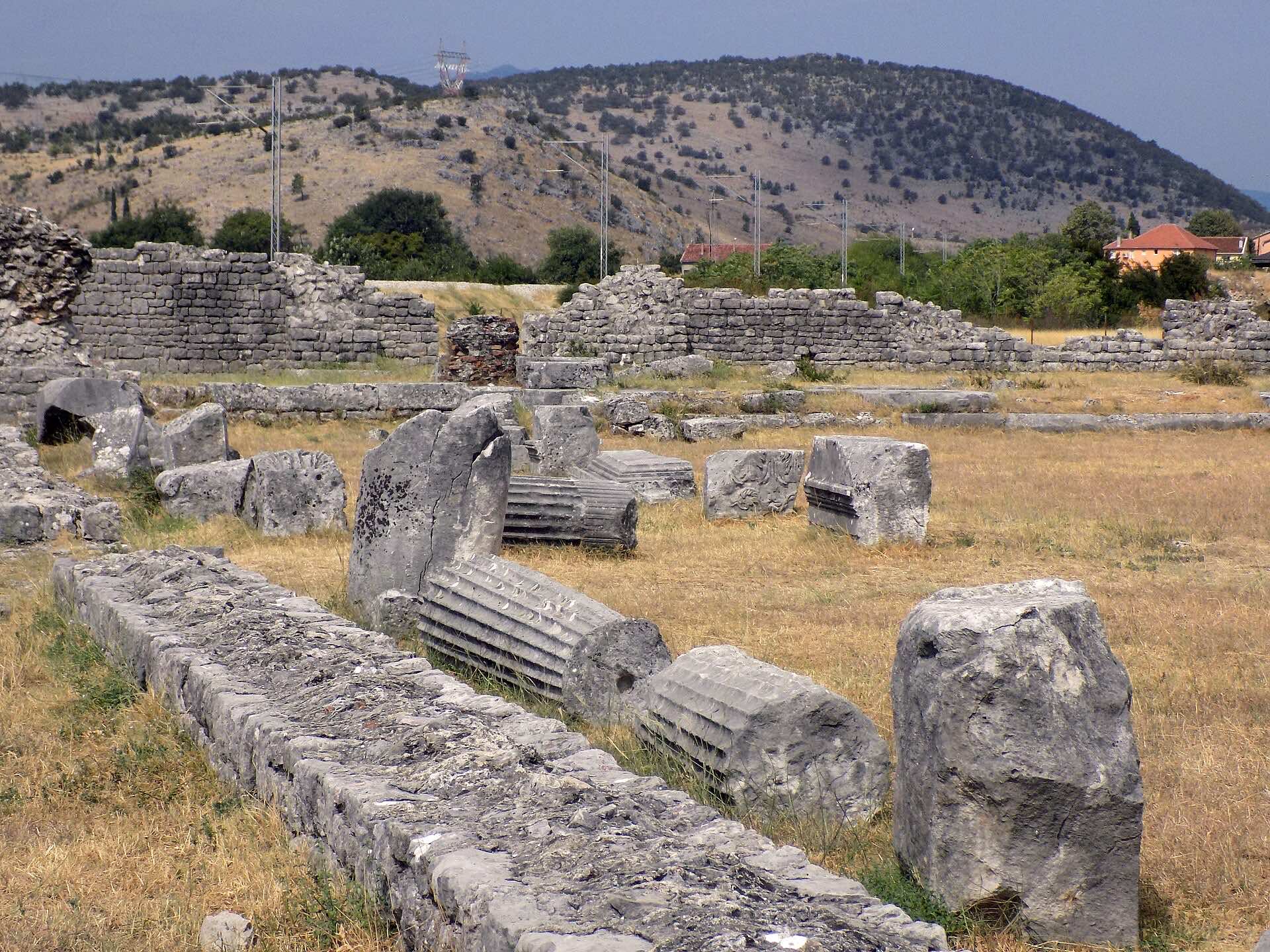
Roman forums were public centers, and Doclea’s layout can be compared with other provincial complexes where a basilica bordered the square. The new paper examines how this particular arrangement was constructed, not simply what it resembled. Its evidence comes from the relationships between surviving walls and the carved stone once used to finish the buildings.
How the researchers dated the first phase
Some inscribed architectural blocks found near the basilica point to the Flavian period in the later first century CE. They record honors for Marcus Flavius Balbinus, who died aged 15, and name members of his family. The inscriptions have long influenced the dating of the forum, but they do not themselves say when every wall was built or who paid for the entire complex.
The researchers also examined which walls join and which appear to rest against earlier structures. They consider it plausible that the basilica’s southern wall and the south side of the square were built together. Combined with the style of the principal architectural decoration, these observations lead them to place the main construction of both the forum and basilica in the first century CE.
That date remains an archaeological interpretation, not a year supplied by a foundation inscription. Several carved elements can be assigned broadly to the first century without a secure choice between the Julio-Claudian and Flavian periods. The study also identifies decorative pieces that may belong to the second century, showing that work at the civic center did not stop after its initial monumental phase.
Roman plan, regional decoration
The complex’s plan belongs to a wider Roman tradition of civic architecture. In Dalmatian towns, the placement of a basilica beside a forum gave administrative and public spaces a recognizable setting. Doclea was not an exact copy of every other town: its forum was closer to square than rectangular, and the identification of a principal temple on its north side remains uncertain.
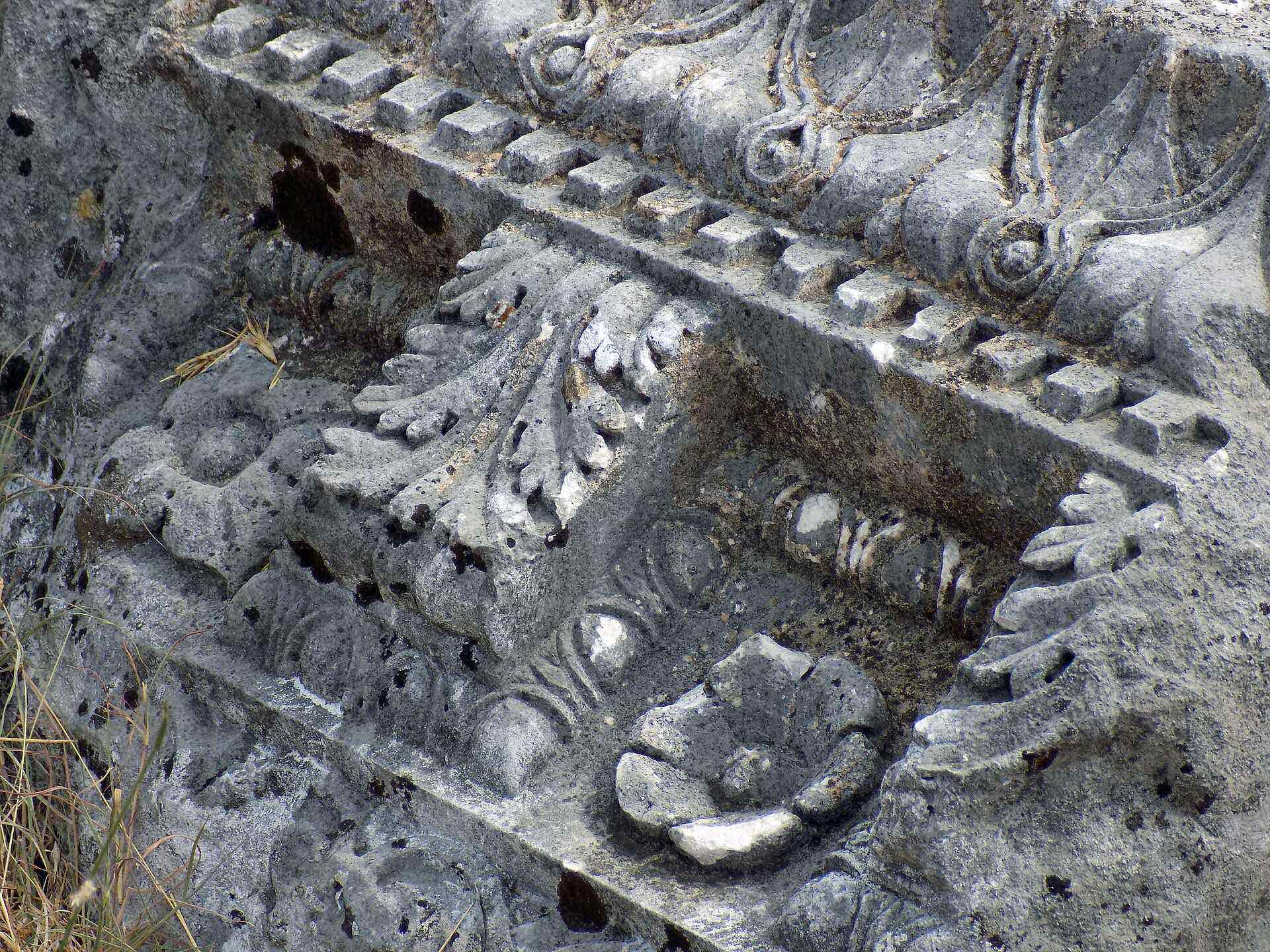
Its stone decoration points in more than one direction. The study compares cornices and capitals at Doclea with work from Rome, other Dalmatian cities and the eastern Mediterranean, especially Asia Minor. Some features suggest that eastern styles reached the region through Greek cities farther south. These are stylistic comparisons, not evidence that a particular named workshop supplied Doclea.
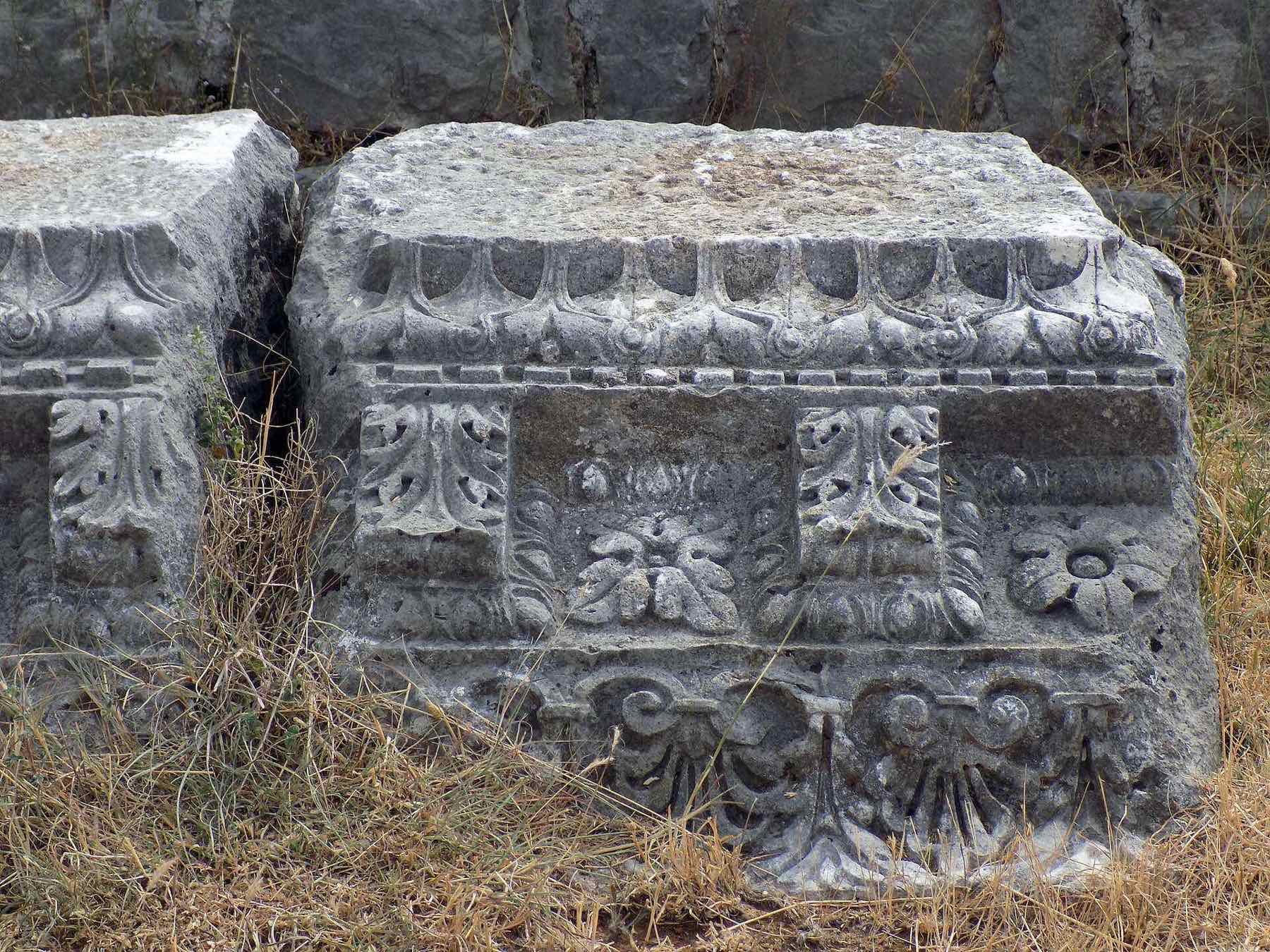
Local limestone was used where more expensive white marble might have been chosen elsewhere. The paper interprets the workmanship as evidence of local craftsmen adapting broader Roman and Mediterranean designs. The Flavii Frontones named on the inscriptions may have been patrons, but the surviving text securely records honors for Balbinus; it does not however establish that his family funded the whole forum and basilica.
A later rebuilding of the basilica
The first-century date does not remove Diocletian’s period from Doclea’s building history. The researchers identify another substantial phase around the end of the third or beginning of the fourth century CE. A brick wall on the basilica’s forum-facing side may belong to this later work, together with architectural elements whose style fits the late Roman period.
Large capitals, arches and pedestals show similarities to decoration at Diocletian’s palace in Split. The paper treats those resemblances as clues to date and architectural language, while allowing that some forms could have developed earlier in the third century. The proposed work concentrated on parts of the basilica and did not require the entire civic center to be built anew.
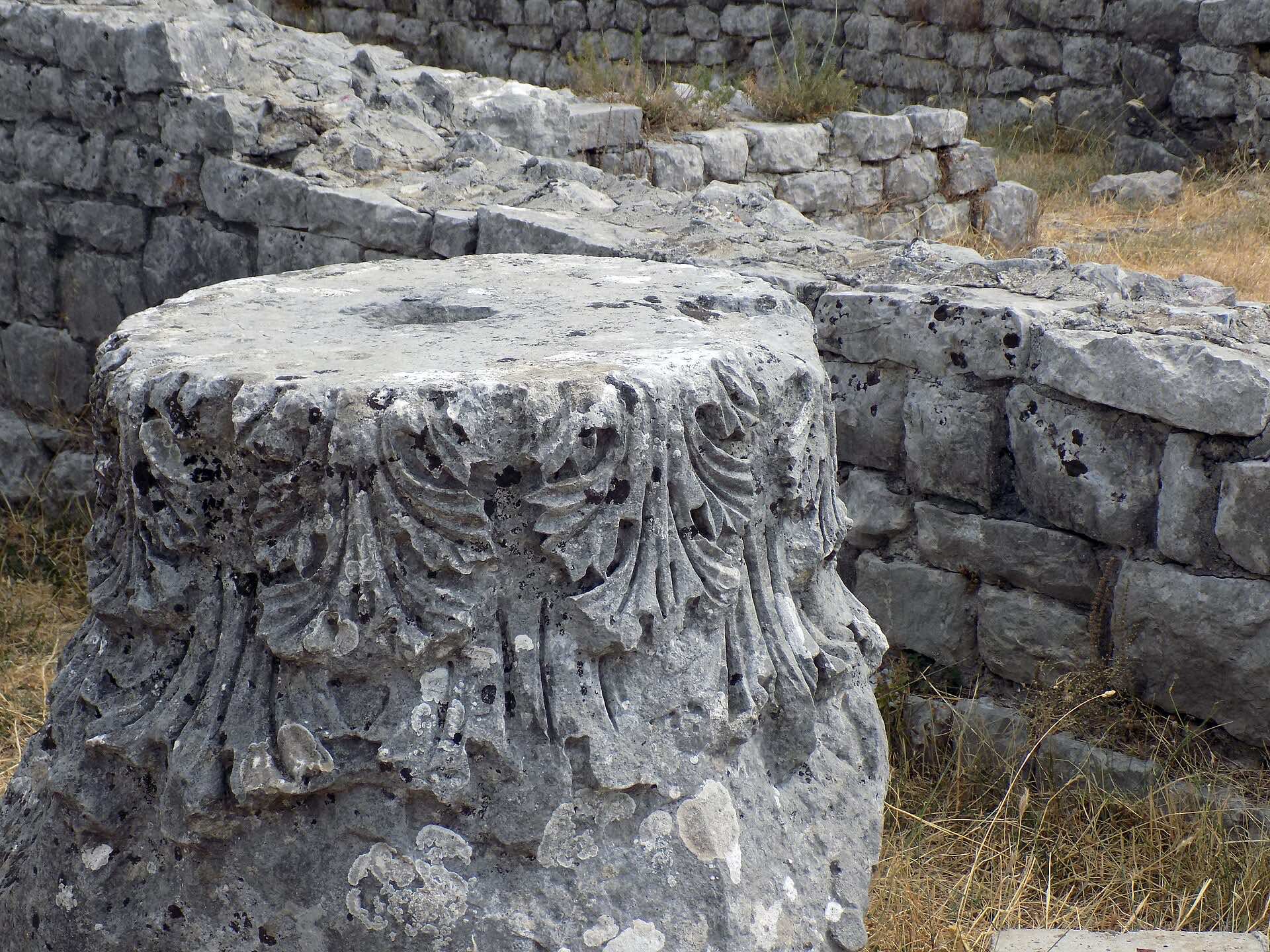
Other monuments also changed during late antiquity. The large baths had several building phases, the last dated to the fourth century, and the city walls have been dated to the late third or early fourth century. Those developments fit a period of significant activity at Doclea during the Tetrarchy, the system of imperial rule associated with Diocletian’s reign and reforms.
Where the “imperial palace” story came from
Nineteenth-century researchers recorded a local name for the forum ruins: Carski dvor, or “imperial palace.” The tradition associated the place with Car Dukljanin, identified locally as Diocletian. The new paper treats that tradition as part of the site’s interpretive history, alongside the architectural evidence for later work.
A previous interpretation proposed that the whole complex was conceived as a setting for the imperial cult in Diocletian’s period. The study acknowledges the possibility of imperial statues and dedications in the basilica, but notes that such a use could have begun earlier. One inscription names Flavius Fronto as a priest of a deified emperor, which cannot by itself assign the whole complex to Diocletian.
No surviving inscription links this forum-basilica specifically to Diocletian or the Tetrarchs. The research therefore separates three points: a first-century monumental center, significant later work, and an unproven claim of direct imperial sponsorship. Doclea’s architecture supports the first two. The third remains open to discussion rather than a result established by the new study.
What the surviving stones can reveal
The ruins are incomplete for reasons that affect every reconstruction. Much of Doclea was excavated before modern recording methods, and the basilica and forum later supplied building stone for the surrounding region. Architectural fragments were removed, destroyed or built into other structures. Some pieces now displayed around the square were moved there during conservation work and did not necessarily come from the positions where they stand today.

That history explains why the researchers combine old plans and photographs with an examination of walls and roughly 230 fragments now in the forum area. A carved block can help identify a building phase even when its original position is unknown, but it cannot always be assigned to a particular room. For a broader account of how older Roman buildings could become sources of material, see the reuse of Roman building stone and other materials.
The picture emerging from Doclea is a long sequence of construction and alteration. Its civic center was already monumental in the early Empire, drew on both Roman and eastern Mediterranean architectural traditions, and acquired new elements around Diocletian’s time. The study’s chronology is strongest where wall relationships, inscriptions and decoration can be read together; large parts of the city and some details of the forum’s later use remain to be investigated.



About the Roman Empire Times
See all the latest news for the Roman Empire, ancient Roman historical facts, anecdotes from Roman Times and stories from the Empire at romanempiretimes.com. Contact our newsroom to report an update or send your story, photos and videos. Follow RET on Google News, Flipboard and subscribe here to our daily email.
Follow the Roman Empire Times on social media: