
Inveresk’s Roman Altars Go on Display in Edinburgh
Newly conserved carvings from Inveresk take their place in Edinburgh’s Roman Scotland exhibition, with clues to a centurion’s religious world.

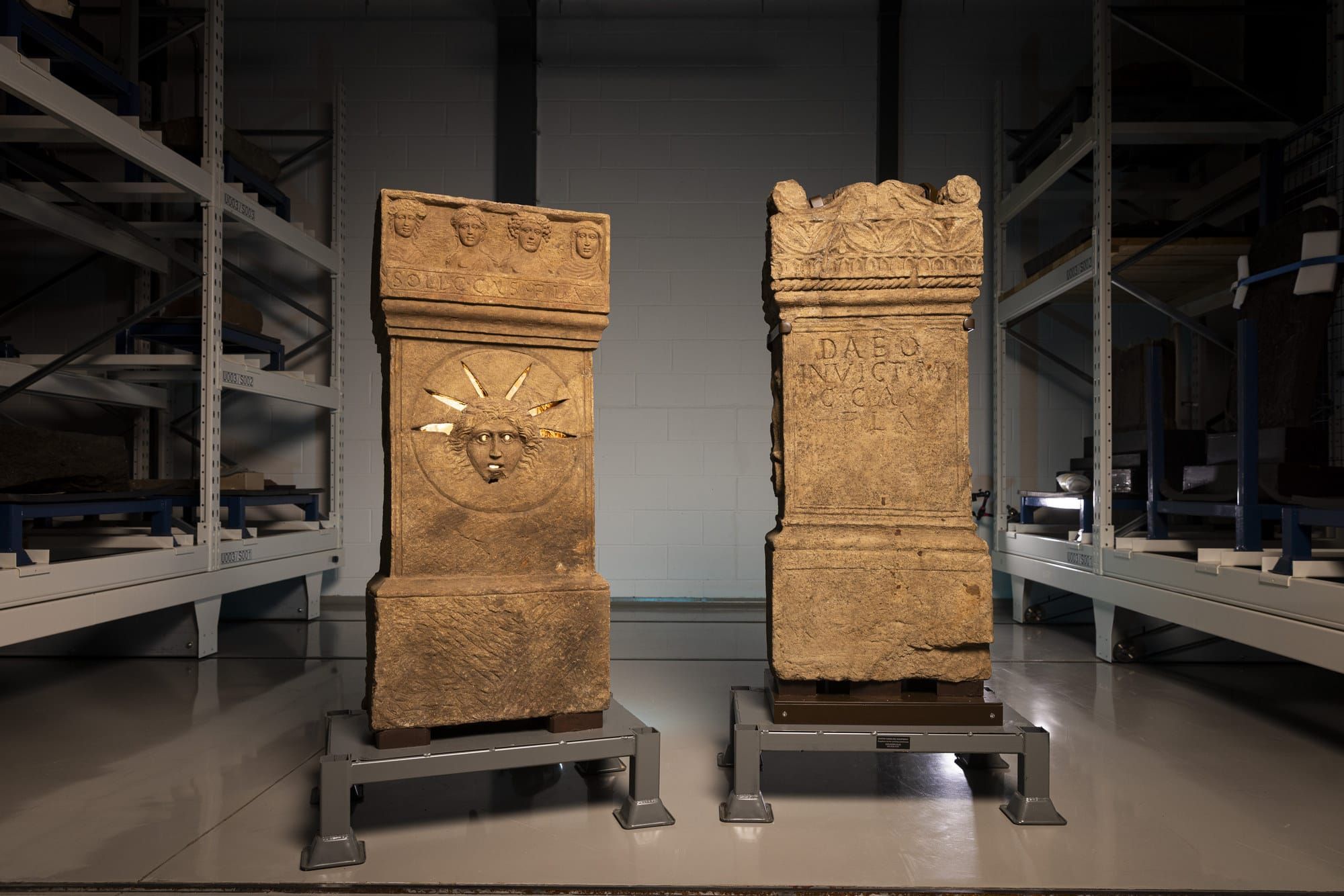
Two Roman altars from Inveresk in East Lothian are at the centre of a new exhibition at the National Museum of Scotland in Edinburgh. Roman Scotland: Life on the Edge of Empire opened on 14 November, bringing the newly conserved stones into public display for the first time, as a part of Rome's campaign in Scotland.
Dedicated to Mithras and the sun god Sol, the altars belonged to a sanctuary discovered during building work in 2010. Their inscriptions, sculpture and surviving paint connect them with a Roman military community of the second century AD, when imperial forces occupied territory beyond the frontier at Hadrian’s Wall.
The exhibition runs until 18 April 2027 and brings together archaeological discoveries, recent research and loans from across Europe. Its focus extends from soldiers and their equipment to the families, traders, craftworkers and enslaved people around them, and to the local communities who encountered the occupying army.
A temple beneath a cricket pavilion
The altars emerged in March 2010 during preparations for a replacement cricket pavilion in Lewisvale Park, east of Inveresk’s Roman fort. Archaeological monitoring began on 22 March, and the stones appeared that day and the following morning. Excavation then concentrated on recovering the carvings and recording their immediate surroundings.
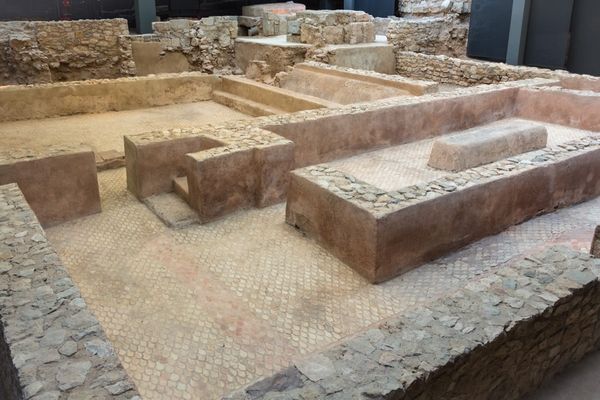
They lay in a sunken rectangular space with benches along its sides and a recess at one end. This arrangement supported its identification as a mithraeum, a temple used by worshippers of Mithras. The two altars had been laid parallel, face down, near the end of the central aisle.
Their inscriptions only became visible when the stones were turned over during the later investigation. The discovery added a religious building to an already extensive settlement. Inveresk’s position beside the Firth of Forth made its fort suitable for coastal defence and for supplying the Antonine frontier, while civilian activity spread beyond the military enclosure.
One centurion commissioned both stones
Both dedications name the same donor, whose name was abbreviated as G CAS FLA. The inscription on the Sol altar identifies him as a centurion, while his three-part name indicates Roman citizenship. His full name remains uncertain, but the two monuments preserve a personal commission within the frontier’s military setting.
The lettering offers a further connection. The letter A has an angled crossbar also found on work associated with the Twentieth Legion, including distance slabs from the Antonine Wall. This resemblance links the altars to the legion’s sculptural workshops and supports a date in the early AD 140s, during the northern advance.
The donor may have commanded the auxiliary garrison or a detachment of legionaries at Inveresk. The carvings received considerable attention: on the Mithras altar, decorative work continued around the back as well as the front and sides, increasing the labour invested in the monument.
Sol’s face was designed to glow
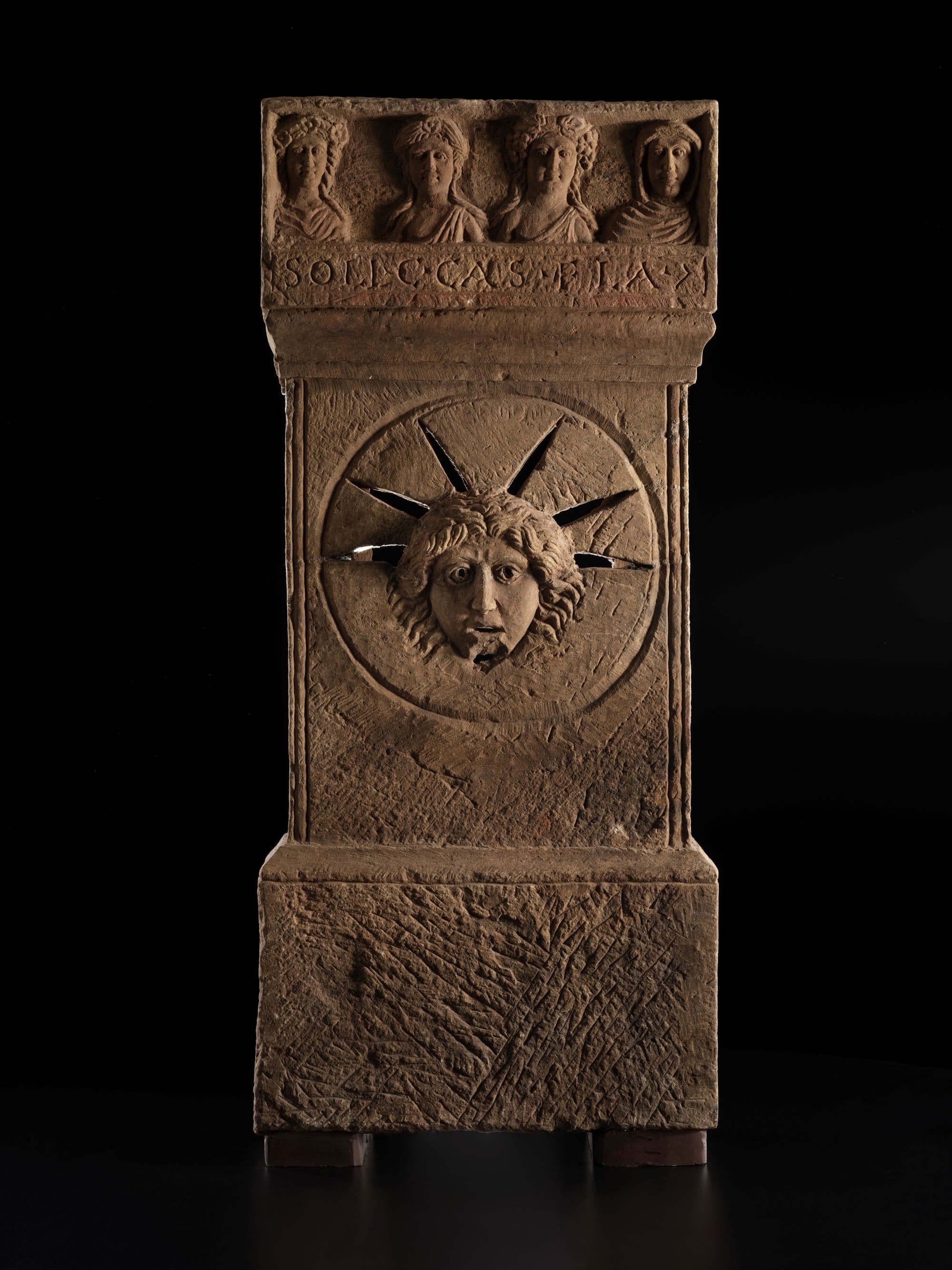
The altar to Sol presents a youthful face with flowing hair and a radiating crown. Openings pass through the rays and facial features, while a hollow behind the portrait provided space for a light. In the temple’s dim interior, illumination could therefore shine through the stone face towards the worshippers.
The arrangement was adapted during use. Shelves within the rear cavity could have supported a raised light source, and heat affected the sandstone around the mouth. An iron rod behind the nose has prompted suggestions of another fitting that could have produced moving light or an acoustic effect.
Above the face, four female figures represent the Seasons. Autumn wears ivy and grapes, while Winter is wrapped in a cloak drawn over her head. These personifications introduced the annual cycle into the imagery of the sun. Comparable lighting arrangements and seasonal figures occur elsewhere in Mithraic worship across the empire.
Mithras shared the altar with Apollo’s symbols
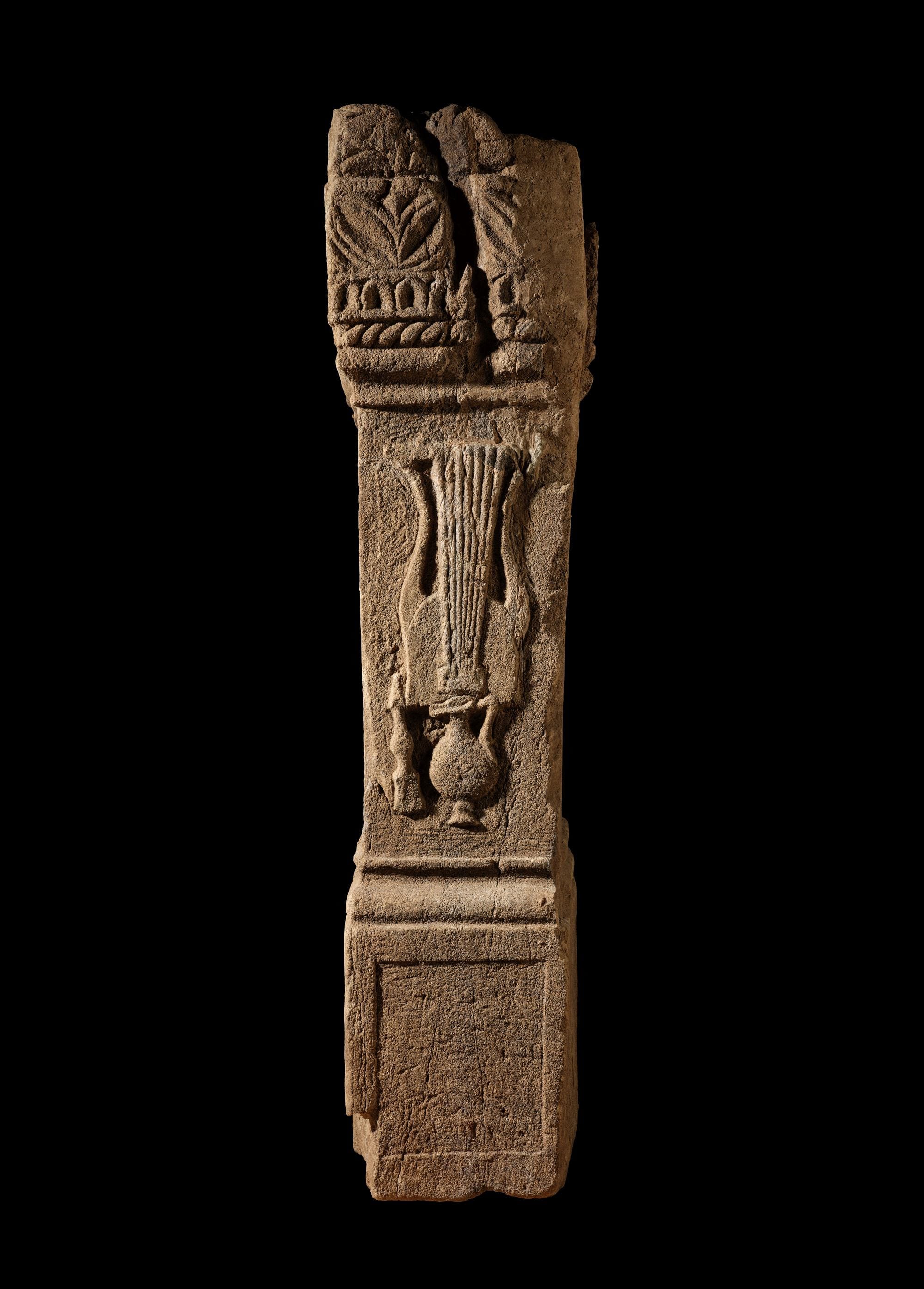
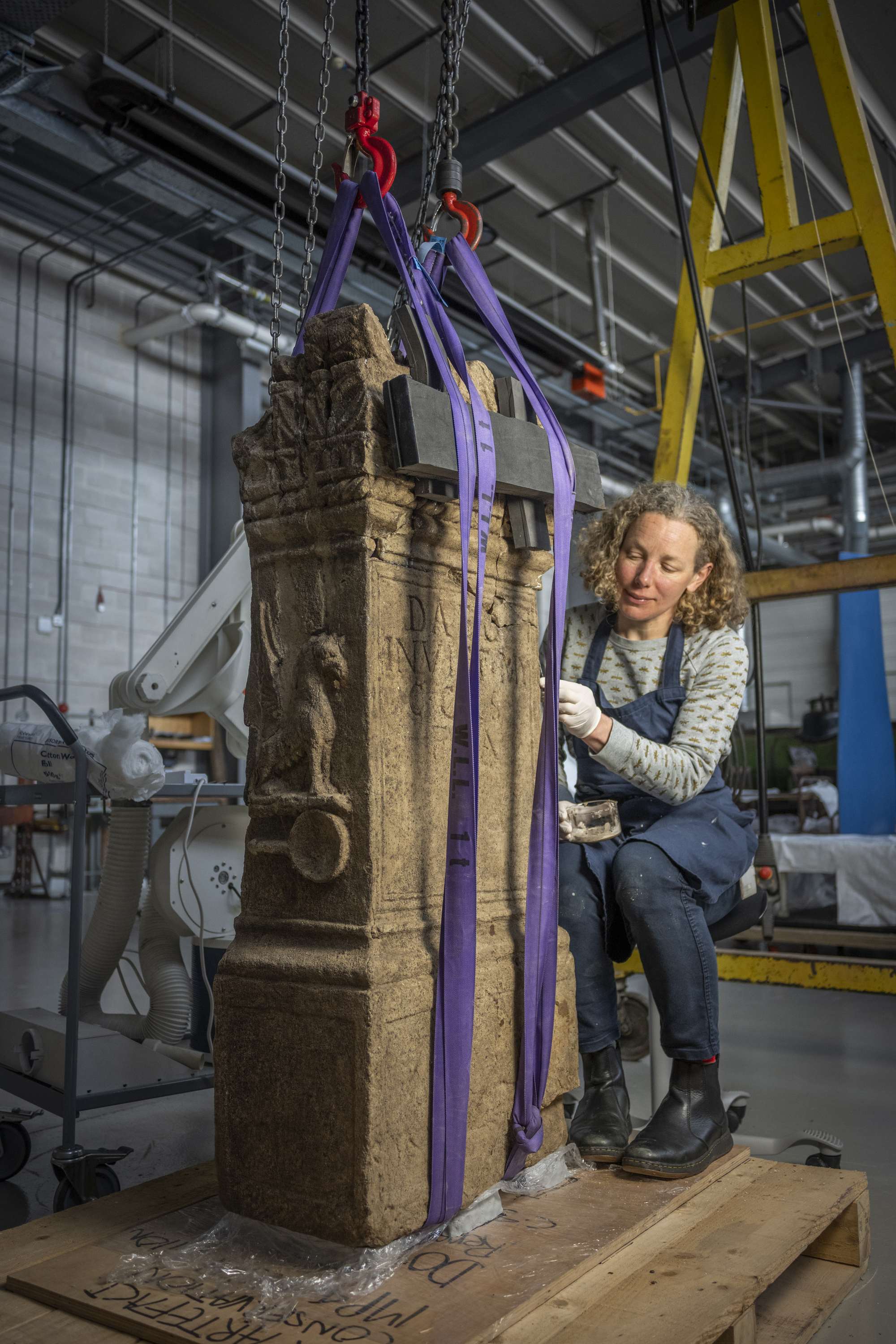
The second stone honours Mithras and carries two ravens within its upper decoration, birds familiar in the cult’s imagery. Its sides combine a torch with a griffin, a lyre and an object interpreted as a plectrum, used to strike strings. These attributes connect the dedication with Apollo as a god of light and music.
The lyre was carved with seven evenly spaced strings spreading towards its upper bar. Its shape and surviving details received close examination in the excavation report, alongside comparisons with other Roman representations of musical instruments. A jug partly overlaps its lower section, while a shallow handled bowl appears on the other side.
The vessels belong to the ritual equipment represented on Roman altars. Together with the divine attributes, they place the dedication within the varied worship of the Roman world. The combination of Mithras, Apollo and Sol also has parallels in other British sanctuaries, including the temple at Rudchester near Hadrian’s Wall.
Paint and repairs survive on the sandstone
The altars were made from different kinds of sandstone. Sol’s portrait occupies a relatively fine-grained pink stone, while the Mithras altar uses a paler, coarser material. Geological examination found local rocks with comparable characteristics, making nearby sources likely. Both monuments stand roughly 1.3 metres (4 feet 3 inches) tall.
Microscopic analysis identified red and white paint on the Sol altar. The white included pigment made from bone and gypsum, while the red was an ochre. Orange-red paint on the Mithras altar combined red and yellow ochres. These surviving patches preserve part of a coloured finish that once accompanied the carved details.
The stones also record different stages of repair. Sol’s chin broke during manufacture and was repaired with plaster. Later damage and deterioration affected the monuments during their long history underground and after recovery. Extensive modern conservation has reconstructed the fragmented stones and prepared them for their place in the exhibition.
The sanctuary closed with a careful burial
The excavators interpreted the placement of the altars as a respectful closure of the sanctuary, probably when the army withdrew. The stones had been removed from their bases and lowered with their decorated fronts protected. Their parallel position and the separate surviving base supported deliberate concealment rather than a simple collapse where they had stood.
A nearby pit held much of a well-worn drinking beaker made at Colchester. Its relationship to the temple led the excavation team to interpret it as an offering associated with the building’s closure. Other Mithraic sanctuaries preserve deposits of drinking vessels, linking the Inveresk find with practices documented beyond this particular frontier community.
The museum now places those religious objects within the wider history of Inveresk and its inhabitants, also encountered in our account of an Inveresk resident’s reconstructed face. At the National Museum of Scotland on Chambers Street, the exhibition brings the altars together with that broader settlement story, from the army’s supply networks to its relationships with local people.

About the Roman Empire Times
See all the latest news for the Roman Empire, ancient Roman historical facts, anecdotes from Roman Times and stories from the Empire at romanempiretimes.com. Contact our newsroom to report an update or send your story, photos and videos. Follow RET on Google News, Flipboard and subscribe here to our daily email.
Follow the Roman Empire Times on social media: