
New Reconstruction Reveals the Face of a Man from Roman Scotland
An international team has reconstructed an Inveresk resident’s face, while his bones and teeth document a journey north and a life shaped by injury.

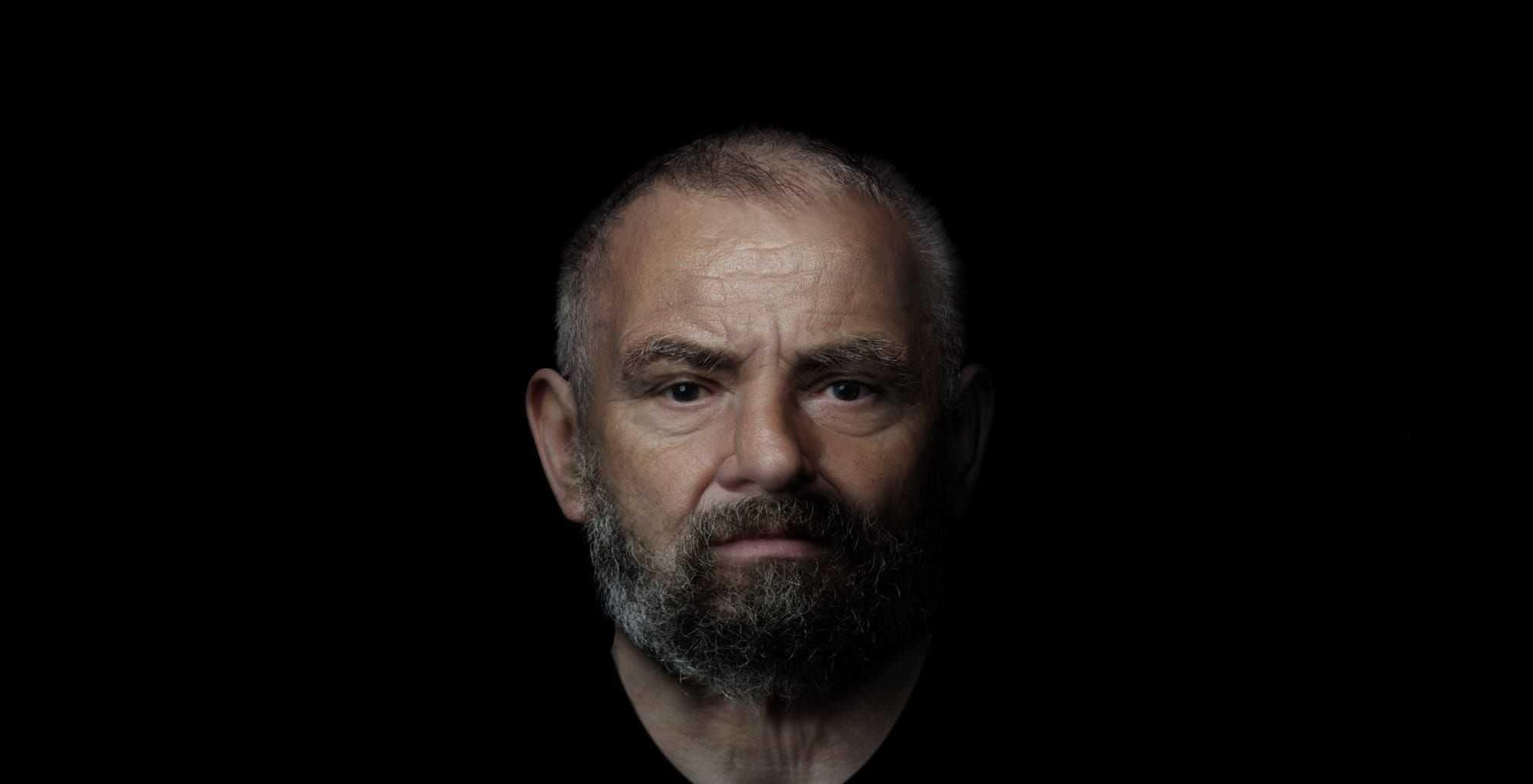
A new facial reconstruction has revealed the possible appearance of a man who travelled from southern Britain to the Roman frontier at Inveresk, near Edinburgh, almost 2,000 years ago. National Museums Scotland announced the reconstruction on 20 October, ahead of an exhibition bringing together finds from the settlement.
The museum places his death between AD 140 and 165 and estimates that he was probably in his early fifties. His remains belong to an unusual group of burials near the fort, where scientific analysis has identified people who had grown up in different regions.
The portrait accompanies a longer investigation of those lives. Excavation, examination of the bones and chemical analysis of teeth have established evidence of migration, physical hardship and distinctive treatment of the dead at a settlement serving Rome’s northern frontier.
Building a face from the skull
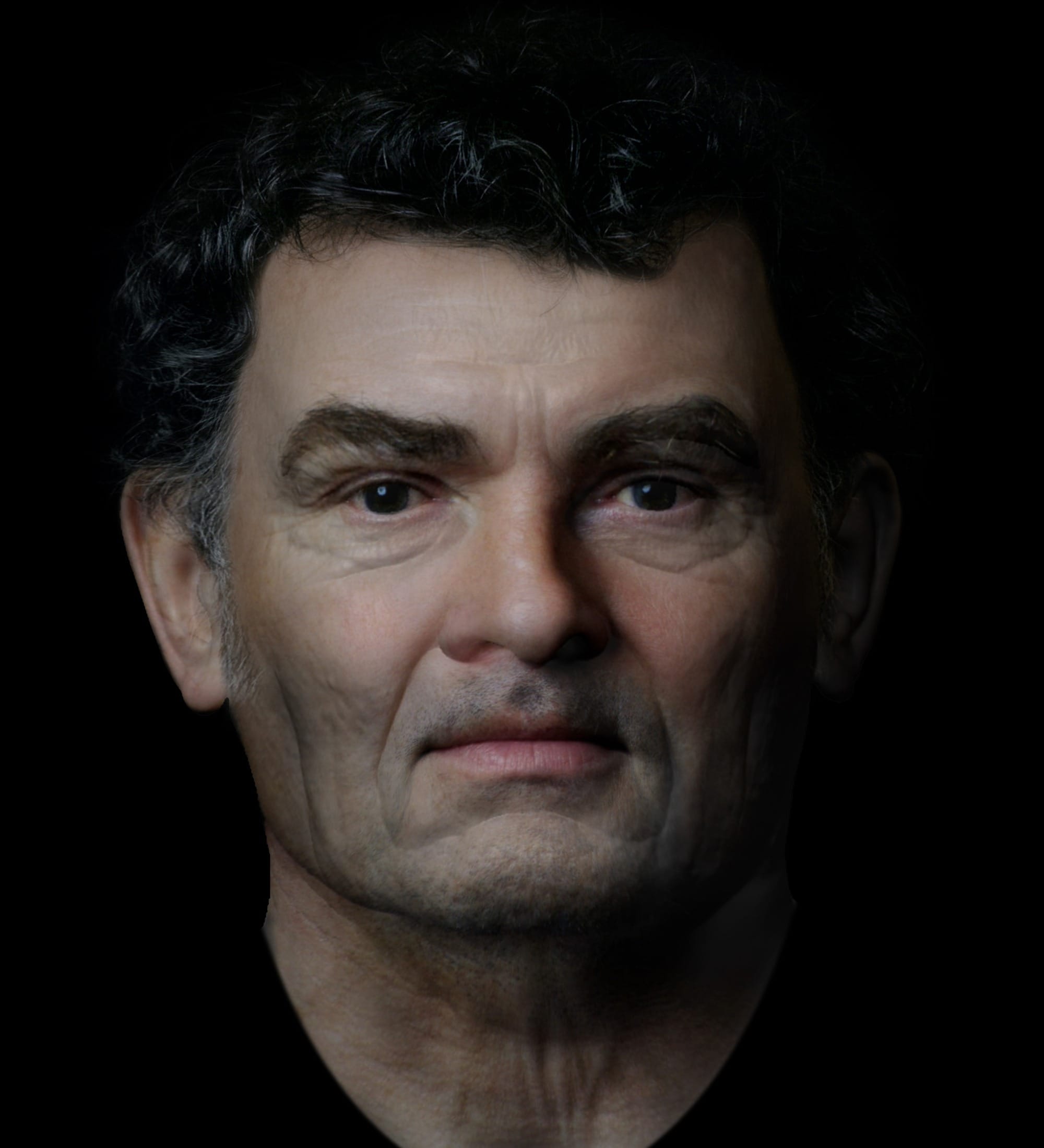
The digital reconstruction combines an assessment of the skeleton by National Museums Scotland with earlier isotope research led from Durham University and ancient DNA analysis by a team based at the University of York and Harvard Medical School. These different investigations supplied information for estimating the man’s appearance.
The museum describes brown eyes and dark hair turning grey, with lines reflecting his age. The published images present alternative renderings of the same individual, including a bearded version. They are reconstructions informed by the remains, with artistic decisions completing the portrait.
Much of the archaeological foundation predates this announcement. Excavations for Musselburgh’s new Primary Health Care Centre took place between August and November 2010, below the steep slope occupied by Inveresk fort. The resulting report, published in 2020, documented the graves, skeletal injuries and changing use of the ground around them.
An elbow condition that changed daily life
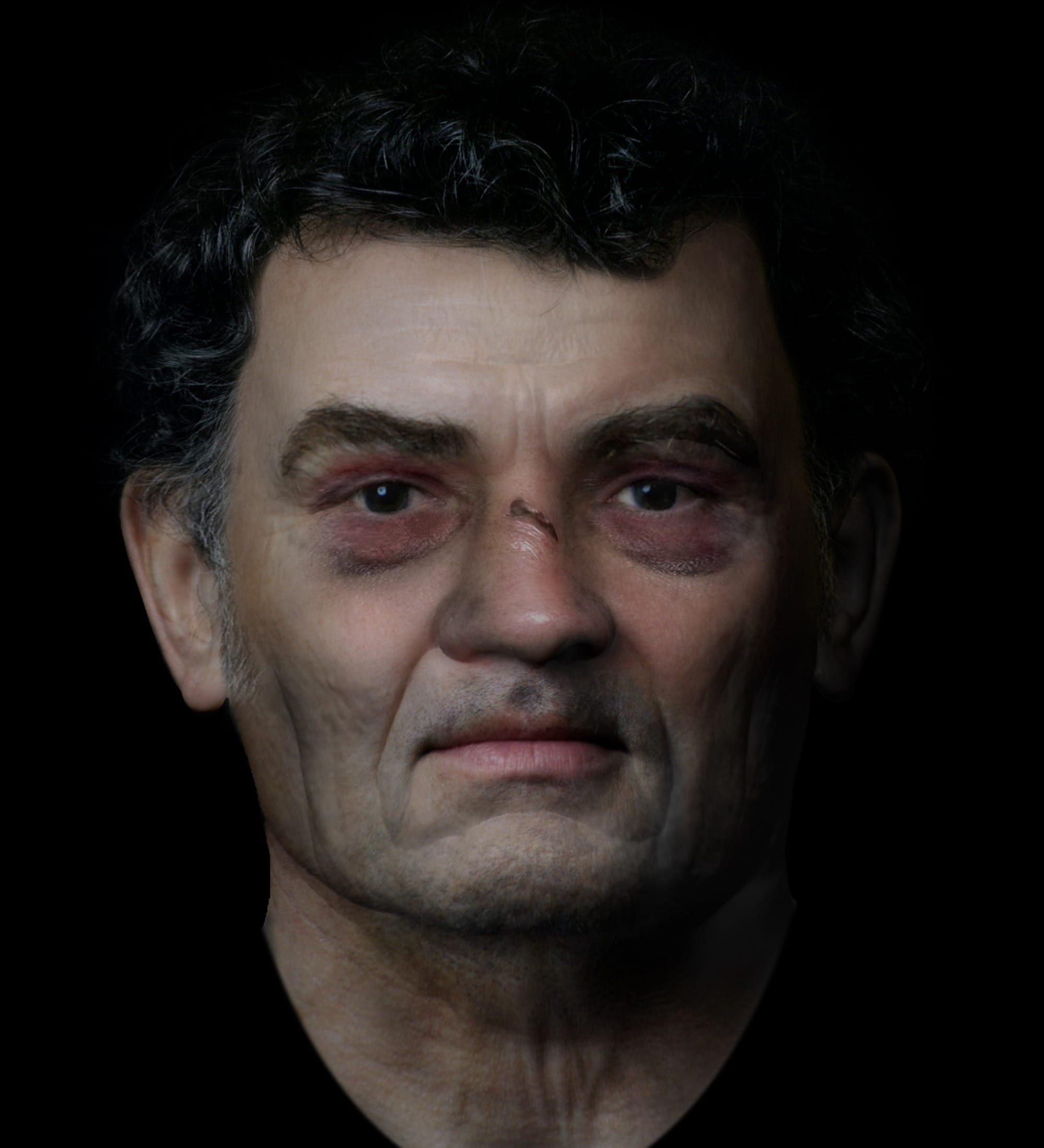
Examination of the man’s skeleton revealed extensive new bone around the right elbow, substantially restricting use of that arm. The museum’s current assessment identifies septic arthritis as the probable cause. It also reports a broken nose which had healed during his lifetime.
Pronounced wear on the front teeth suggests an adaptation to his restricted movement: he may have held objects in his mouth to help with tasks. The museum consequently regards active sword fighting as incompatible with his condition at death; his occupation remains unidentified.
The excavation report records a severely altered right elbow in one of the decapitated men, alongside a healed rib fracture. The rib had developed a substantial callus, showing that the man survived the injury. Across the group, robust bones, pronounced muscle attachments and joint changes provide evidence of physically demanding lives.
A journey preserved in the teeth
The earlier isotope investigation examined six Roman-period men and one Iron Age individual from the excavation. Researchers compared carbon and nitrogen in bone and tooth tissue, together with oxygen, strontium and lead in tooth enamel. The measurements addressed diet and the environments experienced while the teeth were developing.
Oxygen values reflect ingested water, while strontium reaches the body through food and water from the surrounding geological environment. Lead adds another comparison, including exposure to metal sources used by Roman communities. Combining these indicators allowed the researchers to distinguish people whose similar burial place concealed different childhood histories.
One decapitated man had oxygen values consistent with western or southern Britain and a lead signature closely matching Roman-period burials in England. Taken together, the results favoured a childhood in southern Britain. The museum’s new account identifies the reconstructed man as having made that northward journey, covering hundreds of miles before reaching the Firth of Forth.
A busy frontier beyond Hadrian’s Wall
Inveresk belonged to the Roman advance into southern Scotland during the second century. Under Antoninus Pius, the Antonine Wall extended across the Forth–Clyde isthmus, with additional forts along the coasts. The settlement therefore places this man within a northern frontier landscape extending beyond the better-known frontier at Hadrian’s Wall.
The isotope study describes Musselburgh as well positioned on land and sea routes, with fertile surrounding ground and access to the Roman road network. It interprets the settlement as a likely contributor to supplying the northern military sites through a combination of imported provisions and local production.
A substantial civilian settlement developed beside the fort. As elsewhere in the communities of Roman Britain, the archaeological record includes more than military equipment: pottery, personal possessions and food remains document the population around the garrison. The different origins suggested by the burials fit this setting of movement and exchange.
Four burials with the heads removed
Four of the six adult men in the Roman-period burial group had been decapitated after death. Excavators found heads placed away from their normal anatomical position, and surviving neck vertebrae in two cases carried cut marks. The museum identifies these as Scotland’s first examples of Roman-period decapitation burial and among Britain’s earliest.
The excavation report considered several explanations, including punishment and ritual treatment. The museum also raises beliefs connected with the circumstances of death or supernatural concerns. The precise reason at Inveresk remains open, within the wider variety of funeral rites practised in the Roman world.
The isotope results add a useful finding to that discussion. The decapitated men appear to have come from different regions, with proposed childhood origins including England, Scotland and the Mediterranean. Their shared burial treatment therefore crossed geographical backgrounds, rather than simply marking a group who had all arrived from the same place.
Inveresk’s people go on display
The skull and digital reconstruction will be displayed together in Roman Scotland: Life on the Edge of Empire at the National Museum of Scotland in Edinburgh. The exhibition runs from 14 November 2026 to 18 April 2027 and brings recent research into the frontier’s military and civilian communities into public view.
Other Inveresk finds include two carved altars associated with a temple of Mithras, dating to the 140s. Conservators have identified traces of their original paint. The altars, settlement finds and human remains bring together different aspects of life at the same outpost, from religious dedication to personal health and mobility.
The reconstructed face gives a visible form to one of those residents. His journey north and his altered elbow can now be placed beside the archaeology of a growing frontier settlement. How he earned his living there, and why this community treated some of its dead with post-mortem decapitation, remain central questions in Inveresk’s story.

About the Roman Empire Times
See all the latest news for the Roman Empire, ancient Roman historical facts, anecdotes from Roman Times and stories from the Empire at romanempiretimes.com. Contact our newsroom to report an update or send your story, photos and videos. Follow RET on Google News, Flipboard and subscribe here to our daily email.
Follow the Roman Empire Times on social media: