
A Roman Emperor’s Giant Statue May Have Stood in Scotland
For two centuries, a gilded bronze leg from a Scottish bog was treated as loot. A new examination points to an imperial monument closer to home.

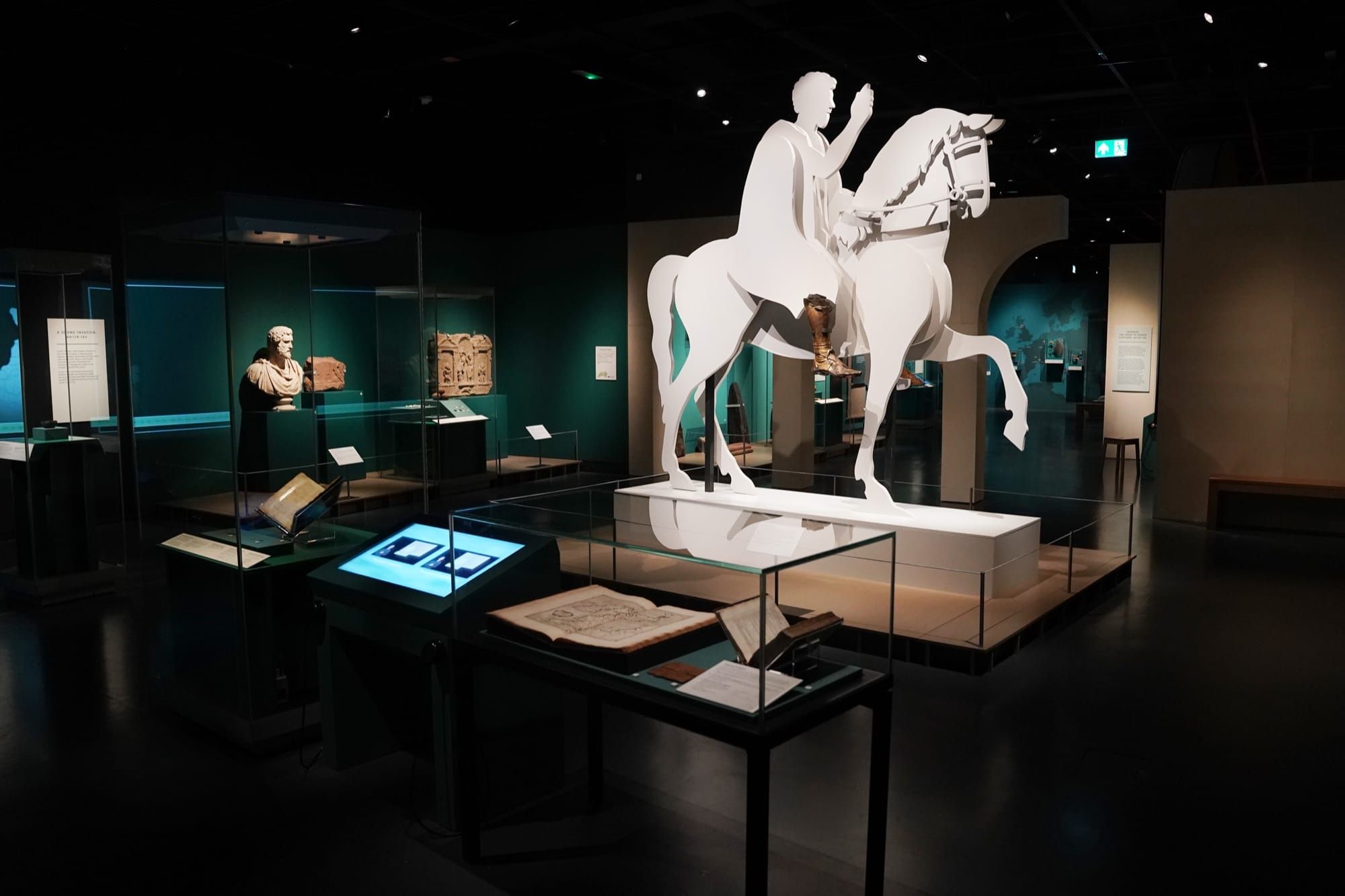
A gilded bronze leg recovered from a Scottish bog may be the surviving part of a monumental statue of Emperor Antoninus Pius erected in southern Scotland. New research announced by National Museums Scotland on 12 November places the object within the Roman occupation of the Scottish Borders and proposes a larger-than-life emperor on horseback.
For more than two centuries, the fragment had been explained as loot brought north from another part of Roman Britain, possibly York. Curators now favour a local setting, drawing together evidence from the leg’s construction and a wider study of imperial statues at Roman frontier forts.
The proposal is presented in Roman Scotland: Life on the Edge of Empire, which opened at the National Museum of Scotland in Edinburgh on 14 November. The ancient leg has been mounted against a modern silhouette of a mounted emperor, allowing visitors to see the scale of the monument it may once have belonged to.
The clue at the top of the leg
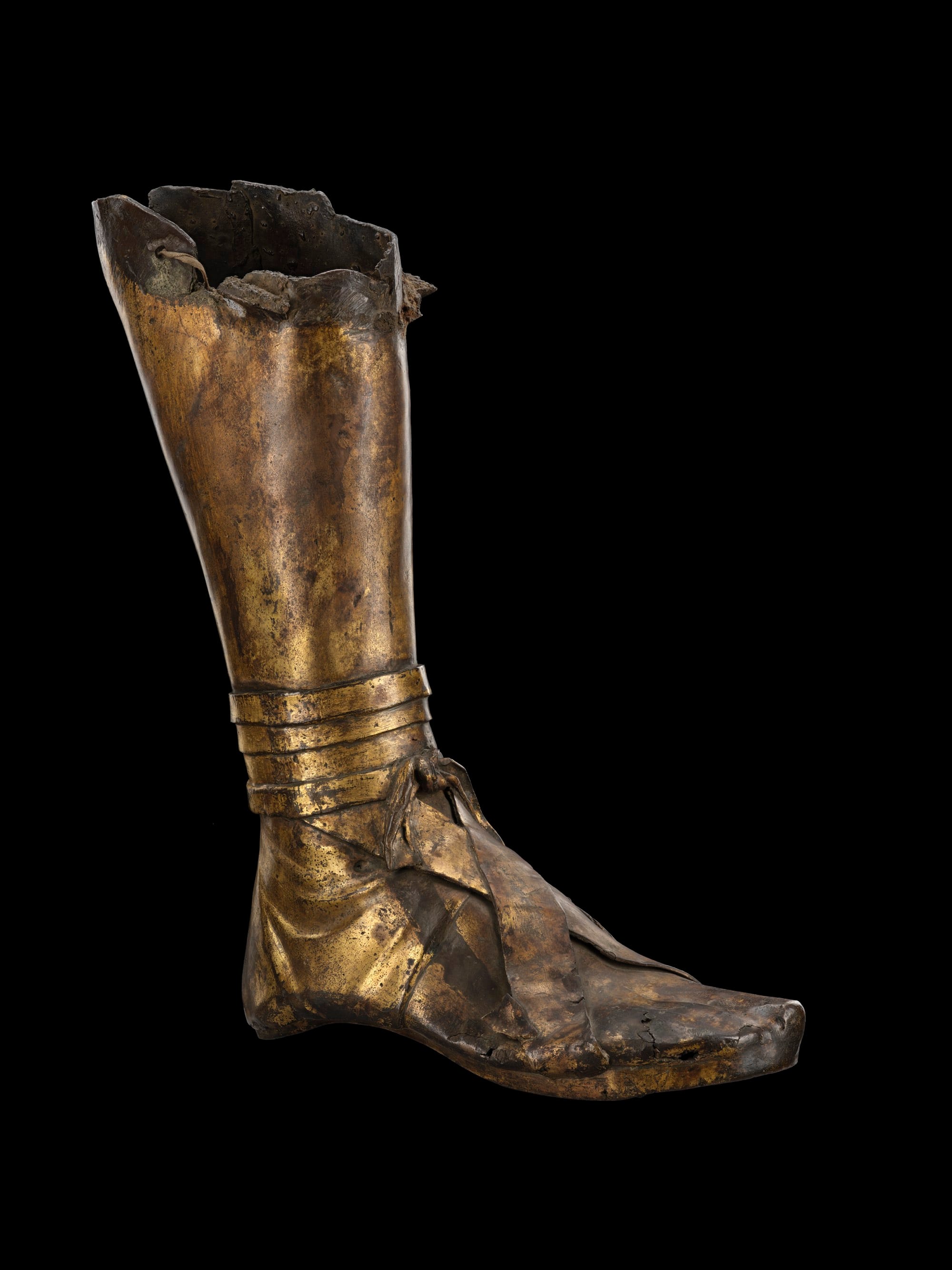
The bronze lower leg and boot were found in 1820 at Milsington, near Hawick. National Museums Scotland dates the object to the AD 140s. Its surviving gold surface and oversized proportions made it an unusual find, but the recent examination concentrated on the less conspicuous area where the leg joined the rest of the sculpture.
At the top, the metal retains its cast edge without the marks that cutting would have left. Around the knee, an ungilded area indicates that part of the leg was originally concealed by a tunic or cloak. Irregular lumps of metal helped fill the folds of that garment and attach the separately made leg to it.
Curators interpret this combination as evidence of deliberate separation at the statue’s original join. The limb differs from the small, uneven pieces typically produced when statues were violently broken or divided for scrap. Its removal appears to have preserved a substantial component of a sculpture that could be taken apart.
A Scottish monument replaces the loot theory
The older explanation placed the complete statue somewhere further south and treated the leg’s Scottish findspot as the destination of plunder. York, the Roman city of Eboracum, was one suggested origin. The museum’s reassessment instead considers whether an imperial monument could have stood within the northern military occupation itself.
A comparative study of fragments from the Roman frontier identified bronze imperial statues in forts, including examples of emperors on horseback. Such finds provide a setting in which the Milsington leg could have belonged to a monument erected in Scotland. The precise location of that proposed monument remains unidentified.
The museum describes the sculpture as the only known example of its kind from Scotland. Its proposed reconstruction resembles the famous surviving equestrian monument to Marcus Aurelius in Rome: an emperor represented above life size, seated on a horse. In Edinburgh, the surviving bronze is displayed within an outline reconstruction of that possible arrangement.
Why Antoninus Pius is the leading candidate
The proposed identification connects the object’s second-century date with the emperor who celebrated the conquest of southern Scotland. During the reign of Antoninus Pius, Roman forces advanced north and established the military frontier associated with the Antonine Wall. The museum interprets the statue as a commemoration of those victories.
The Scottish campaign held a particular place in the emperor’s public honours. National Museums Scotland notes that it was the only foreign campaign he commemorated by taking the victory title Imperator, meaning commander. That association is central to the curators’ preference for Antoninus Pius as the rider represented by the lost monument.
The archaeological chronology places the campaigns under way by AD 139 or 140, with victory celebrated in 142. A gilded monument dated to the 140s would therefore belong to the period in which the conquest was being consolidated. The identification rests on this historical setting alongside the surviving fragment and the frontier comparisons.
The army built beyond the wall
The occupation brought a renewed network of forts and smaller fortlets across southern Scotland. Many installations reused positions occupied during the late first century, while others were new foundations or stood close to earlier sites. Inveresk, near Edinburgh, was among the new military foundations of the Antonine period.
The Antonine Wall was the most conspicuous result of the advance, but direct occupation extended further north. Outpost forts reached towards the River Tay at places including Ardoch, Strageath and Bertha. The archaeological framework for Roman Scotland therefore treats the wall as one element of a wider military system.
This was another stage in the changing frontier represented by Hadrian’s Wall and its military landscape. The advance under Antoninus established a new northern line, while the eventual withdrawal brought renewed work on the older frontier. Forts, roads and monumental objects belonged to successive periods of occupation rather than a single unchanging boundary.
Taking monuments apart before departure
National Museums Scotland links the leg’s careful removal to a Roman withdrawal from southern Scotland in the AD 160s or 180s. This places its separation within the dismantling of the occupation, although the sequence of departures remains debated. The proposed explanation replaces the earlier picture of a limb violently severed and carried away as a trophy.
The wider archaeology records organised decommissioning. Antonine Wall distance slabs were removed from their settings and apparently buried in pits; other inscriptions may have been dropped into wells, as at Bar Hill. Fort buildings were demolished and sometimes burned, while defensive works were reduced.
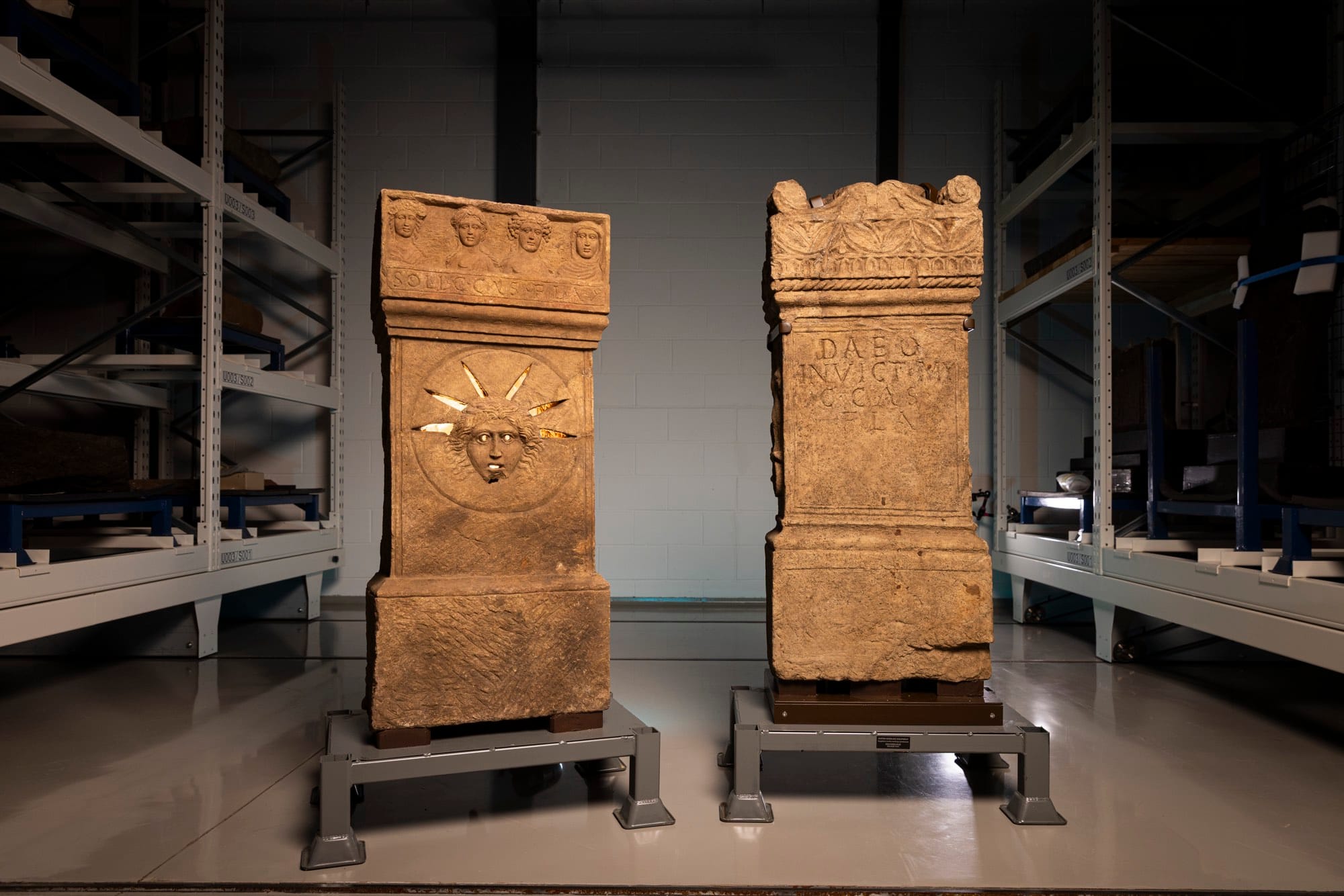
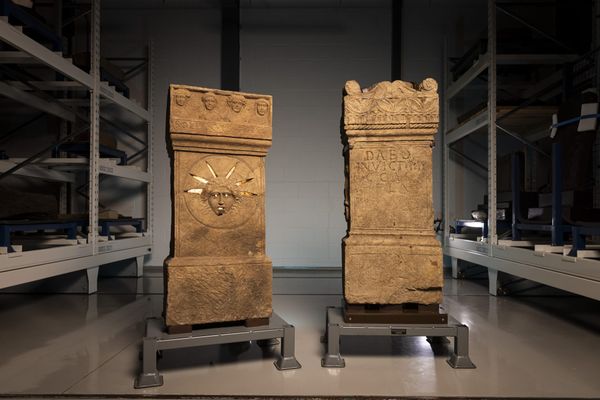
The museum also compares the leg with the careful burial of the Inveresk altars to Mithras and Sol. These objects, discussed in our account of the army’s possessions in Roman Scotland, are displayed in the same exhibition. They provide another example of substantial monuments deliberately placed underground as Roman occupation ended.
A surviving leg and an absent emperor
The exhibition brings the new reconstruction together with the wider material history of life on the frontier. Its subjects include the soldiers stationed in Scotland, the families and communities living around their bases, and the local people confronted by invasion. The proposed imperial statue sits within that history of conquest and occupation.
At the National Museum of Scotland on Chambers Street, the display runs until 18 April 2027. The leg’s position against the reconstructed horse and rider presents the curators’ proposed monument at an immediately visible scale, while retaining the ancient bronze as the physical centre of the display.
The reassessment brings two strands of evidence together: the preserved join on the leg and the presence of imperial bronze statues at frontier forts. Curators now place the fragment within a possible Scottish monument celebrating Antoninus Pius’s victories. The remaining search concerns the monument itself: where it stood and what happened to the rest of it.
About the Roman Empire Times
See all the latest news for the Roman Empire, ancient Roman historical facts, anecdotes from Roman Times and stories from the Empire at romanempiretimes.com. Contact our newsroom to report an update or send your story, photos and videos. Follow RET on Google News, Flipboard and subscribe here to our daily email.
Follow the Roman Empire Times on social media: