Roman Empire Historical Facts
Did Romans Actually Feed Christians to the Lions?
What is the truth behind the phrase: “Christians to the lions?”
A prolific writer from the ancient Greek city of Chalkis, Christina loves Ancient Greek and Roman Empire's tales of gods and mortals. Currently finds inspiration from Ancient Roman monuments in Lisbon
Roman Empire Historical Facts
What is the truth behind the phrase: “Christians to the lions?”
Roman Empire Historical Facts
This iconic phrase echoes through centuries of art, faith, and cinema — but does history support it? A gesture remembered — but perhaps never made.
Roman Empire Historical Facts
What was the real reason behind the execution of Jesus by the Romans?
Roman Empire Anecdotes
In the Roman world, “Son of God” was not an empty phrase. Before Christians used it for Jesus, emperors had already claimed divine sonship through power, public honor, family ideology, and imperial succession. That background changes how the title was first heard.
Roman Empire Historical Facts
In Pompeii, Eumachia did something few women in the Roman world could do so visibly: she turned wealth, priesthood, and family ambition into stone. Her building on the Forum and the honors paid to her by the fullers reveal a woman who stood at the center of civic life, not at its edges.
Roman Empire Historical Facts
The Romans did not leave one fixed doctrine of the universe. Ovid, Lucretius, Cicero, and Manilius offered competing answers about creation, human origins, cosmic order, and fate—showing that Roman cosmology was a field of argument, not a single creed.
Roman Empire Historical Facts
In Rome, status was built from overlapping measures: what you were in law, what you held in property, and who could open doors for you. From senators and city elites to freedmen and slaves, the empire’s hierarchy offered routes upward—but kept its boundaries clear.
Roman Empire Historical Facts
In a Western Empire running out of time, Majorian tried to rule like a governor, not a placeholder. His surviving laws and campaigns reveal a rare programme of repair – and the power struggles that cut it short.
Roman Empire Historical Facts
Publius Quinctilius Varus is remembered for the disaster of AD 9, when three Roman legions were destroyed in the Teutoburg Forest. Yet long before that defeat, he had risen to the centre of Augustan power, holding major commands and shaping the administration of the early Empire.
Roman Empire Historical Facts
In the second century CE, Appian of Alexandria set out to explain how Rome conquered the world — and how it turned against itself. His Roman History remains the most sustained ancient account of the civil wars that transformed republic into empire.
Roman Empire News
Greece has launched a major restoration of the Odeon of Herodes Atticus beneath the Acropolis, combining structural reinforcement, architectural conservation, and infrastructure upgrades to secure the Roman monument’s future as both heritage site and performance venue.
Roman Empire Historical Facts
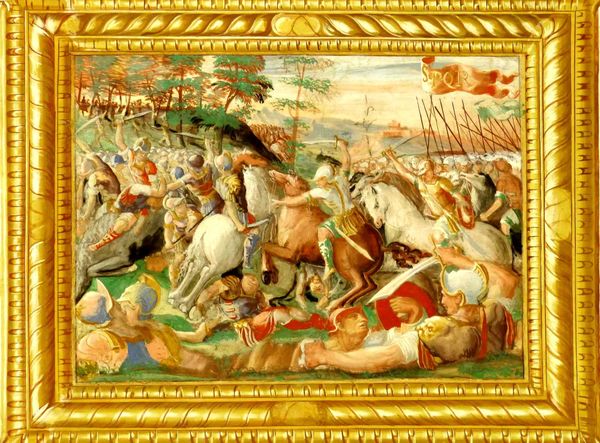
In 255 BCE, as Rome advanced toward Carthage itself, a Spartan mercenary took command of a collapsing army. One battle later, the Roman invasion lay in ruins — and Xanthippus vanished from history almost as suddenly as he had appeared.
Roman Empire Historical Facts
Vitellius is remembered as Rome’s glutton emperor. Yet beneath the hostile portraits of civil war lies a more complicated ruler – one whose brief reign reveals as much about historical narrative as about power itself.
Roman Empire Anecdotes
From tyrants mocked for their bellies to scholars ridiculed for vanishing thinness, Roman writers turned body size into moral theatre. Fatness and emaciation were never neutral traits, but visible signs of luxury, weakness, discipline, or decline.
Roman Empire Historical Facts
Roman sundials did not divide the day into fixed hours. They followed the sun, stretching time in summer and compressing it in winter, shaping daily life through light rather than numbers.
Roman Empire Anecdotes
A lawyer, polemicist, and theologian, Tertullian confronted Rome with a Christianity that refused compromise. His writings reveal how early Christian demands for tolerance coexisted with sharp limits, rigid boundaries, and an uncompromising claim to truth.