
What did “Son of God” mean in a world already ruled by emperors claiming divine sonship?
In the Roman world, “Son of God” was not an empty phrase. Before Christians used it for Jesus, emperors had already claimed divine sonship through power, public honor, family ideology, and imperial succession. That background changes how the title was first heard.

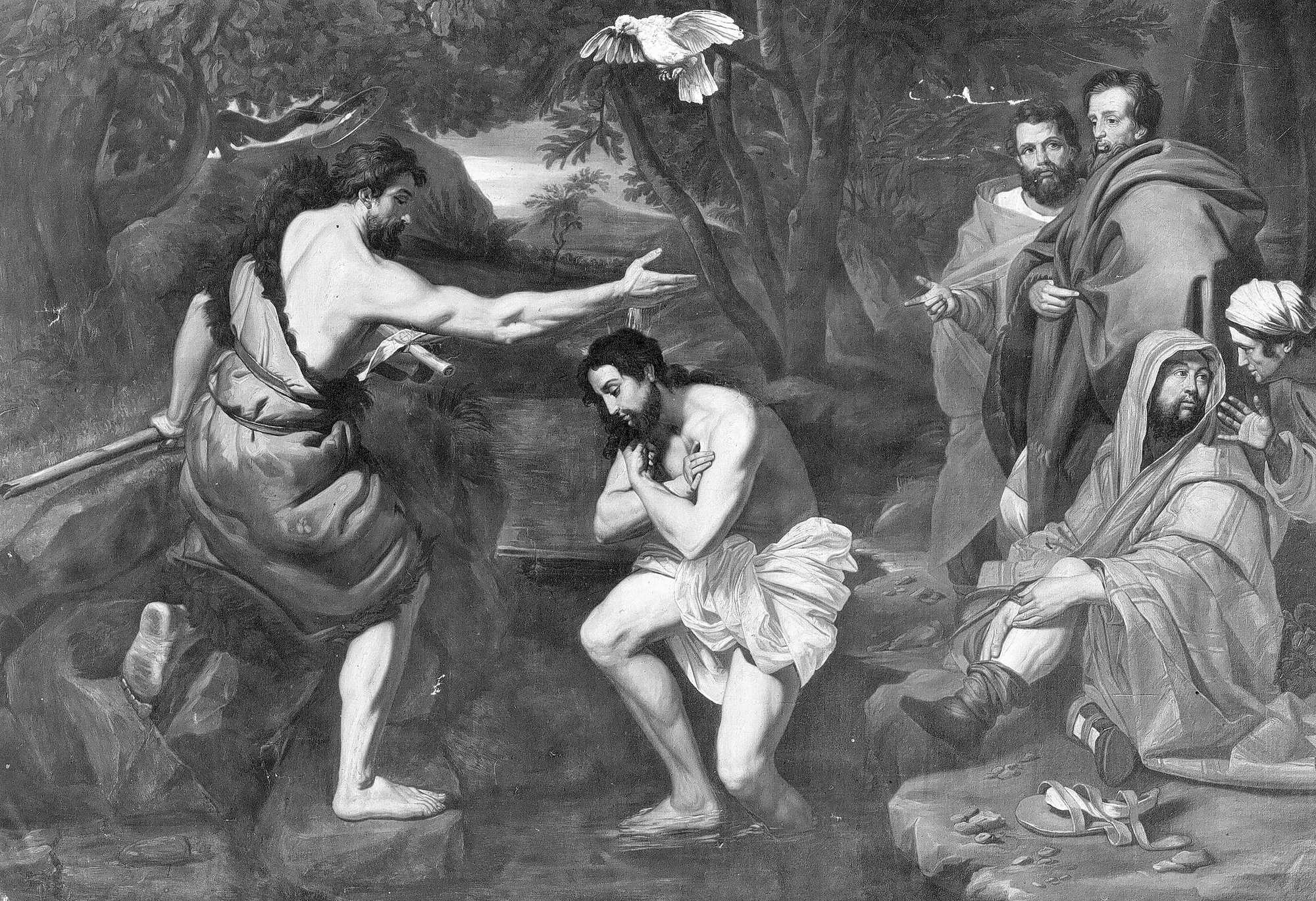
The title “Son of God” is so familiar now that it can seem to belong only to Christian theology. Yet in the first-century Roman world, it did not arrive in an empty religious landscape. It entered an empire already shaped by divine honors, imperial family language, and rulers whose power was expressed in terms that blurred the line between human and divine. To ask what “Son of God” meant in that world is to ask how early Christian language sounded in an age when emperors, too, could be called the sons of gods.
Hearing “Son of God” in the Roman World
To approach the phrase “Son of God” in the first century requires stepping into a world very different from a modern one. A Jew living under Roman rule did not move through life as an autonomous individual protected by personal liberties. Life unfolded within an empire, and that imperial setting shaped the way power, fame, and identity were understood.
Whether one lived in Rome, Alexandria, or Jerusalem, the emperor stood over ordinary existence as the most powerful and visible figure in the world, even for people who had never seen him in person.
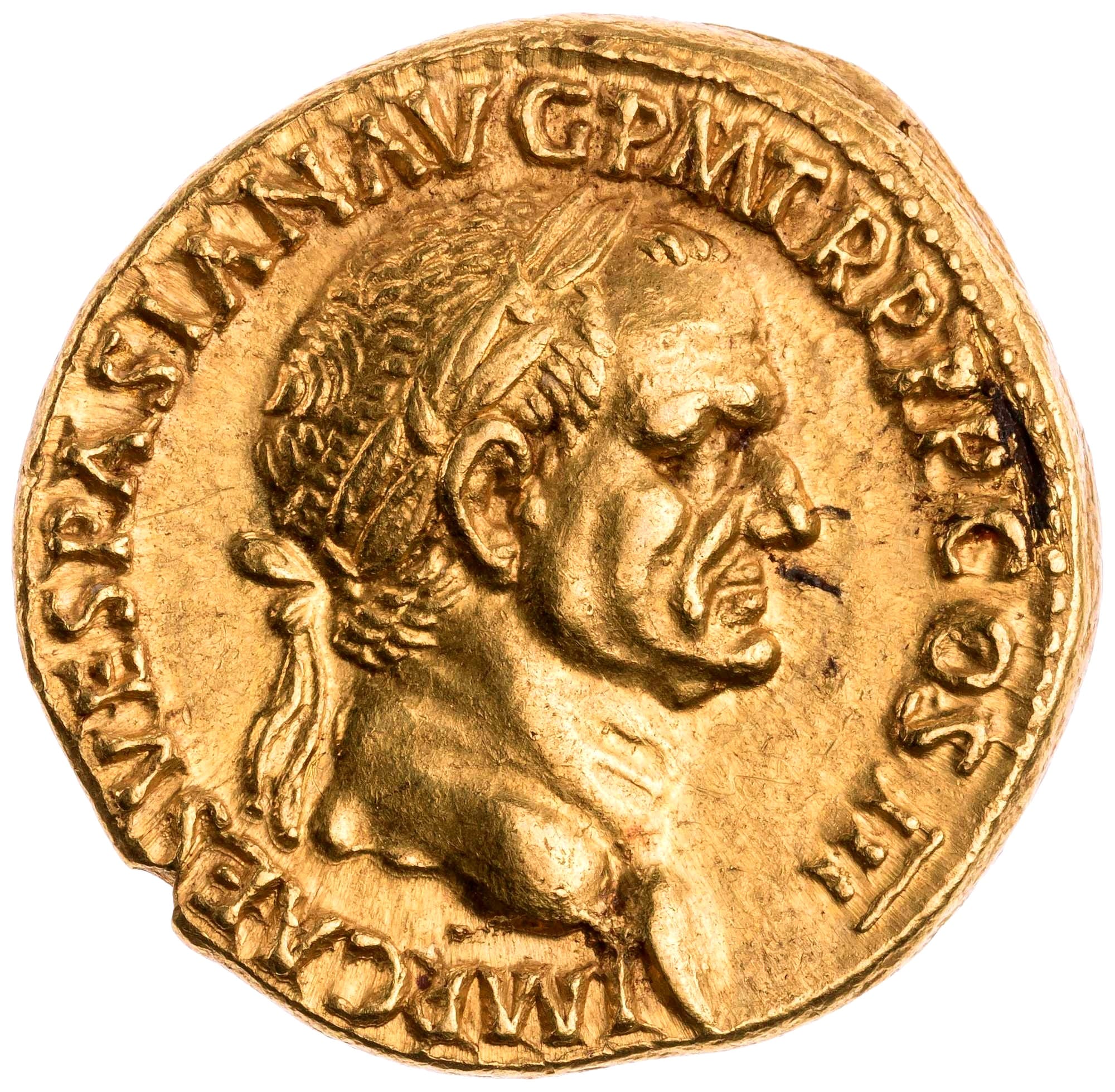
That distance did not make him unfamiliar. Stories about the emperor circulated everywhere—stories about his words, his deeds, his triumphs, even his childhood. His face appeared on coins, while statues displayed not only him but his whole family. For many people, the emperor’s image may have been more familiar than their own reflection. He was known through narrative, public display, and constant repetition. In an age before private likenesses and daily self-regard, the emperor’s face was one of the most widely recognized in the empire.
Alongside that imperial world stood another figure also known through report rather than direct sight. Jesus, too, was encountered through stories passed on by those who claimed to have known him. Those stories told of what he said and did, of his death, and of his later appearance in glory.
They were believed, repeated, and treated as life-giving. But turning that shared memory into a narrative posed its own problem. There was no detailed knowledge of his childhood, no secure picture of what he looked like, and no simple way to begin the story of his life.
The difficulty deepened when it came to the title itself. Jesus was proclaimed as “Son of God,” he addressed God as “father,” and those around him spoke of a new family formed in relation to that fatherhood. That language could be lived and confessed, but narrating it was another matter. For a Jewish writer, the problem was especially sharp because Israel’s God did not have a divine consort and did not beget children in the way many gods in the wider Roman world were imagined to do.
That made the task unusual from the start: if God did not procreate, then how was one to tell the life of God’s son? The question, then, was not simply what to say about Jesus, but how to begin telling such a story at all.
This problem is what gives the phrase “Son of God” its force in the Roman world. It did not appear in a vacuum. It was heard within a social and political order already saturated with family language, dynastic claims, public ritual, and imperial imagery. It belonged to a world in which fatherhood and sonship could never be merely private matters. They were bound up with inheritance, legitimacy, rank, and power.
Reading the Phrase Before Later Theology
The meaning of “Son of God” now feels stable because centuries of Christian usage have made it so familiar. It seems to come already packaged with later doctrinal meanings. The Son is imagined as eternally begotten of the Father, distinct yet one in being, divine in a way carefully defined by later theology. That framework is familiar because it became standard. But it does not belong to the first-century Roman world.
A major difficulty in interpreting early Christian divine sonship is that later theological language has often been allowed to govern earlier evidence. Questions that became central in the fourth century—whether the Son implied absolute divinity, whether he was begotten or made, when he came into existence—have often been pushed backward into the first century as though they were already the obvious questions to ask.
Yet in the social and political world in which the New Testament emerged, those were not the governing terms of discussion. Even when the distinction between “begotten” and “made” mattered, it did not yet carry the highly technical metaphysical weight it would later acquire.
A different approach begins by setting aside those later categories and asking instead what the phrase would have sounded like in its own time. That means listening to the Roman world itself: its religion, its practices of honor, its imperial household, and its family ideology. Once that happens, divine sonship starts to look less like a problem of abstract theology and more like a problem of public meaning. The phrase must be heard not in the light of Nicea, but in the light of empire.
That shift in approach changes the kinds of evidence that matter. Philosophical treatises remain part of the picture, but they can no longer dominate it. Rituals, inscriptions, dedications, priesthoods, public honors, and images become equally important. In that broader field, divine language is no longer limited to intellectual speculation. It belongs to the public life of cities, to the commemorative life of monuments, and to the symbolic life of the imperial family.
Divinity as Status, Not Essence
Modern ways of thinking about divinity have been deeply shaped by Platonism and Christianity. Together, those traditions made it natural to imagine the divine as a distinct essence or nature, sharply separated from the human by an absolute divide. In that framework, the gods belong to one realm, human beings to another, and the problem of religion becomes the problem of crossing the gulf between them. But that way of thinking does not fit the Roman world very well.
Recent scholarship on Roman religion has increasingly argued that divinity in the Roman world was not understood primarily as fixed essence. It was more often understood as status, power, and position within a wider cosmic and social order. The divine realm was not conceived as wholly detached from the human one in the later metaphysical sense.
It belonged instead to a spectrum in which rank, honor, and benefaction mattered more than abstract definitions of being. This does not mean that gods and humans were simply interchangeable. It means that the Roman world did not organize divinity around one unbridgeable abyss between them.
This change in perspective has been especially important in the study of emperor worship. Once one moves away from a model that asks whether a ruler was “really” divine in an essential sense, older problems become less perplexing. The emperor could be treated as both human and divine because Roman religion did not require a choice between those categories in the later philosophical sense.

Divine honors were not automatically false because they were given to a ruler. They belonged to the same social world that rewarded extraordinary benefaction with extraordinary honor.
The same change in perspective affects the study of Roman religious evidence more generally. Older scholarship often relied heavily on elite philosophical texts and asked what Romans believed about the gods. More recent work has widened the evidence base considerably. Temples, priesthoods, inscriptions, papyri, sacrifices, libations, hymns, processions, oaths, images, and dedications all become central. Religion appears not as a tidy intellectual system but as a complex field of public and communal practice.
That shift from inward belief to enacted religion matters. It makes it harder to dismiss Roman religious life as hollow or merely formal. It also makes it harder to treat emperor worship as an anomaly. Once ritual practice is taken seriously, emperor worship begins to look less like a curious distortion and more like a central expression of Roman religious life.
The emperor received temples, sacrifices, priesthoods, dedications, and honors across the empire. These were not marginal acts, and they were not confined to one region. They formed part of a broad and durable religious landscape.
Why Emperor Worship No Longer Looks Like a Problem
Older scholarship often struggled with emperor worship because it assumed that no thinking person could really treat a human being as divine. From one angle, emperor worship was interpreted as top-down manipulation: an instrument of government imposed from above. From another, it was seen as empty flattery: people outwardly participating in a cult they did not inwardly believe. Both explanations depended on the assumption that the emperor’s humanity made genuine divine honor impossible.
That assumption has become much harder to sustain. Once scholars began to focus on material evidence and ritual practice, the scale and seriousness of emperor worship became impossible to ignore. The evidence shows that it was geographically widespread, socially broad, and deeply integrated into local life. It involved local elites, municipal institutions, freedmen, associations, slaves, and provincial communities.
It was not restricted to one corner of the empire, nor was it limited to posthumous rulers. Living emperors, members of the imperial family, and the emperor’s genius and numen all received cultic honors.
This has also changed the way power is understood. Emperor worship was not simply imposed from Rome on unwilling subjects. Local communities often took the initiative. They used the emperor’s cult to express loyalty, display status, negotiate favor, and locate themselves within the structures of empire. In that sense, emperor worship belonged to the ordinary Roman logic of honor for benefaction.
Great benefactions called forth great honors. If a ruler’s power and generosity were perceived as extraordinary enough, the honors could take divine form.
That logic makes better sense of the emperor’s divinity than the older choice between sincerity and cynicism. The emperor’s cult was neither just administrative theater nor a misunderstanding. It was part of a religious system in which divinity could be enacted through honor, ritual, and public recognition. Over time, repeated benefaction and repeated worship could stabilize divine status more firmly, especially within the imperial household. Divinity remained dynamic, but it was not therefore unreal.
This revised understanding also changes the meaning of the language used for the emperor. Terms such as deus, divus, and theos did not always preserve the rigid distinctions that later readers wanted to find in them. The same term could carry different resonances in different contexts, and Greek-speaking regions in particular did not preserve a neat Latin contrast. The result is that divine language about the emperor was broader, more flexible, and more socially embedded than older models allowed.
The Title That Helped Build Augustus
Within that religious and political world, the title “Son of God” took on extraordinary force through the rise of Augustus. The basic outline is familiar. Julius Caesar was treated as divine by some during his lifetime and was formally deified after his death. Octavian, later Augustus, used his status as Caesar’s son to strengthen his legitimacy in the struggle for power. He could therefore call himself divi filius, “son of god.”
Yet the title did not become powerful simply because it sounded grand. It worked because Roman society already understood sonship in deeply public and legal terms. Sonship was not only a matter of biological descent. It was tied to inheritance, succession, family continuity, public identity, and the transmission of status. In that setting, the title divi filius was more than honorific ornament. It announced a recognizable relationship and grounded Octavian’s claim to rule in a form that people could understand.
The striking fact is that Augustus was not Julius Caesar’s biological son. He was his adopted son. That fact is central. The title “Son of God” did not begin with a natural son inheriting his father’s divinity by blood. It began with adoption. That immediately complicates later assumptions about divine sonship. In the Roman world, “son” could be a matter of legal and social transmission, not only biological descent. Adoption was not a secondary or weaker form of sonship. It was one of the principal ways Roman family and political life worked.
Augustus could also draw on more than one form of divine connection. Claims about divine ancestry and divine favor were available to him as well. But the title that proved most effective was the immediate one: son of the deified Caesar. That relationship, rather than some remote mythical genealogy, did the most work in building the new imperial ideology. It gave Roman dynastic politics a new language, and that language would shape the imperial family for generations.
Sons by Birth, Sons by Law
Once the title was established, it continued to develop through the imperial family. Yet it did not do so smoothly. The early principate struggled to produce a stable line of natural sons, and imperial succession repeatedly depended on adoption. This meant that divine sonship in the Roman world could not be reduced to biological begetting. It had to include sons who were “made” through adoption as well as sons who were begotten.
This distinction mattered because the Roman imperial family was closely watched. People across the empire took note of who had been born into the house, who had been adopted into it, and who was emerging as the rightful heir. Divine sonship, therefore, was not just a word attached to the emperor. It was connected to visible processes of family formation and succession. During the Julio-Claudian period in particular, the making of imperial sons remained meaningful and publicly legible.
At first glance, the title “Son of God” might seem to have become merely honorific over time. The fact that later emperors could bear it more loosely might encourage that reading. But the evidence suggests a more complex picture. Through much of the first century, divine sonship continued to carry real family and dynastic weight. It was not detached from succession, even if it was capable of broadening into more general exaltation.
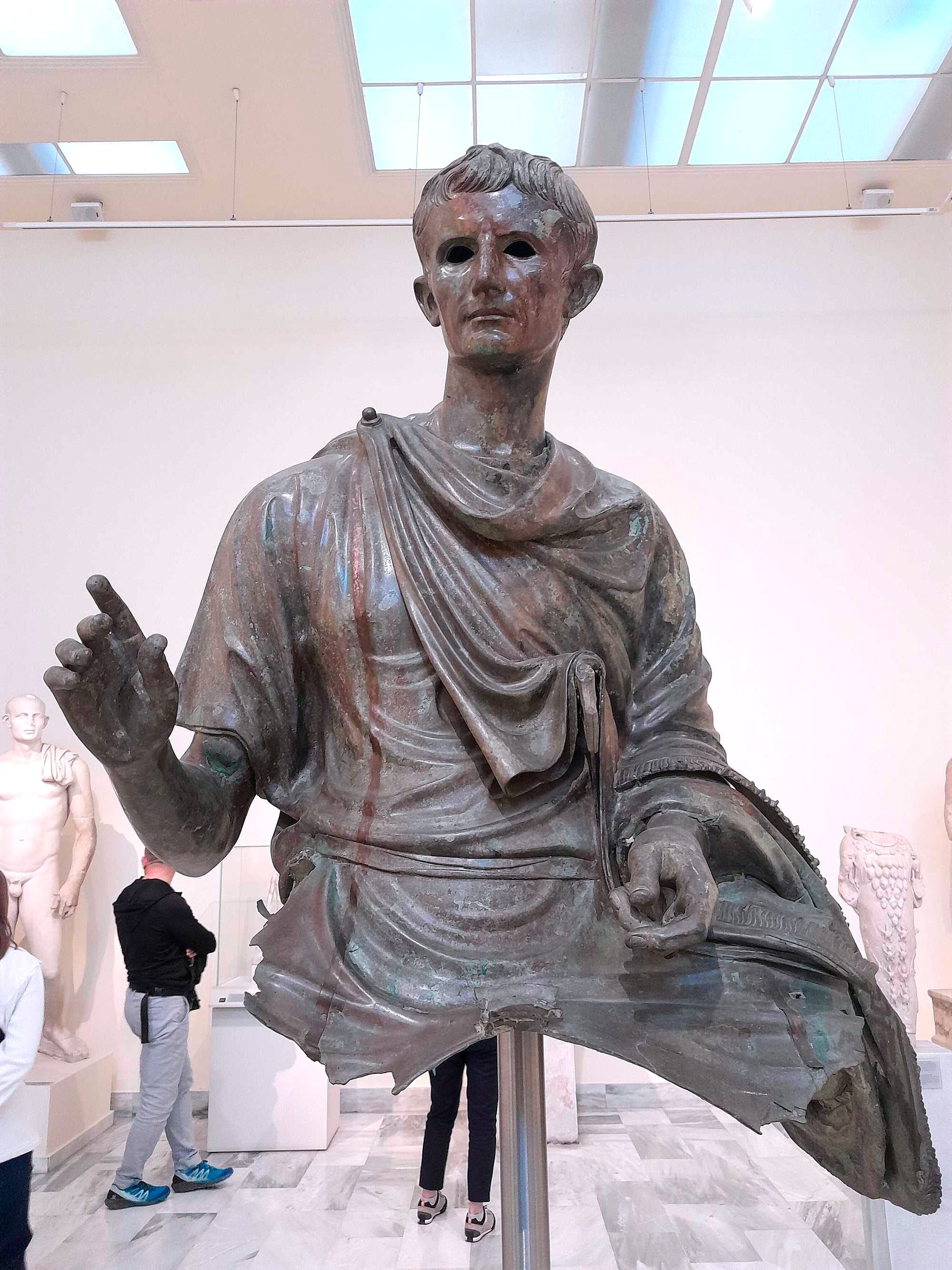
Only later did the title begin to loosen more fully from its original family logic. By the time of the Flavians, an emperor such as Vespasian could be called “son of god” without the same direct adoptive or biological relationship that had anchored the title under Augustus. That did not erase its earlier meaning. It showed rather that the title could now operate on both levels at once: as part of a dynastic framework and as a broader mark of imperial exaltation.
In that sense, the distinction between begotten and made already mattered in Roman public life long before it became a technical theological issue. In the Roman world, it was not first an abstract problem of essence. It was a practical question of family, legitimacy, and political order.
Why the Phrase Already Carried Weight
This Roman background matters because it shows that divine sonship already carried strong social and political meaning before Christians applied the title to Jesus. It was not an empty phrase waiting to be filled. It already belonged to a world in which emperors could be called sons of god, and in which sonship itself was shaped by inheritance, legitimacy, adoption, and family ideology.
That does not mean early Christian language was identical to imperial language. It does mean that the phrase entered a world already trained to hear father-son language in public and political terms. Claims about divine sonship were not heard innocently. They came into a setting where family, power, worship, and legitimacy were already entangled.
In that setting, the divine sonship of Jesus could be expressed in more than one way—through Davidic descent, miraculous birth, baptism, election, or adoption-like language—because the wider world already held multiple models of sonship together. The Roman world had shown that sonship could be articulated through more than one mode, and that complexity belongs to the first-century evidence itself. It is not simply a later confusion introduced by theology.
The result is that “Son of God” in the Roman world cannot be reduced either to later Nicene doctrine or to a simple imperial slogan. It belonged to a field of meanings already shaped by Roman religion, emperor worship, family practice, and dynastic ideology. To hear the phrase in its first-century setting is therefore to hear both divine status and family succession at once. ("The Son of God in the Roman World. Divine Sonship in Its Social and Political Context by Michael Peppard)
The title “Son of God” is so familiar now that it can seem to belong only to Christian theology. Yet in the first-century Roman world, it did not arrive in an empty religious landscape. It entered an empire already shaped by divine honors, imperial family language, and rulers whose power was expressed in terms that blurred the line between human and divine. To ask what “Son of God” meant in that world is to ask how early Christian language sounded in an age when emperors, too, could be called the sons of gods.

About the Roman Empire Times
See all the latest news for the Roman Empire, ancient Roman historical facts, anecdotes from Roman Times and stories from the Empire at romanempiretimes.com. Contact our newsroom to report an update or send your story, photos and videos. Follow RET on Google News, Flipboard and subscribe here to our daily email.
Follow the Roman Empire Times on social media: