
Status in Rome: What You Were, What You Had, Who You Knew
In Rome, status was built from overlapping measures: what you were in law, what you held in property, and who could open doors for you. From senators and city elites to freedmen and slaves, the empire’s hierarchy offered routes upward—but kept its boundaries clear.

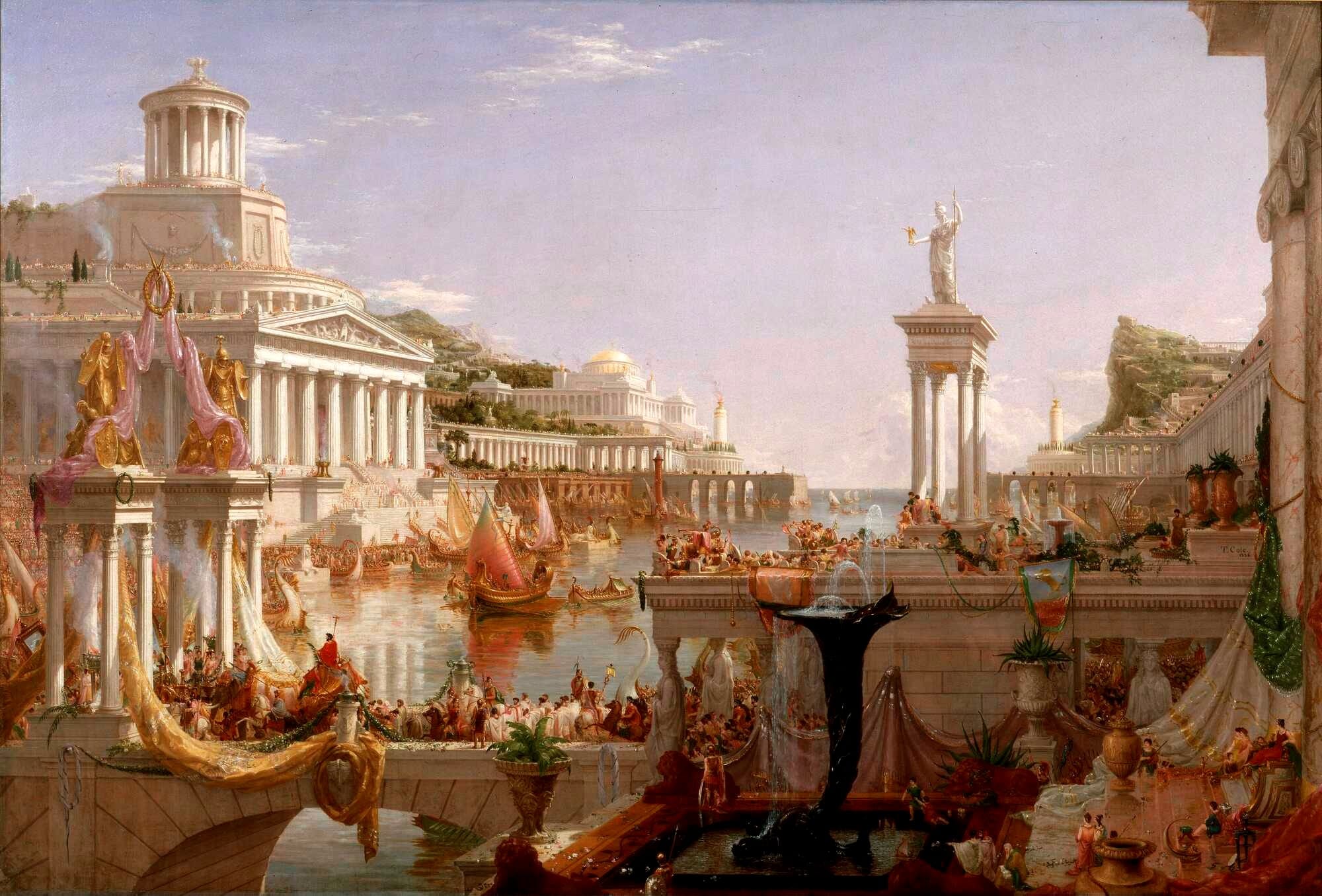
Rome was the largest city of the ancient world and, as the imperial capital, stood apart in scale, diversity, and complexity. Its most famous landmarks – the Colosseum, the imperial palaces, the Pantheon – are only part of the picture. The more revealing perspective is Rome as a place where vast numbers of people were born, lived their daily lives, and died within the same urban landscape.
Size, Power, and the Social Effects of a Metropolis
“He used to play jokes on his slaves, even ordering them to bring him a thousand pounds of cobwebs and offering them a prize; and it is said that he collected ten thousand pounds’ worth, and then remarked that one could realize from that how great a city Rome was.”Historia Augusta, Elagabalus 26.
For a pre-modern, pre-industrial city, Rome’s scale was extraordinary. The commonly accepted estimate for the Augustan period – roughly 800,000 to 1,000,000 inhabitants – would place it among a tiny group of cities worldwide of comparable size before the nineteenth century, with the closest parallels found in China.
After 1800, technological change and new economic structures made multi-million cities increasingly common, but Rome achieved its size under far more restrictive conditions. Ancient observers themselves linked this achievement to the empire’s wealth and power, which made the capital’s growth possible.
Rome’s size matters not simply as a symbol of greatness, but because it shaped the workings of Roman society. The city’s ability to expand despite practical and ecological constraints reveals something about the capacities of the Roman economy – not comparable to modern performance, but notable within the limits of pre-industrial societies.
At the same time, Rome’s growth was itself a driver of transformation. The city’s demand for people, food, and raw materials reworked economic and social structures across a hinterland that stretched around the Mediterranean.
The capital’s position explains the foundations of that expansion. Members of the ruling elite channelled the gains of imperial domination into the urban environment, while migrants arrived in large numbers to meet elite needs and to pursue their own share of imperial wealth. Yet those investments were not merely decorative.
The prominence of Rome mattered for maintaining elite authority, because the city’s grandeur formed part of the ideology that underpinned Roman rule.
The size of the city also reshaped everyday life and social relations. Concentrating such a large population into a limited space produced a distinctive demographic pattern, leaving Rome dependent on continual inward migration simply to sustain its numbers. The resulting social world is characterised by constant movement, instability, and sustained interaction among many cultures.
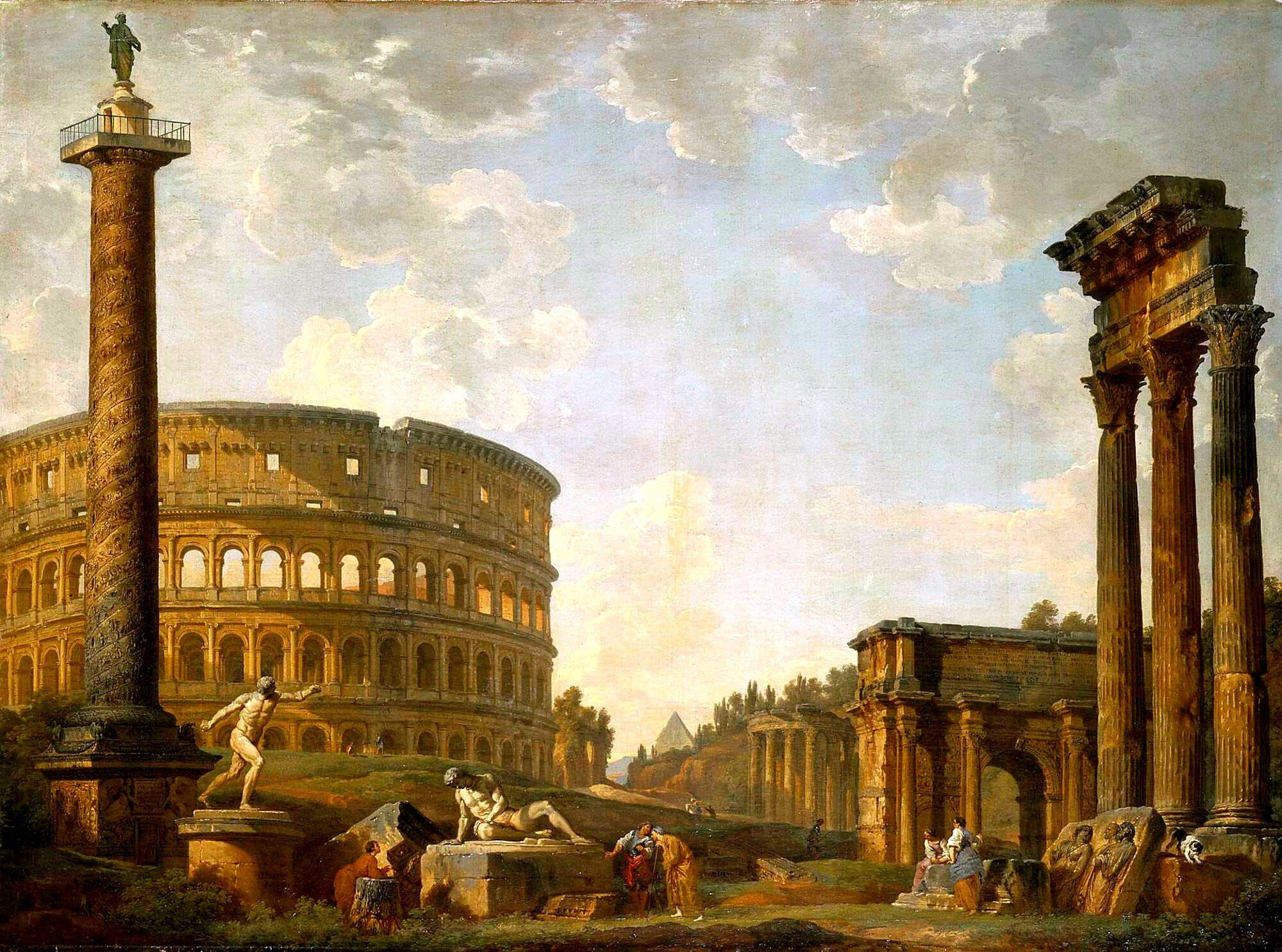
In contrast to the more personal relationships of countryside and small-town life, the metropolis fostered contacts that were often anonymous and impersonal, while widening the gap between the political elite and the mass of the population.
Within this environment, social order relied less on intimate patron–client ties and more on large-scale mechanisms. Public rituals, ceremonies, and major civic occasions became central, alongside the force of architecture and visual imagery, which worked to uphold a symbolic order capable of binding a sprawling society together.
Ancient writers repeatedly emphasised that Rome surpassed every other city in the Mediterranean. Pliny the Elder, drawing on brief remarks about the city’s physical extent, concluded that no city in the world could be compared with Rome in magnitude (Natural History 3.5.67). For some purposes that general impression may be enough, but questions about Rome’s demographic regime and its demand for food and resources require a more precise sense of population size.
Comparisons with other large pre-industrial cities also depend on this. In some contexts, a “primate” city could dominate its region with only tens of thousands of inhabitants, remaining politically and culturally decisive while exerting a more limited economic and social pull. If Rome truly approached one million or more, its impact on the empire would have been far greater.
The difficulty is that direct evidence for Rome’s population does not survive. A figure of one million is widely accepted, but it remains a hypothesis rather than a secure fact. Estimates have varied dramatically over the centuries, ranging from about 150,000 to as high as four million – an implausibly vast number by pre-nineteenth-century standards.
Historians are forced to work from indirect indicators, repeatedly returning to the same small body of figures and measurable traces, often of uncertain reliability, and debating what they can reasonably support.
The problem resembles attempts to infer population from odd “proxy” data: a very large quantity of cobwebs might imply many rooms and buildings, but without dependable information about how many spiders typically lived in each structure and how productive they were, any calculation built on such material will remain contested. (“Population size and social structure" by Neville Morley, in The Cambridge Companion to Ancient Rome)
The “Classic” Social Order of the Early Empire
From Augustus to Antoninus Pius, the Empire is often treated as a high point not only in political stability and territorial reach, but also in the development of Roman society. The argument here is not that Rome invented a new social system in these years.

Rather, the familiar “orders–strata” model that had taken shape in the Late Republic continued largely intact and reached its most recognisable, fully developed form.
Two developments are singled out as genuinely new in social terms. First, the imperial monarchy became the political framework that best suited Roman society. That shift reshaped the place and function of each social layer and added a new summit to the social pyramid in the imperial household.
Second, the integration of provinces and provincials extended what had been “Roman” social ordering across much of the empire. The outcome was a broadly shared imperial aristocracy, a closer alignment of local elites, and a measure of assimilation for wider segments of the population.
Even in this “classic” phase, the system is described as slowly changing rather than fixed. The position of specific groups (senators, rural slaves, and others) could shift over time, and integration advanced unevenly through citizenship and urbanisation. Yet change remained internal to the traditional orders–strata structure until the later second century, when signs of deeper crisis became clearer.
Why Land Mattered More Than Money
Continuity in social structure is linked to continuity in the underlying economy. The Early Empire is described as enjoying a major upswing—higher output and productivity, expanding urban markets, stronger craft production, mining development, and more extensive trade and financial activity.
Provincial development and urbanisation raised productivity in many regions, especially in the western provinces, and new mining resources were exploited and administered more directly through imperial structures. Craft output expanded to meet demand from cities and the army, with mass production in large workshops held up as especially visible in pottery industries. Trade also intensified, supported by banking, credit, and investment.
But none of this is treated as a revolution in the economic system. The framework remains the Late Republican one, now extended across the empire. Technological development is described as failing to translate into structural transformation, and the economy remains fundamentally agrarian. Expansion—one of the engines that had provided new labour, markets, and resources—slowed after Augustus, limiting the conditions for continued growth.
This matters directly for social classes because the primary division of society is tied to the ownership of land. In a world where agriculture dominates production and employment, wealth and status concentrate in landholding more than in entrepreneurship. The highest social layers are therefore not primarily merchants, manufacturers, or bankers, but large landowners—senators above all, then equestrians, then local urban elites—many of whom also engage in commerce and finance without being defined by it.
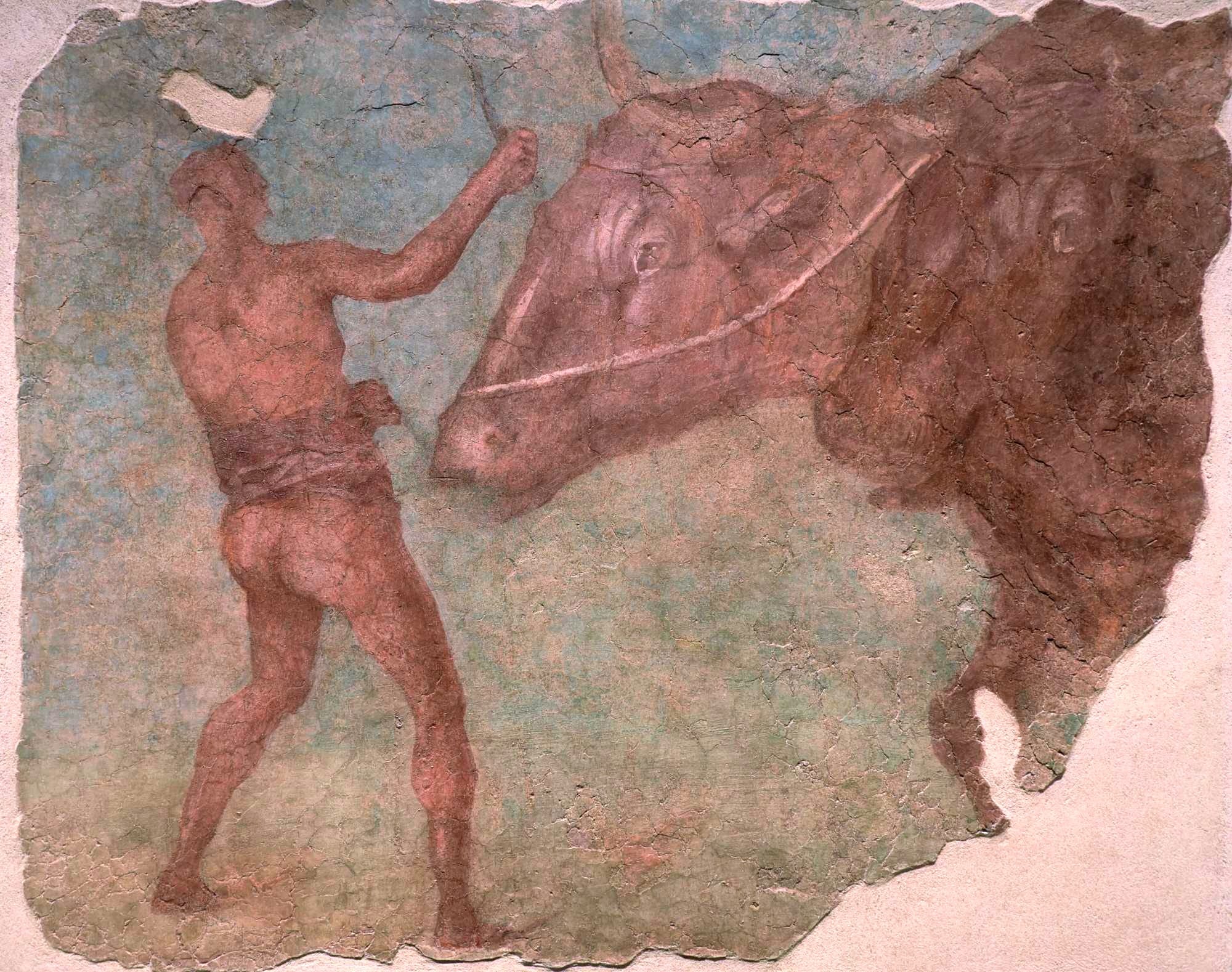
Because the economy is not built around large-scale technological systems requiring a distinct managerial or industrial middle, a true “middle order” cannot fully develop. Urban craftsmen and traders exist, sometimes prospering, but they remain a relatively small minority in a society where the countryside dominates.
The Shape of Society: Orders Above, Dependent Strata Below
The empire’s population was overwhelmingly rural. Out of perhaps 50–80 million inhabitants, roughly nine-tenths are placed on the land, living directly from agriculture. Most towns were small by modern standards, often only a few thousand people, with many cities in the 10,000–15,000 range. Only a handful—Rome above all, and a very small number of other great centres—approach the scale of hundreds of thousands.
This demographic structure helps explain the social one. Most members of the lower strata work in agriculture, whether on small plots, as tenants, as dependent labourers, or as enslaved workers where slavery in agriculture is entrenched. City populations include artisans and traders, but many urban residents are also effectively peasants cultivating land near the city.
At the same time, the social order is not reduced to economics. The division into orders is also shaped by non-economic factors: origin and ancestry, political organisation under monarchy, legal status, and especially the possession or absence of Roman citizenship. These elements reinforce hierarchy and limit rapid mobility, producing a relatively stable social ladder and a culture strongly tied to tradition.
The Emperor as the New Summit of Rank
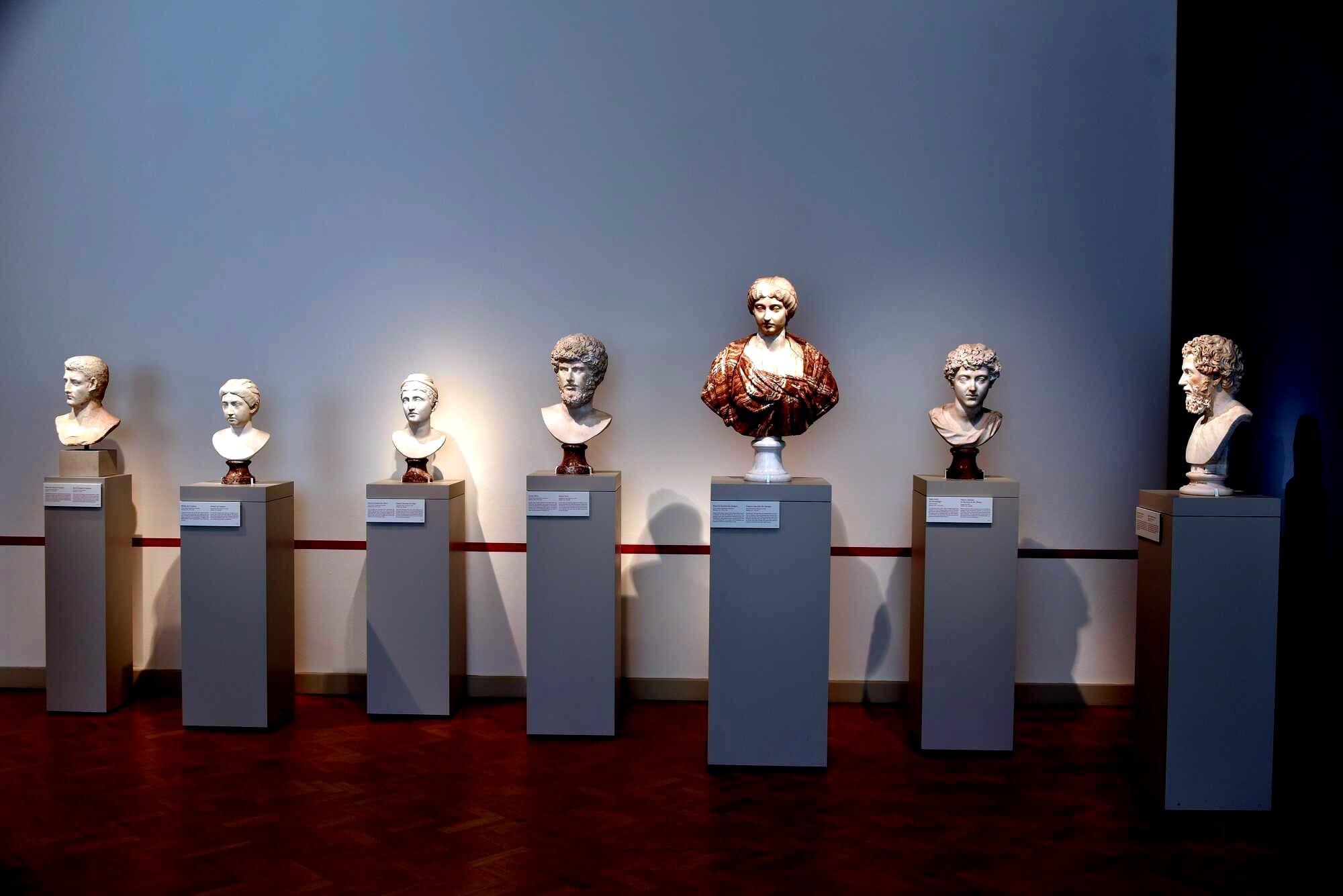
The consolidation of monarchy was completing the social hierarchy. Instead of multiple competing leaders at the top, the empire now has one supreme figure whose pre-eminence rests on the traditional foundations of status: power, prestige, and wealth.
Imperial power was effectively unmatched: legislative initiative, provincial governance, military command, and decisive influence over admissions to and expulsions from the senatorial and equestrian orders. Alongside formal authority stands personal standing—auctoritas—and the symbolic apparatus that grows around the emperor: titulature, dress, ceremonial, and religious charisma, including cult honours and, in parts of the Greek east, deification.
Imperial wealth is likewise portrayed as unmatched, grounded in crown property and private holdings—above all land, but also mines and workshops.
These realities sharpened the definition of other groups’ roles. The emperor’s relationships with elites resemble “friendship” among near-equals in status, while the relationship between ruler and masses is described as resembling patronage on an imperial scale, reinforced through largesse, public games, ritual participation, and loyalty oaths.
Senators, Equestrians, and a More Precisely Graded Elite
Within this system, the senatorial order continues to occupy the traditional commanding positions in administration, the judiciary, and military leadership. What changes is the meaning of public service: it increasingly becomes service to the emperor. Even offices that had once symbolised republican prestige are treated as rewards tied to loyalty and performance within the imperial framework.
Equestrians are described as receiving a clearer and expanded role. Where their public activity had been limited in the Republic, the early imperial period employs capable equestrians—after military service—in administrative and financial posts linked to imperial property and the fiscal management of the empire.
This division of labour between senators and equestrians fixes the distinction between the two leading orders more sharply than before and creates finer hierarchies inside each order, based on imperial career pathways and the level reached in service.
The logic of hierarchy extends beyond free elites. Even among slaves and freedmen, a new internal stratification is described as emerging through the rise of an influential group attached to the imperial household—imperial slaves and freedmen whose proximity to power gives them an exceptional position.
Provinces, Citizenship, Urbanisation: A Roman Class System Spreads
The second major development is the extension of this social order across the empire. As Roman economic patterns spread in the Latin west and as the Greek east becomes more fully integrated into imperial economic life, provincial societies are portrayed as increasingly divided along lines that resemble Italy’s.
The upper strata in the provinces were city elites and large landowners, with the wealthiest increasingly drawn into the equestrian and senatorial orders. The lower strata—urban and rural—were living in varying forms of dependency as free people, freedmen, or slaves. Over time, the higher ranks of the empire are no longer confined to Italy: provincials enter the commanding heights, first as prominent senatorial groupings and eventually as emperors themselves.
Two mechanisms drive this integration: the spread of Roman citizenship and, even more, urbanisation. Citizenship is granted to individuals and communities, increasingly reaching beyond long-Romanised regions. Urbanisation expands through colonies (often veteran settlements) and through the granting of civic autonomy to communities as municipia; in the Greek east, existing cities are promoted rather than replaced. The development produces a dense network of urban centres that helps standardise social structures and encourages assimilation—though not uniformly.
Regional differences remain decisive. The Mediterranean core shows more complex social layering, while many northern provinces are portrayed as having fewer and less powerful cities, fewer senatorial landowners, and different patterns of dependent labour.
Some areas, especially Egypt, are treated as retaining distinctive local structures more strongly, with only limited alteration under Roman rule. Even so, the overall picture is of a broadly shared imperial model, varying by region but setting the dominant direction of social and economic development across the Roman world.
The Sharpest Divide: Upper Strata and Lower Strata
In the Early Empire, society was not reorganised into a fundamentally new system. Instead, the familiar Late Republican structure became more clearly defined. The most visible line remained the separation between upper and lower strata, unequal in size and sharply unequal in standing.
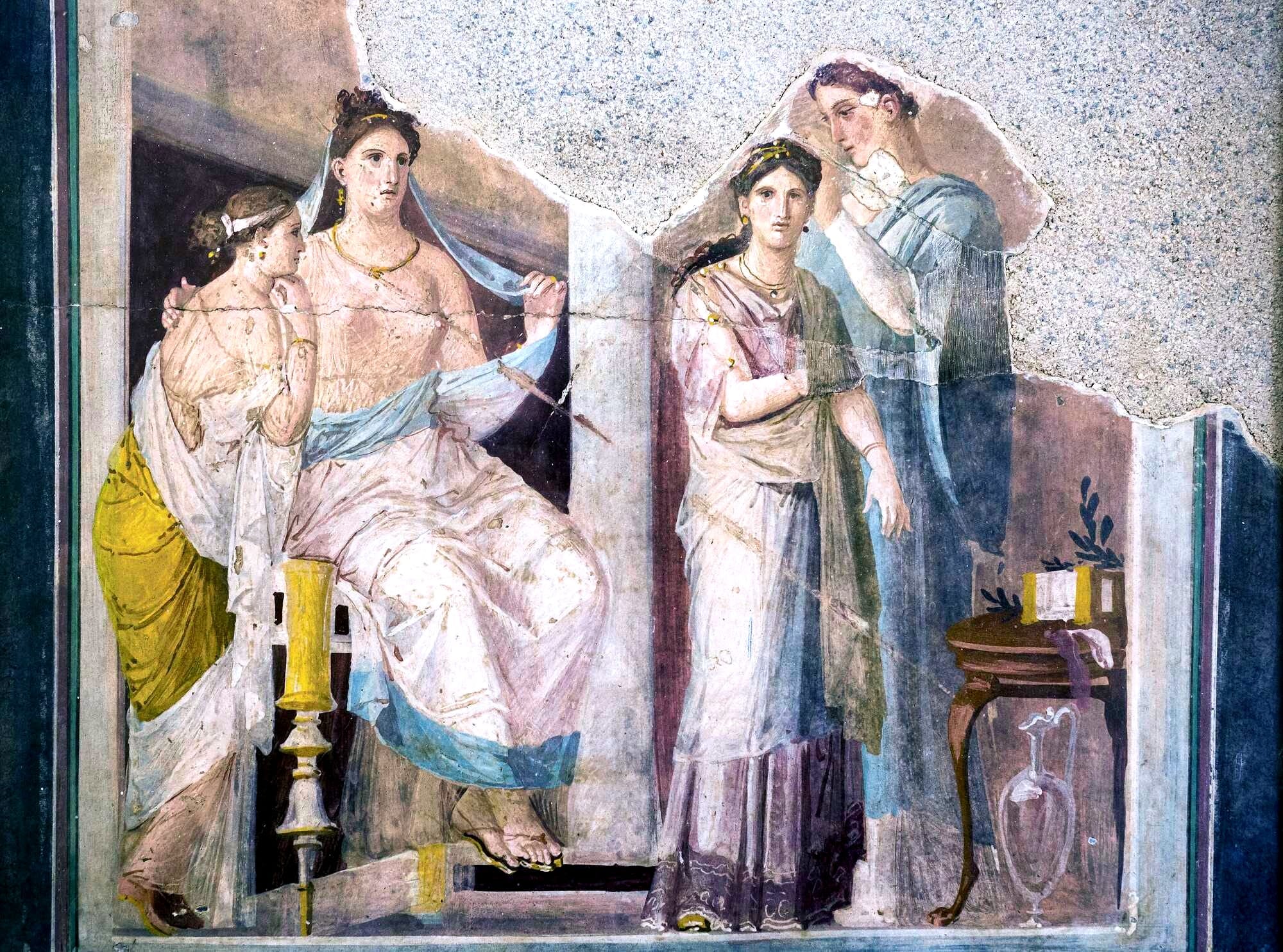
Ancient observers expressed the divide in paired opposites—rich and poor, great and small, prestigious and nameless, noble and ordinary—while still assuming that the “better” should rule and the majority should obey.
By at least the mid-second century, legal language reflects the same split through the categories honestiores and humiliores/tenuiores. The “honourable” were characterised not only by wealth, but by the prestige and recognised standing that accompanied it—expressed through ideas such as dignitas and auctoritas—while the lower categories carried the marks of lesser status and fewer protections.
Membership of the true upper strata required the convergence of several qualifications: wealth, access to higher office and power, social prestige, and—crucially—membership in a privileged ordo. In practice, the core of the upper strata consisted of three corporate orders: the senatorial order, the equestrian order, and the decurional order of cities.
Others could be rich or influential without fitting this full profile. Wealthy freedmen might possess fortunes, and imperial slaves and freedmen could hold extraordinary behind-the-scenes influence at court, yet they still carried stigma tied to origin and were excluded from the leading orders in principle.
Other groups complicate the picture without overturning it. Soldiers were not counted among the upper strata, even though the military could become a decisive political force and certain units enjoyed privileges. The urban plebs in Rome could sometimes register as a political factor, yet their general social standing remained low.
The polarity becomes clearest when the traits of the lower strata are set side by side: poverty, lack of power, exclusion from higher office, low prestige, and a life outside the privileged orders. Broadly—though not perfectly—the lower strata overlapped with the great mass of producers in town and countryside.
What Made Status: Land, Office, Birth, and Legal Standing
Wealth mattered, but not as an abstract number alone. The most decisive form of wealth was landholding, and the gap between rich and poor could be enormous. Evidence from Italy under Trajan illustrates how uneven land distribution could be, with many small owners holding modest valuations while a small minority controlled very large valuations.
Contemporary complaint could even treat large estates as destructive to the land. Similar concentration is described in parts of the provinces, including claims that in parts of Africa an immense share of land lay in very few hands.
At the top end, fortunes could reach extraordinary levels, whether held by senators or by powerful freedmen tied to the imperial court. At the bottom end, the evidence includes cases of extreme rural poverty, with tiny plots subdivided among many families and living conditions reduced to crowded, minimal housing and near-total lack of possessions.
Social distance was not only economic but cultural and moral, reinforced by contempt directed at the poor and by the reality that wealth could multiply rapidly for a few, while upward turns were rare for most.
Power and office sharpened the hierarchy further. The highest posts in imperial administration and military command were restricted to senators and equestrians, while the running of civic communities belonged to local elites within the decurional order. Informal routes to influence also existed—court bureaux run by imperial freedmen, bribery, intervention by powerful women, and other forms of manipulation—but these did not dissolve the overall pattern. The key point is that status was tied to access to office and the prestige that office conferred, not to wealth alone.
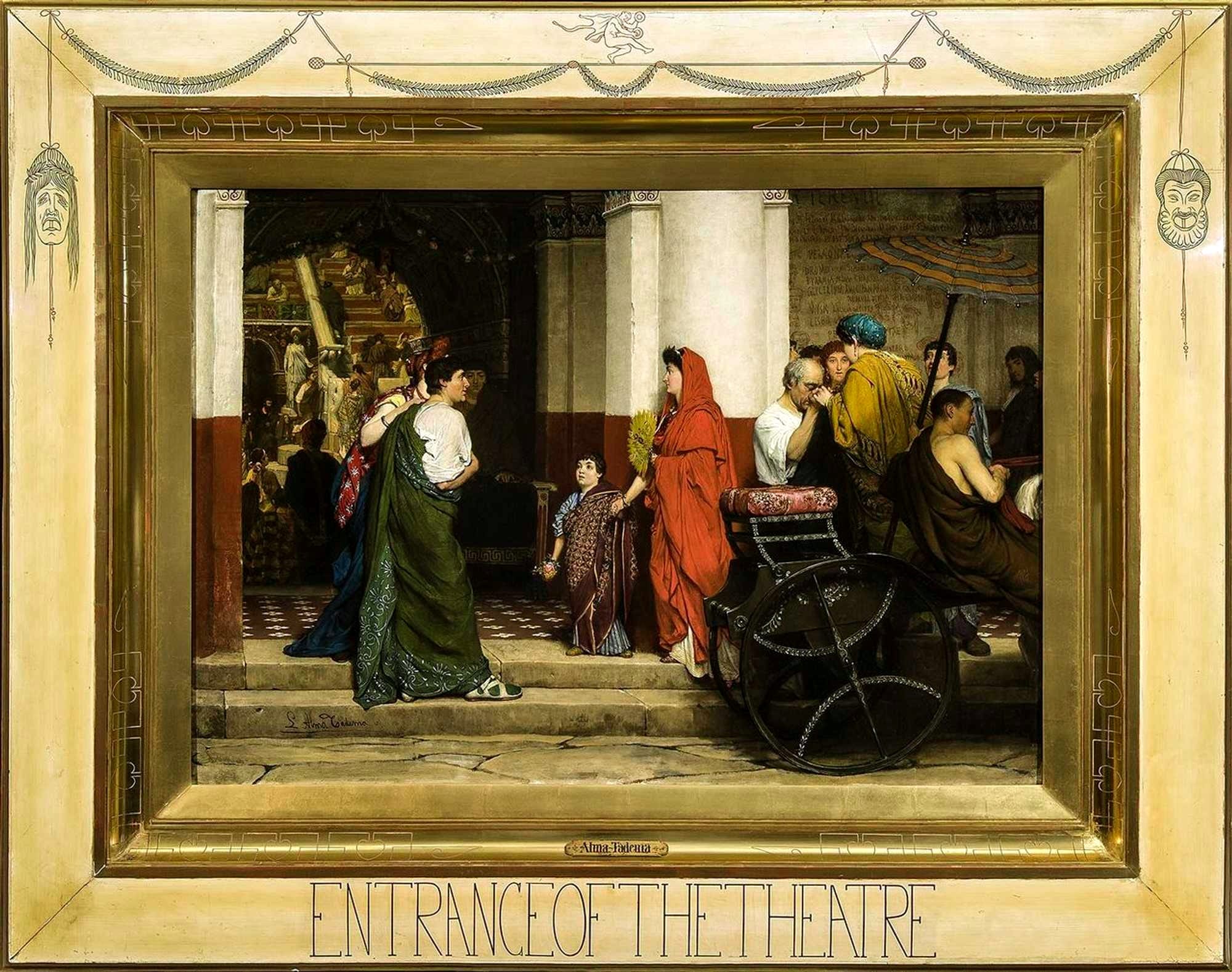
Legal status carried direct social consequences. Citizenship remained a powerful divider: citizens held key rights in public service, military service at the more prestigious level, and private law, even though citizenship itself did not guarantee wealth. Within the citizen body, distinctions also existed, including forms of partial citizenship tied to Latin rights.
Another legal distinction cut still deeper: freeborn, freed, and enslaved status. Slavery meant legal dependency and severe restriction—lack of control over work or residence, barriers to wealth, and exclusion from public office. Freed status removed slavery but carried continuing stigma. Elite hostility toward slave origins could persist even across generations, reinforced by policies that limited the political ascent of freedmen’s descendants. Even when imperial freedmen wielded influence, they could be treated as socially tainted by origin.
Geography and origin mattered too. Rome could claim that high positions were open to outsiders and that talent could be found across the empire, yet long-standing prejudices did not vanish. Italian precedence was often assumed early on, and hostility toward easterners, Syrians, Cappadocians, Jews, and Egyptians appears in literary sources, with real consequences for honour and advancement.
Exceptional individuals could break through—an equestrian Jew from Alexandria is one example—but the larger pattern remained one of unequal reception and slow cultural acceptance.
Orders, Symbols, and the Limits of Mobility
A defining feature of Roman hierarchy is that elite status was not simply a social outcome—it was corporate membership, controlled by formal admission and publicly marked by symbols and titulature. Entry into the senatorial order, the equestrian order, and the decurional order was not automatic for outsiders who merely became wealthy.
Membership was recognised and displayed through insignia, titles, and official procedures. Senatorial status, for instance, became hereditary in principle, while new admissions depended on imperial decision; equestrian status depended on grants such as the equus publicus; municipal elite status depended on civic office and official enrolment.
Expulsion was equally formal and meant unmistakable social demotion. This corporate structure helped preserve hierarchy by regulating who could enter and who could remain.
Birth stood at the centre of this system. Once a family secured high position, continuity tended to follow—sometimes supported by imperial assistance to keep senators above the required wealth threshold. Rome was not a caste society, and moralists could criticise birth-based nobility, but inherited standing still gave a decisive advantage. The homo novus faced steep barriers and needed unusual effort, fortune, or imperial favour to rise.
Personal merit could matter, but within limits. Financial skill could produce great fortunes; specialised training could bring wealth and recognition; legal expertise and oratory could propel careers; and loyalty and service to the emperor could open doors, especially in political crises.
Yet achievement did not erase every stigma. Wealth could not fully cancel servile origin, and education did not automatically grant entry to privileged orders. The system could reward talent, but it did so without abandoning its preference for pedigree and corporate rank—an ambivalence that remained a defining feature of Roman social life.
The Senatorial Order in the Early Empire – Small, Closed, and Replenished
Under the Empire the senatorial order is presented as becoming more tightly bounded than it had been in the Late Republic. Augustus reduced the Senate to 600 after removing those judged unworthy, and the figure is described as remaining broadly stable for two centuries. Entry was controlled: only a limited number could begin the senatorial track each year, while some men of equestrian background could be admitted at higher rank by imperial decision.
At the same time, the boundary between senators and equestrians is described as hardening. Senators’ sons were formally treated as senatorial, the senatorial property qualification rose well above the equestrian minimum, and later policy fixed the principle that an equestrian who entered senatorial rank left his former order behind.

Senatorial wealth was typically far above the minimum census and rooted above all in landholding, even when senators also profited from lending, estate production, and office incomes. But wealth alone did not define the order: its corporate identity rested on legal status, public function, and shared ideology.
Senators are described as bound together by family ties, marriages, adoptions, and networks of friendship, and by a relatively uniform set of responsibilities in administration, law, and military command. Their formation encouraged common patterns of behaviour and a strong sense of belonging to the “most distinguished order,” reinforced by the expectation of public service and a lifestyle fitting high rank.
Despite this solidarity, the order is presented as constantly changing in composition. Childlessness, political violence, and periodic purges meant many families vanished within a generation, so the Senate required continual replenishment through homines novi. New men—often drawn from the upper strata of cities, frequently from equestrian families—are described as becoming especially prominent, in part because emperors favoured them as able and loyal supporters of monarchy.
Over time, recruitment shifts from Italy to the provinces as provincial integration deepens; yet provincial senators are presented as adopting the same senatorial ideals as Italians, with internal hierarchy driven by office rank and imperial career pathways rather than regional origin.
Equestrians, City Elites, and the Wealthy Freedmen
The equestrian order was far larger than the senatorial order and expanded as provincials were increasingly admitted. It possessed an identity marked by titulature and civic solidarity, but it was less cohesive than the Senate because its membership was socially and economically varied and its occupations ranged widely.
In formal terms it was not hereditary: admission elevated individuals rather than families, even if “equestrian families” existed in practice. The order also formed a bridge within elite society—supplying recruits to the Senate above, while remaining closely connected to municipal elites below, since many equites held civic office and could belong at the same time to a city’s decurional council.
Equestrian wealth differed sharply from one member to another. Some barely met the census needed to sustain an equestrian lifestyle; others were richer than many senators. Income could come from office salaries for those in imperial service, but private wealth remained decisive. Equestrians were more visible than senators in commerce, enterprise, and finance, though landholding still underpinned wealth for many and remained a common marker of status.
In social origins, the order was mixed. Some equites came from relatively low backgrounds, including rare cases of freedmen or sons of freedmen, men promoted through long military careers, and select provincial notables. The dominant pattern, however, is that most equites came from the leading families of cities and owed their rank largely to wealth and local standing.
Provincial representation rose gradually, first from more urbanised regions and later from areas where urbanisation produced families oriented toward Rome and eligible for equestrian distinction. Only a minority entered the imperial “aristocracy of office” through the military and administrative cursus; the highest equestrian posts could place their holders near the centre of power, narrowing the practical distance between top equites and leading senators.
Below the empire-wide orders sat the civic elites organised in local ordines decurionum. Each city had its own council-based elite, typically around a hundred members, deliberately set apart from the urban plebs. Although admission was not formally hereditary, it often became so in practice as property and standing passed within families. Yet uniform organisation produced wide variation: wealth thresholds differed by city, and local economies shaped the real status, education, and occupations of decurions.
Decurions governed civic life—justice, finance, food supply, building, public order—and were expected to fund it through entry payments, office costs, priesthood expenses, construction, and benefactions. Over time, financial strain—especially on less wealthy councillors—made the decurionate increasingly burdensome and pushed the system toward greater control and growing attempts to secure exemptions.
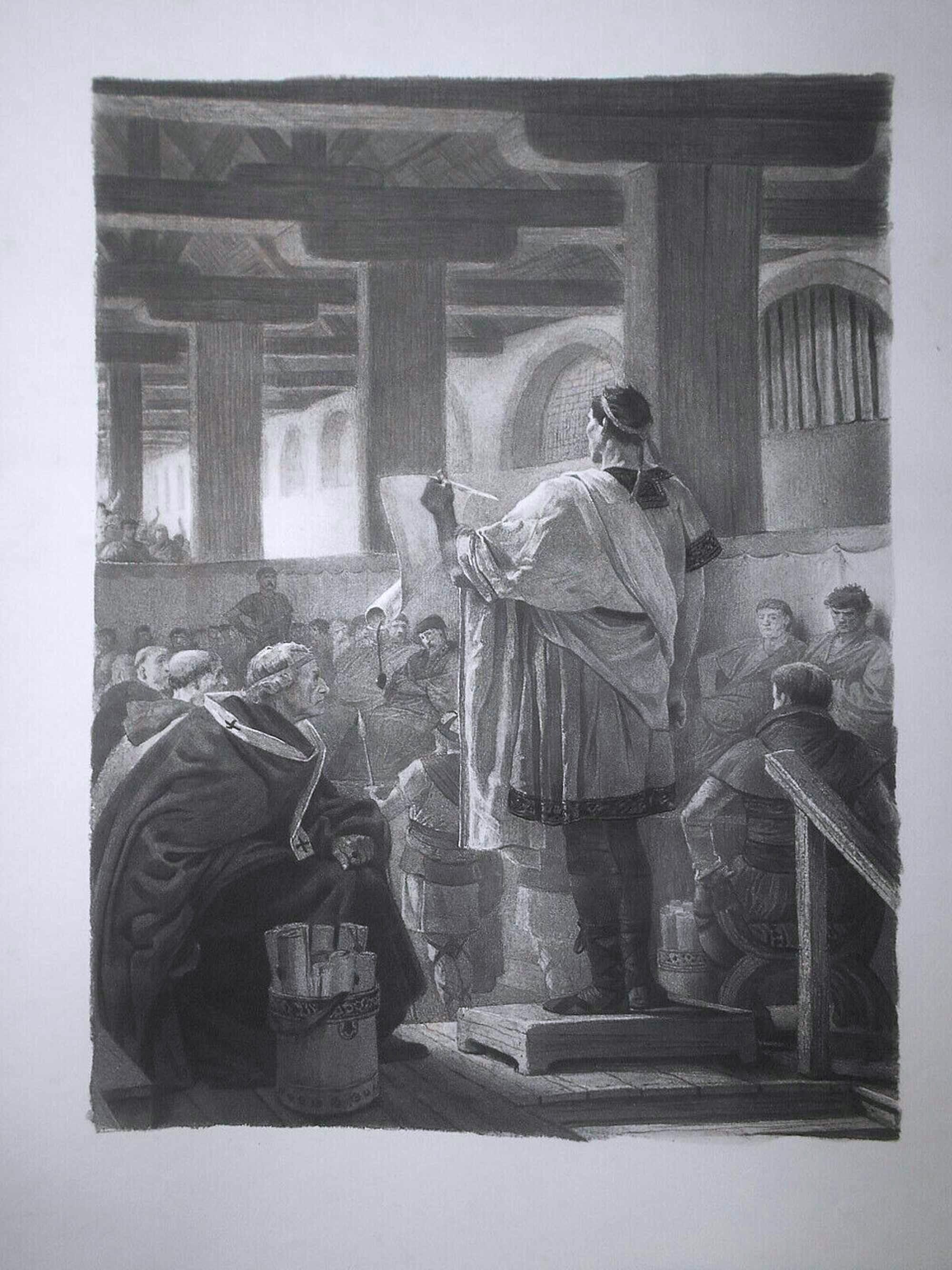
Alongside decurions stood rich freedmen who could match them in wealth, often through trade, banking, and crafts, while also investing profits into land. Servile origin usually blocked them from entering the decurional council, so they formed separate civic bodies—often connected to the imperial cult and commonly styled Augustales—which functioned as a secondary elite in many towns. Their spending contributed heavily to urban development and welfare, and when their role declined, civic finances tightened and burdens shifted more heavily onto decurions.
The emperor’s own slaves and freedmen could be exceptionally wealthy and influential, yet the same stigma of origin set limits: entry into the equestrian order was rare and entry into the senatorial order did not occur, even for the most powerful court freedmen.
The Urban and Rural Lower Strata – Dependency, Work, and Limited Mobility
The lower strata was divided first by place: an urban plebs and a rural plebs, separated by different work, lifestyles, culture, and chances for advancement. Ancient writers regularly treated town life as more “cultivated” than the countryside, and medical and geographical observers alike noted a sharp gap between better-provided city-dwellers and disadvantaged rural populations.
A second set of divisions ran through the lower strata by legal status—freeborn, freed, and enslaved—categories that mattered because they shaped different forms of dependency on the upper strata. Yet these labels did not create neat social compartments. Prosperity or poverty, control of resources, and degrees of dependence varied widely within each category, producing a graduated internal stratification rather than clear-cut boundaries.
City life is presented as offering the lower strata better prospects than the countryside: more work, greater occupational flexibility, more public life, more distributions and patron-funded support, and easier access to entertainment. Even enslaved people are described as often being better placed in cities than on estates, where labour could be harsher.
Urban life also created forms of organisation through collegia, associations that allowed artisans, devotees of cults, and even some enslaved people to build corporate identity, imitate civic hierarchy in miniature, and fund meals and burials through dues and benefactions. Alongside associations stood two major pillars of urban stability: regular grain provision—especially prominent at Rome—and the constant availability of spectacles and leisure.
At the same time, urban life is not presented as comfortable for most. The urban poor are described as widely despised, living in cramped and harsh conditions, vulnerable to food shortages, and surrounded by visible begging. Work and ability did not guarantee security, and even trade could end in disappointment. A further source of resentment lay in the humiliations of client life in elite households, where poor freeborn and freed alike could be demeaned, sometimes even by slaves.
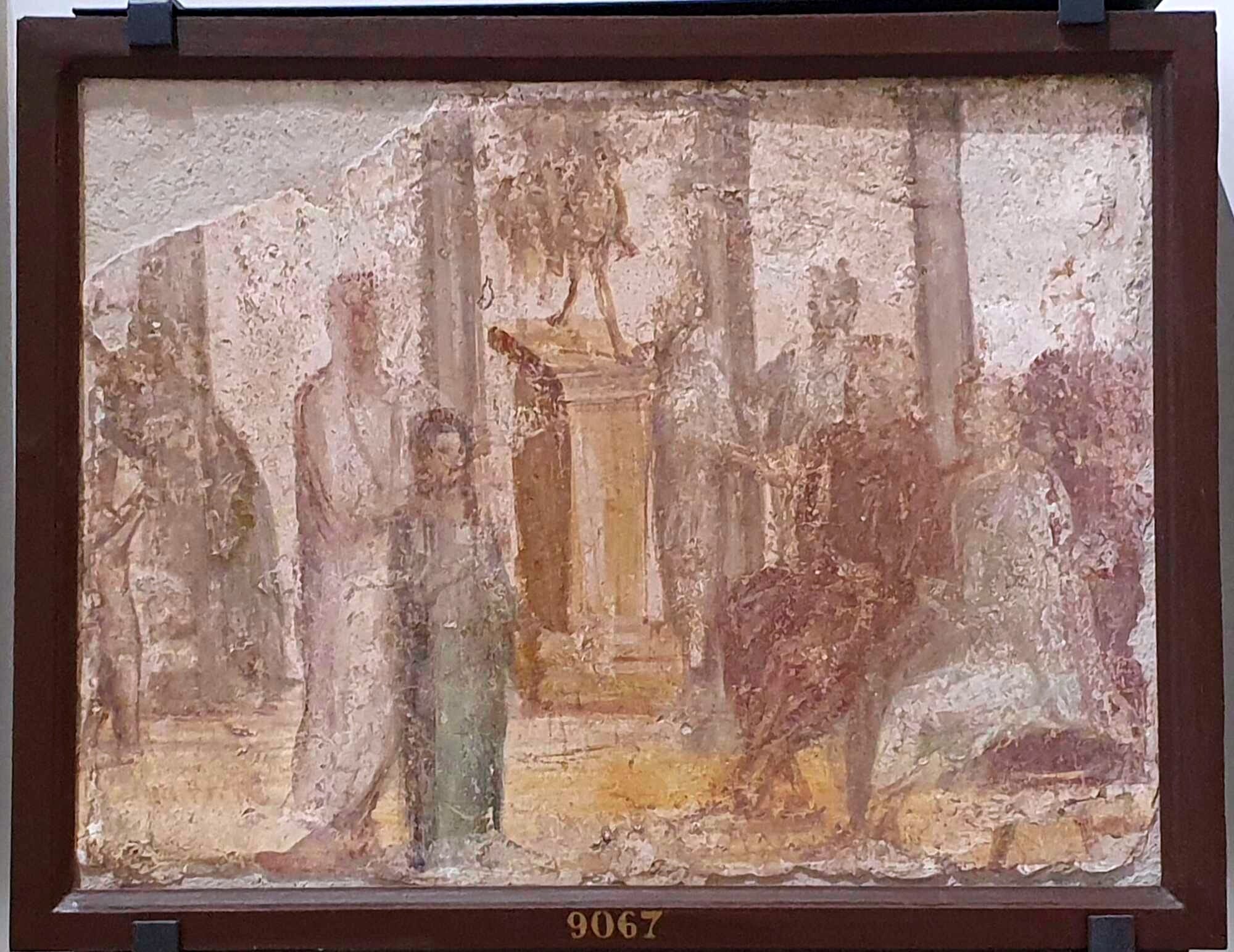
The occupations of the urban lower strata ranged from crafts and small shopkeeping to a broad set of “intellectual” services—doctors, teachers, administrators, artists, performers—activities treated socially as closer to crafts than to elite professions. Urban economies included both tiny independent businesses (sometimes even run by slaves with permission or as agents) and large-scale workshops and commercial networks using enslaved people and freedmen as labour and agents.
The boundaries between freeborn, freed, and enslaved were blurred in cities because of constant turnover. Many enslaved people expected manumission, often around a set age, and freedmen were, by definition, former slaves. The children of freedmen could be counted as freeborn, meaning that large sections of the urban lower strata—sometimes even within higher ranks—could be of servile descent. This mobility depended on the continual replenishment of enslaved populations, yet under the Empire large-scale conquest no longer supplied slaves as in earlier centuries.
Slaves increasingly came from within the empire: births within slave households, exposure and raising of foundlings, sale of children, and even “voluntary” self-sale by desperate free people. The prospect of eventual freedom could make enslavement appear preferable to rural poverty, especially because manumission by a citizen master could bring Roman citizenship or Latin rights, along with training in a trade.
Slaveholding practices are also presented as shifting under these conditions. With replenishment less assured, owners had incentives to keep enslaved labour productive and manageable, and moral pressure against extreme cruelty grew. Laws and imperial interventions are described as placing limits on certain forms of brutality and extending some protections.
Manumission remained common enough to require regulation: legislation limited mass testamentary manumissions, set minimum ages and conditions, and channelled some freed people into Latin status rather than full citizenship. These measures are described as aiming less at ending manumission than at controlling the political and civic consequences of large numbers of newly freed people.
Finally, the manumission system was a refined form of exploitation rather than a clean break. Freed people often remained bound to former masters through obligations and dependence, while owners benefited from disciplined labour motivated by hope of freedom, from peculium arrangements, and from the patronage ties that continued after manumission. In urban settings, many owners bought slaves with the expectation of freeing them later, because the resulting dependent relationship could be especially profitable. (“The Social History of Rome” by Geza Alfoldy
Rome’s hierarchy endured because it combined rigid boundaries with controlled pathways. Legal status and citizenship set limits, land and office concentrated power, and networks—from household patronage to civic councils and collegia—decided how protection, opportunity, and humiliation were distributed in daily life. The system could absorb newcomers, free slaves, and elevate provincials, yet it kept signalling that birth, rank, and recognised membership mattered most. In the end, Roman status was not a single ladder, but a set of overlapping measures that shaped who could command, who had to ask, and who was expected to endure.

About the Roman Empire Times
See all the latest news for the Roman Empire, ancient Roman historical facts, anecdotes from Roman Times and stories from the Empire at romanempiretimes.com. Contact our newsroom to report an update or send your story, photos and videos. Follow RET on Google News, Flipboard and subscribe here to our daily email.
Follow the Roman Empire Times on social media: