
10 Best Roman Movies to Watch, Ranked
From arena spectacles to political intrigue, satire and scientific inquiry, ten Roman films earn their places in our countdown for different reasons.

Give cinema Rome, and sooner or later someone will build an arena. We love the spectacle; the films that stay with us need people worth caring about. Its screen worlds include occupied provinces, slave rebellions, royal diplomacy and the struggle to keep teaching as a city turns against its teachers. A Roman movie can take place far from the capital: the empire’s frontiers and subject communities often provide its most compelling stories.
Our countdown ranges from grand historical epics to gloriously irreverent satire. “Roman” here includes the late Republic as well as the imperial centuries, and one adventure set around the transition to post-Roman Britain. There is room for a magnificent charge, a disastrous love affair and a Roman official losing control of the room.
Our order weighs performances, storytelling, music, visual craft and lasting influence, and that harder-to-measure pleasure of being swept into someone else’s world. This is our editorial ranking rather than a ratings table or a league of historical accuracy. A monumental reputation earns consideration; a magnificent performance makes us care who is standing among all that marble.
10. Gladiator II (2024): Spectacle in search of a stronger centre
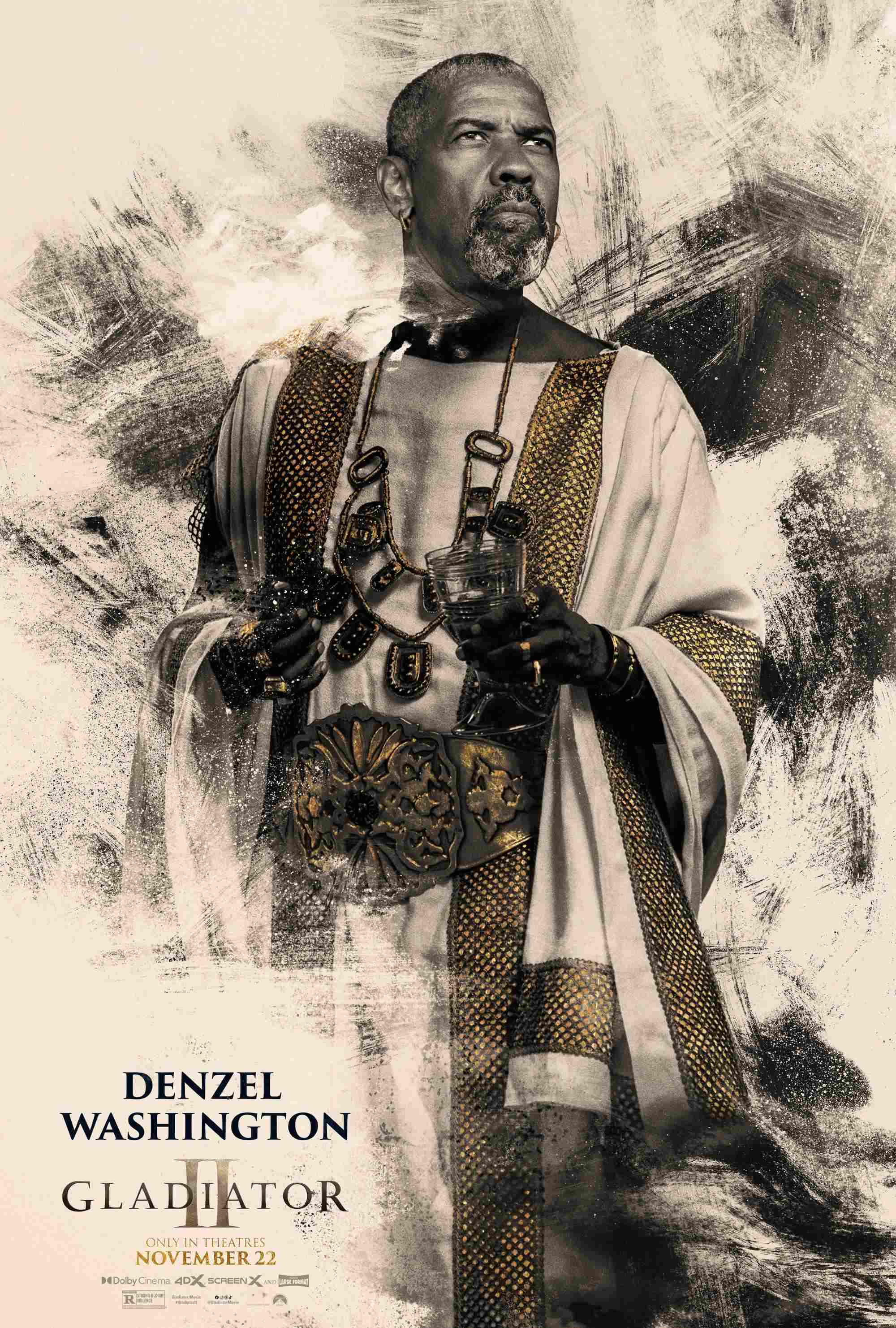
We love Ridley Scott, but Gladiator II earns the last position here. We want so much from him. His return has size, movement and a formidable cast, yet the attractions make a stronger impression than the central journey. Paul Mescal plays Lucius, whose life is overturned by a Roman conquest; Denzel Washington’s Macrinus turns the resulting struggle into an opportunity for power.
Washington is a delight: watch the calculation behind the charm, and the palace intrigue suddenly has a pulse. Pedro Pascal and Connie Nielsen add weight to the conflicts around Lucius. The spectacle is deliberately extravagant: a rhinoceros charge and a flooded arena stocked with sharks push the film towards fantasy. Our reservation is cinematic as much as historical; we spend too much time admiring the next attraction and too little worrying about the person caught in it. Even a shark needs a story to swim in...
The Roman setting also offers an invitation to look beyond the screenplay. Washington’s character shares a name with an actual emperor, whose career is covered in our account of Macrinus and his brief rule. Scott’s sequel remains an energetic entry in the genre, but its crowded plotting, uneven balance, and somehow pressured climax, keep it at number ten.
9. King Arthur (2004): A cast worth following beyond the frontier
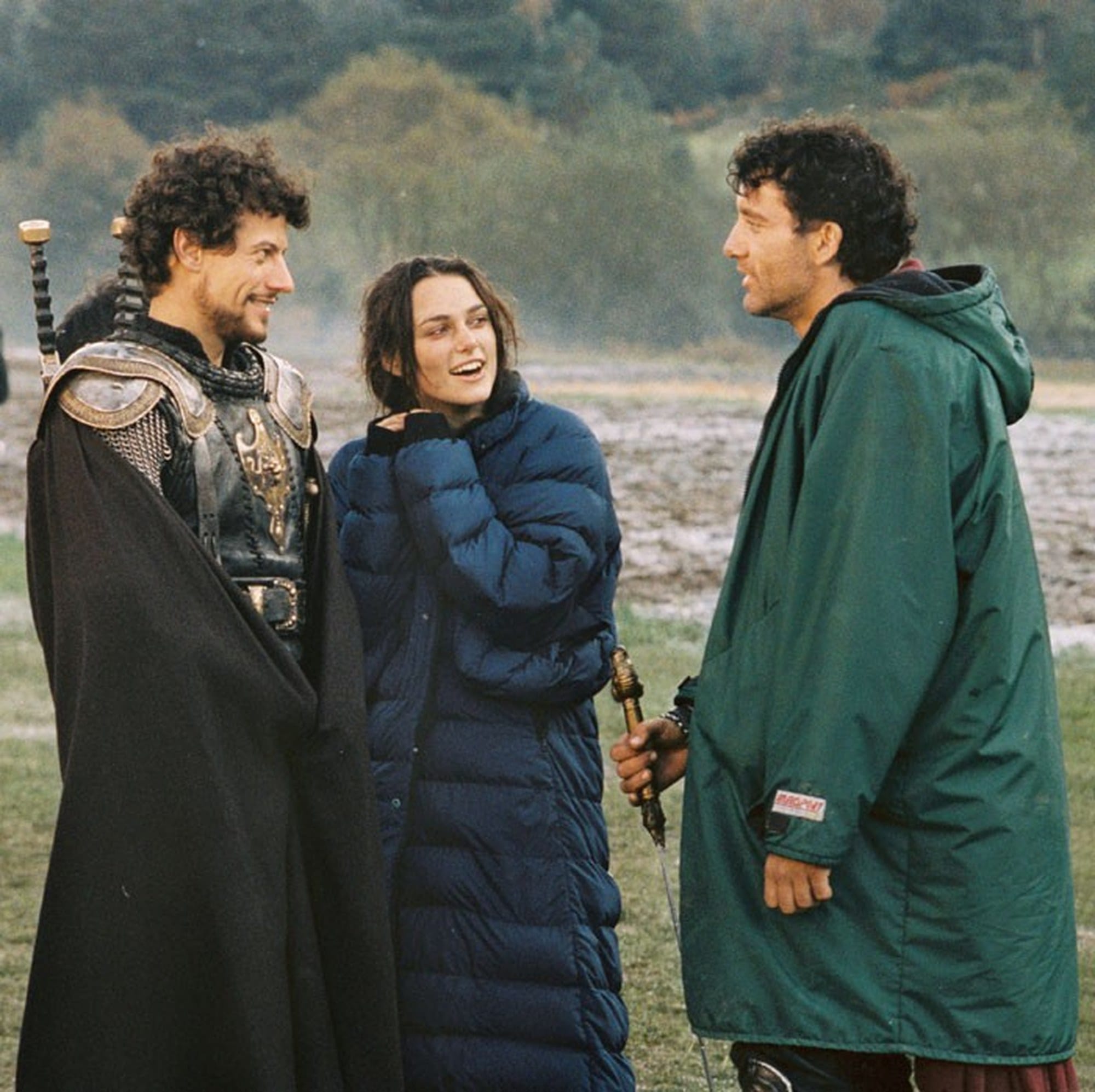
Antoine Fuqua’s King Arthur earns our praise for its actors and modern cinematography. Clive Owen gives Arthur a restrained, weary authority, while Ioan Gruffudd, Mads Mikkelsen, Ray Winstone and Ray Stevenson make his companions more appealing than their sometimes functional dialogue. Keira Knightley’s Guinevere is an active participant in the adventure, rather than the typical female figure waiting behind castle walls.
The film trades the familiar medieval court for a Roman military setting, placing Arthur and his cavalrymen near Hadrian’s Wall as their service approaches its end. Its landscapes, cold-weather action and physical battles give the story a somehow dark, gritty directness that helps it hold up beside more ceremonious epics. We would happily follow this ensemble into another freezing, ill-advised expedition. Their company and the brisk photography lift the film above its modest critical reputation.
Its claim to reveal the real story behind the legend is much less persuasive. The Sarmatian connection is a hypothesis, and the screenplay’s mixture of Roman withdrawal, Arthurian companions and a simplified Saxon enemy leaves major historical gaps. Academic readings treat it as a modern reworking of identity and empire. Our account of Hadrian’s Wall and Roman Britain supplies a useful historical counterpart to Fuqua’s frontier adventure. Enjoy it for the people and the photography; its claim to be the real Arthur needs a much colder reception.
8. Cleopatra (1963): Imperial grandeur at a stately pace
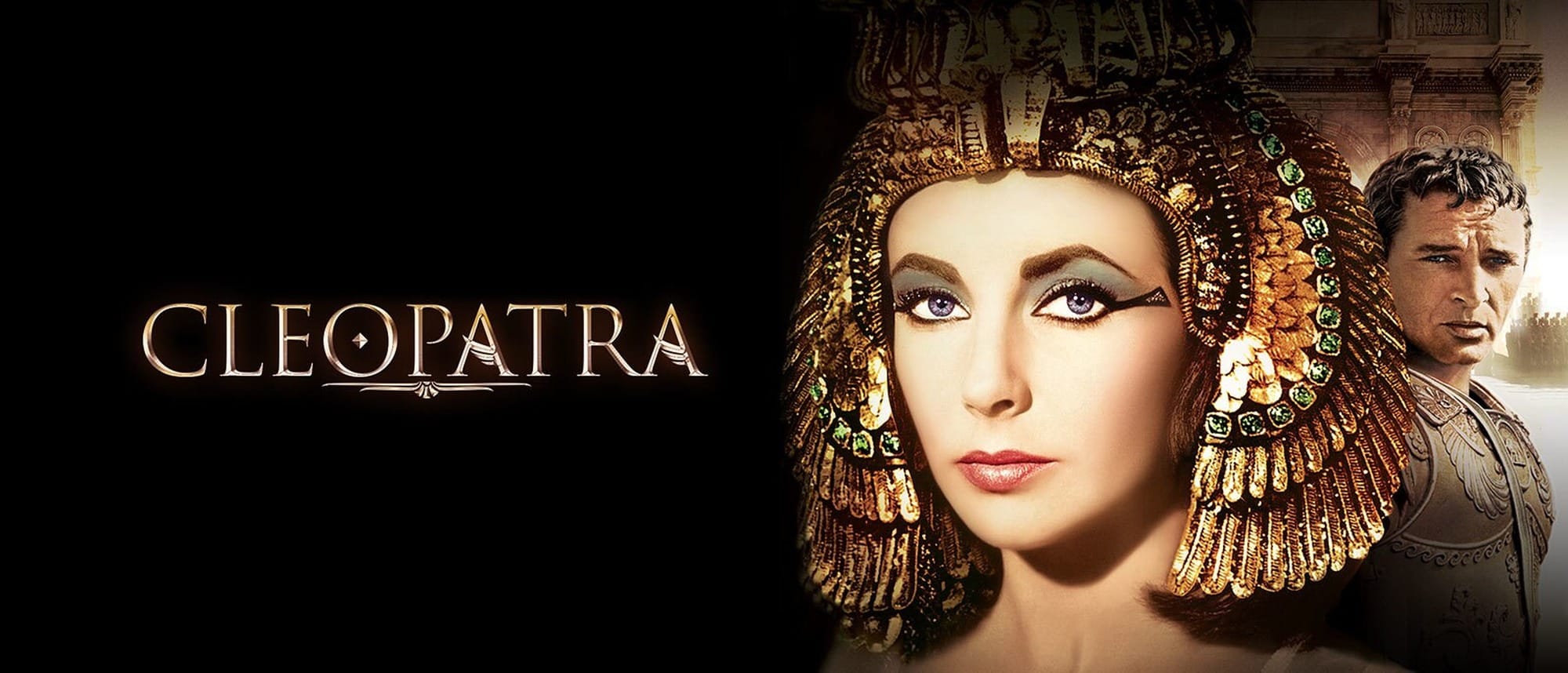
Joseph L. Mankiewicz’s Cleopatra belongs here because it gives royal diplomacy the scale of a world-changing event. Elizabeth Taylor’s queen negotiates with Julius Caesar and Mark Antony while defending her own position. Rex Harrison and Richard Burton make the Roman side of those relationships a contest of personalities, with the queen placed at the centre of the action.
The sets, costumes and ceremonial entrances remain an extraordinary expression of Hollywood ambition. Taylor’s arrival in Rome makes political display into a spectacle in its own right. The production understands that imperial authority is performed in public, even when its private arrangements are made in rooms where affection and advantage become difficult to separate. It is gloriously excessive, and we admire the nerve of it. Here is a film that approaches a royal entrance as though anything smaller than a small city would be an insult.
We place it lower because the theatricality has aged less comfortably than the design. Long exchanges, formal delivery and the sheer duration can make the drama feel remote to an audience used to more fluid screen performances. The romance also occupies a great deal of the film’s attention. Cleopatra deserves its place in cinema history, but historical importance and present-day momentum are different strengths; here the former exceeds the latter. We love its grandeur more readily than we love spending quite so long in its company.
7. Quo Vadis (1951): Rome as a grand theatrical spectacle
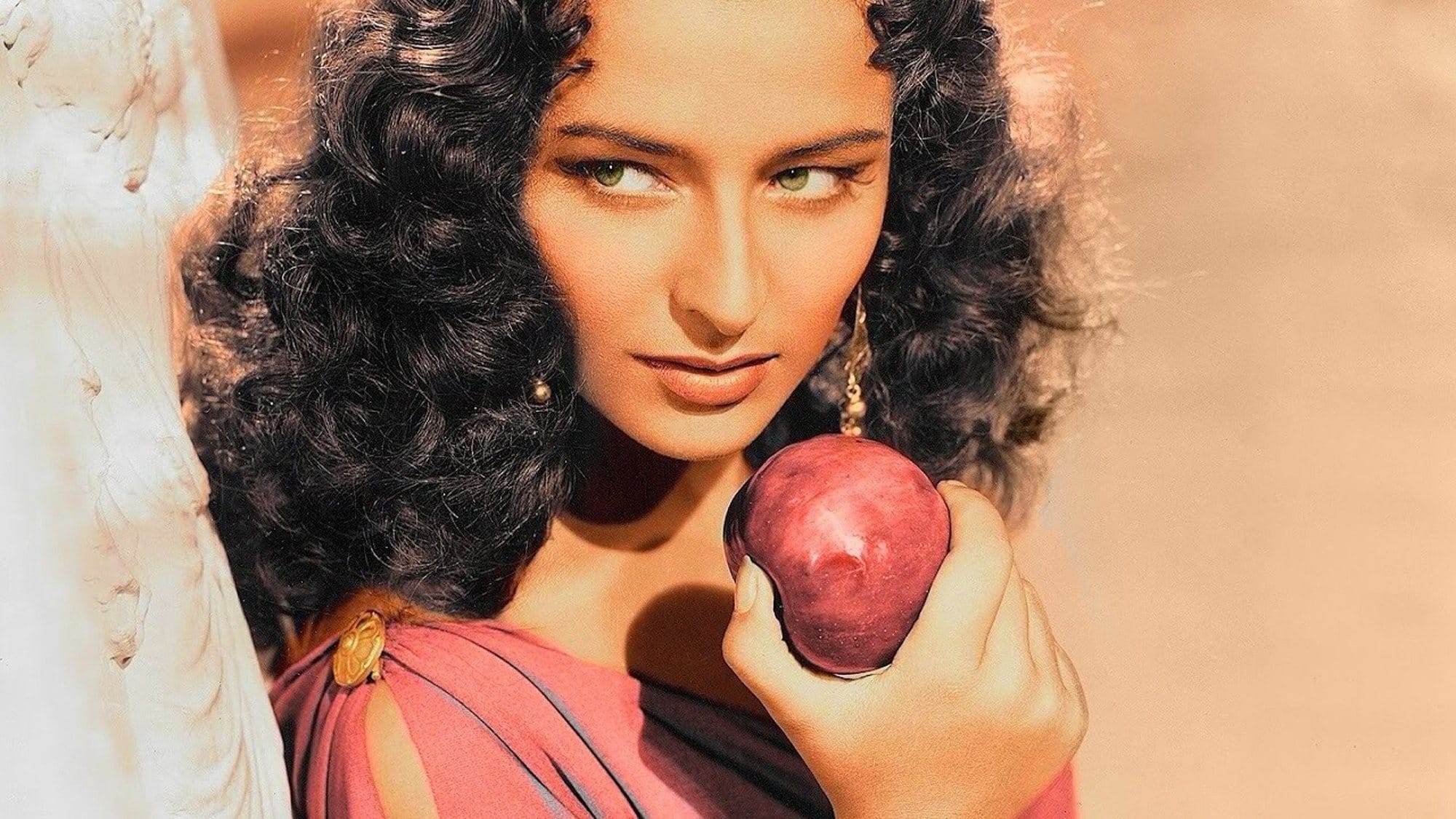
Quo Vadis helped establish the scale and style of the postwar Roman epic. Mervyn LeRoy directs a story that brings Robert Taylor’s Roman officer Marcus Vinicius into contact with Deborah Kerr’s Christian Lygia, setting their relationship against Nero’s court. Its Rome is a place of processions, persecution and conspicuous luxury, designed to fill the screen with public spectacle.
Peter Ustinov is the reason our affection survives the film’s more stately stretches. His Nero is vain, petulant and dangerously self-absorbed, even deliberately caricaturistic, making the imperial scenes livelier than the central romance. The contrast between a ruler’s theatrical self-image and the suffering around him is fundamental to this version of Rome. That combination of star performance and enormous production design explains why it remains a significant landmark in the genre.
Its historical theatricality is also what dates it for a modern audience. Like Cleopatra, it frequently presents emotion through formal speeches and emphatic gestures, while its moral divisions are drawn broadly. The fire and persecutions belong to its dramatic story; our article on Nero and the Great Fire of Rome examines the historical question separately. We value the pageantry, and Ustinov makes an emperor’s vanity wonderfully watchable. The speeches ask rather more patience of us, which keeps this grand old spectacle below the livelier films ahead.
6. Caligula: The Ultimate Cut (2023): A notorious epic reconsidered
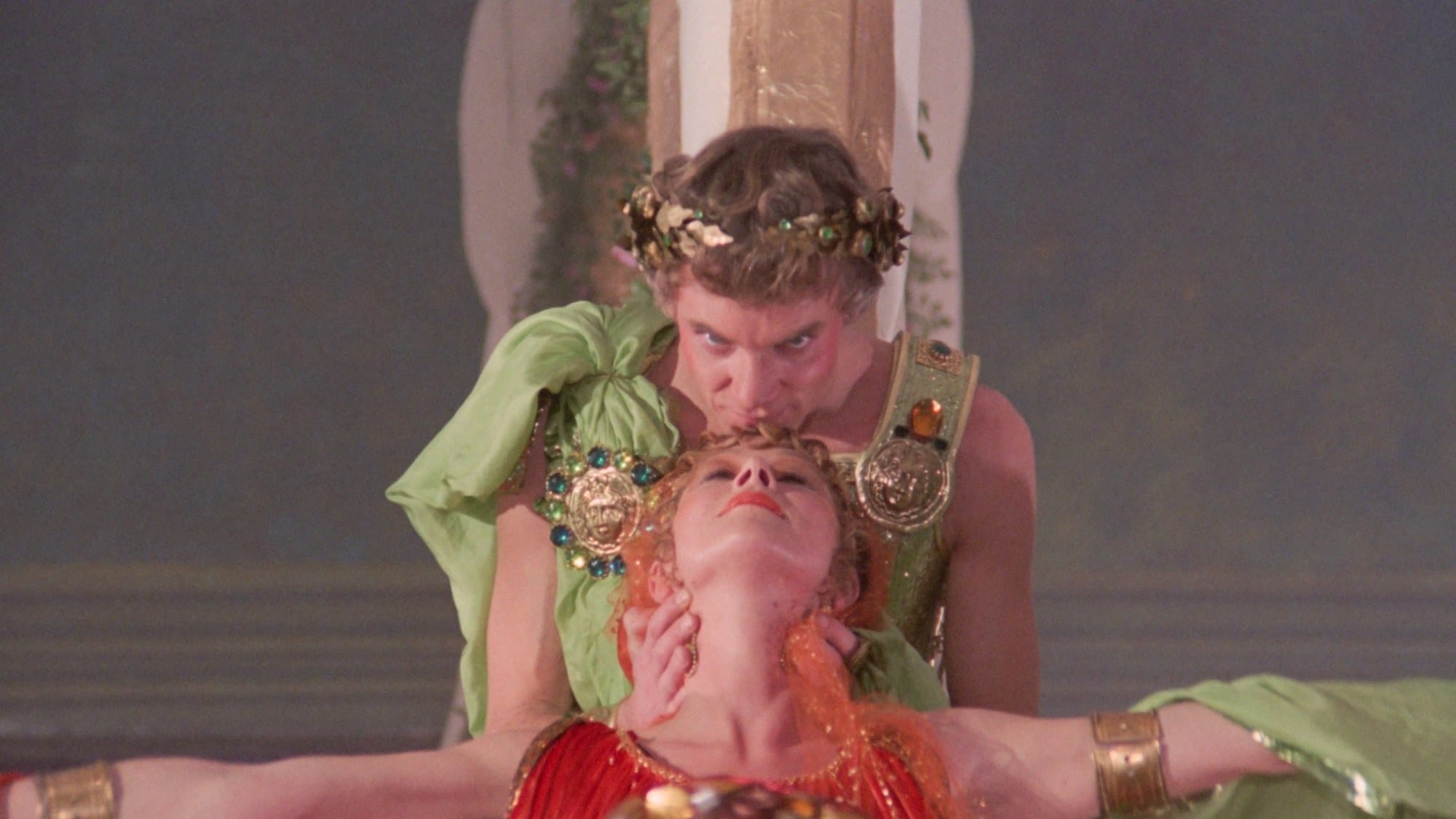
The version here is Caligula: The Ultimate Cut, the reconstruction assembled by Thomas Negovan that premiered at Cannes in 2023 and reached US cinemas in 2024. Identifying the edition usually makes little difference, but in some films and Extended Editions (yes, you all know which we mean), it is essential: the original production became notorious for the conflict between its dramatic ambitions and the explicit material added by producer Bob Guccione. The new assembly gives the performances and the political narrative considerably more room.
Malcolm McDowell’s Caligula, Peter O’Toole’s Tiberius and Helen Mirren’s Caesonia are the main attractions. The reconstruction places greater emphasis on the emperor’s movement towards cruelty and destructive power, while the extravagant interiors make his court seem enclosed within its own excess. We admire how thoroughly the splendour turns sour. The artificiality serves the subject: this court feels like a magnificent room in which nobody should feel safe.
Our sixth place recognises that recovered dramatic strength without treating the reconstruction as an unqualified masterpiece. The film remains sexually explicit, violent and deliberately grotesque, with an unevenness that belongs to the production itself. It is best approached as a feverish interpretation of imperial corruption, rather than a dependable biography. The remarkable cast and visual imagination earn our curiosity and, at their best, our admiration. Comfortable viewing it is not; compelling viewing it can certainly be.
5. Life of Brian (1979): The empire through an irreverent lens
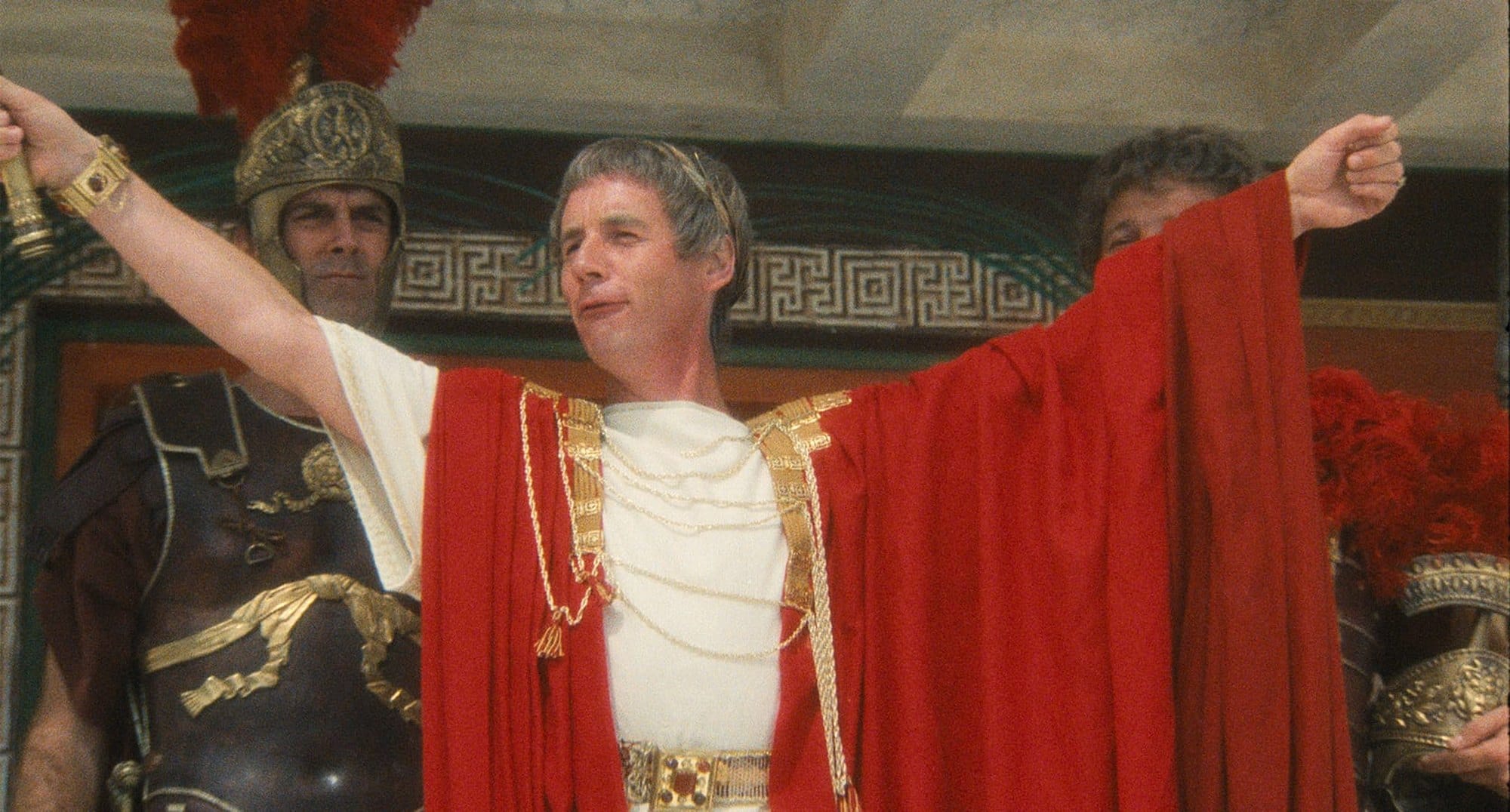
Terry Jones’s Life of Brian changes the terms of the countdown. Its Roman world is inhabited by a reluctant messiah, quarrelling revolutionaries and officials struggling to impose order. Graham Chapman’s Brian is an ordinary young man overwhelmed by the meanings other people assign to him, giving Monty Python’s satire a central character who is far less certain than his followers.
The comedy works because its targets are brilliantly specific. Political factions become absorbed in their own divisions, religious certainty turns misunderstanding into conviction, and Roman authority can be both threatening and absurd.
The famous Latin lesson is irresistible: an act of resistance becomes a humiliating grammar exercise, and the story behind the scenes makes it timeless. Conquest apparently comes with homework. A sequence about the benefits of Roman government similarly lets arguments about occupation collapse under the speakers’ own concessions.
What we love is the combination of merciless intelligence and poor Brian’s bewilderment. Everyone has an answer, and almost nobody has listened to the question. The ensemble’s changes of role and tone move the action between bureaucracy, street politics and religious expectation without the ceremonial weight of a traditional epic. Its Roman setting is integral to the jokes, while its concern with obedience and group identity gives them a wider reach. Fifth place is a wholehearted recommendation. The sheer pleasure of watching authority lose its dignity deserves a place beside the grandest epics.
4. Agora (2009): A magnificent place for ideas in Roman cinema
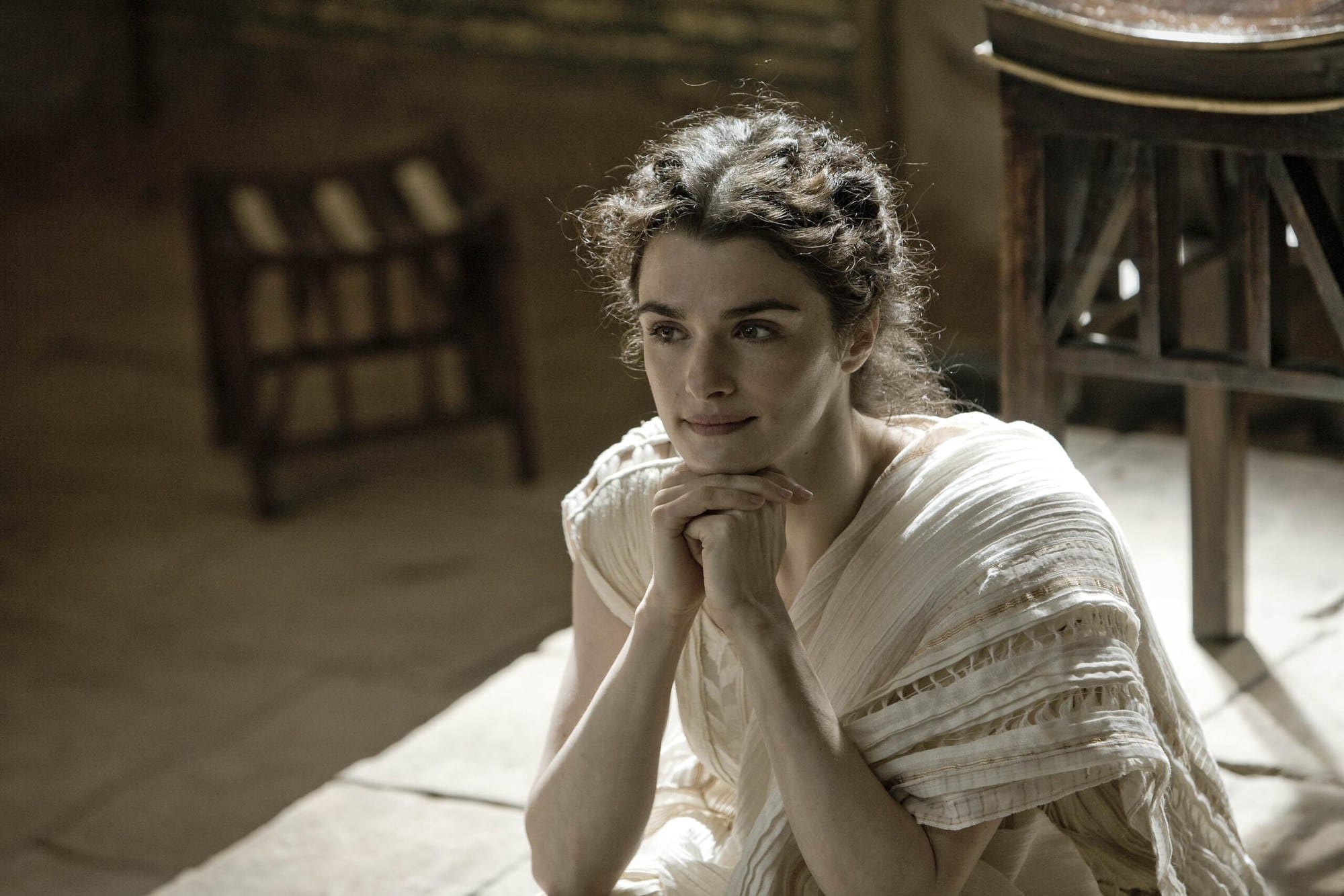
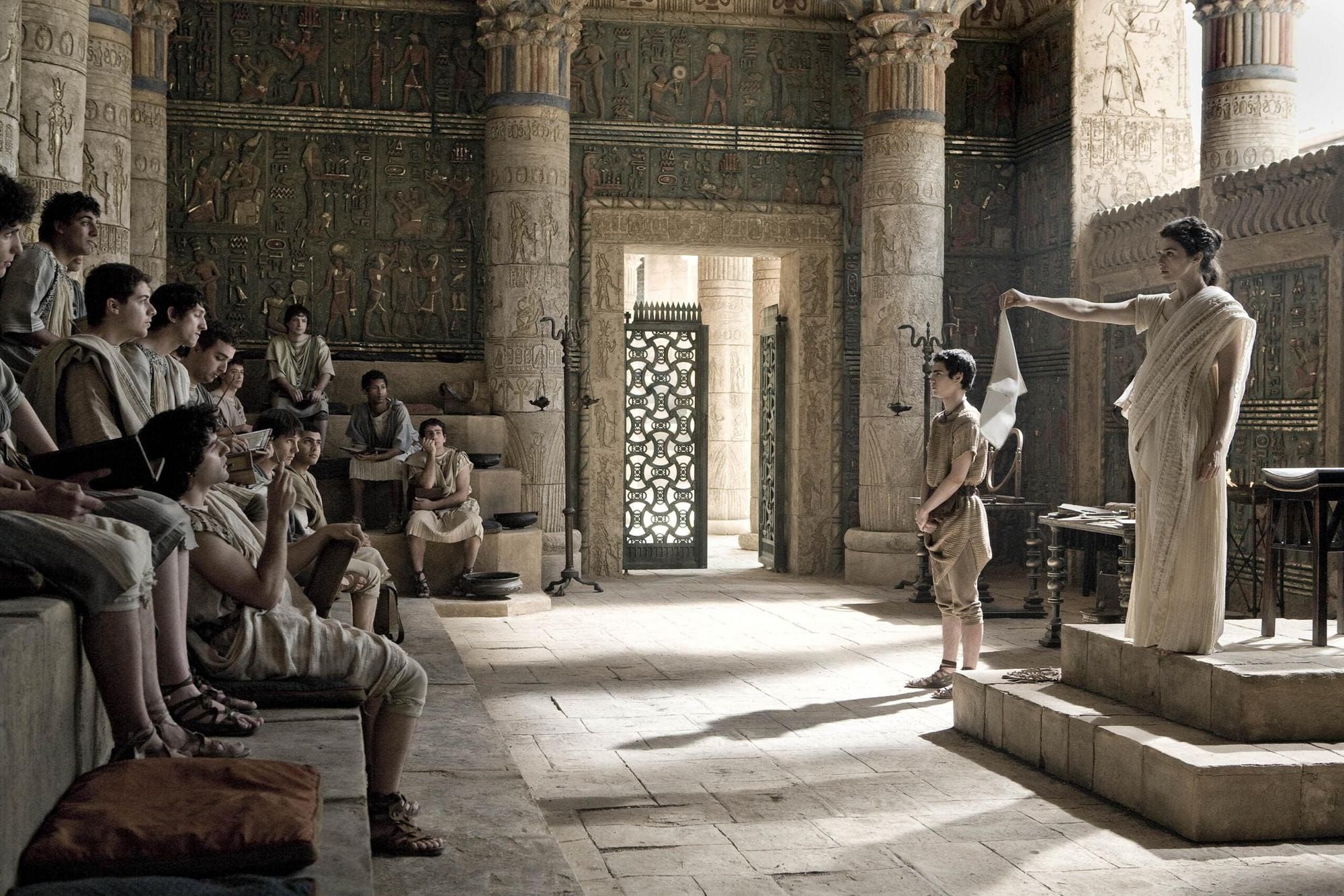
Agora is the film we most want readers to fall in love with. Alejandro Amenábar turns late Roman Alexandria, in Egypt, into a setting where teaching, political authority and religious allegiance become inseparable. Rachel Weisz’s Hypatia gives the film a commanding centre: her attention to a mathematical problem carries as much dramatic significance as the confrontations unfolding in the streets outside.
We love its belief that a person thinking can be as gripping as an army charging. Lessons, models and demonstrations give intellectual work an emotional force: Hypatia’s concentration becomes something precious amid the competing loyalties around her. Oscar Isaac’s Orestes and Max Minghella’s Davus bring different loyalties into Hypatia’s orbit, while Xavi Giménez’s cinematography and Guy Hendrix Dyas’s production design give Alexandria both grandeur and vulnerability. The movement between private study and public unrest makes its city more than an impressive background.
The screenplay fictionalises important elements of Hypatia’s life, including the romance and the astronomical breakthrough it assigns her. Its achievement is the dramatic space it creates for a woman’s intellectual independence within a Roman provincial city. Weisz makes that independence deeply moving. There is a quiet courage in the way her Hypatia keeps returning to a problem while the city demands other answers.
For us, that combination of an outstanding central performance, visual ambition and a subject rarely given this scale makes Agora fully deserving of fourth place. Its place among the giants is earned; for us, its humanity is magnificent.
3. Spartacus (1960): An army, a rebellion and a defining epic
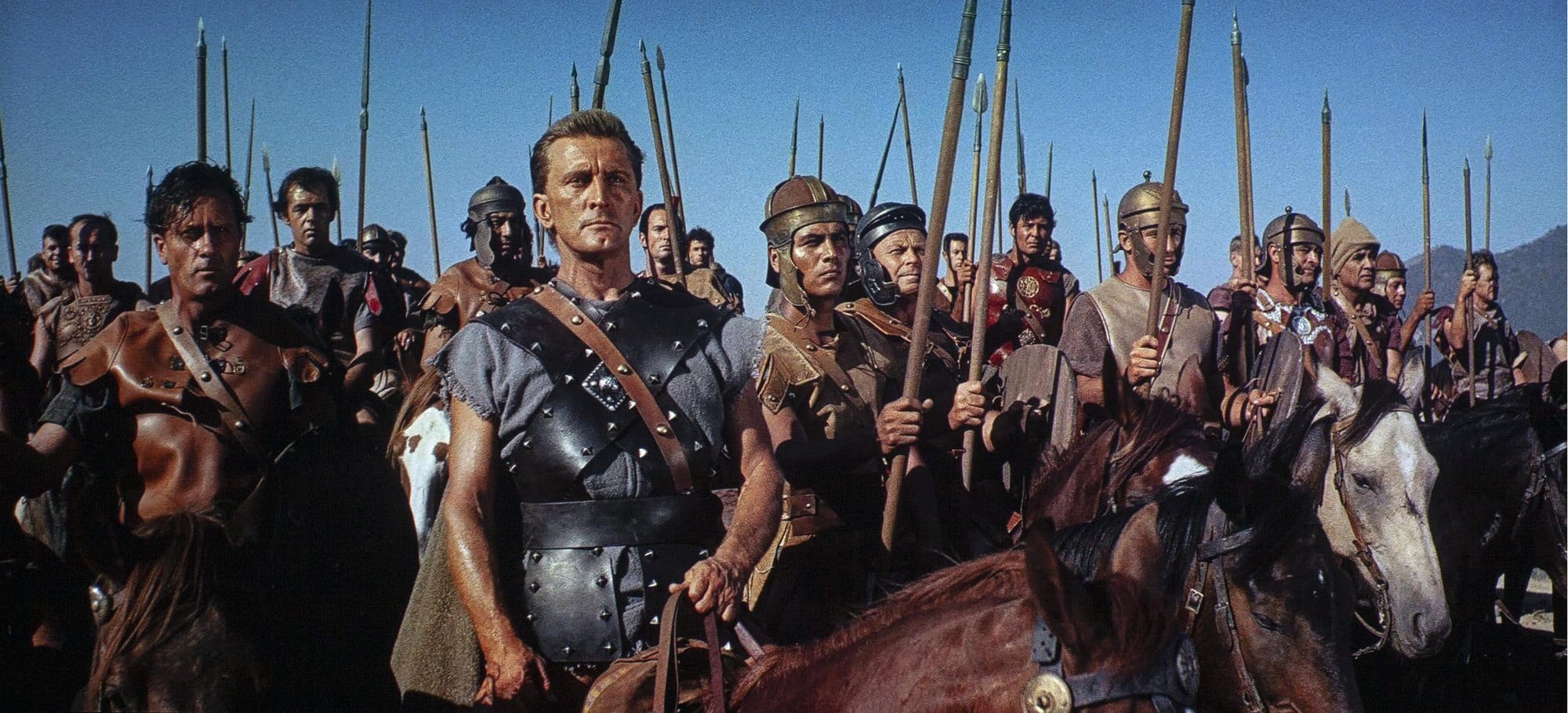
Spartacus is one of the epics that defined the genre and shaped cinema for decades. Kirk Douglas is magnificent, giving the enslaved gladiator strength without losing the vulnerability that makes his freedom worth fighting for, while Laurence Olivier, Charles Laughton, Jean Simmons and Peter Ustinov supply a formidable range of competing interests. Stanley Kubrick’s direction gives the rebellion both intimate relationships and the immense scale required to confront Rome.
The production really did assemble an army. AFI records that 8,800 Spanish army troops were photographed for its battle sequence, a more precise account than the familiar phrase “a cast of thousands.” Those formations give Roman military power an imposing physical presence. There is something thrilling about that weight of bodies moving together: the rebellion faces a power that fills the horizon. Dalton Trumbo’s screenplay also puts slavery and political control at the centre of the drama, giving the spectacle an argument as well as a setting. Name someone else other than Kubrick that could deliver that.
Our third place is exceptionally close to second. Some of the dialogue and performance style retain the formal quality of the period, but the acting, widescreen composition and sense of collective struggle remain powerful. The film alters the rebel leader’s fate; our account of Spartacus and the revolt against Rome follows the historical story. We love its people as much as its armies. Spartacus makes freedom feel personal on an immense scale; third place is painfully close to second.
2. Ben-Hur (1959): The race that gives it the narrow advantage
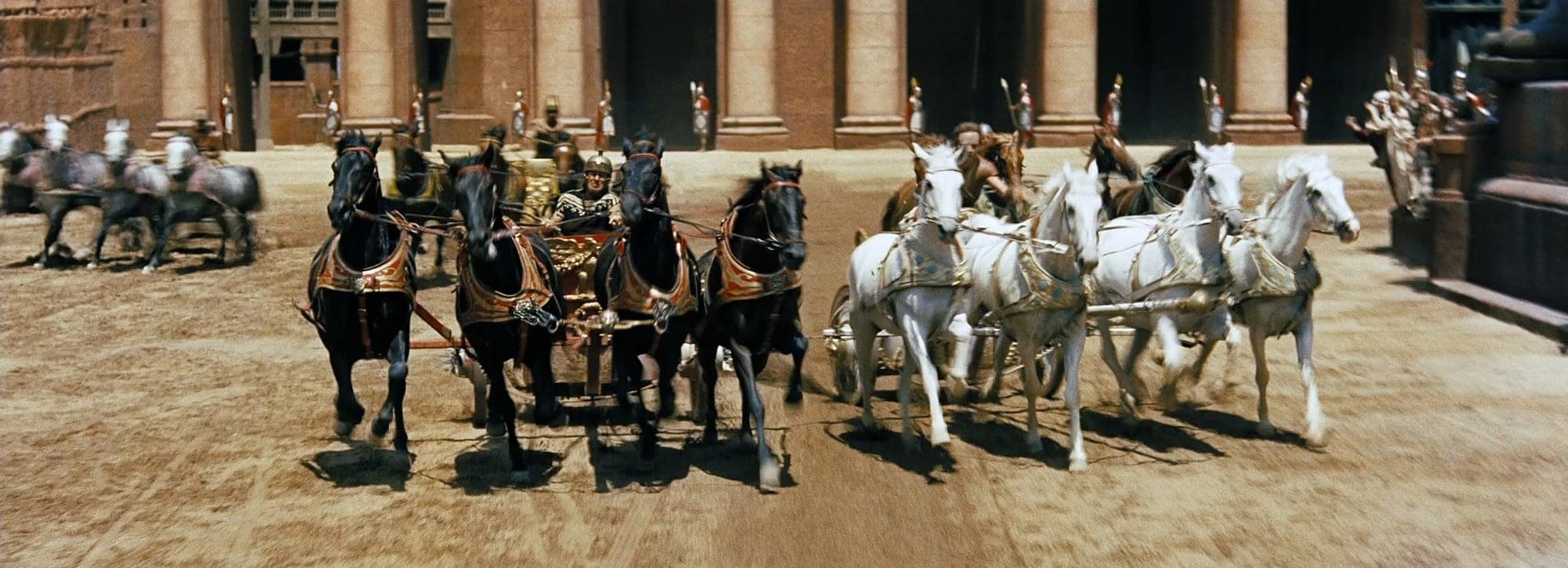
William Wyler’s Ben-Hur takes second by the smallest margin over Spartacus. Together they set standards of scale, ambition and practical filmmaking that helped define the epic for decades. Charlton Heston’s Judah Ben-Hur and Stephen Boyd’s Messala give the story a personal conflict within Roman imperial power, turning a former friendship into betrayal, enslavement and revenge.
Then the chariots arrive, and our order tips by a nose. It combines physical danger, precise staging and clear dramatic purpose: the chariots and horses do not merely demonstrate the production’s resources; each turn advances a rivalry, at extreme peril. We love the clarity of it: amid all that speed and danger, there are two men whose hatred we understand. It is still breathtaking cinema, after all these decades. Andrew Marton and Yakima Canutt’s work on the sequence helped create an action set piece whose force survives far beyond the film’s original release.
The achievement extends to Miklós Rózsa’s score and the film’s visual scale, although its solemn passages and theatrical delivery can feel more distant today. We give it the narrow advantage because the race remains such a complete union of spectacle and character. Roman racing has its own history beyond this fictional duel, including the career of Scorpus, a celebrated charioteer at Rome. Ben-Hur earns its position because the race makes those immense resources feel alive. The margin over Spartacus is tiny; the thrill that decides it is enormous.
1. Gladiator (2000): The most complete Roman movie
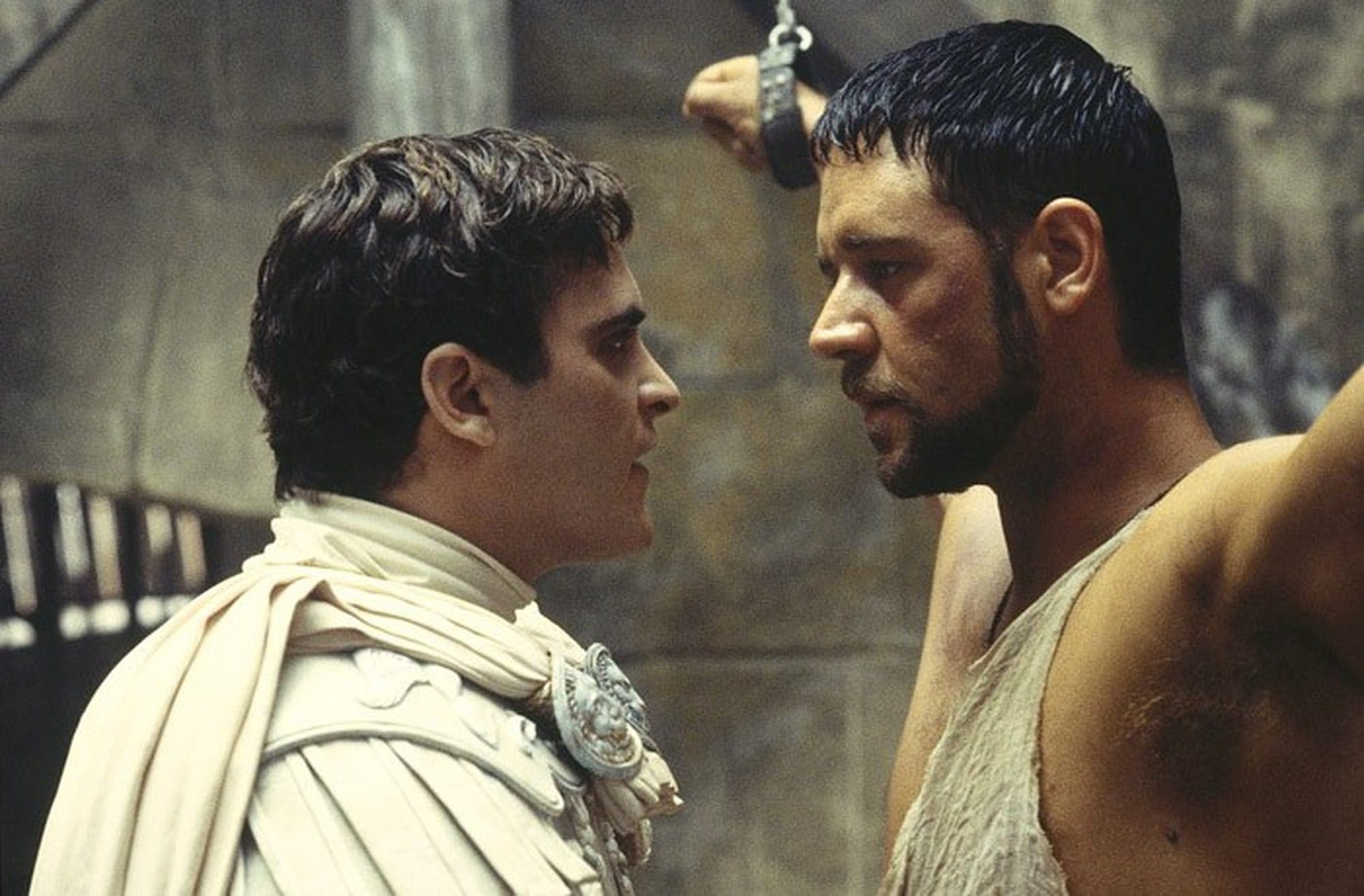
Gladiator is our number one because, for us, it is the most complete Roman movie of all. Russell Crowe’s Maximus gives the revenge story its heart: beneath the soldier’s command is a man aching for home. Joaquin Phoenix’s Commodus supplies a disturbing rival, and the supporting cast gives the political and gladiatorial worlds distinctive voices. Ridley Scott joins those performances to action that advances the story rather than leaving its characters behind.
Hans Zimmer and Lisa Gerrard’s music is central to that cohesion, connecting the violence of the arena with the memory of home in musical tones so memorable, they have a constant play button in our minds. We love how the score holds onto that longing; the film can fill a stadium and still make one man’s loss feel larger.
The production design, photography and effects work together to give Rome scale without making the human figures feel incidental. For us, the acting, music and visual craft have no conspicuous weak link. Its small cinematic imperfections rarely disturb the whole, whereas the more theatrical delivery of several older epics now makes their construction more visible and any comparison unfair.
Historical liberties remain, and our account of Commodus and his appearances in the arena provides a counterpart to the screen emperor. Our choice rests on filmmaking: Gladiator combines the genre’s inherited grandeur with performances and pacing that remain accessible to a modern audience.
What finally wins us over is the feeling beneath all that craft. We care about Maximus long before the arena asks us to cheer for him. Gladiator gives us the grandeur we came for and the human connection that makes it stay with us. That is an extraordinarily difficult combination to beat.
🏛️ Sources used:
Carl J. Mora, The Image of Ancient Rome in the Cinema, FILMHISTORIA Online 7 (1997).
Ana Mejón and Francisco Jiménez Alcarria, Mujeres científicas en el cine: El caso de Hipatia de Alejandría en Ágora, Área Abierta 22.2 (2022), 237–254.
Christoph Houswitschka, A Postcolonial View on King Arthur (2004) and Nomad (2005), Studia Litteraria 10.2 (2015), 107–120.
American Film Institute, Spartacus (1960): production history, credits and synopsis.
American Film Institute, Ben-Hur (1959): production history, credits and synopsis.
The Criterion Collection, Spartacus (1960).
Paramount Pictures, Gladiator (2000): cast, synopsis and music credits.
Caligula: The Ultimate Cut, official reconstruction history.
IFC Center, Caligula: The Ultimate Cut: 2024 release and credits.
Sony Pictures, Life of Brian: synopsis and cast.
Monty Python, Life of Brian (1979): official film record.
Disney D23, King Arthur (2004): release and cast.
Festival de Cannes, Agora (2009): synopsis and credits.
York University, Gladiator Guru Holds His “All Hail” for Box Office Hit (11 May 2000).
Rotten Tomatoes, Gladiator II: film record, cast, synopsis and ratings (checked 13 October 2026).
Rotten Tomatoes, King Arthur: film record, cast, synopsis and ratings (checked 13 October 2026).
Rotten Tomatoes, Cleopatra: film record, cast, synopsis and ratings (checked 13 October 2026).
Rotten Tomatoes, Quo Vadis: film record, cast, synopsis and ratings (checked 13 October 2026).
Rotten Tomatoes, Caligula: The Ultimate Cut: film record, cast, synopsis and ratings (checked 13 October 2026).
Rotten Tomatoes, Life of Brian: film record, cast, synopsis and ratings (checked 13 October 2026).
Rotten Tomatoes, Agora: film record, cast, synopsis and ratings (checked 13 October 2026).
Rotten Tomatoes, Spartacus: film record, cast, synopsis and ratings (checked 13 October 2026).
Rotten Tomatoes, Ben-Hur: film record, cast, synopsis and ratings (checked 13 October 2026).
Rotten Tomatoes, Gladiator: film record, cast, synopsis and ratings (checked 13 October 2026).
Juliette Harrisson, Dico, dico, dico: Latin language in popular culture, Rosetta 8.5 (2010), 34–46.
Monty Python, Life of Brian (1979): official soundtrack and sketch record.
Roman Provincial Coinage Online, type 89182: coinage of Macrinus at Alexandria (AD 217/18).
Martial, Epigrams 10.50 and 10.53, Bohn’s Classical Library translation (1897).
Associated Press, Movie Review: Gladiator II, with Denzel Washington, goes back into the arena (2024).



About the Roman Empire Times
See all the latest news for the Roman Empire, ancient Roman historical facts, anecdotes from Roman Times and stories from the Empire at romanempiretimes.com. Contact our newsroom to report an update or send your story, photos and videos. Follow RET on Google News, Flipboard and subscribe here to our daily email.
Follow the Roman Empire Times on social media: