
The Kalends of May: How Rome Opened a Sacred Month of Fire, Growth, and Old Gods
The first of May in Rome opened a month of flowers, sacrifice, purification, and old divine presences. The season felt bright, but the sacred atmosphere was never simple.

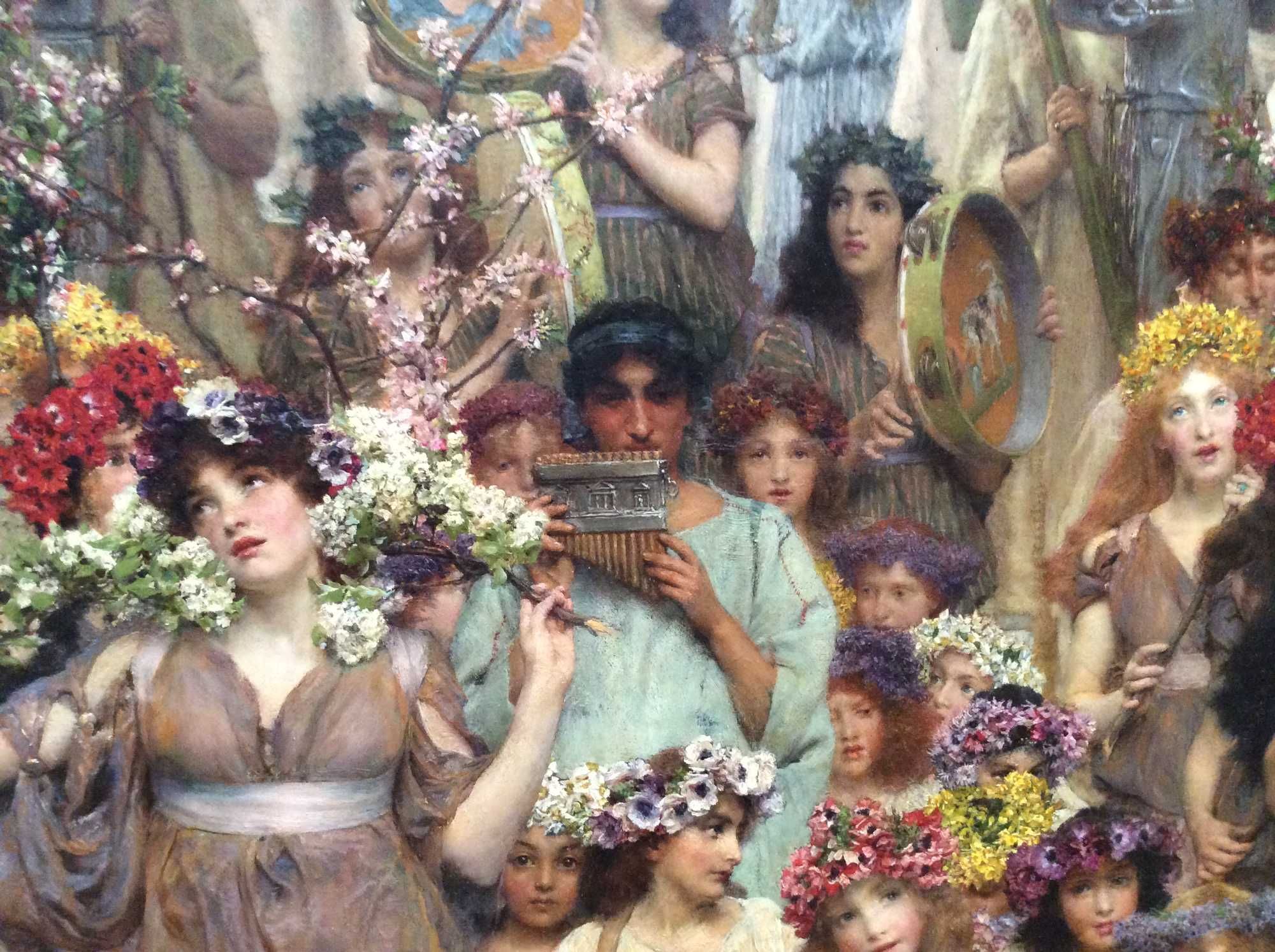
In Rome, the Kalends of May marked more than the first day of a new month. They opened a stretch of sacred time shaped by old gods, ritual attention, and the uneasy balance between renewal and restraint. Flowers, garlands, and the joyful energy of spring belonged to the season, but so did sacrifice, purification, and a sense that May carried a religious weight of its own.
Flowers, Fertility, and the Sacred Month of May
Some of the earliest traditions later associated with May Day can be traced back to the Roman Floralia, the festival of Flora, goddess of flowers. Celebrated from 28 April to 3 May, it marked the season with offerings, decoration, and public festivity.
Milk and honey were presented to the goddess, while people and public spaces were adorned with flowers. Romans wore floral wreaths and blossoms in their hair, and the period was filled with dancing, games, and a joyful welcome to the arrival of spring.
Yet May in Rome was not only cheerful and festive. Alongside its association with flowers, fertility, and seasonal renewal, the month also carried a more solemn character. May was linked with Maia, and it was regarded as a time of purification and religious observance connected with the dead.
The first of May in particular was treated as a sacred day in the temples. So although the season encouraged celebration, the month itself was not thought suitable for everything.
Roman custom considered May unlucky for marriage, and formal wedding ceremonies were generally avoided during it. (“Contemporary consumption rituals. A research anthology. Edited by: Cele C. Otnes, Tina M. Lowrey)
Ovid and the Ritual Opening of a New Month
The opening of May in Rome was not simply the turning of a calendar page. It was also a moment that invited explanation. As Ovid puts it,
“You ask whence I suppose the name of the month of May to be derived.”
From the beginning, then, May appears not as an empty stretch of time, but as a month whose sacred meaning had to be understood. In the world of the Fasti, a new month begins through ritual attention, learned inquiry, and religious ceremony.
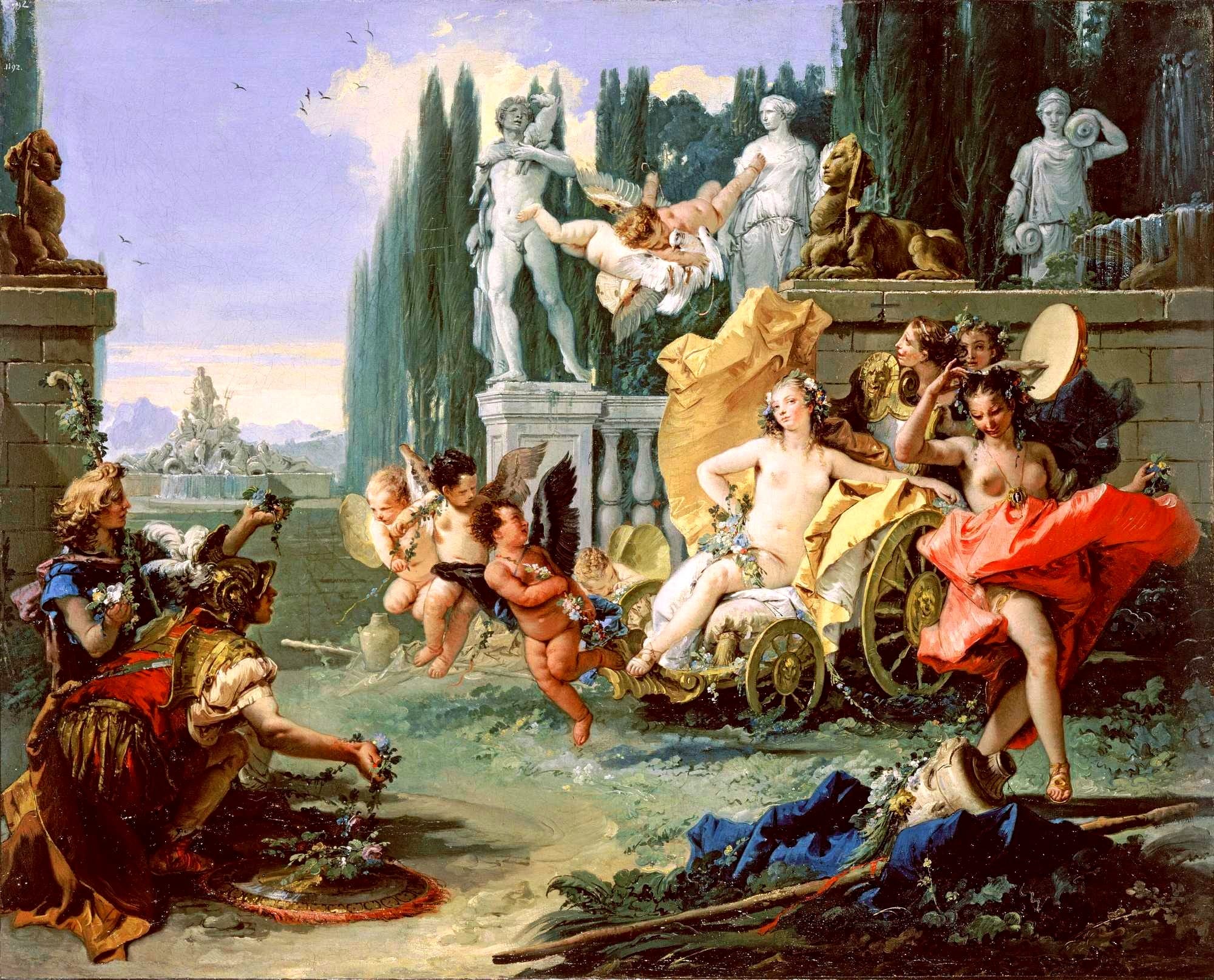
The poet does not treat religious observance as distant antiquarian material, but as something that unfolds in the present tense, almost as if the reader were being guided into the rite itself. The effect is that the beginning of a month feels active and ceremonial. A sacred day arrives not in silence, but with formulas, invocations, and instructions that create the sense of a community gathering for worship.
This is one of the most useful ways to think about the Kalends of May. In Ovid’s religious calendar, the first day of a month can be marked by solemn address, by heightened speech, and by ritual framing that turns time itself into an event. The audience is not merely told that a new month has begun. It is drawn into the atmosphere of observance. That makes the Kalends more than a date. They become an opening in which language, ritual, and public attention work together.
What matters here is not only the specific rite attached to a day, but the Roman habit of treating sacred time as something that had to be properly entered. Ovid’s poem repeatedly shows that rites are introduced, explained, and imaginatively staged. This gives the calendar a living texture.
A month such as May does not begin as an abstract unit. It begins under the sign of ritual action and religious meaning, with the poet acting almost like a ceremonial guide.
That perspective is especially valuable for the Kalends of May because it reminds us that Romans did not separate calendar and cult. The first of the month could be a moment of invocation, explanation, and reverence, and Ovid’s method helps recover that feeling. The sacred month begins not only with a name, but with a form of attention. (“Ritual Directions in Ovid’s Fasti: Dramatic Hymns and Didactic Poetry” by John F. Miller)
Why the Month Was Called May
Ancient Romans did not agree on a single explanation for the name of May, and that uncertainty is part of what makes the month interesting. Antiquarian tradition preserved several attempts to explain it, but one of the strongest linked the month to Maia. In that tradition, May took its name from the goddess, and the month’s place in the Roman year was understood through her divine identity rather than through a purely numerical or seasonal logic.
Roman scholars treated the naming of months very seriously. The question was not trivial. To ask why May was called May was to ask what force, person, or memory stood behind the structure of sacred time. Some explanations connected the month to the maiores, the elders; others gave priority to Maia.
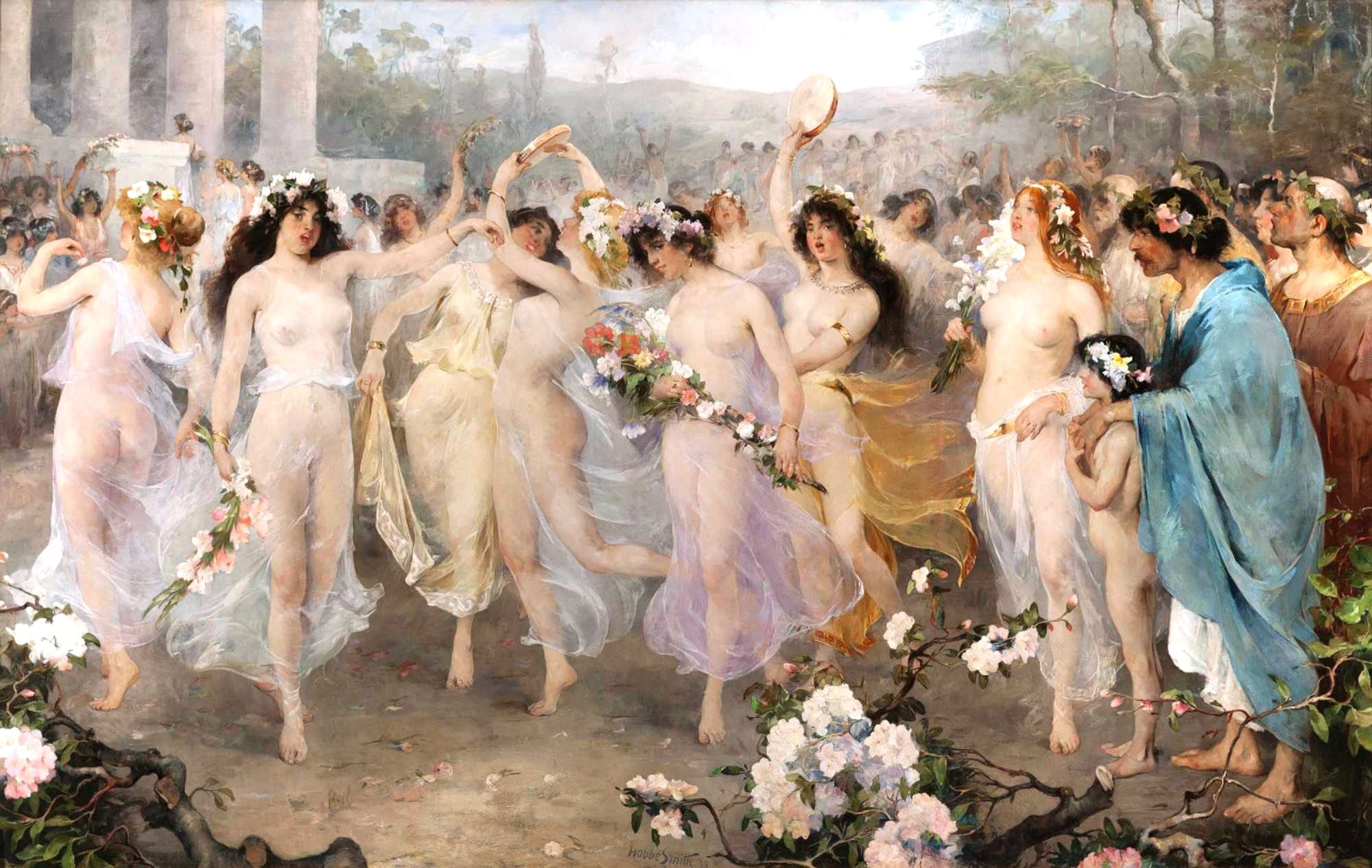
What emerges is not confusion so much as a layered Roman habit of explanation, in which myth, cult, ancestry, and learned tradition all competed to define the calendar.
The important point is that the month opened under a name already charged with religious meaning. The first day of May did not arrive as a neutral date. It belonged to a month whose identity had to be explained, and one powerful explanation placed Maia at its center.
That makes the Kalends of May feel more than administrative. They mark the entrance into a month whose name itself invited reflection on divine origins.
The Romans were not merely observing May; they were also interpreting it. They inherited explanations, debated them, and passed them along through antiquarian writing. The month of May therefore stood at the meeting point of ritual time and learned tradition. (“Ennius’s Fasti in Fulvius’s Temple: Greek Rationality and Roman Tradition” by Jörg Rüpke)
Early Calendar Thinking and the Place of Maia
A more speculative antiquarian line of thought connects the Roman calendar to older ritual patterns and to broader attempts to explain how months acquired their symbolic character. In this material, Maia again appears as an important figure, and May is treated as a month that could preserve traces of very early religious and calendrical ideas. Rather than focusing narrowly on one rite, this approach tries to place the month within a larger structure of Roman sacred time.
What is useful here is the insistence that month-names were not empty labels. They were understood as carrying memory, cult, and sometimes even traces of older ritual systems. In that context, Maia is not just an etymological explanation but part of a wider attempt to understand how the Roman year was once imagined.
May becomes a month whose significance may reach back beyond later literary ordering into deeper patterns of Roman religious thought.
The Kalends of May opened a month the Romans did not treat lightly. Whether through formal antiquarian discussion or broader speculation about the old calendar, May appears as a month tied to sacred identity, not merely to seasonal convenience.
So even where certainty is limited, the larger impression remains strong. The first of May belonged to a month whose name, place, and ritual associations invited explanation. That alone tells us something important about Roman religion: time was never only counted, but also interpreted. (“The Case for Vergil’s Venerable Pig” by Van L. Johnson)
A Month of Flowers – and a Month of Caution
Early May in Rome was not simply bright with flowers and springtime festivity. It also opened into a month marked by solemnity, purification, and a certain unease. The Kalends of May carried important religious observances: the temple of Bona Dea was dedicated on that day, and the Flamen Volcanalis offered sacrifice to Maia, a detail that fits well with the ancient tradition linking the month’s name to the goddess.
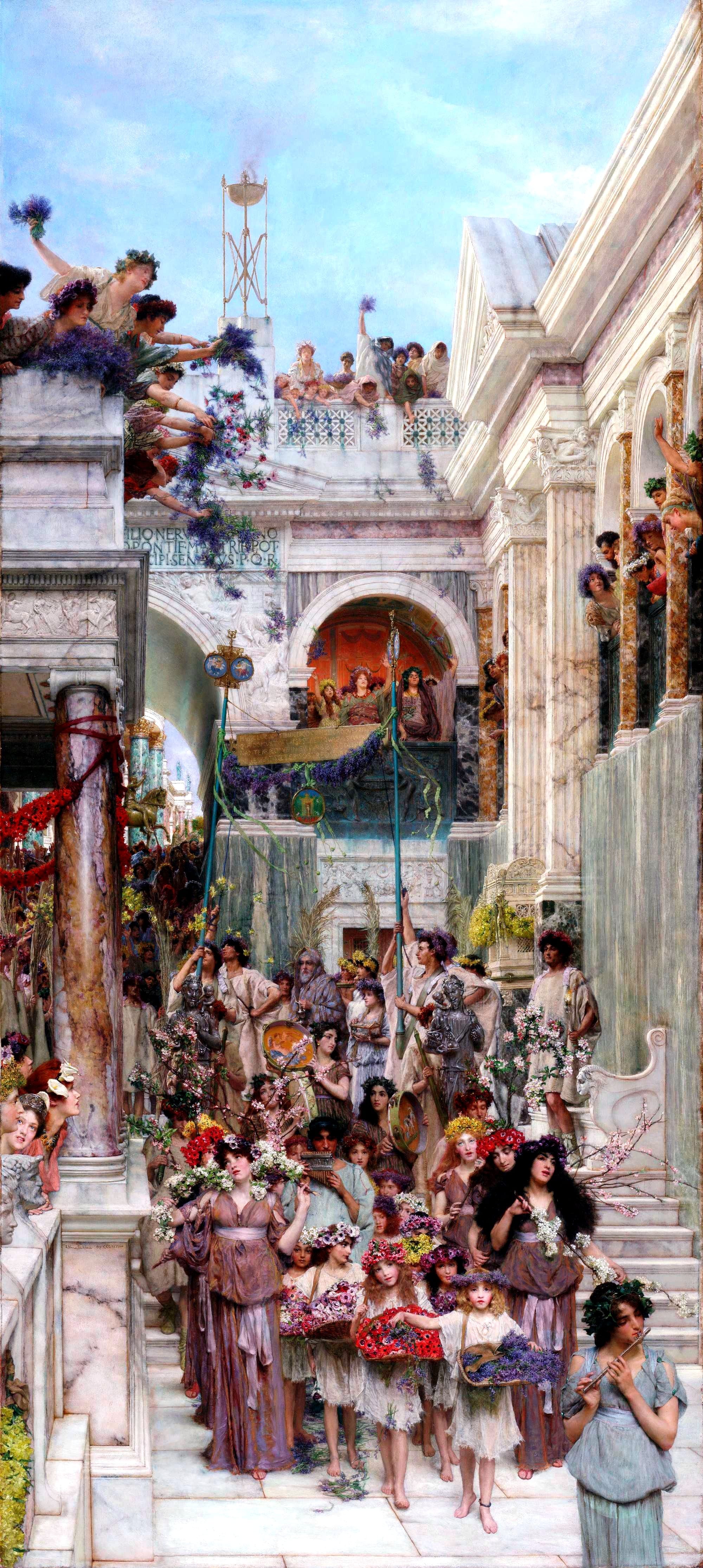
Ovid also notes that on May 1 an altar and small images of the Lares Praestites, the guardian spirits of the city, were set up. The first of May, then, was not just the opening of a month but a sacred threshold, marked by cult and protective ritual.
May also had a more complicated religious tone than its flowers might suggest. Alongside seasonal renewal came rites of cleansing and expiation, including the Lemuria, the Argei, and the purification of the fields at the month’s end.
Renewal and fertility were certainly part of the month, but so were ritual caution and the need to address forces that might threaten the household, the city, or the crops.
That mixed atmosphere helps explain one of the more striking Roman ideas about May: despite the season’s beauty, the month was widely thought unlucky for marriage. An old line preserved by later tradition says:
“mense Maio malae nubunt,” meaning “girls marry badly in the month of May.”
The saying is blunt, but revealing. Even in a month associated with growth and divine presence, Romans could still sense danger or impropriety in beginning a marriage then. May was sacred, but not necessarily easy.
That gives the Kalends of May some of their real interest. The day stood at the entrance to a month that Romans did not treat lightly. It could be touched by flowers, garlands, and the joy of the season, but it also belonged to a cycle of rites meant to protect, purify, and remember.
In Rome, the first of May did not open onto spring alone. It opened onto a sacred month in which beauty and caution lived side by side. ("The Roman Festivals of the Period of the Republic" by W. Warde Fowler)
That is what makes the Kalends of May so revealing. They show a Roman world in which time itself was sacred, and where even the beginning of a beautiful spring month could not be separated from ritual duty, divine presence, and inherited caution. May began with flowers, but in Rome it also began with memory, ceremony, and the quiet seriousness of a month that was never taken lightly.

About the Roman Empire Times
See all the latest news for the Roman Empire, ancient Roman historical facts, anecdotes from Roman Times and stories from the Empire at romanempiretimes.com. Contact our newsroom to report an update or send your story, photos and videos. Follow RET on Google News, Flipboard and subscribe here to our daily email.
Follow the Roman Empire Times on social media: