
AI Assists in Finding the Rules of Ancient Roman Board Game
A marked stone from Coriovallum fits several simulated blocking games. The study narrows the possibilities without recovering the exact rules Roman players used.

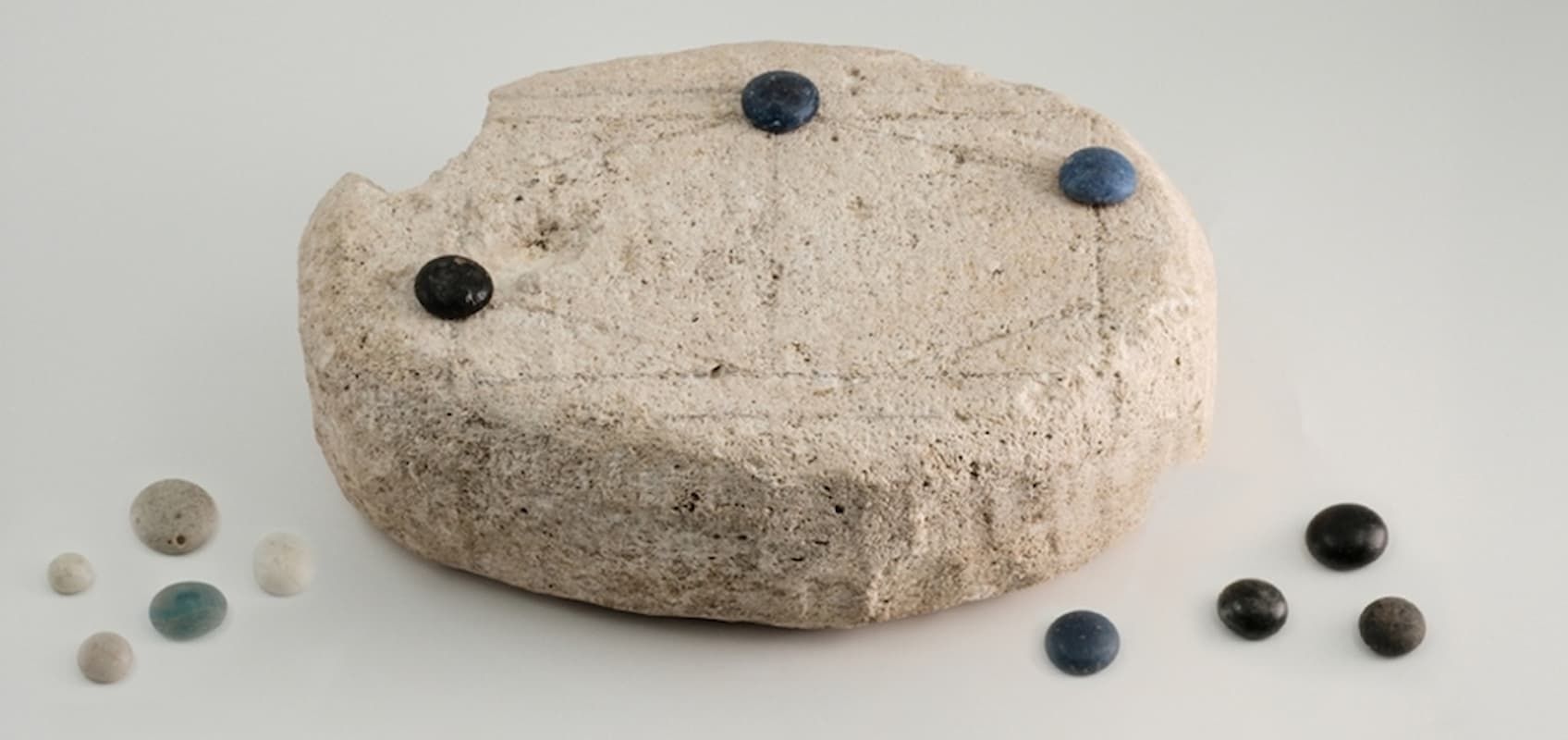
An incised limestone object from the Roman town of Coriovallum, beneath modern Heerlen in the Netherlands, has yielded a plausible way to play a game whose rules were never written down. Researchers compared microscopic wear on the stone with the results of computer simulations using Artificial Intelligence (AI). The closest matches were games in which one player tries to block the other’s pieces.
The finding comes from a study published in Antiquity on 11 February 2026. Recent reports from New York Times has brought it back into the news, alongside the joyful announcement that the research is being nominated for the 'Research of the Year' Award, based on popular vote (you can also vote, till October 7, 2026). Its authors propose several playable versions rather than claiming to have recovered the one set of rules used by Roman players.
We have to note that this is an object with no securely recorded excavation context. The museum’s archive says it was found in Heerlen, but provides little more about where it lay or what was found beside it. The analysis therefore rests on the stone’s form, its surface wear and comparisons with games documented elsewhere.
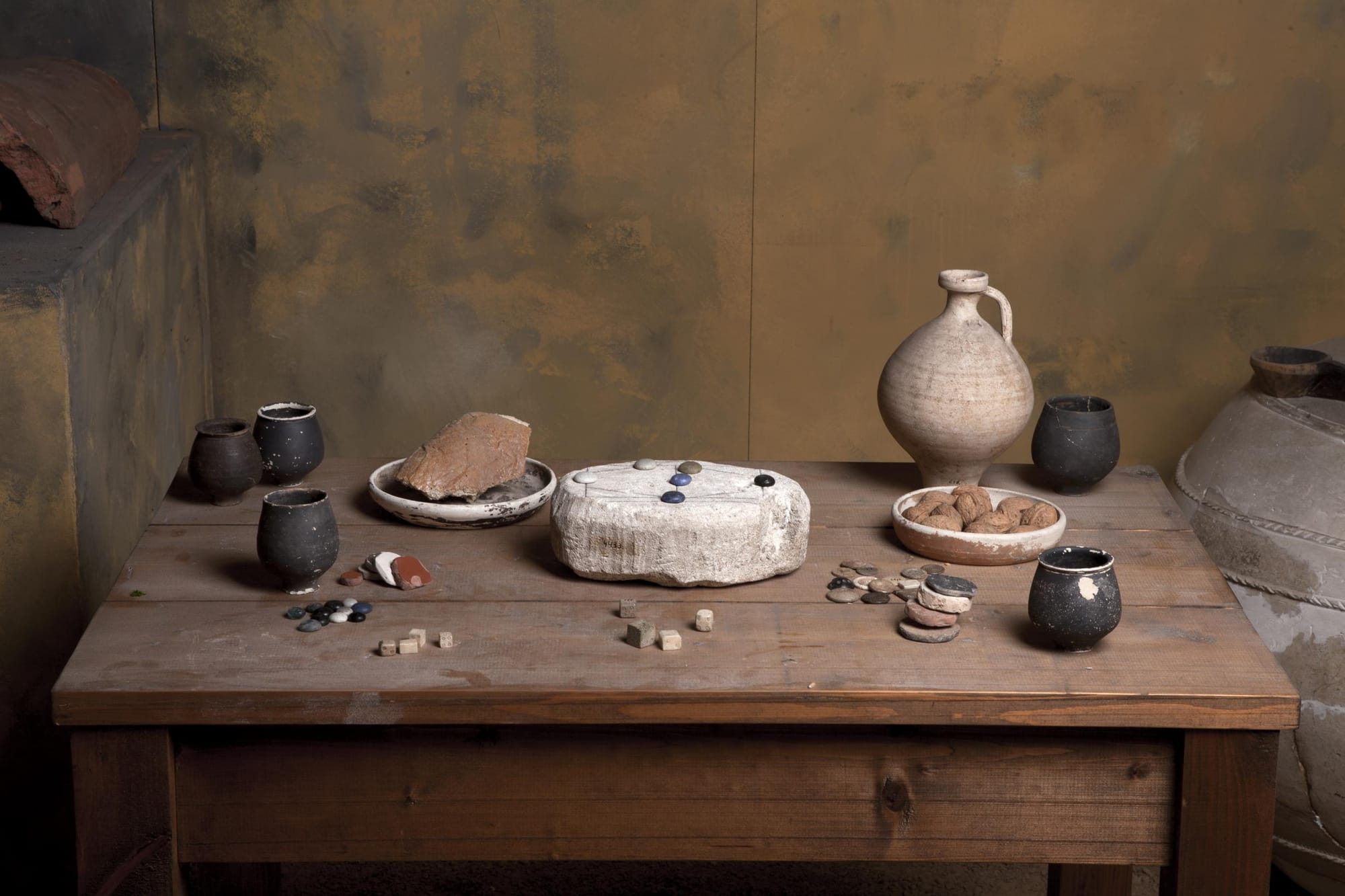
A Small Stone from Roman Coriovallum
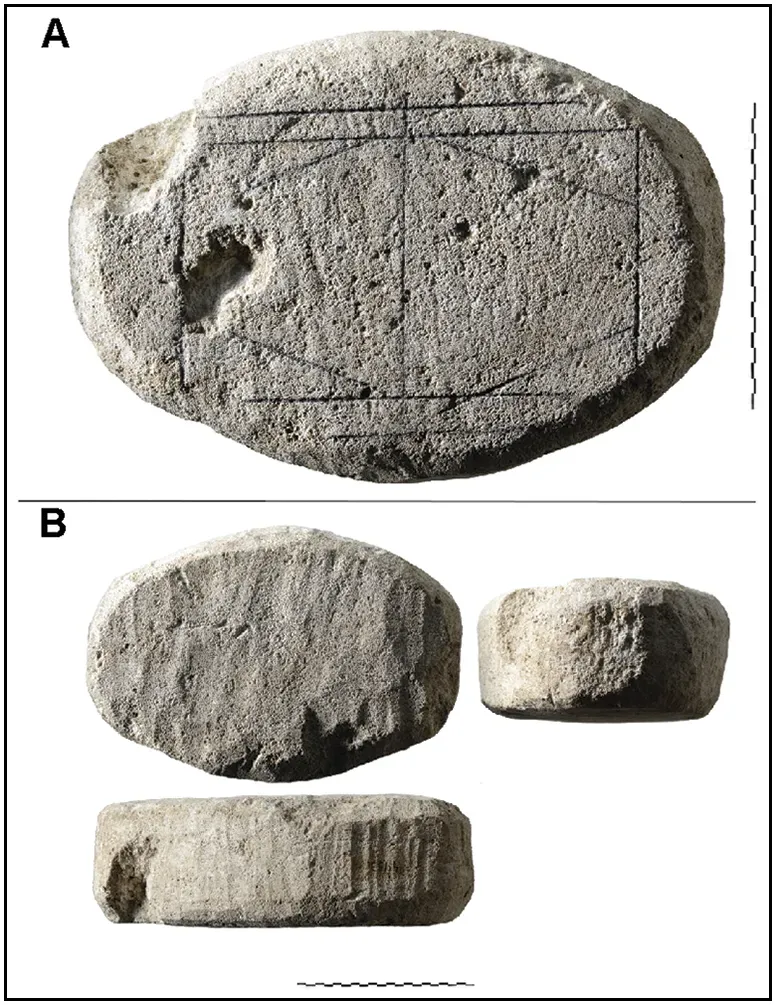
The object, catalogued as number 04433 by Het Romeins Museum, is an oval piece of white limestone measuring 212 by 145 by 71 millimetres (8.35 x 5.71 x 2.80 inches) and weighing 3.38 kilograms (7.45 pounds). Its stone came from the Norroy quarries in what is now north-eastern France. Unlike ordinary building blocks, all its sides were worked and its upper face was smoothed and marked with a geometric pattern.
Coriovallum was a town in the province of Germania Inferior at the junction of important Roman routes. The study places its foundation under Augustus and describes substantial buildings, burial grounds and Roman-style pottery production in the imperial period.
The researchers suggest the stone may have been reshaped from an architectural element during the town’s late Roman phase, when reused building stone was common. That is an interpretation, not a dated find from a sealed layer. With the original discovery circumstances poorly documented, neither the maker nor the people who used it can be identified.
Why the Lines Look Like a Game
The incisions do not match the grid of a game whose rules are securely known. A gaming purpose had been proposed before, but the researchers also used AI to test other possibilities. They considered an architectural drawing, a mason’s guide and a decorative stone before examining whether use left traces beside the lines.
The small oval shape and bevelled edge count against its being part of a larger pavement plan. Its marks are also less precise than the construction lines expected from stone cutting, while the worked upper surface seems designed to keep the pattern visible. None of these observations alone proves that someone played on it.
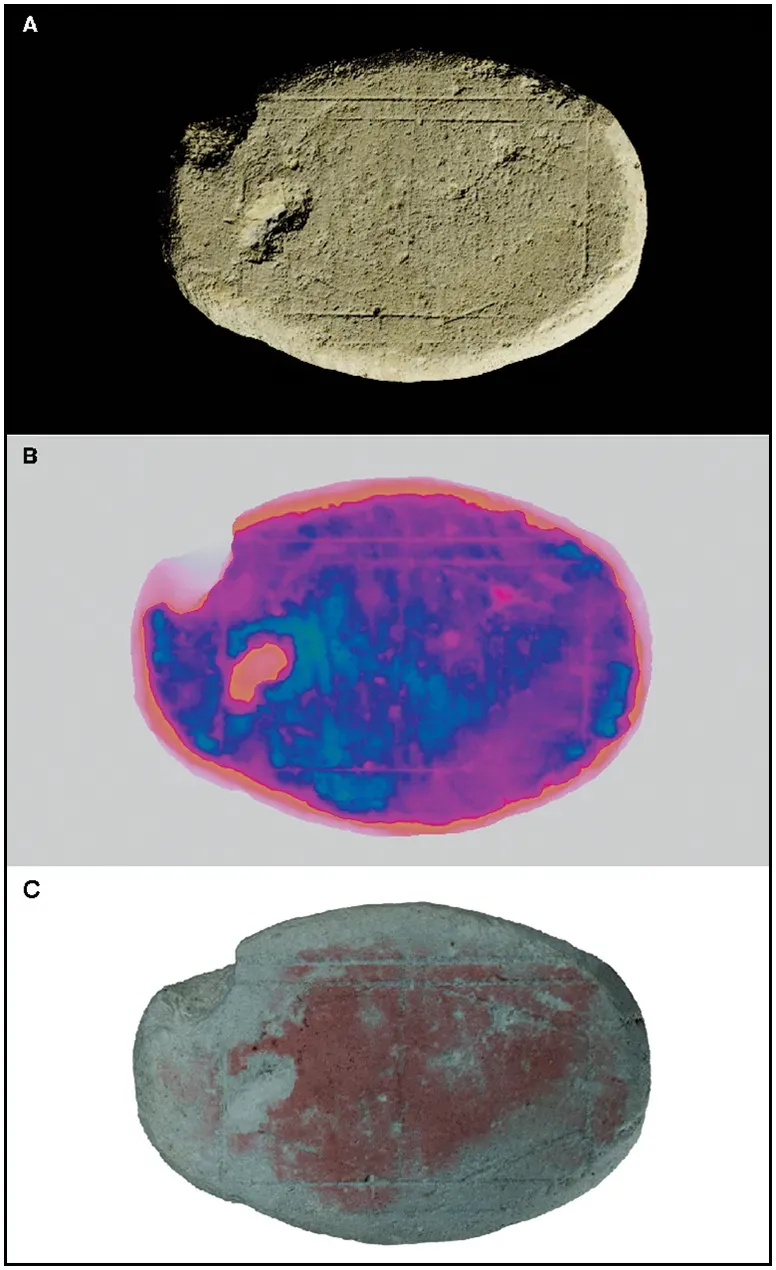
The strongest material clue is uneven smoothing near particular incisions. Microscopic examination found levelled grains in those zones, unlike the rougher surface elsewhere. The team argues that sliding hard glass or stone counters over the softer limestone could have caused the abrasion. Roman-era glass pieces have been found at Coriovallum, although the paper does not establish that those specific pieces belonged to this stone.
Testing Possible Moves Against Wear
The team used the Ludii game system to test rules drawn from historic European games on six possible readings of the incised board. Starting positions, permitted moves and winning conditions produced 130 game configurations. For each combination of board and rules, computer AI agents played 1,000 rounds, allowing the researchers to count how frequently play crossed each line.
They then compared those patterns with the observed wear. A useful match needed heavy traffic on the noticeably worn diagonal, relatively little traffic on the central line and use across most of the board. Nine configurations met the criteria. Every one was a blocking game, in which a player with more pieces tries to prevent an opponent from moving.
Seven matches used four pieces against two; two used three against two. The researchers favour a playable four-against-two version with the sides starting opposite each other. The simulation did not find an inscription prescribing moves, and its output cannot show whether Roman players used exactly that arrangement or changed the order of play between games.
What the Computer Cannot Recover
The study’s six board readings reflect uncertainty about which intersections formed playable positions. One arrangement seems most practical when the size of Roman counters is considered, but the results do not eliminate the others. A different plausible rule set, including one not tested, could also create similar wear.
Computer AI agents played according to programmed rules and strategies. Human players could favour one side of a board, repeat familiar moves, or use a stone in ways that a simulation does not capture. The authors adjusted for symmetry in their comparisons, yet explicitly retain that limit when interpreting their results.
Other causes of abrasion remain possible, including later damage or an otherwise undocumented use of the marked surface. The researchers judge gameplay the most likely explanation because the wear follows the incisions. Their conclusion is a plausible reconstruction, not a fully verified version of a uniquely decoded ancient rulebook.
A Different Game from Familiar Roman Boards
Roman gaming evidence includes squared boards associated with ludus latrunculorum and three-row boards for duodecim scriptorum. Scholarship on glass counters from Pompeii stresses that even familiar games have disputed details. It also shows why an object that looks like a playing piece cannot automatically be assigned that function: many glass discs from one Pompeian neighbourhood were probably used for something else.
The Coriovallum pattern is different from those better known layouts. Our overview of Roman board games and gambling describes that broader leisure setting, while its account of games played by spectators at the Colosseum offers another example of gaming surfaces in public places. Neither establishes the identity of the Heerlen game.
Blocking games comparable to the simulated versions are recorded in later European traditions. The Antiquity paper notes that certain Roman-era scratched boards resemble the layouts of later examples, but no Roman text describes this blocking game. If the Heerlen interpretation is correct, it would place evidence for this type of play much earlier than the surviving written rules.
What the Find Adds to Roman Play
The study joins two kinds of evidence that are usually considered separately: physical traces left on an object and the move patterns that different rules would produce. That combination helped AI tools to narrow down an unfamiliar design to a family of games without pretending that its ancient name, complete rules or players are known.
Its provenance also sets a firm boundary on the story. The object is held by a museum, and the archive records Heerlen as its findspot, but a precise excavated setting is unavailable. The proposed late Roman reuse and gaming function depend on analysis of the object rather than an association with a dated room or a complete set of counters.
The most defensible result is therefore specific: a small marked stone from a Roman town probably served as a board, and simulated blocking games best reproduce the wear along its lines. The paper offers a testable model for studying other uncertain boards, while leaving the exact choices of Coriovallum’s players – for the time being – unresolved.
Walter Crist et al., “Ludus Coriovalli: using artificial intelligence-driven simulations to identify rules for an ancient board game,” Antiquity 100, no. 409 (2026), 111–126.
Antiquity, “AI simulation helps calculate the rules of an unknown Roman board game,” 11 February 2026.
H.E.M. Cool, “Recreation or Decoration: What Were the Glass Counters from Pompeii Used For?”, Papers of the British School at Rome 84 (2016), 157–177.

About the Roman Empire Times
See all the latest news for the Roman Empire, ancient Roman historical facts, anecdotes from Roman Times and stories from the Empire at romanempiretimes.com. Contact our newsroom to report an update or send your story, photos and videos. Follow RET on Google News, Flipboard and subscribe here to our daily email.
Follow the Roman Empire Times on social media: