
Conclave's Robert Harris Sees in Rome’s Republic, a Warning for Modern Democracy
A new interview about Agrippa brings Rome’s passage to one-man rule into the present, as the Conclave novelist warns about broken political rules.


Robert Harris, the author of Conclave, has returned to ancient Rome with a warning about the survival of democratic government. Discussing his new novel, Agrippa, with CBC’s Tom Power, he argued that a political system can endure for centuries and still lose the shared rules that sustain it.
The interview aired on Q with Tom Power on 15 October. CBC Arts published its accompanying report that day and updated it on 16 October. Harris’s central concern was the erosion of accepted restraints on power, a process he sees connecting the Roman Republic’s transformation with contemporary American politics.
His Roman setting is the passage from republican government to the rule of Augustus. The new book approaches that change through Marcus Vipsanius Agrippa, the general and statesman who stood beside Rome’s future emperor. Harris presents the story as a fictional memoir, giving that political transformation the perspective of a participant.
Agrippa’s place beside the future emperor
In the account of the novel presented by CBC, Agrippa’s story covers roughly two decades during which political authority became concentrated in one man. The choice of narrator brings Augustus’s close associate into the foreground, alongside the ruler whose position his military successes helped secure.
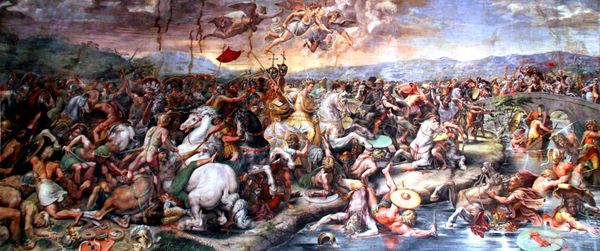
The historical connection is more than evident. Agrippa and Octavian, the future Augustus, achieved victories at Naulochus in 36 BCE and Actium in 31 BCE. A scholarly analysis of the Republic’s transformation places those successes within the struggle that prevented a more lasting fragmentation of Roman power among rival commanders.
Agrippa therefore belongs directly in the history of Rome’s new political order. Our account of Agrippa’s early career beside Octavian follows his emergence within that circle. Harris’s novel returns to their relationship to examine how a republic’s political life could give way to personal rule.
The danger Harris sees in broken rules
Harris told Power that comparisons with the United States repeatedly arose while he was writing about ancient Rome. He linked his warning to the weakening of laws and conventions that had previously constrained political behaviour. In his interpretation, breaking those restraints changes the expectations under which later leaders operate.
He also argued that the effects of recent changes in American political life would extend beyond Donald Trump’s presidency; that is at least Harris’s assessment of the present. The Roman question behind his argument concerns how institutions retain authority when powerful participants increasingly disregard the rules governing their use, and eventually leave a trail of weakness.
For Harris, the Republic’s crisis involved a loss of agreement about the purpose of the state itself. He described a political community divided over what its common system was meant to preserve, and expressed concern about its modern counterpart amid the influence of technology, concentrated wealth and new financial interests.
Power moved before the old names disappeared
The historical change unfolded over decades. A scholarly synthesis of the period describes the redistribution of authority from several centres of power towards a single ruler. Leading senators, the Senate collectively, the equestrian elite and the Roman people had all formed part of the earlier political balance.
Under Augustus, power became concentrated around the princeps, or first citizen. Existing offices and republican language continued through this transformation. Our account of Octavian’s emergence as Augustus follows the career at the centre of that process, including the relationship between his authority and the institutions he retained.
That gradual development explains why historians consider several possible turning points. Caesar’s march on Rome in 49 BCE, his assassination in 44 BCE, Actium in 31 BCE and the settlements of Augustus’s position all belong to the discussion. The concentration of power becomes clearer when those changes are considered together.
Rivals could claim the same Republic
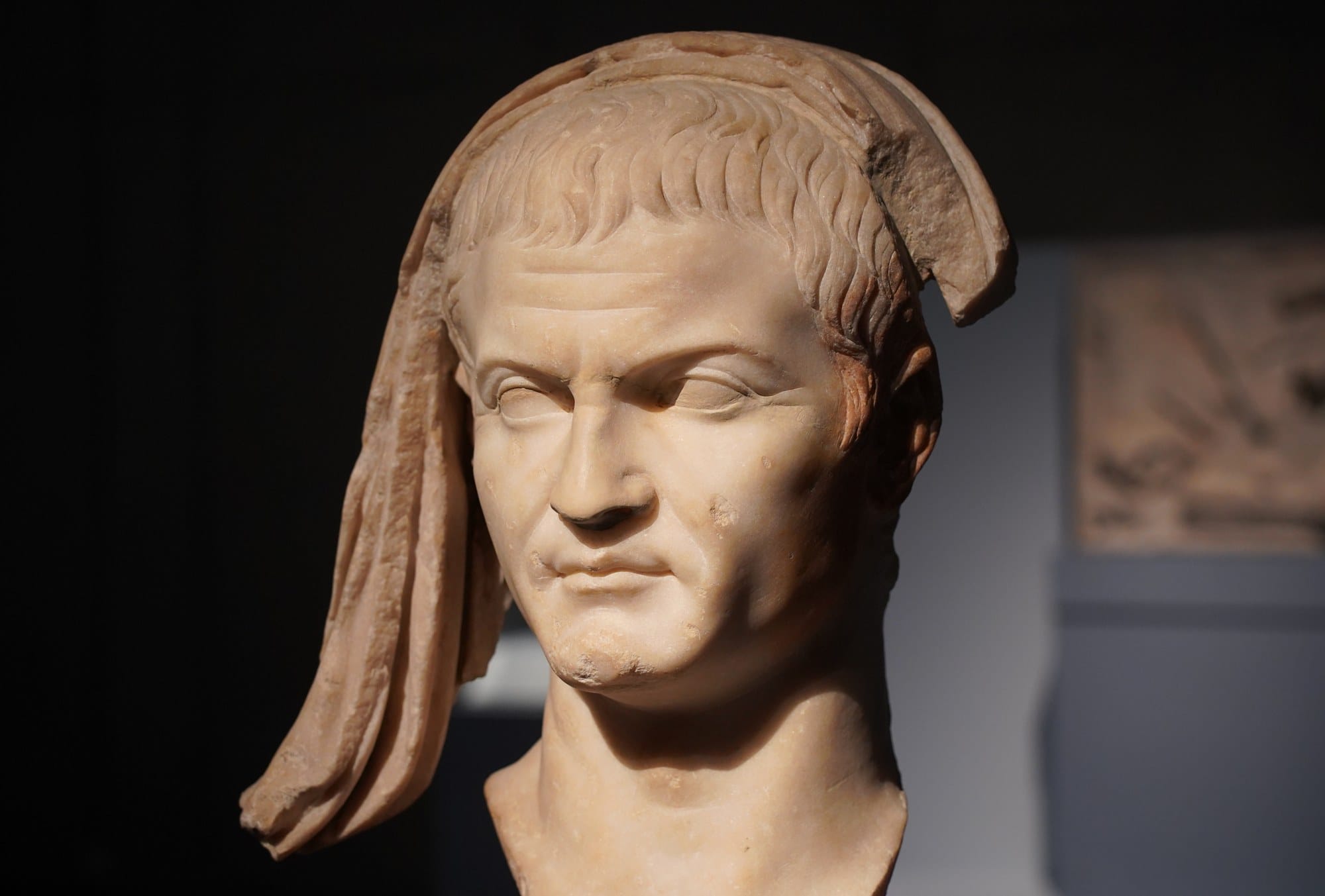
The scholarship also presents competing explanations for the political breakdown. One influential account stresses the loss of consensus as different groups developed conflicting interests and senatorial government failed to accommodate them. Another places greater weight on the civil wars themselves as the force that destroyed a still functioning political system.
A further interpretation emphasises attachment to republican traditions even among the people who helped transform them. Rival leaders could claim that they were defending the state while disputing who legitimately spoke for it. The conflict concerned competing versions of republican authority as well as the ambitions and interests of particular individuals.
In this reading, legitimacy became divided among the Senate, popular leaders and military commanders. The familiar institutions remained powerful reference points even when they were being used against one another. The distinction gives historical depth to Harris’s concern about shared rules: the participants could appeal to the same political inheritance while pursuing incompatible courses.
A return to the world of the Cicero trilogy
Harris had already made the late Republic central to his fiction in Imperium, Lustrum and Dictator, the three novels of his Cicero trilogy. The CBC report places Agrippa alongside those earlier books as another examination of the transition from republican politics to autocratic government.
The trilogy’s central figure belonged to the political world being transformed. Cicero’s career and writings offer another route into that period. The new novel changes the narrative viewpoint to a man closely associated with Augustus, while retaining Harris’s interest in the Republic’s final generations.
The interview also ranges beyond Roman history. The episode description identifies Harris’s unexpected route into writing fiction and the rare access to the Vatican that helped inspire Conclave among its subjects. Those discussions place the new Roman novel within a career that repeatedly returns to institutions, political upheaval and people caught within them.
History also leaves room for resilience
Asked whether studying the past offered comfort or caused alarm, Harris stressed the capacity of people to endure catastrophe. He pointed to earlier generations who had lived through crises, including the two world wars, as a source of reassurance about human survival amid the breakdown of established orders.
He connected that response with his own fiction, describing books concerned with calamity and the choices people make as familiar structures collapse. His interest in the past combines anxiety about the fragility of political arrangements with attention to how individuals continue living through the changes around them.
The Roman story at the centre of Agrippa is the concentration of authority around Augustus after years of conflict. Harris’s present-day warning asks how a long-established political community recognises that its shared restraints are weakening. The full interview develops that argument alongside his account of writing the novel and the experiences behind his earlier work.


Full interview: Agrippa, modern democracy and the making of Conclave.





About the Roman Empire Times
See all the latest news for the Roman Empire, ancient Roman historical facts, anecdotes from Roman Times and stories from the Empire at romanempiretimes.com. Contact our newsroom to report an update or send your story, photos and videos. Follow RET on Google News, Flipboard and subscribe here to our daily email.
Follow the Roman Empire Times on social media: