
Lucretius and the Roman Poem That Changed How the World Was Seen
Lucretius left behind only one surviving work, but it was enough to reshape how later ages thought about nature, fear, and the place of humanity in the universe. His poem challenged superstition, questioned power, and gave Rome one of its boldest philosophical voices.

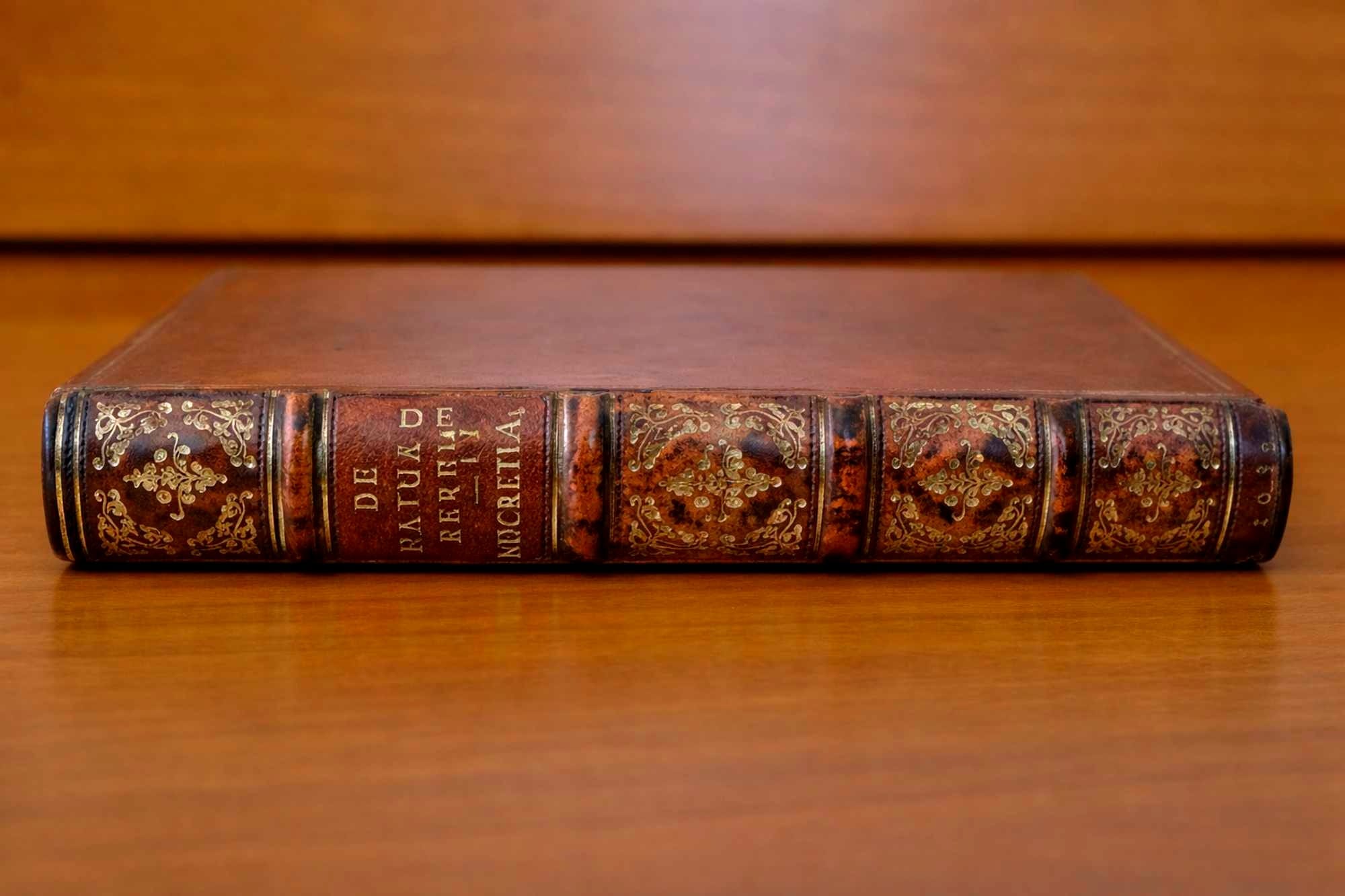
Lucretius wrote in an age of political unrest, but his poem looked far beyond the immediate struggles of Rome. In De rerum natura, he asked what the universe is made of, why human beings live in fear, whether the gods govern the world, and what death really means. The result was one of antiquity’s most radical works – a Roman poem that challenged superstition, redefined nature, and changed how later ages would imagine the world itself.
The Poet and the Poem
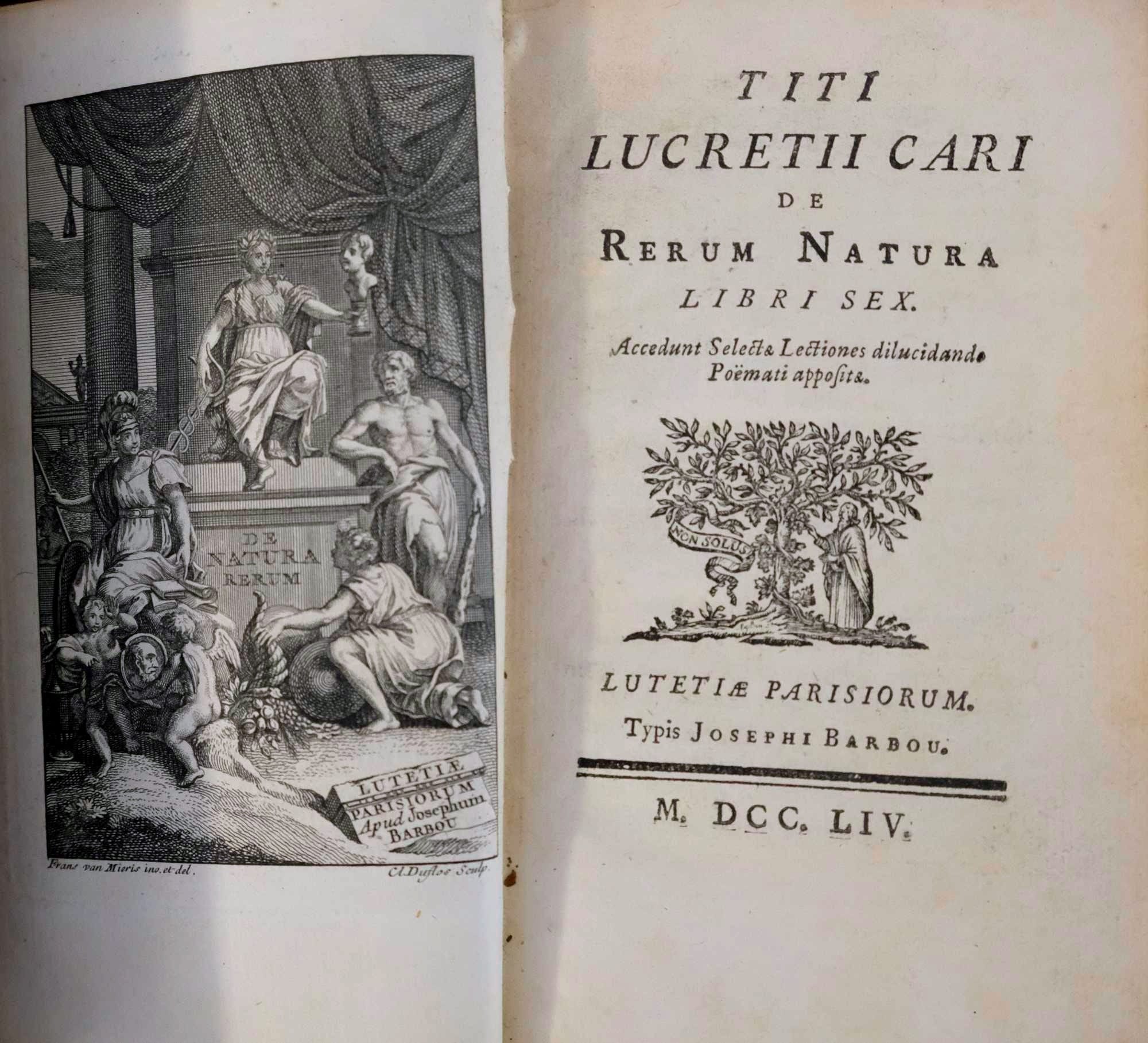
Titus Lucretius Carus, usually dated to around 99–55 BC, was a Roman poet and philosopher. The only work securely connected to him is De rerum natura, a philosophical poem that sets out the principles of Epicurean thought and is usually translated as On the Nature of Things, though it is sometimes rendered as On the Nature of the Universe.
Very little can be said with certainty about his life. The safest conclusion is that he was connected, either as a friend or a dependent, to Gaius Memmius, to whom the poem was addressed and dedicated.
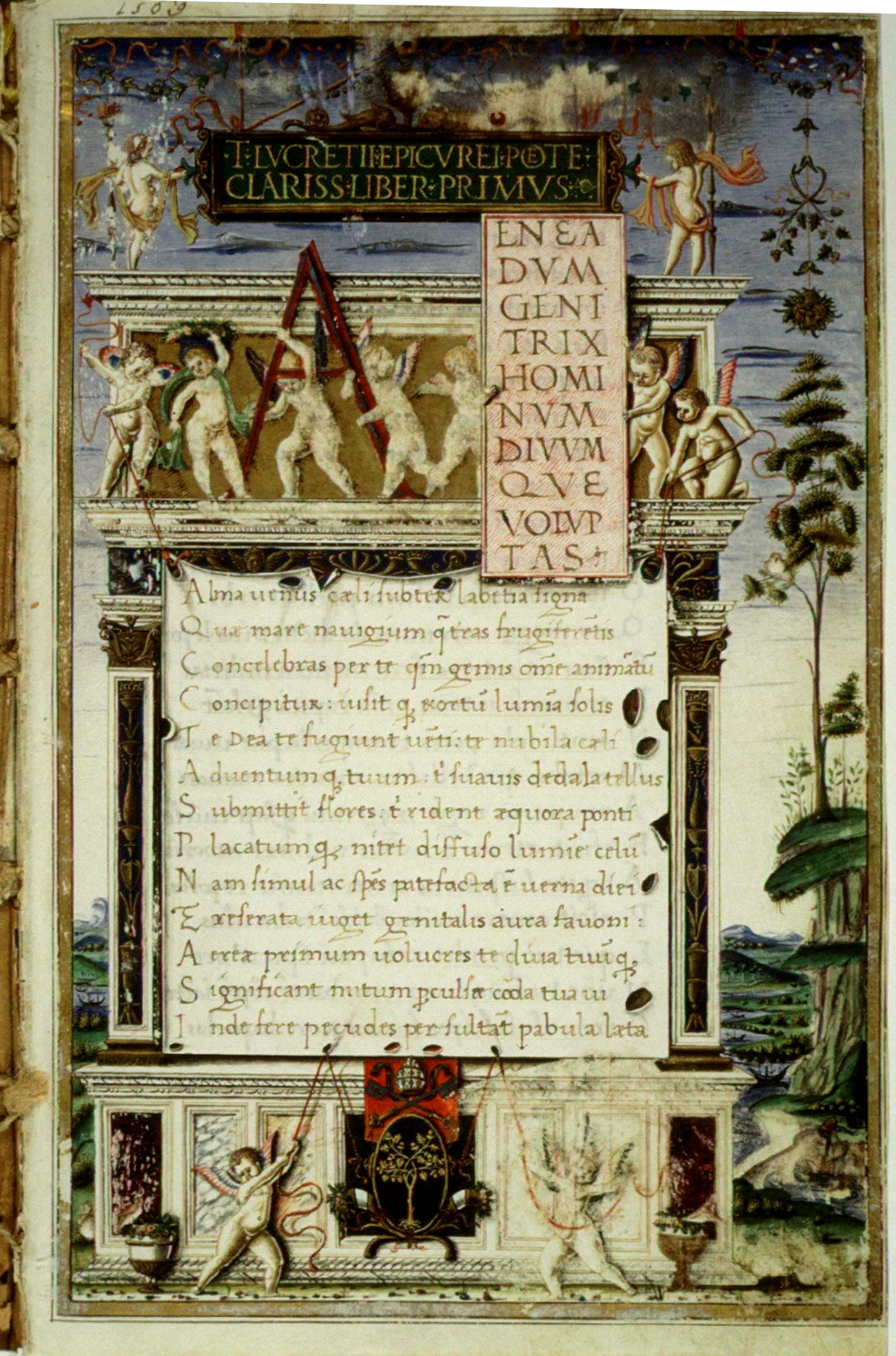
De rerum natura later exercised a strong influence on Augustan poetry, especially on Virgil – above all in the Aeneid and Georgics, and to a lesser degree in the Eclogues – as well as on Horace. The poem came close to disappearing in the Middle Ages, but it was rediscovered in 1417 by Poggio Bracciolini in a monastery in Germany. After its recovery, it became important both for the later development of atomist thought, influencing figures such as Pierre Gassendi, and for the intellectual efforts of Enlightenment thinkers who sought to shape a new form of Christian humanism.
Lucretius and the Crisis of Roman Public Life
De rerum natura may appear at first glance to stand far from the immediate concerns of Roman politics. Its gaze is fixed on atoms, the soul, the gods, the earth, and the structure of the universe. Yet beneath that immense philosophical design lies a poem deeply responsive to the tensions of its own age.
Its teaching is universal, but its urgency belongs to a Rome marked by instability, competition, and moral fatigue. The poem does not speak the language of public debate in any conventional sense, yet it addresses a society in which ambition, fear, and the struggle for power had become destructive habits of life.
This political dimension becomes especially clear in the poem’s account of the development of human society. What begins as a narrative of early mankind gradually forming communities, customs, and institutions also becomes a reflection on the costs of civilization itself. Human beings do not simply move from savagery to order in a clean and triumphant progression.
They create laws, bonds, and structures of mutual life, but they also create rivalry, domination, insecurity, and the restless desire to possess more than nature requires. The growth of society is therefore presented as both necessary and dangerous. It offers protection and stability, yet it also gives new forms to vanity, violence, and fear.
The poem’s larger view of the universe gives this historical meditation an even sharper edge. In a world made of atoms moving through infinite space, there is no foundation for believing that Rome occupies a privileged place in creation or that its power is guaranteed by divine design. The world itself is not eternal, and neither is any city, institution, or empire within it.
Rome is not removed from the common condition of all material things. It too belongs to a universe in which everything formed must in time pass away. The poem thus strips Roman greatness of cosmic permanence and refuses to treat empire as something secured by destiny or providence.
That vision carries serious consequences for public life. The poem does not merely criticize isolated political failures or the misconduct of particular men. Its challenge reaches far deeper, into the very values that sustained Roman competition for office, military glory, status, and wealth.
The pursuit of honor is exposed not as a noble fulfillment of human nature, but as a symptom of misunderstanding. The same is true of greed, rivalry, and the hunger for domination.
These arise from fear, from insecurity, and from false beliefs about what human beings truly need in order to live well. So long as people remain trapped by those illusions, public life will continue to reproduce conflict.
For that reason, the poem offers no ordinary political remedy. It does not suggest that Rome can be set right by a better constitution, a wiser faction, or a stronger ruler. The crisis lies too deep for that. What appears outwardly as political disorder is treated as the visible expression of a more fundamental disturbance in the human mind.
Fear of death, superstition, craving for distinction, and the endless pursuit of what is unnecessary all distort human judgment. A society governed by such impulses cannot remain healthy for long. The corruption of public life begins in private confusion.
The only true answer offered is philosophical transformation. Human beings must learn to live according to nature rather than according to ambition. They must free themselves from fear of divine punishment, from the terror of death, and from the false belief that power, riches, or reputation can bring lasting peace.
Once those illusions are removed, a different kind of society becomes imaginable – one founded not on domination and rivalry, but on restraint, mutual respect, and freedom from aggression. Public harmony depends on inward clarity. Without that inner correction, political life remains unstable no matter what form it takes.
The poem offers this vision without any easy optimism. Its account of civilization is marked by the sense that collective life is fragile, and that the achievements of society carry within them the seeds of disorder. The more intensely human beings pursue power, prestige, and excess, the more they weaken the body politic.
Political crisis is therefore not treated as an accidental misfortune, but as the natural outcome of desires left unchecked and beliefs left unexamined. The warning is severe: a society that cannot master its fears and appetites will continue moving toward decay.
Seen in this light, De rerum natura is not a retreat from history but a profound response to it. Its explanation of nature becomes, at the same time, a diagnosis of Rome. By denying that empire has cosmic privilege and by exposing the emptiness of the ambitions on which Roman public life depended, the poem undermines the moral and ideological foundations of the world around it.
What it sets in their place is not a political program, but something more radical: the claim that no society can be healthy unless human beings first learn how to think, desire, and live differently. ("Lucretius and Roman politics and history" by Alessandro Schiesaro)
Lucretius and the Long Road to Modern Science
Lucretius did not write a scientific handbook in the modern sense, yet his poem became one of the most important ancient texts in the later history of science. Its central purpose was to free human beings from fear – especially fear of the gods and of divine interference in the world – and to do that it presented a universe governed not by providence but by the motion and interaction of atoms.
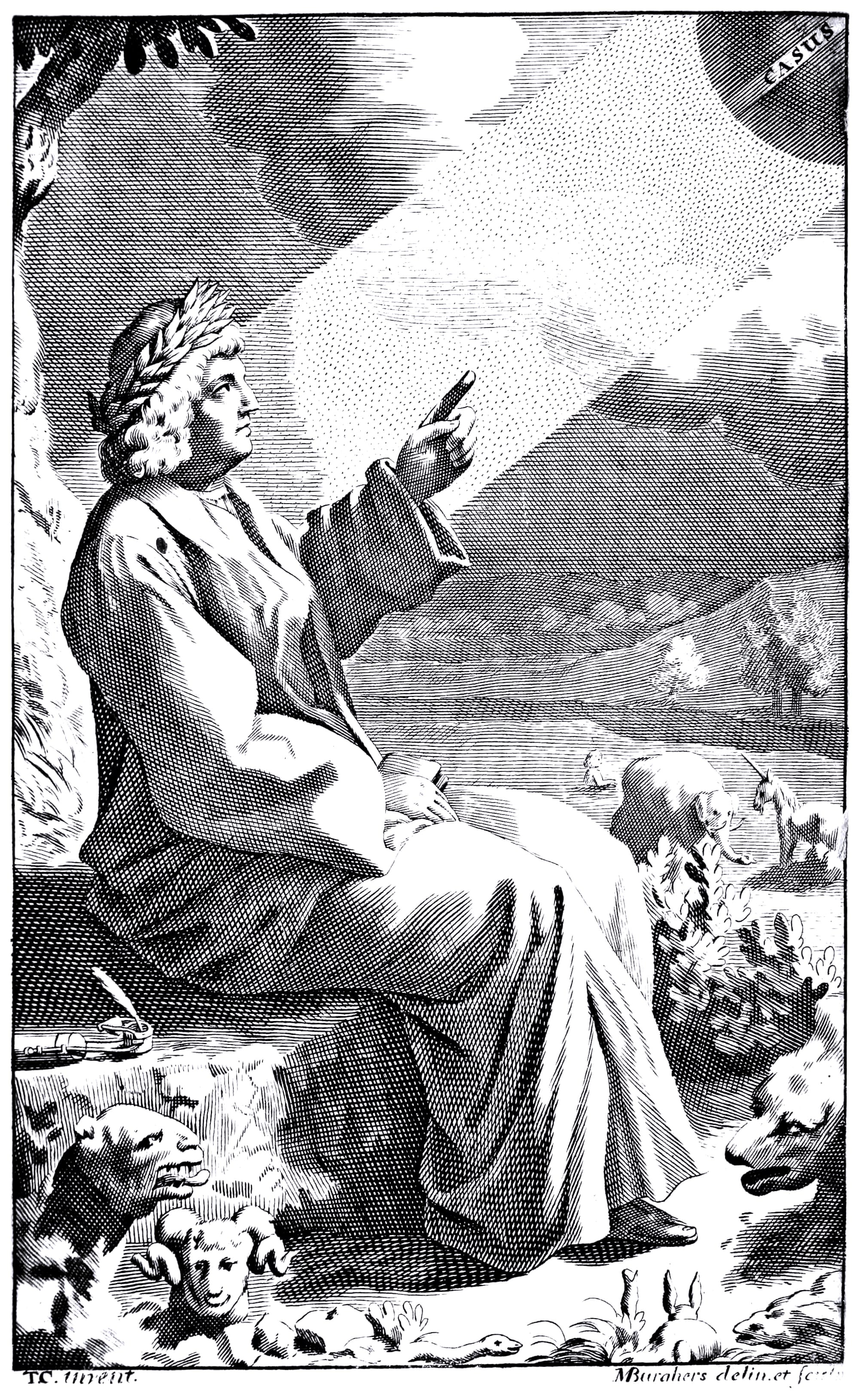
Nature, in this vision, does not wait for orders from above. It acts by itself, without divine supervision, producing all things through material processes. That idea would prove extraordinarily powerful many centuries later, when European thinkers began to challenge older religious and scholastic explanations of the natural world.
A Universe Without Providence
The poem ranges widely across subjects that today would belong to different sciences: sensation, mental disturbance, cosmology, seasons, eclipses, thunder, magnetism, disease, plague, and the rise of plant and animal life. What unites all of these topics is the same explanatory method. Phenomena are not traced back to divine will or cosmic purpose, but to matter in motion.
The world is not arranged according to a providential plan, and nature does not exist for the sake of human beings. This anti-teleological view was deeply unsettling in societies shaped by religious explanations of the cosmos, but it also opened the door to a different habit of thought – one in which natural events could be studied as natural events.
Why the Poem Mattered After Its Rediscovery
When the poem returned to circulation in a Christian intellectual world, it caused both fascination and alarm. Its claims were too radical to be absorbed unchanged, yet they could not be ignored. The idea that reality consists of atoms and void, that there are no immaterial spirits directing nature, and that the gods do not govern earthly events gradually entered the intellectual bloodstream of early modern Europe.
These ideas were often revised, softened, or merged with other systems, but they helped erode the older scholastic picture of a world full of fixed essences, intrinsic purposes, and divinely ordered hierarchies. In that sense, the poem did not simply survive – it became one of the forces helping to reshape the very framework through which nature was understood.
Ancient Atomism and Modern Science
Continuity should not be exaggerated. There are real links between ancient atomism and modern science, but they are not the same thing. What persisted across the centuries was the basic conviction that visible bodies are made of smaller, enduring units that do not themselves possess the full range of qualities found in the larger objects they compose.
That basic intuition remained powerful enough for later scientists to treat atomism as one of the most fruitful ways of understanding the material world. Yet modern atomism grew out of experiment, measurement, and mathematical inquiry, whereas ancient atomism belonged to a philosophical effort to explain change, plurality, and first principles. The resemblance is therefore important, but it is not a simple identity.
From Poetic Vision to Scientific Hypothesis
Over the course of the Scientific Revolution and the centuries that followed, the Lucretian vision of a self-sufficient nature helped encourage a world picture in which causes were sought in particles, motion, and configuration rather than in divine intentions or occult forces. In chemistry, physiology, meteorology, and cosmology, the refusal of teleology became a major explanatory ideal.
The theory of atoms was eventually transformed from an ancient conceptual model into a hypothesis increasingly confirmed by experiment. In that process, Lucretius remained a point of reference long after antiquity, his poem continuing to offer both provocation and intellectual encouragement.
Lucretius and the Question of Life
The poem also mattered for the history of thinking about life itself. Its account of the emergence of living beings and the disappearance of forms unable to survive gave later readers a powerful anti-creationist framework for imagining the natural history of the earth. Lucretius did not develop a modern theory of evolution, and he did not describe species as indefinitely changing over time.
But he did imagine a world in which living forms arise materially and in which extinction plays a decisive role in shaping what survives. Those ideas would resonate later, especially in debates over the development of life and the relation between natural history and theology.
The Great Difference Between Ancient and Modern Materialism
For all that, the deepest difference between Lucretius and modern science lies not only in method but in purpose. Ancient atomism was contemplative. It sought understanding in order to calm the mind, free human beings from superstition, and place life within a larger natural order. It did not aim at technological mastery. Modern materialism, by contrast, became increasingly bound to experiment, intervention, and control.
Once matter was understood as corporeal and manipulable, nature could be treated not merely as something to understand but as something to transform. The new sciences moved toward the practical remaking of the world. Lucretius’ poem never imagines that ambition. Its gaze remains philosophical, reverent before nature’s spontaneous processes, and often sharply skeptical about the value of human striving.
Why Lucretius Still Matters
That is why Lucretius occupies such a curious place in the history of science. He is not a modern scientist before science, nor can his poem be reduced to a primitive version of later physics. What he offers instead is something more foundational: a powerful vision of a world that can be explained without providence, without supernatural intrusion, and without purpose built into nature itself.
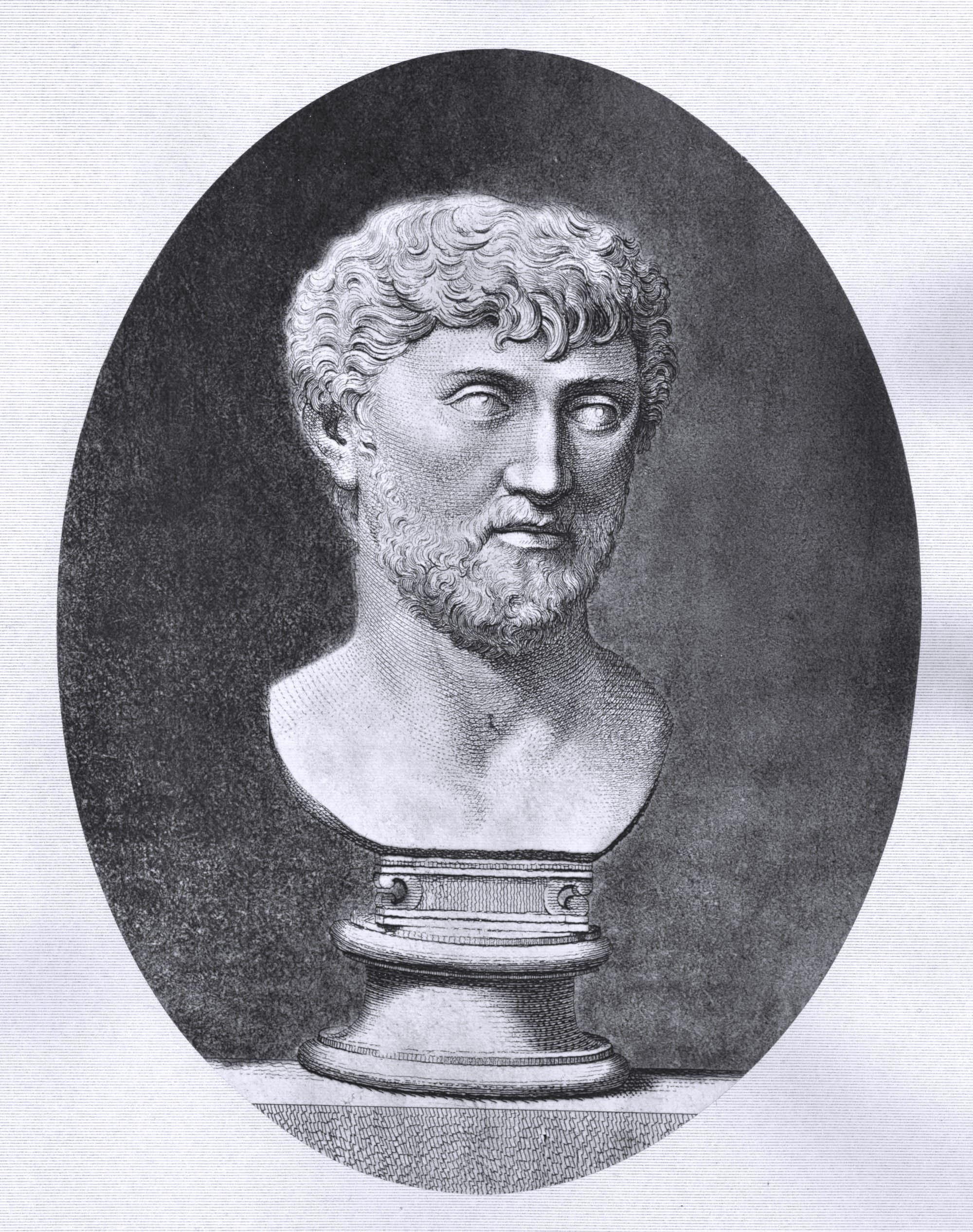
That vision helped prepare minds for later scientific habits of thought, even though the tools, methods, and goals of modern science would become very different from his own. His poem belongs to the history of science not because it discovered modern physics, but because it made the natural world intellectually imaginable in a new and radical way. ("Lucretius and the history of science" by Monte Johnson & Catherine Wilson)
St Jerome’s Testimony on Lucretius
The most famous ancient notice about Lucretius’ life comes from St Jerome. In his continuation of Eusebius’ chronicle, under a year around 94 BC, he records the poet’s birth and adds a far darker claim: that Lucretius was driven mad by a love potion, wrote several books during intervals of insanity, had them later corrected by Cicero, and died by his own hand at the age of forty-four.
That account has long been treated with suspicion, above all because of its most dramatic elements – the love potion, the madness, and the suicide. Yet the objections raised against it are not as decisive as they are often made to seem. Once examined closely, Jerome’s testimony appears less easy to dismiss than modern readers have sometimes assumed.
There is no strong reason to treat the notice as a Christian invention. Jerome had access to earlier biographical material on classical authors, and there is every reason to think that Lucretius’ life had also circulated in pagan sources. Nor is the reference to Cicero especially implausible. The remark that he emended Lucretius’ books need not imply extensive editorial intervention. It may simply mean that he reviewed the poem and approved it for publication.
The Case Against Jerome
The main objections usually take three forms. The first insists that a love potion could not have caused recurring attacks of madness. The second argues that De rerum natura does not read like the work of a man writing through periods of mental collapse. The third, and by far the most influential, rests on silence: if earlier writers knew such a story, surely they would have mentioned it.
Taken together, these arguments have often been thought strong enough to discredit Jerome altogether. But each is more fragile than it first appears.
Could a Love Potion Cause Madness?
It is certainly difficult to believe that a love potion could directly produce repeated fits of insanity in any simple physical sense. But Jerome’s wording does not require such a literal interpretation. The potion may be understood not as the immediate medical cause, but as the beginning of a chain of suffering. An illness, emotional torment, or some deeper collapse may have followed from it, eventually leading to psychological breakdown and recurring episodes of derangement.
Seen in that light, the story is not impossible. Strange, yes – but not inherently absurd.
Does the Poem Prove Mental Stability?
Another objection rests on the poem itself. De rerum natura seems, at first glance, too controlled, too intellectually rigorous, too architecturally precise to have been composed, even in part, during lucid intervals between bouts of madness.
That objection sounds persuasive until pressed too far. Much of Lucretius’ philosophical material derives from Epicurus, and the poem’s reasoning does not necessarily prove continuous mental composure on the part of its author.
Some of the doctrines accepted in the poem, especially the multiple explanations given for natural phenomena such as thunder, eclipses, and the movement of the sun, do not suggest modern scientific exactness so much as fidelity to inherited philosophical teaching.
Lucretius was undoubtedly a poet of real power, but that is not the same as proving perfect rational equilibrium. His verse can be magnificent, but it is not uniformly so. Its unevenness does not prove instability, but neither does the poem itself prove the impossibility of it.
Nor is there anything unusual, in broader literary history, about major writers suffering from serious mental disturbance. Poetic force and mental fragility have often coexisted. The existence of one does not disprove the other.
The Weakness of Silence
The strongest objection has usually been the silence of earlier authors. If Jerome’s story were true, why do Cicero, Virgil, Ovid, Seneca, Quintilian, Plutarch, and others not mention it?
The answer is less dramatic than the objection suggests. Ancient writers did not approach literary biography in the modern way. They mentioned personal details when those details served a purpose. If they had no reason to dwell on the manner of Lucretius’ death, their silence proves very little.
Cicero, for example, says remarkably little about Lucretius at all. In a brief note to his brother Quintus, he offers only a compressed literary judgment on the poem. That hardly creates an expectation that he would discuss the poet’s life. Virgil’s praise of Lucretius is likewise literary, not biographical. His purpose is to honour poetic and intellectual achievement, not to write a life.
The same pattern continues elsewhere. Nepos refers only to the death of Lucretius, not to its cause, because the detail is irrelevant to his purpose. Ovid shows interest in the poetry of earlier writers, not in their biographies.
Seneca quotes Lucretius for style and thought, not for anecdote. Quintilian is concerned with literary evaluation. Plutarch had little interest in Latin poets as biographical subjects. In each case, silence can be explained perfectly well without assuming ignorance of the tradition.
Why the Argument from Silence Fails
Once enough names are gathered together, silence can look impressive. But accumulation does not create proof. The absence of a reference is only meaningful when there was a strong reason for the reference to appear. In Lucretius’ case, that reason is often missing.
The same applies to later authors. Some mention him only in passing. Others cite him for literary or philosophical purposes. A few use language broad enough to include any kind of death. None of this compels the conclusion that Jerome’s story was unknown or fabricated. It shows only that ancient authors were selective, and that biographical detail survived unevenly.
Lactantius and the Limits of Polemic
One of the more serious cases is Lactantius, who attacks Epicurean ideas repeatedly and might seem an obvious place for such a story to surface. Yet even here the silence is less conclusive than it appears. His abusive language toward philosophical opponents is largely rhetorical. When he calls thinkers mad or senseless, he is using the standard vocabulary of polemic, not offering literal diagnosis.
More importantly, Lucretius appears to have impressed him as a poet and stylist. He quotes him extensively and even makes use of some of his attacks on superstition. If his real target was Epicurean doctrine, then Epicurus – not Lucretius’ personal end – remained the more useful opponent.
A Story That Cannot Be Dismissed
None of this proves that Jerome’s account is certainly true in every detail. But it does mean that it cannot be brushed aside as fantasy. The objections commonly raised against it are weaker than they first appear. The love potion need not be read literally, the poem does not settle the question of Lucretius’ mental condition, and the silence of earlier writers carries far less force than has often been claimed.
What remains is not certainty, but credibility. Jerome’s testimony may be uncomfortable, dramatic, and impossible to verify completely. Yet it survives serious scrutiny better than its critics have always admitted. The old story of Lucretius’ madness and suicide may not be provable – but neither can it be confidently dismissed.
Lucretius left behind almost nothing of himself except a poem, yet that poem proved enough to secure his place among Rome’s most formidable minds. It challenged fear, stripped nature of divine supervision, and forced its readers to confront a universe far larger and less comforting than tradition allowed. Whether read as philosophy, poetry, or a response to a world in crisis, De rerum natura remains unsettling because it asks for more than admiration. It asks for a different way of seeing life, death, power, and the fragile order of human society.
About the Roman Empire Times
See all the latest news for the Roman Empire, ancient Roman historical facts, anecdotes from Roman Times and stories from the Empire at romanempiretimes.com. Contact our newsroom to report an update or send your story, photos and videos. Follow RET on Google News, Flipboard and subscribe here to our daily email.
Follow the Roman Empire Times on social media: