
Forest Stones in Germany Identified as Roman Temple, Goddess Figure Discovered
Excavations at Kapersburg in Germany’s Taunus reveal a Roman temple, votive stones and a Victoria figure, while later finds raise questions about life beyond the Limes.

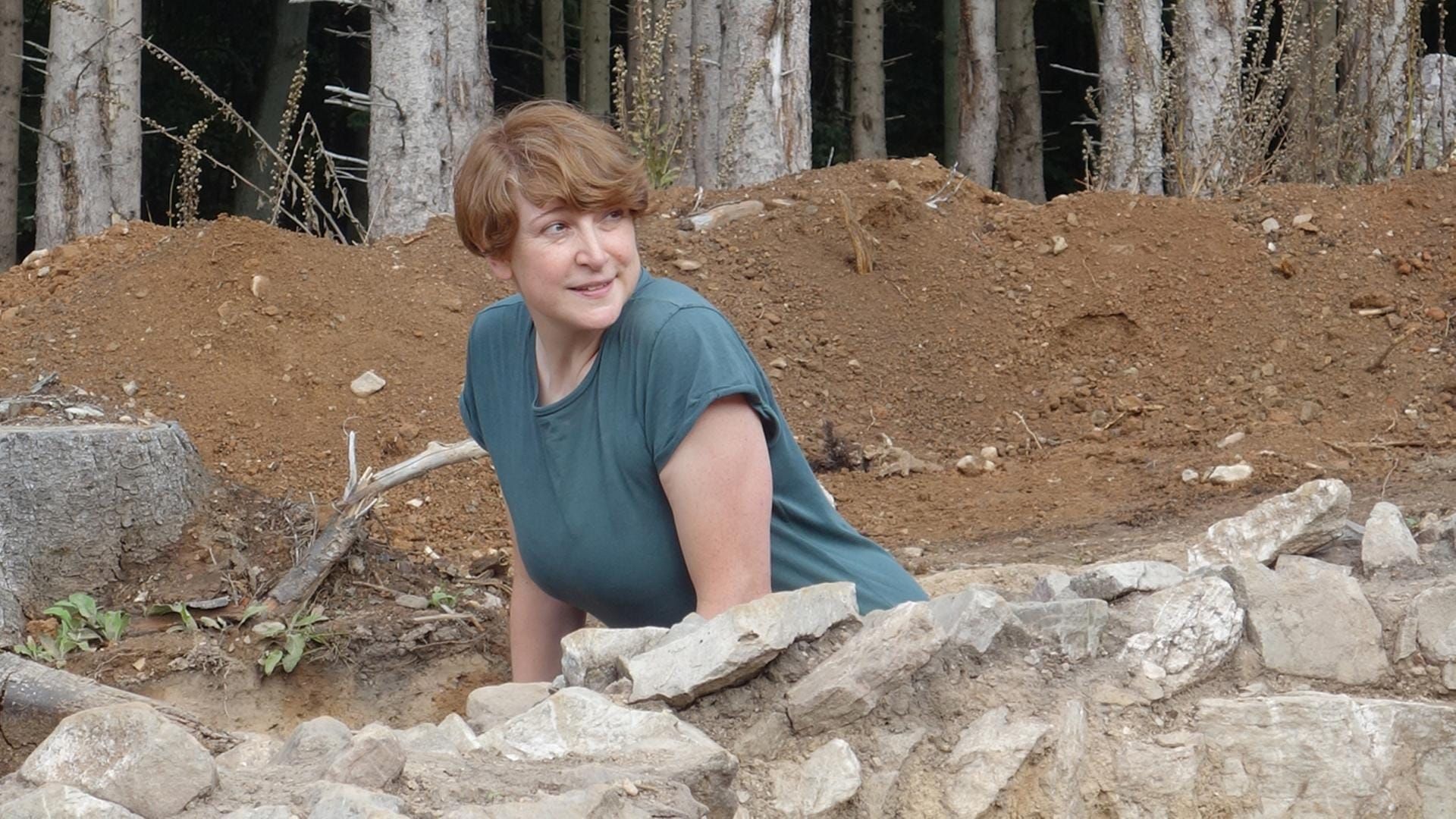
Excavations beside the Roman fort of Kapersburg in Germany’s Taunus have exposed the foundations of a small temple and brought to light a group of objects linked to worship there. Among the finds are part of a figure identified as Victoria, fragments that may belong to a statue of Mars, and two inscribed votive stones. The discoveries add detail to a civilian settlement that lay outside the fort’s walls.
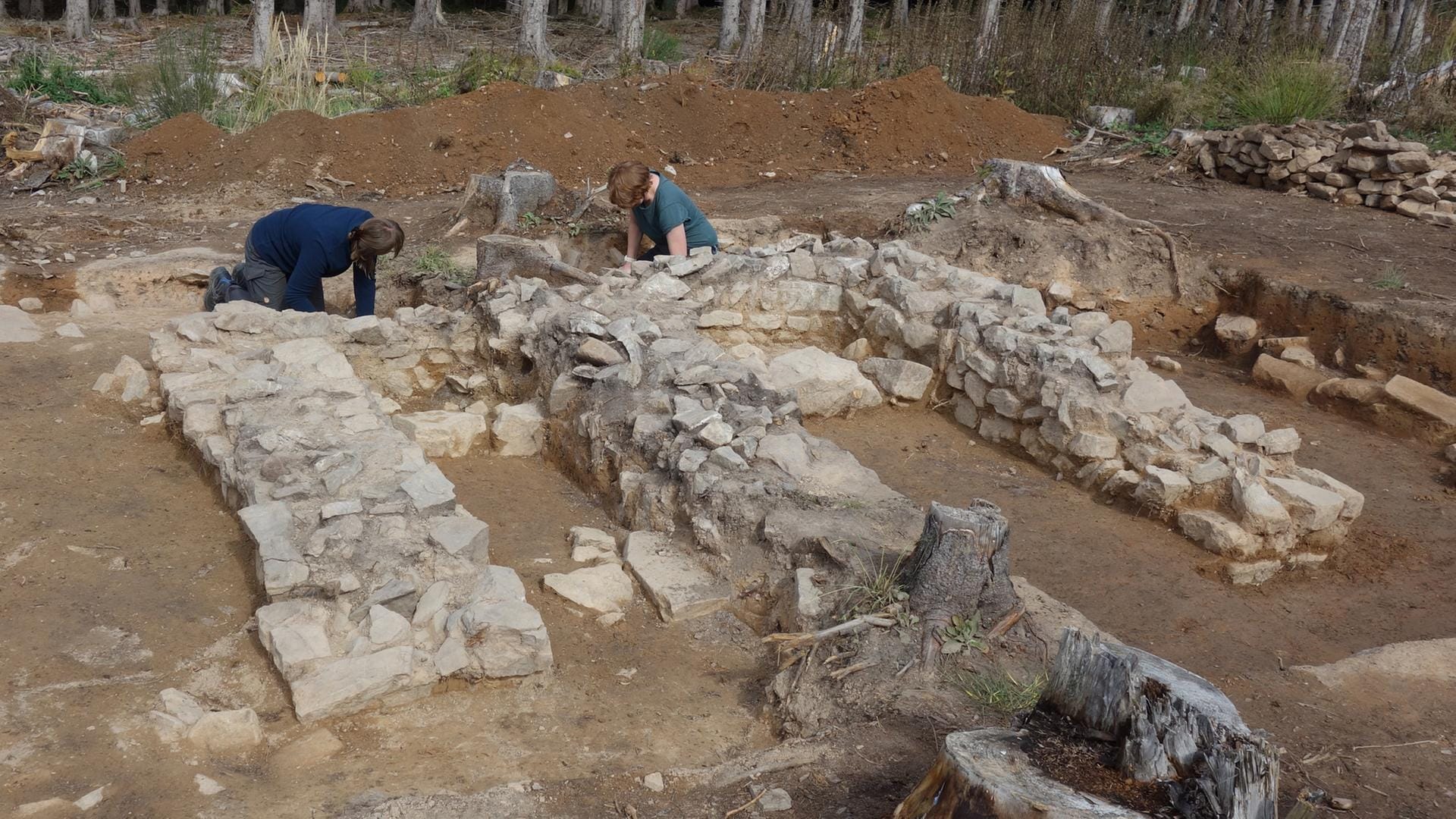
The remains sit only a few centimetres beneath the forest floor near Rosbach, in Hesse. Archaeologists working in an area opened by storm damage have traced a rectangular structure roughly five metres long. Within it are smaller square foundations. The survival of the masonry gives researchers an unusually clear plan, but it does not yet settle exactly how the building’s walls and open spaces were arranged.
A shrine outside the fort
Kapersburg was more than a military enclosure. Hesse’s heritage office and Goethe University Frankfurt have been investigating the civilian settlement, or vicus, beside the fort since 2024. Their account describes streets, terraces and traces of buildings under woodland that has protected much of the archaeology from later disturbance. The newly reported temple belongs to this wider landscape of living and working around a frontier garrison.
District archaeologist Kai Mückenberger described the excavated plan to hessenschau as a cult building. The outer foundation measures about five metres along one side; the smaller walls inside are about half a metre thick. One possible reading is a central sacred space with a passage around it. Researchers have not yet established whether every part was roofed or how any opening or gate was made. The plan is evidence for a building, while its complete appearance remains a reconstruction.
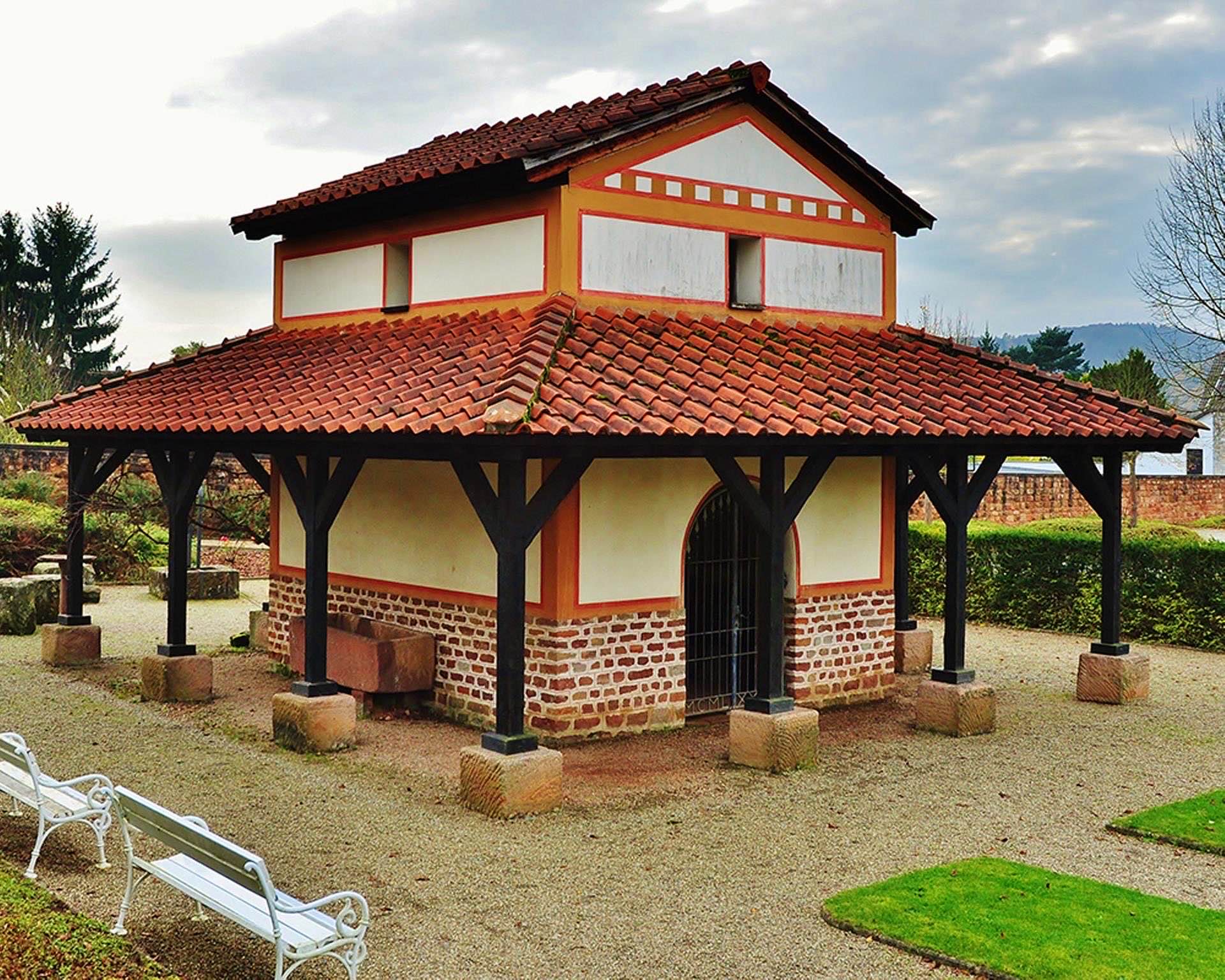
At a site where the remains are so close to the surface, these details matter. The surviving stonework records what was built at ground level; walls of timber or other material may have disappeared. A photograph of a reconstructed Roman temple elsewhere can help readers picture one possible form, but it cannot show Kapersburg’s building as it actually stood. The Schwarzenacker reconstruction included further below is therefore a comparison, not a reconstruction of this excavation.
Victoria, Mars and the inscribed stones
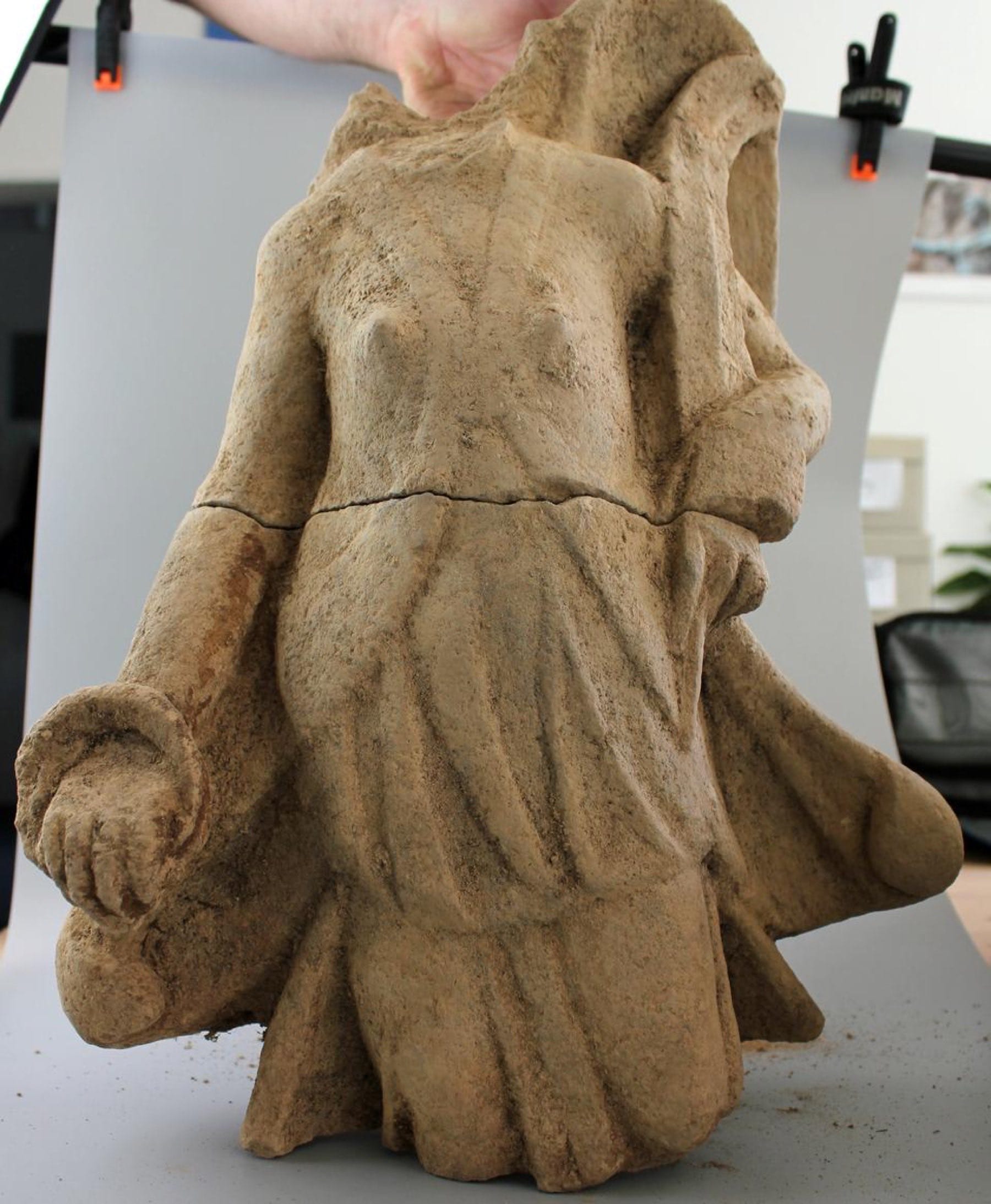
The most striking illustrated object is the torso of a winged figure identified as Victoria, the Roman personification of victory. The heritage office also reports fragments that may come from a statue of Mars and says the temple was once dedicated to that god. The pieces connect the structure with Roman religious practice, but the fragmentary Mars identification should remain qualified until the objects and their contexts are fully published.
Two votive stones add written evidence. One had been reported from the 2023 work and later returned for display in Rosbach; the 2026 heritage report mentions two stones from the temple area. Professor Markus Scholz is examining their inscriptions. Hessenschau says the Latin text on a stone found in the latest work is still being interpreted. A dedication can eventually identify a worshipper, deity or act of thanks, but its wording should not be guessed before that study is complete.
These finds make the building more than an architectural outline. Statues and dedications show people investing in a place of worship alongside an occupied settlement. They also invite comparison with Roman practices of worship and offerings and with the place of Mars among Roman gods.
A community on the frontier
According to the heritage office, Kapersburg’s fort was occupied for roughly 150 years by the Numerus Nidensium, a unit associated with Nida, near modern Frankfurt-Heddernheim. The fort stood on the Upper German frontier, but its civilian neighbours left their own material record. Excavations have exposed a workshop with a forge, later levelled to make room for houses, as well as the streets and terracing that organised the settlement.
The temple belongs within that changing neighbourhood. Its votive stones and sculpture indicate religious activity near everyday movement, work and residence. The finds do not establish who used the shrine, how often ceremonies took place or whether soldiers and civilians worshipped there together. Those are questions for the inscriptions, dating evidence and wider excavation record, rather than details that can be filled in from an image of the walls.
The settlement’s roads also place the site in a wider Roman landscape, although no road model can determine the precise traffic through this excavated street. Our account of the network of roads linking Roman provincial centres offers useful context for why a frontier settlement could connect to places beyond its fort. At Kapersburg, the local archaeological evidence is more specific: the heritage office reports actual streets and altered building plots beside the garrison.
What happened after the garrison left?
Hesse’s heritage office says the troops departed around the middle of the third century. Near the temple, excavators have found a brooch and handmade pottery that point to activity after the Roman frontier system here had changed. The office tentatively links these traces to Alemanni. They show that people were present in the area later than the fort’s military occupation, but they do not by themselves prove that the temple continued to function as a shrine.
Recent scholarship also cautions against treating the end of the frontier as a single event on one date. In a 2025 study, Markus Scholz and Christof Flügel review the different chronologies of Germania Superior and Raetia and question a uniform “Limesfall” in AD 259/260. Their broader argument does not date Kapersburg’s individual objects. It does explain why the fort’s departure, later settlement traces and possible reuse of a building must each be assessed separately.
What the excavation can establish next
The immediate work is to read and publish the inscriptions, study the sculpture and connect each object to a securely recorded layer. The temple foundations supply a plan; the finds supply clues to dedication and use; the nearby later objects supply a separate question about what happened on the site after the garrison. Combining those lines of evidence may refine the building’s date and reveal whether its story continued into the post-Roman period.
For now, the strongest conclusion is also the most concrete. Beside Kapersburg’s fort, archaeologists have exposed a small Roman cult building with unusually clear foundations and a collection of religious finds, including Victoria and votive stones. The site offers a close view of religious life in a frontier settlement, while the inscriptions and the building’s final phases remain under investigation.
The discovery is a reminder that an apparently quiet forest floor can hold much of a settlement’s layout only centimetres below it. At Kapersburg, the preserved streets, workshops, houses and shrine are being examined together. That approach gives the new finds their real value: they can be placed within the life of a particular community rather than treated as isolated Roman objects.


About the Roman Empire Times
See all the latest news for the Roman Empire, ancient Roman historical facts, anecdotes from Roman Times and stories from the Empire at romanempiretimes.com. Contact our newsroom to report an update or send your story, photos and videos. Follow RET on Google News, Flipboard and subscribe here to our daily email.
Follow the Roman Empire Times on social media: