
Eumachia: The Unknown Powerful Woman of Pompeii
In Pompeii, Eumachia did something few women in the Roman world could do so visibly: she turned wealth, priesthood, and family ambition into stone. Her building on the Forum and the honors paid to her by the fullers reveal a woman who stood at the center of civic life, not at its edges.

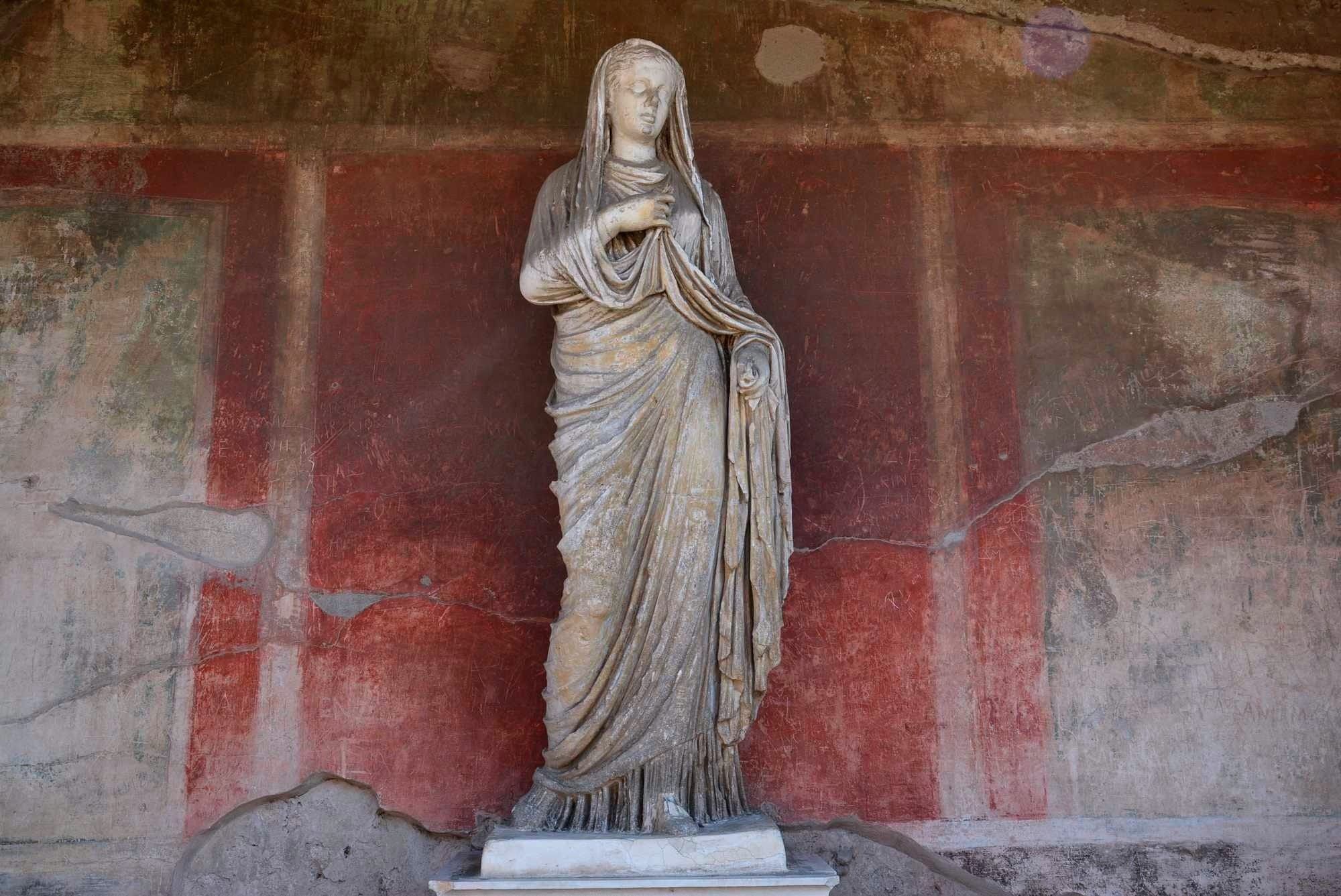
In the heart of ancient Pompeii, a woman’s name once stood where everyone could see it—cut into stone above a grand public entrance, facing the busiest civic space in town. Eumachia did not survive in epic poetry or imperial histories; she survives in something more Roman, more durable: inscriptions, buildings, and the public honor of her fellow citizens.
Who Eumachia was
Eumachia is one of those rare figures who steps out of antiquity not through a long narrative, but in a handful of sharply focused facts. The clearest of those facts is how she presented herself publicly: Eumachia, daughter of Lucius, public priestess—and a benefactor bold enough to say so on the fabric of the city.
Her “public priestess” title (sacerdos publica) matters. In Roman civic life, religion was not private sentiment; it was public office, public prestige, public visibility. A sacerdos publica is not a household devotee but a woman recognized by the community as fit to represent the city in ritual space. That alone implies status. But Eumachia’s inscription adds something more: she had the money—enough to fund a monumental complex—without needing a husband or a magistracy to speak on her behalf.
Her family background is partly inferential, but the clues point toward the prosperous, commercially grounded elite of Pompeii. Modern discussion links the Eumachii to industries like tiles and ceramics through stamped building materials, suggesting that their wealth could be made as well as inherited. This is a very Roman story: in a booming Campanian town, business success could translate into civic prominence—especially when it was converted into generous public spending.
Eumachia also wrote her benefaction as a family project. The main dedication is made “in her own name and in the name of her son, Marcus Numistrius Fronto.” On the surface this is affectionate and dutiful—an elite woman tying public generosity to household continuity. But it is also political language in stone: a lasting announcement that the family belongs among the city’s leading names. In Roman towns, buildings were reputations you could walk through. Eumachia understood that perfectly.
If much of Eumachia’s life is silent to us, one thing is not: her confidence. She does not appear as someone hidden behind male guardianship. The inscriptions imagine her as a civic actor—religious officeholder, donor, commemorator—whose identity is legible without explanation. That is exactly why she matters.
What she built and why it mattered
Eumachia’s most famous act was architectural. She funded major elements of the large forum-side complex now associated with her name, and the inscription is unusually explicit about what she paid for: a chalcidicum, a crypta, and porticus.
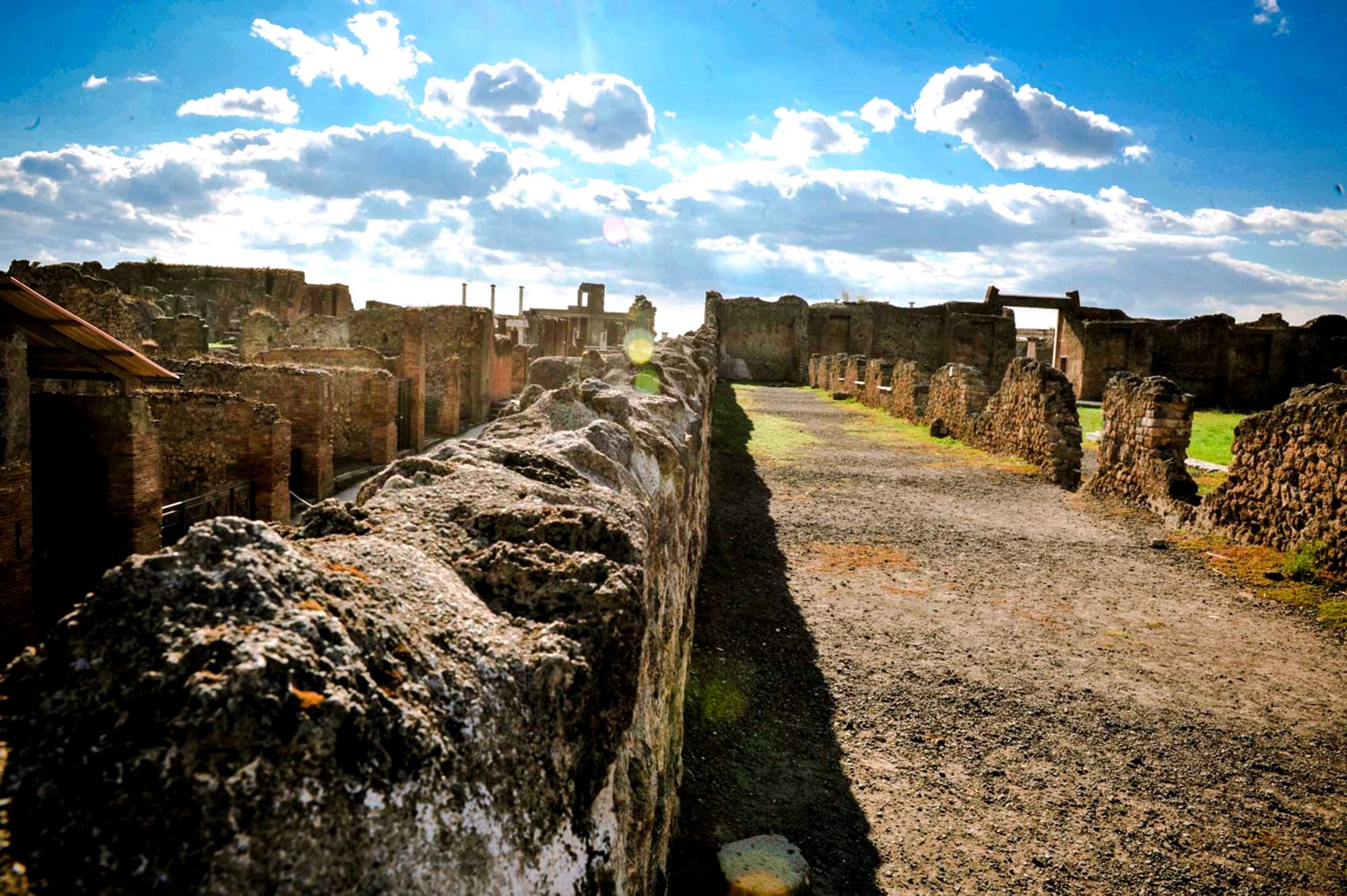
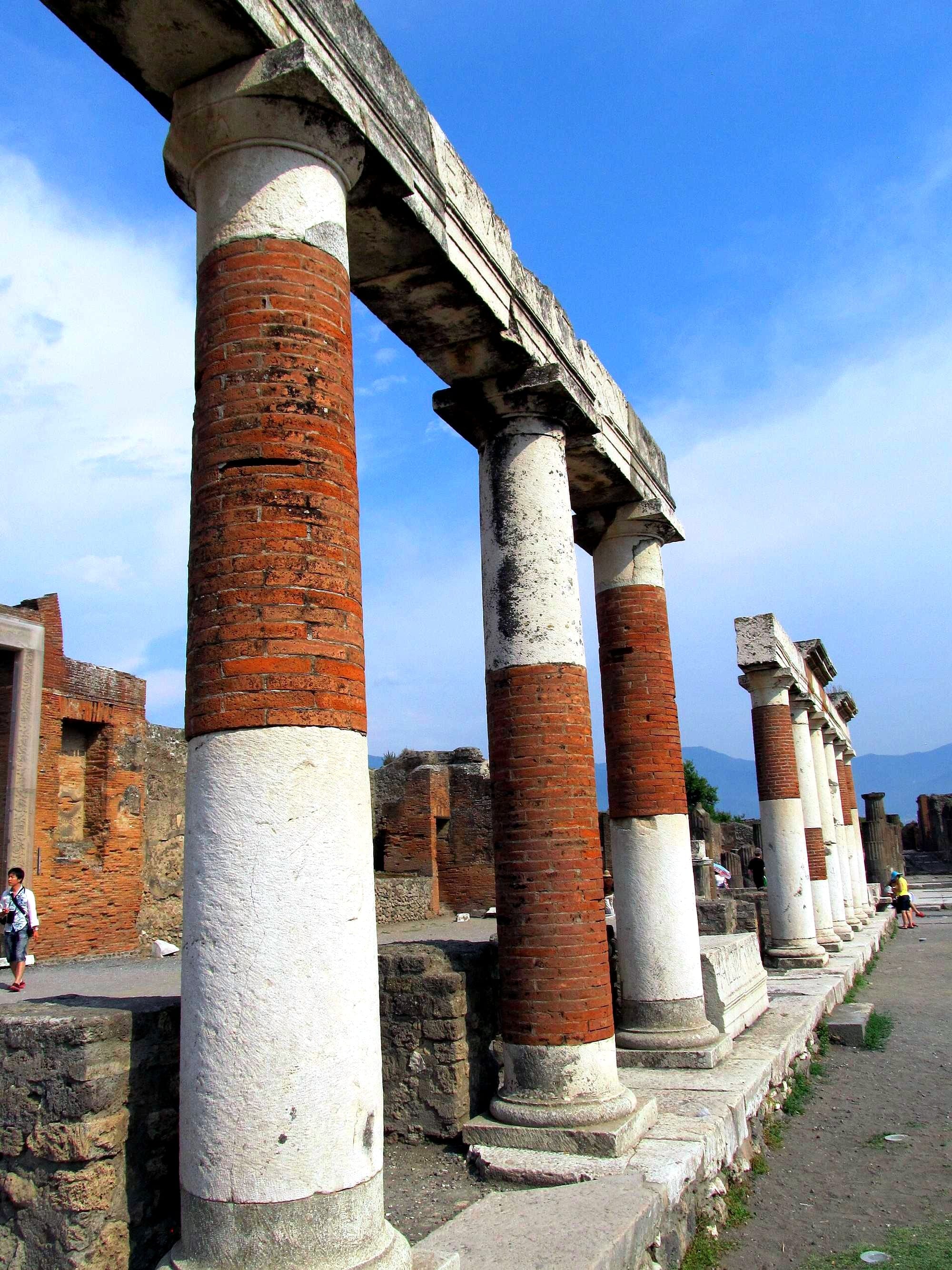
The terminology can sound technical, but the idea is clear. The chalcidicum is best understood as a deep, monumental porch or vestibule—an impressive threshold that turns entry into ceremony. The porticus are the colonnades, the ordered lines of columns that frame movement and give a public building its sense of dignity and rhythm.
The crypta (here not a tomb, but a covered gallery/corridor) creates shaded circulation and “inner” space—ideal for meetings, display, and controlled access. Together, they make a complex that is not merely functional but performative: it stages status and community.
Dating remains debated in scholarship, but most treatments place the project in the early Imperial period; official interpretive materials often narrow this to the years around AD 2–3, while scholarly discussion keeps a broader early first-century frame.
Most revealing of all is what she dedicated the building to: Concordia Augusta and Pietas. These are not random divine names. They are virtues—social harmony and dutiful loyalty—shot through with Augustan-era political meaning. Eumachia’s gift is therefore not only civic generosity; it is civic messaging, aligning her monument with the moral language of the new imperial order while also elevating her own prestige within it.
The fullers, the wool world, and the debate
Eumachia’s connection to the wool and textile economy enters the story through another inscription—short, blunt, and socially loaded. The fullones, the professional fullers who cleaned and finished cloth, set up an honorific dedication to her. That public honor suggests a relationship of patronage or protective sponsorship: a major occupational group thought she mattered enough to honor her formally, in stone, in a prominent civic context.
But what was the building for? Here the debate begins. Older interpretations sometimes imagined it as a kind of textile exchange or even a functional space linked to the industry. Modern archaeological work has pushed back against single-function labels, emphasizing that the complex likely served multiple roles—meeting space, display space, transactional space—rather than operating as a working “factory.”
In other words, even if it related to commerce, it was commerce conducted in the language of civic grandeur, not workshop labor. That is a key distinction, and it helps explain why a guild would honor her: the building offered status and visibility as much as utility.
The Building in the Forum
The Building of Eumachia has long stood at the center of debate because of its size, its position, and the woman who gave it her name. Rising on the east side of Pompeii’s Forum, directly along one of the city’s most important urban lines, it was too large and too prominent to be a marginal structure. Only the Basilica was bigger.
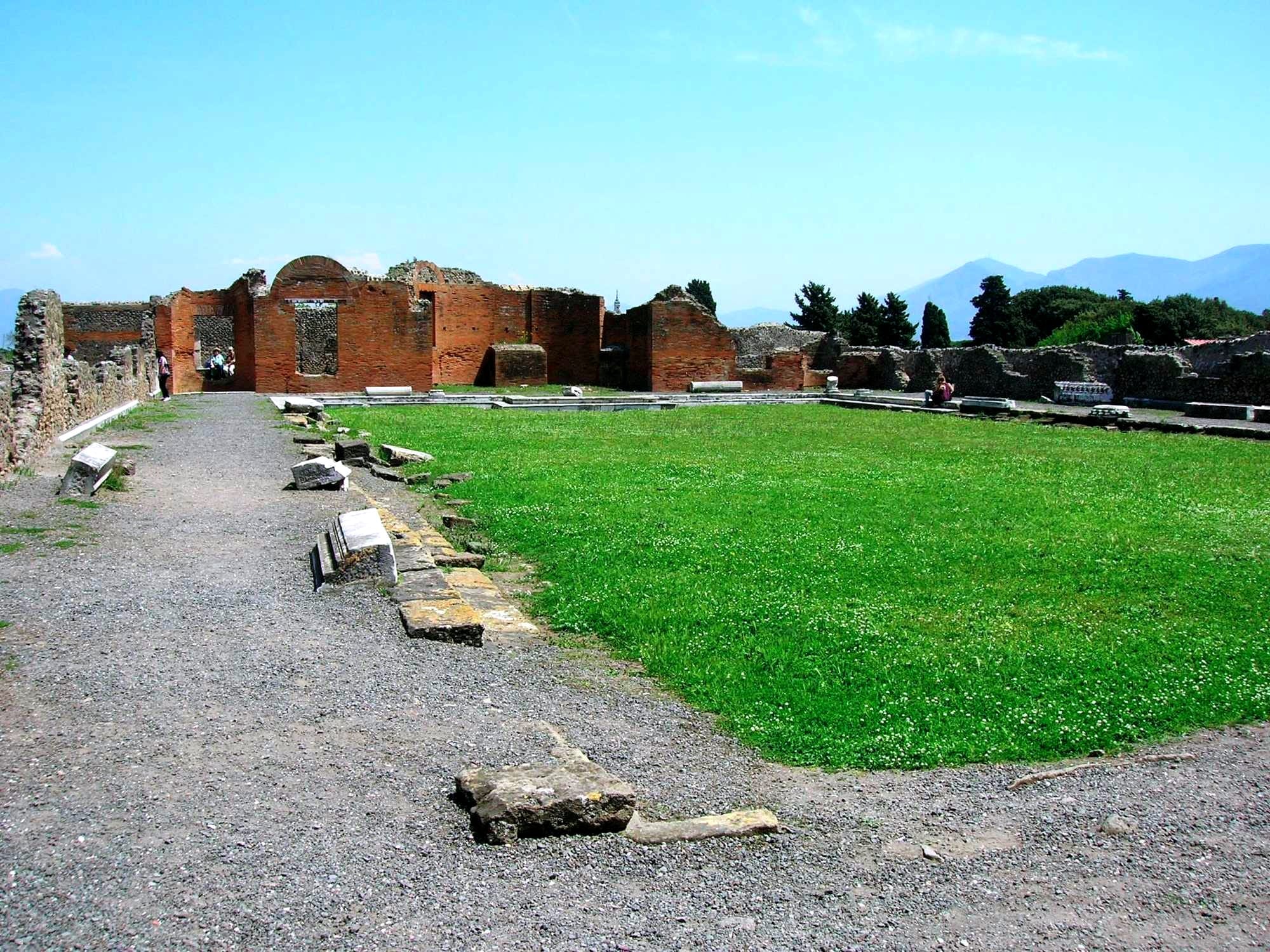
Its façade formed part of the Forum colonnade, and its dedication made its public meaning unmistakable: Eumachia, a public priestess, built and dedicated it in her own name and in that of her son to Concordia Augusta and Pietas. That already tells us something important. This was not a private house, nor a modest family donation, but a monument meant to be seen, entered, and remembered.
“Eumachia, daughter of Lucius, public priestess, in her own name and in that of her son Marcus Numistrius Fronto, built the chalcidicum, crypt, and porticoes at her own expense, and dedicated them to Concordia Augusta and Pietas.”
Its layout helps explain why the building has been so difficult to define. At the front stood a deep porch opening toward the Forum. Behind it lay a large colonnaded court, with a surrounding covered corridor. The complex could also be reached from the Via dell’Abbondanza, and some of its entrances were arranged in ways that suggest controlled access rather than free circulation.
There were porter’s lodges, doors that could be supervised, and architectural features that seem designed to separate those with business inside from the ordinary flow of traffic outside. That does not fit very comfortably with the image of a simple market open to everyone at all times.
Older attempts to explain the building often tied it directly to Pompeii’s cloth trade. Because the fullers dedicated a statue to Eumachia inside the complex, and because earlier excavators reported vats, basins, and tables in the court, some scholars thought they had found either a fullery or a cloth market.
From there, more elaborate explanations followed: the front porch was imagined as a place for auctions, the inner colonnades as areas for displaying textiles, and the central apse as a kind of tribunal for commercial disputes. Those readings had obvious appeal, especially in a city so closely associated with textile production and finishing.
That interpretation, however, became much harder to sustain once the evidence was examined more closely. The vats and basins in the court were later understood not as permanent fixtures of a working fullery, but as temporary features connected with repairs after the earthquake of AD 62. More importantly, the plan of the building does not resemble what one would expect from a true retail market.
Its interior spaces are long passageways and an open court rather than a practical arrangement of booths or shops. Even more striking, the entrances do not seem well suited to the movement of large quantities of goods. Instead, they suggest monitoring and restriction. If the building had really functioned as a major cloth bazaar essential to the city’s daily economy, it is difficult to explain why its design worked against that purpose.
A more persuasive reading sees the building not as a retail market but as a focal point for the city’s wool and cloth interests at a higher level. In that interpretation, the inner spaces were less about everyday selling and more about controlled access, meetings, and business conducted by people with a right to be there. The porticus and crypta would have offered seclusion, shade, and privacy—something closer to an elite commercial meeting place than to a street market.
The upper rooms may also have had an administrative function. In this reading, the fullers’ dedication makes excellent sense: the building mattered to them, but not because it was a workshop. It mattered because it stood at the center of the trade world that supported their work.
The most suggestive feature in this argument is the porch itself. One of the two raised platforms in the front seems to have been genuinely usable, while the other was effectively decorative, preserving visual symmetry. That detail matters because it points toward a very specific function for the working platform: not a general speaking stage, but an auction block.
Similar arrangements are known elsewhere in Pompeii. If that is right, then the front porch may have been used for the sale of wool or finished cloth in bulk rather than for ordinary retail trade. The gates that could close off the porch from the Forum then make much better sense. They would not have been there to protect a public arcade at night, but to create privacy and control when important transactions were underway.
Seen in this light, the Building of Eumachia becomes far more than an isolated monument. It appears as the civic face of one of Pompeii’s major industries. It connected elite benefaction, religious dedication, and the economic life of the town in a single monumental setting. Eumachia’s role in it was therefore not decorative.
By placing her name on such a structure, and by linking it to Concordia Augusta and Pietas, she inserted herself into the public, commercial, and moral life of the city at once. The fullers’ gratitude only makes that clearer. Whatever the building’s exact balance of functions, it was a place where status, business, and public identity met in stone. ("The Building of Eumachia: A Reconsideration" by Walter O. Moeller)
Eumachia, Livia, and the Politics of Public Display
Eumachia’s building did more than place her name on the Forum. It also placed her within a language of public honor that reached beyond Pompeii. The dedication to Concordia Augusta and Pietas Augusta connected her monument to values closely associated with the early imperial order, and the building itself seems to have echoed major public architecture at Rome.
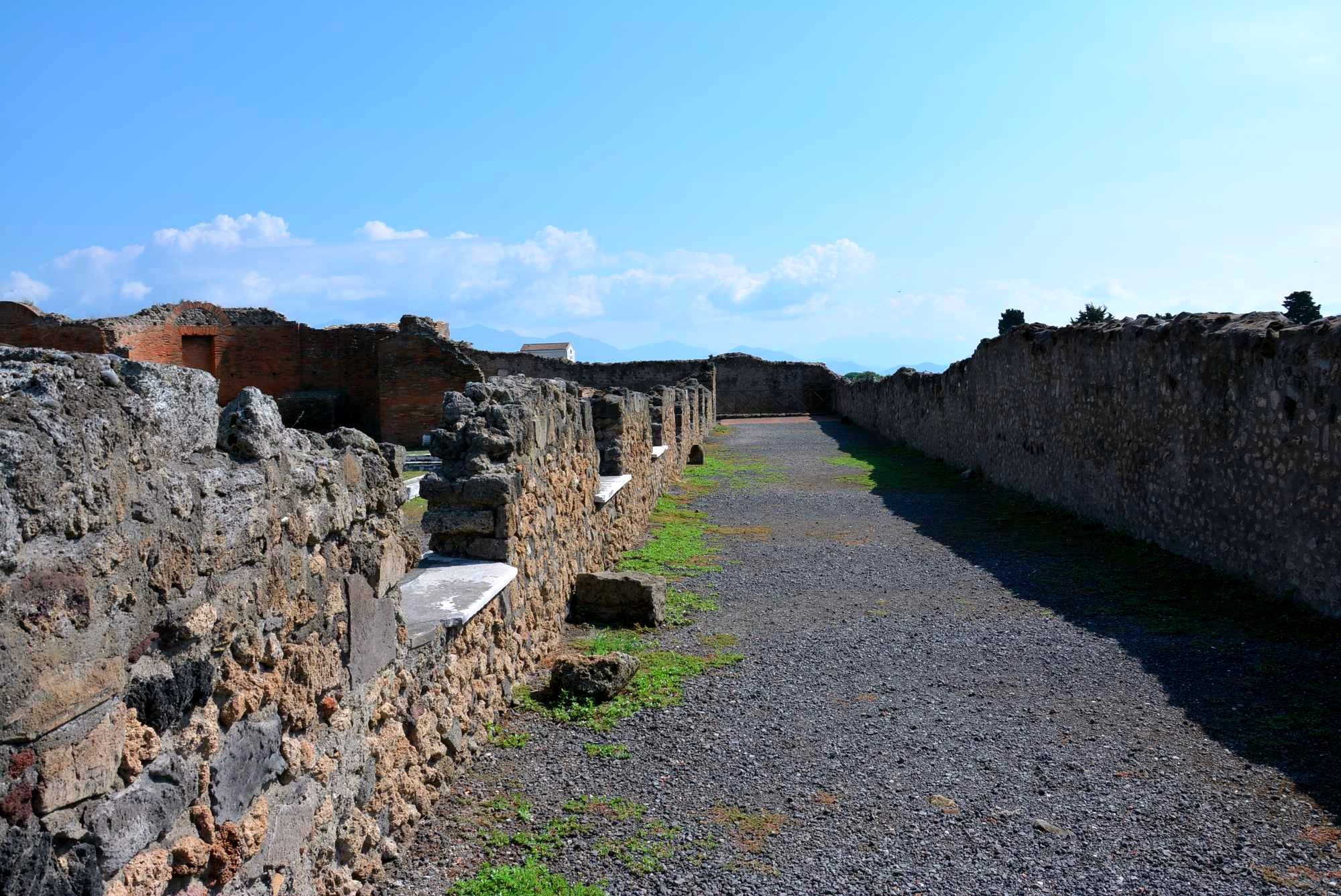
That matters because it suggests that Eumachia was not simply funding a useful structure for her city. She was presenting herself in a style that invited comparison with the women of the imperial household.
The wording of the inscription is especially revealing. Eumachia named herself first and stated clearly that the building was made at her own expense, even though she also included her son, Marcus Numistrius Fronto. That order is important. It does not read like a mother quietly promoting a son while remaining in the background.
It reads like a woman claiming public credit in her own right, while at the same time linking her benefaction to the future standing of her household. In Pompeii, as in Rome, buildings could be used to secure memory, project prestige, and strengthen a family’s position in civic life.
That combination of self-display and family strategy has often been read against the example of Livia, the wife of Augustus and mother of Tiberius. Eumachia’s dedication to Concordia Augusta, together with the architectural resemblance between her building and major public monuments at Rome, makes the comparison hard to ignore. By the early first century AD, Livia had become one of the most visible women in the Roman world, associated not only with dynastic continuity but also with public religion and public honor.
In that context, Eumachia’s inscription may have done more than advertise generosity. It may have aligned her with a wider model of female prominence that was now being made acceptable, even admirable, under the new imperial order.
If that is right, then Eumachia’s role in Pompeii becomes clearer. She was not stepping outside civic life, nor acting only as the mother of a rising son. She was using recognized Roman forms of public benefaction to place herself at the center of the city’s symbolic life. Her office as public priestess had already made her visible in ritual terms. Her building added urban permanence to that visibility. The result was a woman whose authority was expressed through religion, architecture, and inscription all at once.
Her wider family background also helps explain how such a role was possible. The Eumachii were an established Campanian family with links to local wealth, and Eumachia herself was married to Marcus Numistrius Fronto, who held one of Pompeii’s highest magistracies. Her son, named in the building inscription, must have stood to benefit from the public prestige created by her dedication, even if he is otherwise little known. The evidence suggests a family deeply embedded in the civic elite, with Eumachia herself acting as one of its most forceful public representatives.
Even her tomb reinforces that impression. Outside the Porta di Nocera she built one of the most imposing tombs in Pompeii, and the inscription there states that it was made for herself and her household. That wording is striking. It keeps the emphasis on Eumachia as the active figure, the person who organized memory as well as monument. Just as she had inscribed herself into the life of the Forum, she also inscribed herself into the city’s funerary landscape. ("The public priestesse of Pomepeii" by Roy Bowen Ward, in The Early Church in its context)
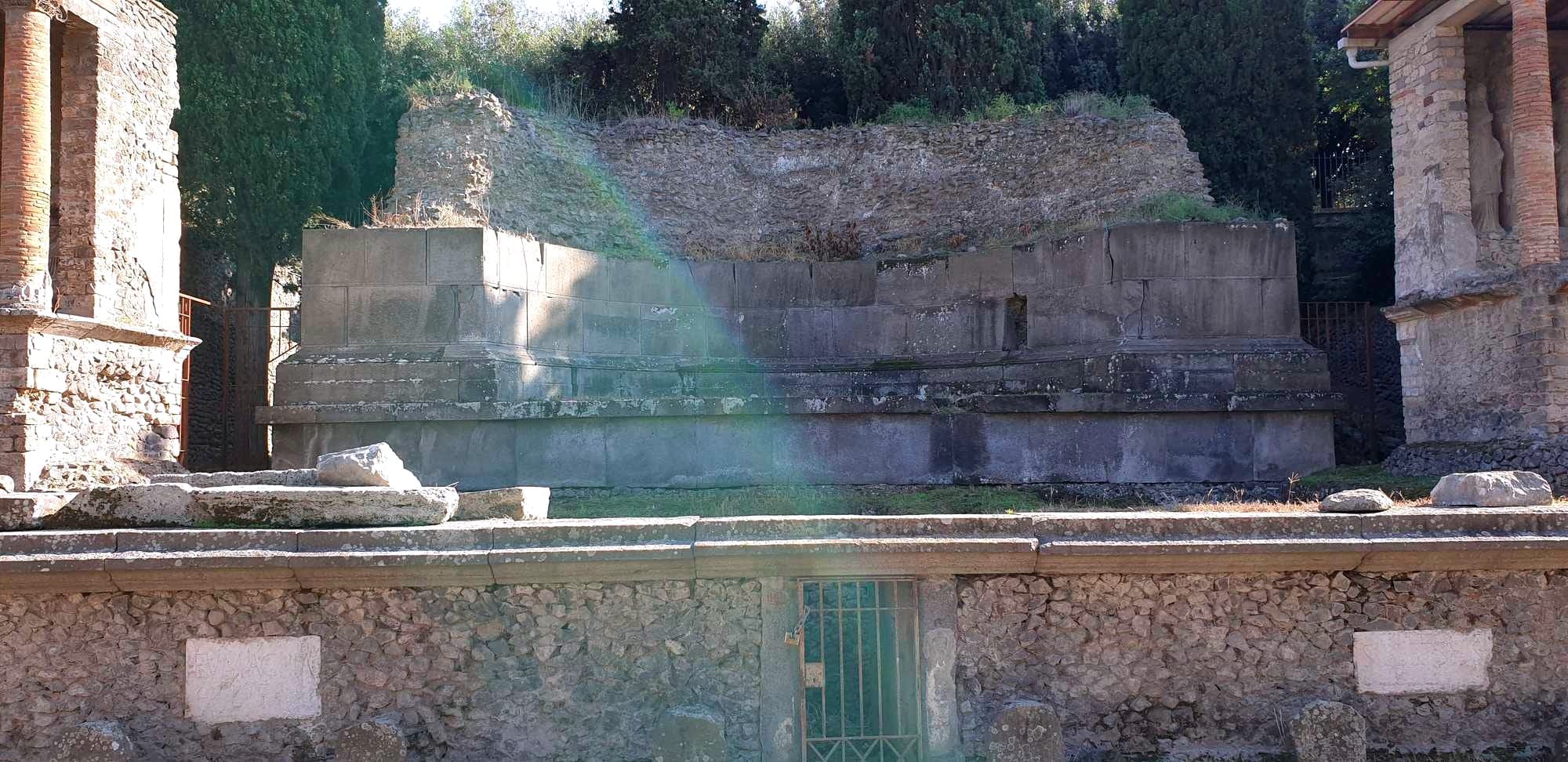
These details make Eumachia more than a local benefactor attached to a famous building. They show a woman who knew how public life worked in a Roman town and how architecture, religion, and family identity could be brought together in one carefully shaped civic image. She was not simply present in Pompeii’s history. She made herself impossible to overlook.
Eumachia survives because she understood how Roman public life worked. She used religion, architecture, inscription, and family identity to secure a place for herself in the civic memory of Pompeii. That is what makes her so compelling today. She was not an ornament to the city’s history, but one of the people who shaped its public face. In a world where so many women appear only faintly in the record, Eumachia made sure that her name, her office, and her ambition would endure in full view.
About the Roman Empire Times
See all the latest news for the Roman Empire, ancient Roman historical facts, anecdotes from Roman Times and stories from the Empire at romanempiretimes.com. Contact our newsroom to report an update or send your story, photos and videos. Follow RET on Google News, Flipboard and subscribe here to our daily email.
Follow the Roman Empire Times on social media: