
Aurelius Victor: The Roman Historian Whose Greatest Work Was Lost
Born into a modest family in Roman Africa, Sextus Aurelius Victor rose to high imperial office and wrote a history of Rome's emperors. His career, sharp observations and the mystery of his lost historical work offer a fascinating glimpse into the fourth-century Roman world.


In AD 361, the emperor Julian arrived in the Balkans during a confrontation with his cousin Constantius II that threatened to plunge the Roman Empire into another civil war. At Sirmium, he encountered a historian named Aurelius Victor, a man from Roman North Africa whose career had brought him into the world of imperial administration. Julian summoned him to Naissus, appointed him governor of Pannonia Secunda and honoured him with a bronze statue.
It was an extraordinary advancement for someone who had been born in the countryside to a father of limited means and little education. Victor regarded his studies as the means by which he had improved his position in society. Nearly three decades after Julian's appointment, he would reach one of the most prestigious offices in the empire, serving as prefect of Rome under Theodosius I.
His reputation as a historian presents another interesting story. Ammianus Marcellinus admired him, Jerome wanted a copy of his history, and later writers drew on material associated with his account of the Roman emperors. Yet the work generally attributed to Victor today is relatively short, covering the emperors from Augustus to Constantius II.
The discrepancy between his reputation and the surviving text has prompted a reassessment of what he originally wrote. According to one substantial modern reconstruction, the familiar history is not Victor's complete work at all, but an abbreviated remnant of a far more extensive account of Rome's imperial past.
From Roman Africa to the Imperial Court
Sextus Aurelius Victor was probably born around AD 320 in the countryside of Roman North Africa. His precise birthplace is unknown, but his African origins are supported by manuscript testimony and by references within his own historical writing.
One of the most revealing passages about his life appears during his discussion of Septimius Severus, another African who had risen to the highest position in the Roman world. Victor interrupts his narrative to reflect on the advantages of education and his own advancement.
This gives all good men, and myself as well, greater reason for confidence: I was born in the countryside to a father of modest means and without education, yet through such considerable study I have made my life more honourable up to the present time. Aurelius Victor, De Caesaribus, 20.5
Victor presents his education as the means by which he rose from a rural family of modest standing into the upper ranks of Roman society. The passage establishes his pride in that achievement, though it tells us little about his family's precise financial circumstances.
His description has sometimes been taken as evidence that he came from genuine poverty. The situation is less certain. A rural family could be relatively modest without being destitute, while the education Victor received suggests that resources or assistance of some kind were available to him. The evidence does not establish precisely how his studies were financed.
What is clear is that education became central to his understanding of social advancement. His historical work reveals extensive knowledge of Latin literature, rhetoric and the conventions of historical writing. He was particularly familiar with Sallust and Tacitus, whose influence appears repeatedly in his language and judgments. His references also indicate acquaintance with Greek historical literature.
Carthage, one of the great educational centres of Roman Africa, has been proposed as a possible destination for his higher studies. Victor was familiar with the city and later described it with admiration. Nevertheless, no surviving evidence directly identifies the schools he attended or confirms that he studied there.
He may also have spent part of his early adulthood in Rome. His writing displays a detailed interest in the capital's monuments, celebrations and political disturbances, especially those occurring under Constantine and his sons. These references have encouraged the suggestion that he was present during some of the events he describes, although knowledge acquired through reading or personal contacts cannot be excluded.
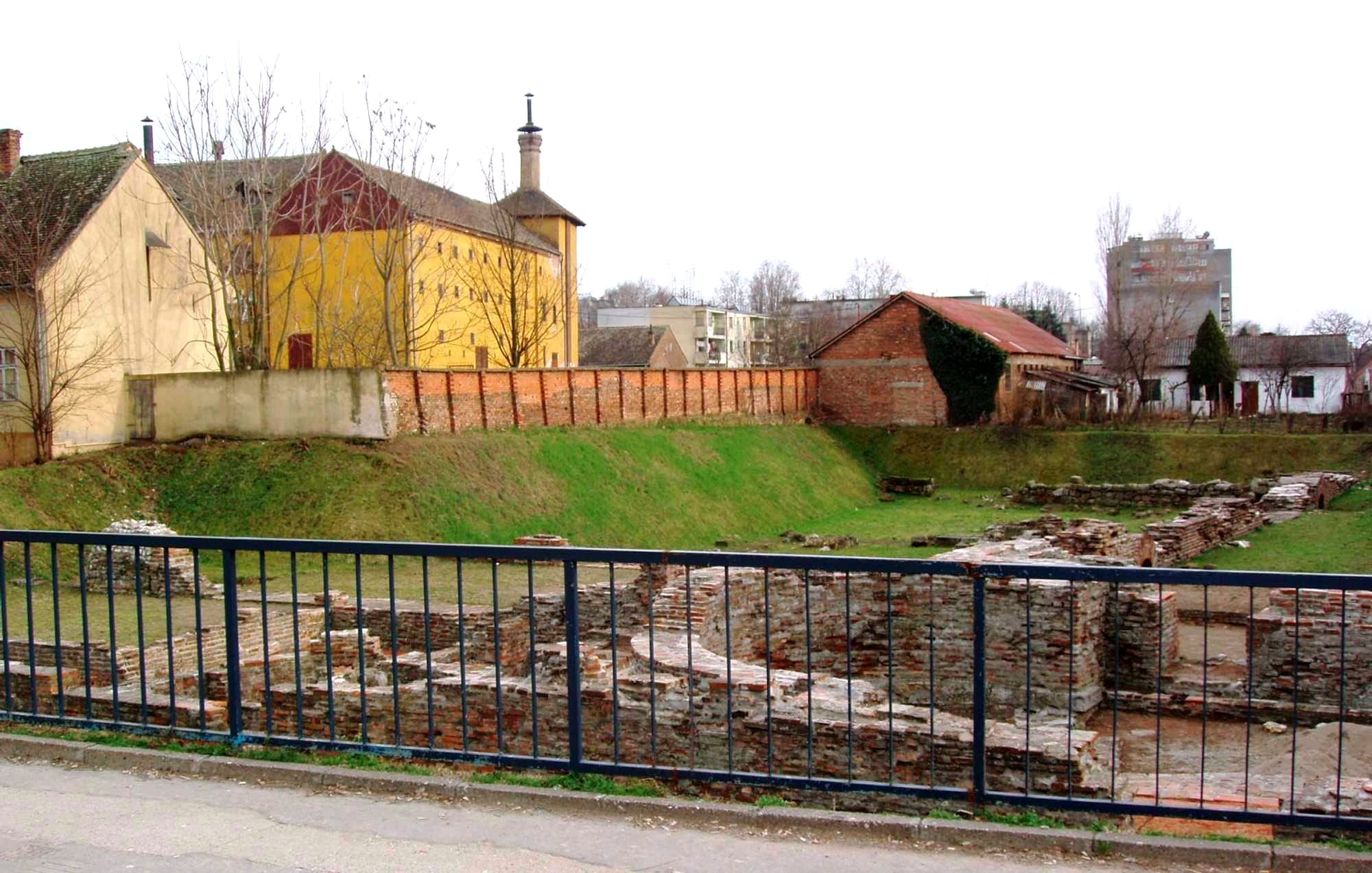
By the later 350s, Victor may have been associated with the imperial administration in Illyricum, where Sirmium was an important centre of government. His possible connection with Anatolius, the praetorian prefect of Illyricum, provides an indication of the administrative work he might have encountered.
Victor praises Anatolius for improving the imperial postal service and relieving burdens imposed on the provinces. His detailed knowledge of administrative practices elsewhere in the history also suggests familiarity with government procedures. The precise offices he held before 361, however, remain unknown. Suggestions that he served as a notary, secretary or financial official are reconstructions rather than documented appointments.
The Historian Who Impressed Julian
In the autumn of AD 361, Julian advanced through Illyricum after being proclaimed Augustus by his troops in Gaul. His relationship with Constantius II had deteriorated, and the empire faced the prospect of armed conflict between the two members of Constantine's dynasty.
Julian secured Sirmium and continued to Naissus, where he reorganized the administration of the territories that had come under his control. It was during these events that Aurelius Victor entered the historical record as an individual whose literary reputation and personal qualities were already recognized.
Ammianus Marcellinus provides the principal testimony:
While there he appointed Victor, an historical writer, whom he had seen at Sirmium, and whom he ordered to follow him from that city, to be consular governor of the second Pannonia; and he erected in his honour a brazen statue, as a man to be imitated for his temperance; and some time after he was appointed prefect of Rome. Ammianus Marcellinus, Res Gestae, 21.10.6
The appointment made Victor governor of Pannonia Secunda, a strategically important province whose capital was Sirmium. It also brought him senatorial rank and placed him among the men entrusted with administering the empire during a period of political uncertainty.
The bronze statue was another distinction. Such honours could recognize public service or literary achievement, but the precise reason Julian selected Victor for this particular reward is not recorded.
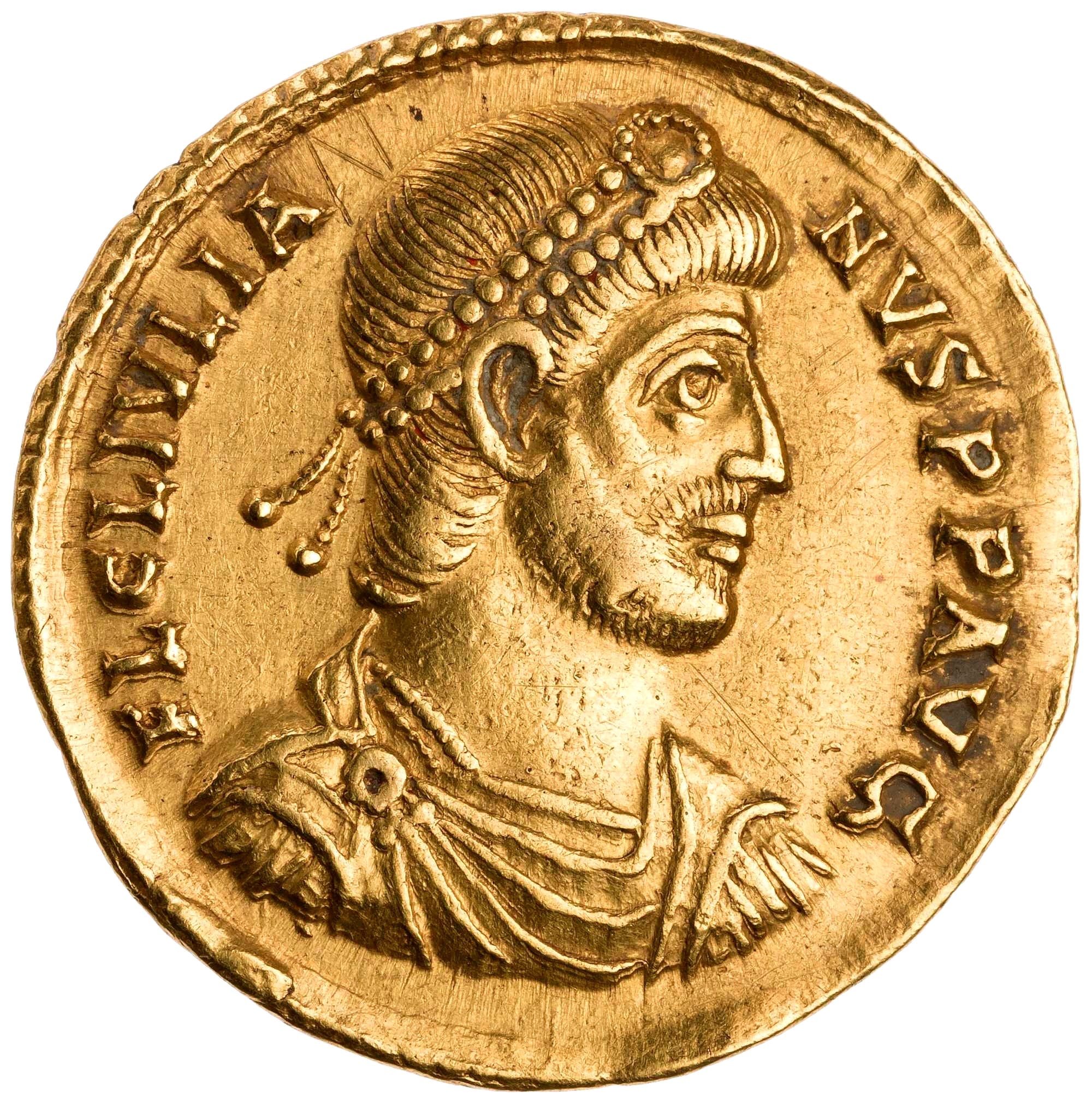
Victor's historical writing may have recommended him to the emperor. Both men showed considerable interest in literature, traditional Roman culture and the conduct of rulers. Julian's satirical work, The Caesars, also contains judgments of earlier emperors that resemble some of those preserved in Victor's history.
The parallels include their treatment of Trajan's drinking, Hadrian's interest in Antinous and the military discipline associated with Probus. These similarities have encouraged the suggestion that Julian had read Victor's work, although some of the stories circulated more widely in ancient literature.
The political circumstances are equally relevant. Julian needed administrators willing to serve him in the newly acquired provinces, and Victor's possible experience at Sirmium may have made him particularly suitable.
Accepting the appointment was not without risk. Constantius remained emperor in the East and was preparing to confront Julian when he died in November 361. His death removed the immediate threat of civil war and left Julian in control of the empire.
Little is known about Victor's activities as governor. His term had ended by May 365, when another official is documented in the position, but the date of his departure is unknown.
His appointment demonstrates that Julian trusted him with an important provincial administration. The nature of his service there, his relationship with other officials and his activities following Julian's death in 363 cannot be securely reconstructed.
The next firmly documented stage of his career came more than two decades later, when he attained the urban prefecture of Rome under Theodosius I.
What Aurelius Victor Thought Made a Good Emperor
Victor's history reveals a writer who judged emperors not merely by military achievements but also by their education, personal character and choice of officials.
He admired rulers who demonstrated restraint, promoted capable administrators, respected the Senate and preserved the stability of the state. His favourable judgments included Trajan, Antoninus Pius, Marcus Aurelius, Septimius Severus, Aurelian and Probus, although his approval did not prevent him from acknowledging their shortcomings.
Education occupied a particularly prominent place in his assessments. Victor associated literary training and eloquence with the qualities expected of a good ruler. He could admire military competence while criticizing an emperor for lacking the cultural refinement he considered desirable.
His treatment of the Tetrarchs illustrates the distinction. Diocletian and his colleagues possessed practical experience, military ability and administrative skill, qualities Victor recognized. Yet he also regarded their limited formal education as a deficiency.
The importance he attached to learning is consistent with his own experience. His studies had enabled him to advance socially, and he repeatedly contrasted educated administrators with men who obtained positions through military influence or powerful connections.
His assessment of Maximinus Thrax was particularly severe. Maximinus had risen from the military ranks to become emperor in AD 235, and Victor regarded his accession as part of a damaging change in the relationship between the army, the Senate and imperial authority. Victor also devoted considerable attention to corruption in government.
One of his sharpest attacks appears in his account of the Gallic emperor Victorinus, whose murder followed an accusation involving the wife of a military supply official. Victor uses the episode to condemn the influence of the quartermasters, known as actuarii, whom he portrays as dishonest, greedy and capable of manipulating military affairs.
A class of men, especially in the present age, worthless, corrupt, cunning, rebellious and greedy for possessions, seemingly made by nature to commit fraud and conceal it. They control the grain supply and are therefore hostile to those who attend to public needs and to the fortunes of farmers. Aurelius Victor, De Caesaribus, 33.13
Victor goes on to accuse these officials of distributing favours to people whose foolishness and losses had enabled them to accumulate wealth. His criticism is unusually specific. Rather than simply accusing soldiers of greed, he draws attention to administrators whose control of supplies gave them opportunities to exploit farmers and interfere with the provisioning system. His indignation may reflect experiences gained during his own administrative career.
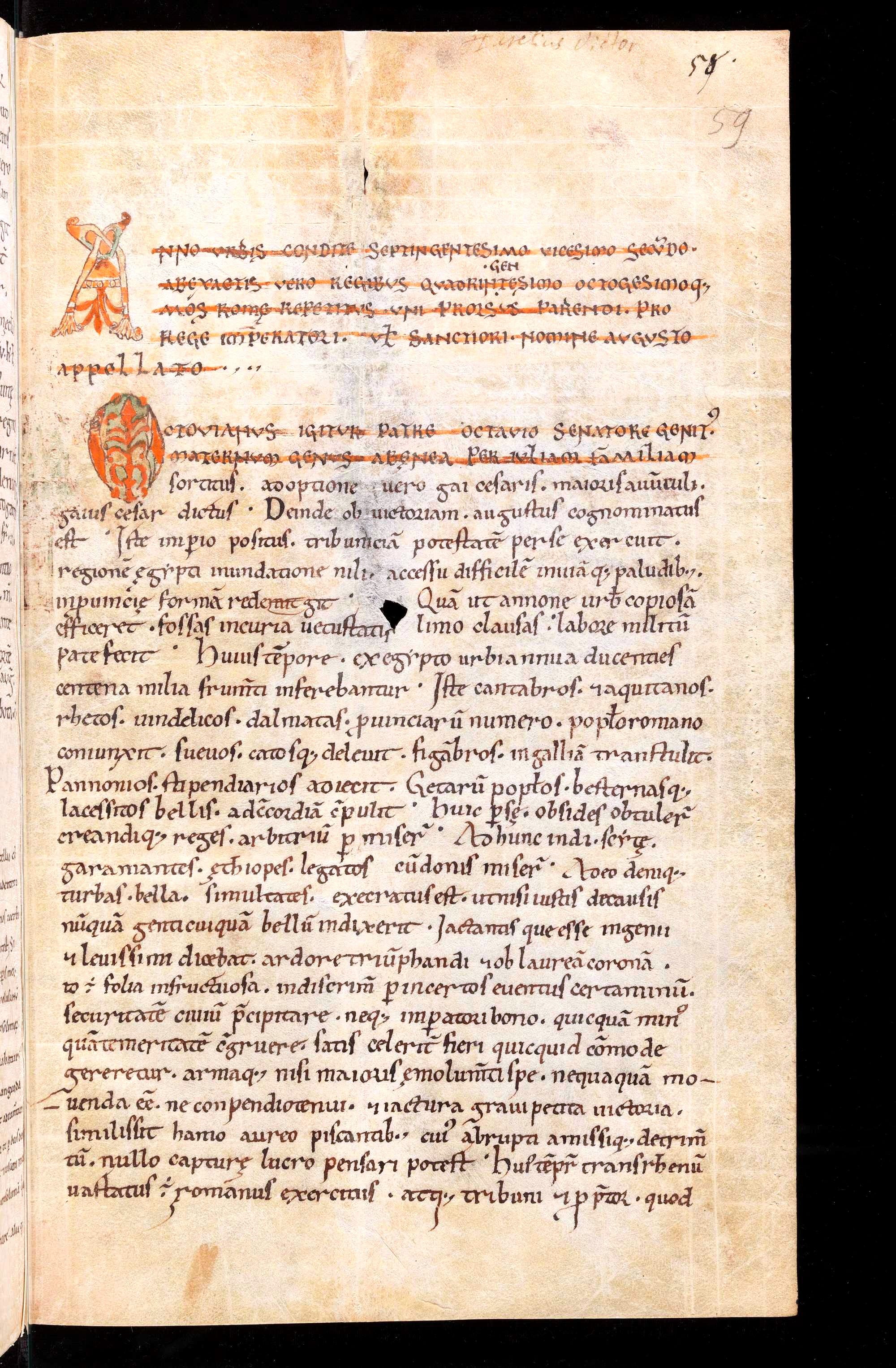
For Victor, the conduct of the emperor remained central to the quality of government. A capable ruler could appoint honest officials, restrain abuses and restore discipline. Conversely, a ruler who tolerated corrupt or incompetent subordinates could damage the state even if he possessed admirable personal qualities.
This concern appears in his judgments of Constantine and Constantius II. Victor acknowledged imperial accomplishments but also criticized the influence of unsuitable officials and the consequences of poor appointments.
His loyalty to traditional institutions did not make him an unconditional admirer of the Senate. He valued its dignity and authority but criticized aristocratic complacency, luxury and the failure of privileged men to exercise responsibility.
He was especially concerned about the Senate's loss of political initiative. In his view, senators should have remained capable of exercising their traditional responsibilities, including a meaningful role in the selection of emperors. At the same time, he understood the practical difficulty of opposing an ambitious commander supported by an army.
His admiration for Roman institutions did not mean that he believed only Italians should govern. Discussing the succession after the Flavian dynasty, Victor reflects on the contribution made by emperors originating outside Italy. He interrupts the account to present a broader observation:
Up to this point, men born in Rome or elsewhere in Italy had ruled the empire; thereafter newcomers also ruled, perhaps far better, as in the case of Tarquinius Priscus. From all that I have heard and read, I am entirely convinced that the city of Rome grew chiefly through the excellence of outsiders and the skills brought in from elsewhere. Aurelius Victor, De Caesaribus, 11.12–13
The observation sits naturally beside his praise of provincial emperors, particularly Trajan and Septimius Severus. Victor's own advancement also demonstrated how education and public service could bring a provincial into the governing class. Yet his judgments were not free from prejudice.
His treatment of imperial women was frequently hostile. He associated figures such as Livia, Messalina and Agrippina with political intrigue, sexual misconduct and the corruption of rulers.
His treatment of Gallienus was similarly severe. Victor blamed the emperor for much of the disorder that affected the empire during his reign and objected particularly to developments that diminished the military role of senators.
These opinions reveal the political and moral assumptions through which Victor interpreted Rome's history. They also explain why his account cannot be treated as a neutral record of imperial achievements and failures.
The Rome He Refused to Forget
Although Victor came from North Africa and admired several emperors of provincial origin, he remained strongly attached to Rome as the traditional centre of imperial government.
His history repeatedly records the buildings, ceremonies and honours associated with the city. He praised emperors who restored monuments, supported public institutions and respected established religious customs. One omission during his own lifetime prompted an unusually personal complaint.
In his discussion of Philip the Arab, Victor records the celebration of Rome's thousandth anniversary in AD 248. He then looks ahead a century, observing that in AD 348, when the city reached its 1,100th anniversary according to the traditional foundation date, the occasion passed without comparable solemnities.
And since the occasion has reminded me, in my own lifetime the eleven-hundredth year also passed, during the consulship of Philip, without being marked by the customary solemnities. So little concern for the city of Rome remains as the days go by. Aurelius Victor, De Caesaribus, 28.2
The passage also contains an extraordinary religious anecdote, which belongs to Victor's discussion of the earlier reign of Philip the Arab rather than to the anniversary of AD 348. Victor reports that during a sacrifice performed according to traditional rites, an anomalous appearance was found in a sacrificial animal.
When the sacrificial animals were being slaughtered according to the pontifical rites, female genital organs appeared in the belly of a male pig. The diviners interpreted this as foretelling the decline of later generations and the growing strength of vice. Aurelius Victor, De Caesaribus, 28.4–5
The story is presented as an ancient report of a religious portent, not as evidence that the prediction was supernatural or correct. Victor's account continues with a discussion of Philip's efforts to discourage male prostitution and his doubts about another prediction attributed to Etruscan diviners.
His attitude toward divination was not entirely uncritical. Although he recorded omens and showed respect for traditional religious observances, he could also question the competence and interpretations of those who claimed to explain the future.
His concern extended beyond ceremonies. He lamented the changing political position of Rome and the increasing importance of other imperial centres.
Constantine's establishment of a new capital at Constantinople belonged to this transformation. Victor's treatment of that city is notably restrained compared with the attention he gives to Rome's monuments, public celebrations and religious traditions.
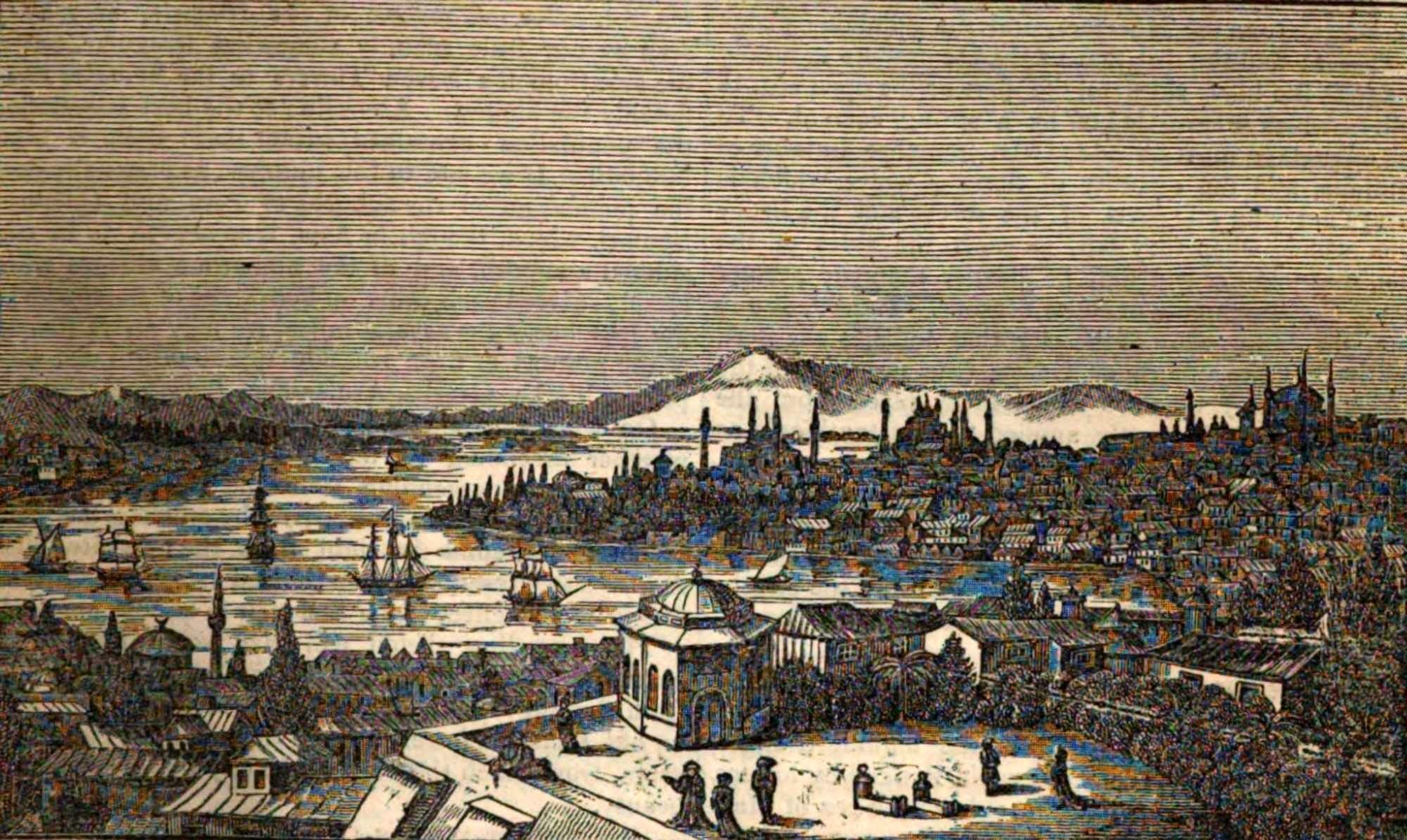
When Constantine died in AD 337, his body was taken to Constantinople for burial. Victor records that the Roman population reacted with considerable displeasure.
Whether he personally witnessed that reaction cannot be established. His decision to include it is nevertheless consistent with his recurring interest in the traditional capital and the conduct of emperors toward it. His account also contains extensive notices of imperial building activity in Rome.
He praises Vespasian for restoring the Capitol and undertaking major works, records the completion of the Colosseum under Titus, and describes the public improvements made by emperors including Trajan, Hadrian, Aurelian and Diocletian.
He was capable of approving Constantine's building activity in Rome while remaining dissatisfied with the emperor's burial elsewhere. Victor's religious sympathies reflected a similar attachment to established Roman practices.
In his discussion of Diocletian, he praises the care devoted to traditional cults and religious observances. Christianity, by contrast, receives no explicit treatment in his imperial history, despite the changes taking place during the reigns he described.
The silence is striking. Victor lived through the period when Christianity acquired increasing imperial support and theological disagreements became closely connected with imperial politics.
His writing nevertheless concentrates on the conduct of rulers, the administration of government and the preservation of established institutions. His favourable treatment of traditional cults supports the interpretation that his religious sympathies remained with Rome's older practices, although his private religious activities are unknown.
His later appointment under the Christian emperor Theodosius I demonstrates that his public career continued through these changes. It does not establish that he changed his religious beliefs.
By the late fourth century, Rome was no longer the regular residence of the emperor, but its prefecture remained an exceptionally prestigious office.
In late 388 or early 389, Victor became urban prefect. The position carried responsibility for the administration of the city and placed its holder among the most prominent members of Roman senatorial society.
An inscription dedicated to Theodosius confirms his office and identifies him as Sextus Aurelius Victor, a man of senatorial standing who exercised judicial authority on the emperor's behalf.
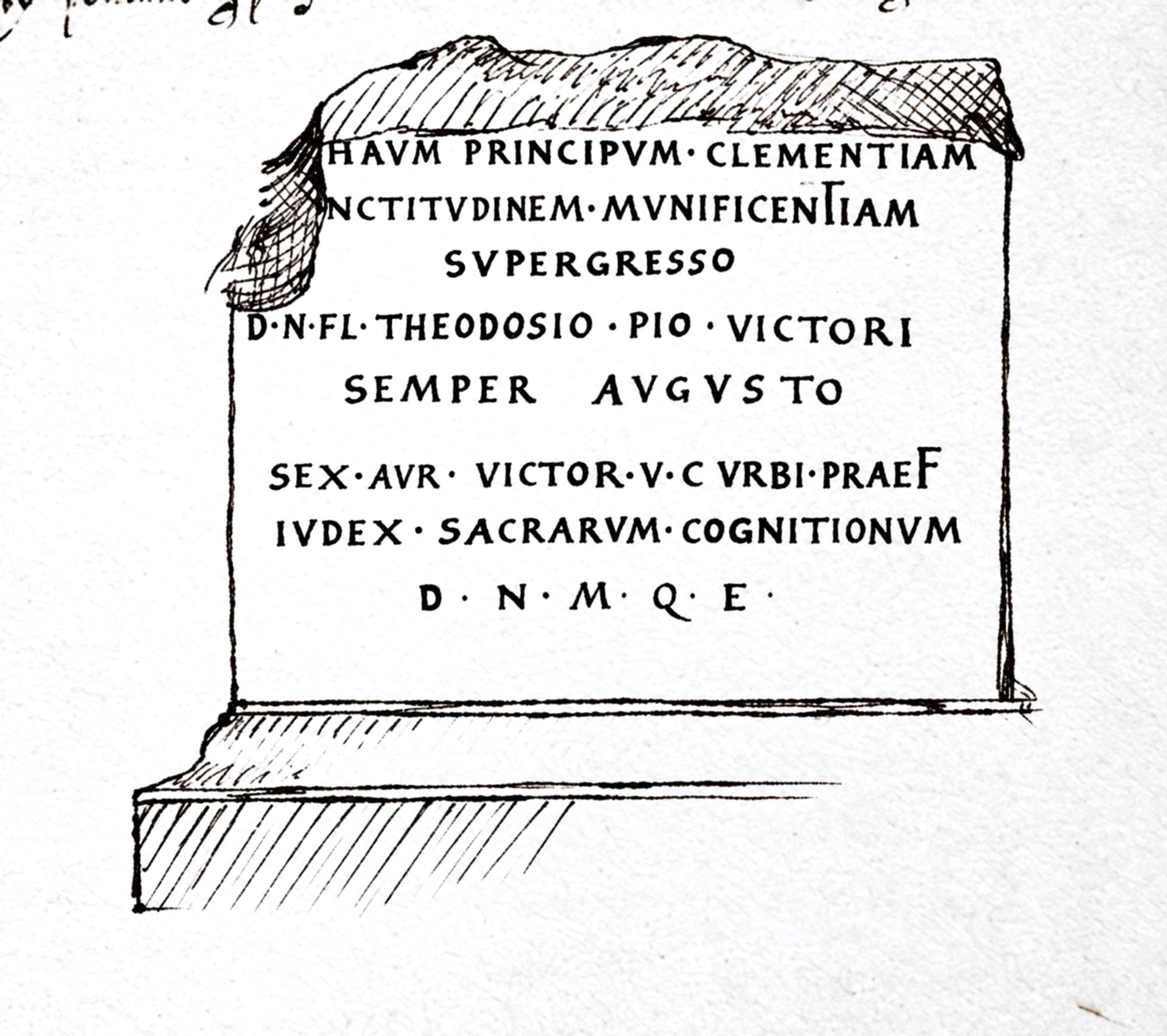
The inscription, recorded as CIL VI 1186, was discovered in Rome in 1563 near the area of Trajan's Column. The stone itself is now lost, but its wording was preserved.
It provides direct evidence for the final known stage of Victor's career, almost three decades after Julian had honoured him with a statue.
Scandals, Strange Deaths and Lessons From the Past
Victor was interested in more than the formal achievements of emperors. His history includes anecdotes about their private conduct, rumours of murder, strange portents and moral lessons drawn from events centuries apart.
Some stories were already familiar from earlier Roman historians. Others contain details that suggest Victor's engagement with a wide range of Greek and Latin literary material. One of the most revealing concerns Caracalla and Julia Domna.
Victor recounts a scandalous allegation that Caracalla became attracted to Julia, whom he incorrectly presents as the emperor's stepmother. Julia Domna was, in fact, Caracalla's mother.
The episode describes a provocative encounter between them and belongs to a hostile tradition concerning the Severan dynasty. It cannot be treated as reliable evidence that such an encounter occurred. Its literary construction, however, is unusually interesting.
The scene resembles the story of Gyges and Candaules in Herodotus, where the exposure of a woman's naked body becomes central to a narrative involving power, desire and betrayal. Victor's wording about modesty departing with clothing also recalls that earlier Greek account. The resemblance has been interpreted as evidence that Victor employed a familiar literary episode in presenting an imperial scandal.
Another striking example appears in his account of Marcus Aurelius and Lucius Verus. Victor reports an allegation that Marcus poisoned his fellow emperor during a meal using a knife coated with poison on one side. According to the story, Marcus cut a portion of sow's udder, ate an uncontaminated piece and offered Verus the poisoned portion.
Victor explicitly rejects the allegation. He argues that only people whose own minds are inclined toward wrongdoing could believe such a story about Marcus Aurelius, and notes that Lucius Verus was generally understood to have died of illness at Altinum.
The episode closely resembles a poisoning story in Plutarch's Life of Artaxerxes, in which Parysatis kills Stateira using food cut with a blade poisoned on one side.
The similarity has encouraged the view that an earlier literary account helped shape the Roman imperial anecdote. It does not establish that Victor himself invented the story or that Marcus Aurelius murdered Verus.
Victor's historical interests extended to the political crises of his own lifetime. In describing the seizure of power by Nepotian in AD 350, he depicts violence spreading through Rome, with houses, streets, public squares and temples filled with blood and bodies.
The account contains striking verbal similarities to Sallust's descriptions of civil conflict and Tacitus's treatment of violence in Rome following the death of Vitellius.
These literary parallels do not establish that Victor invented the disturbances. They show that he employed language drawn from earlier Roman historians when describing events much closer to his own lifetime. He also included stories that reveal his interest in the unpredictable nature of imperial power.
During his account of Titus, Victor describes an emperor who learned that two men had conspired against him but chose to spare them. According to the story, Titus invited them to a public spectacle and placed a gladiator's sword in their hands, demonstrating his confidence in the limits of human efforts to determine a ruler's fate.
The anecdote is also preserved in Suetonius. Its inclusion in Victor's history illustrates the qualities of restraint and confidence that he associated with an admirable emperor, although the incident cannot be independently established merely from its appearance in the literary tradition. His treatment of the third-century emperors repeatedly returns to the instability created when military power determined succession.
Men who achieved authority through the support of soldiers could quickly lose their position when the army turned against them. Victor's judgments reflect his concern that military ambition had weakened established political institutions and encouraged the advancement of men who lacked the education or character he expected of rulers.
The relationship between virtue and Fortune appears throughout his historical reflections. Victor attempted to account for the success of unsuitable emperors and the failures of capable ones while maintaining that individual character could profoundly influence the condition of the state.
He also believed that history could preserve distinctions obscured by political power during a ruler's lifetime:
If the reliability of the historical record did not stand in the way, refusing to let honourable men be deprived of the reward of remembrance or wicked men obtain an everlasting and distinguished reputation, virtue would be pursued in vain. For that true and singular honour could then be granted through favour to the worst men and unjustly taken from the good. Aurelius Victor, De Caesaribus, 33.26
The passage appears within Victor's condemnation of Gallienus and his discussion of the honours that later emperors received. It also explains the moral judgments that accompany so many of his accounts of Roman rulers.
The History That Disappeared
For many years, Aurelius Victor was known principally as the author of a relatively brief history of the emperors from Augustus to Constantius II, traditionally called the Liber de Caesaribus. The work contains valuable historical information, but its presentation has often puzzled readers.
Victor frequently interrupts the narrative with personal observations, comments about imperial government and comparisons with earlier periods of Roman history. Some passages move abruptly from one subject to another, while others refer to people or events that have not been adequately introduced.
These peculiarities contributed to his reputation as an ambitious but sometimes ineffective historian. Yet the surviving evidence suggests that his contemporaries regarded his writing more highly than that assessment might imply. One possible explanation is that the surviving text was not originally composed in its present form.
The title transmitted in the manuscripts describes the work as Historiae abbreviatae, or abbreviated histories. Another account of the emperors, traditionally known as the Epitome de Caesaribus and also transmitted under Victor's name, has been studied alongside it.
The two texts differ in style, content and chronological coverage. The first concludes around AD 360, while the second continues to the end of the reign of Theodosius I in 395.
The Epitome was long regarded as a late-fourth- or early-fifth-century work, but a recent reassessment places its compilation much later, drawing attention to material derived from sixth- and seventh-century authors.
The traditional explanation treats the two histories as separate compositions and generally regards the shorter De Caesaribus as Victor's principal surviving work. A major reassessment published in 2023 proposes a different account of their relationship.
According to this reconstruction, Victor originally wrote a substantial Latin history of the Roman emperors, and the two surviving texts are independent abbreviations of that larger work.
The proposal depends on manuscript titles, literary similarities, historical details and references to Victor by later authors. In several places, the abbreviated texts preserve related but significantly different accounts of the same events.
Their treatment of Decius's death during the Gothic wars of AD 251 is one example. One account emphasizes the emperor and his son falling in battle; another describes Decius sinking into a swamp, his body never recovered. These differences could have arisen if separate compilers selected material from a fuller narrative containing more than one tradition about the event.
Another example concerns Trajan's origins. The surviving texts preserve different geographical information that may reflect an original discussion distinguishing his Spanish birthplace from traditions about the Italian origins of his family.
Neither example independently proves that Victor wrote the proposed larger work. Together with many other textual comparisons, however, they form part of the case for abbreviation. Perhaps the most intriguing evidence comes from early medieval manuscript annotations known as the Scholia Vallicelliana.
One annotation attributes to a historian named Victor a reflection on emperors who devoted themselves to archery instead of public affairs. It then relates the extraordinary skill of Domitian, who was said to have been able to shoot arrows through the spaces between a man's outstretched fingers.
The shorter Epitome preserves the detail about Domitian but not the preceding historical reflection. The difference has been interpreted as evidence that the annotation preserves material from Victor's fuller history, of which the familiar text retained only a shortened version.
Other ancient and early medieval references similarly preserve information associated with Victor that is absent from the surviving abbreviated accounts. The proposed original would have been much more extensive than the approximately 11,000-word De Caesaribus. One reconstruction estimates a work of perhaps 70,000–150,000 words, with approximately 120,000 suggested as a plausible figure. These numbers are conjectural; neither the original length nor the organization of its books can be established.
For more than a century, historians have attempted to explain similarities between fourth-century Roman histories by proposing the existence of an anonymous lost imperial account, commonly called the Kaisergeschichte.
On the traditional understanding, Victor, Eutropius and other writers relied on this earlier source. The recent reassessment reverses the explanation. It argues that Victor's own larger history may have supplied much of the information subsequently shared by those authors.
The textual parallels include descriptions of Galerius's Persian campaign, the organization of the Tetrarchy and the rise of Maxentius. Differences between the surviving accounts have traditionally been understood as evidence that Victor and Eutropius independently consulted a common source. They could also be explained, under the newer interpretation, by the two writers drawing differently on a more substantial work by Victor.
The implications are considerable. Instead of a historian whose principal achievement was condensing earlier material, Victor becomes a major source for later accounts of the Roman emperors.
The underlying idea that his history may have survived only in shortened form was proposed long before the recent reassessment. Nineteenth-century scholars had already examined the manuscript titles and literary differences between the texts. The newer study greatly extends that argument and places it within a broader examination of late Roman historical writing.
The reconstruction remains debated. The complete original has not been recovered, and the precise relationships among the surviving texts continue to depend on interpretations of manuscript and literary evidence.
The Historian Whose Words Outlived Him
Whatever the original scale of Victor's history, ancient references show that his writing attracted attention beyond the circumstances of its composition.
Ammianus Marcellinus identified him as a historian and praised his character. Julian honoured him with a statue and entrusted him with a provincial governorship.
Another witness was Jerome, who wrote to Paul of Concordia during the 370s requesting several books, including a history by Aurelius Victor that he wanted to consult for information on the persecutors of Christians.
I mean the commentaries of Fortunatian and—for its account of the persecutors—the History of Aurelius Victor, and with these the Letters of Novatian; Jerome, Letter 10.3
Jerome's request establishes that the work was known and considered relevant to an educated Christian writer interested in imperial persecution.
It does not establish that Jerome actually obtained the book. Similarities between his subsequent historical writing and material associated with Victor have nevertheless encouraged the suggestion that he eventually consulted it.
Victor's influence has also been traced in the Historia Augusta, a collection of imperial biographies whose authorship and date have generated extensive scholarly debate.
Particularly close connections appear in its treatment of Septimius Severus and other third-century emperors. These parallels form part of the evidence used to investigate how the collection was compiled and which earlier histories its author employed.
The sixth-century writer John the Lydian explicitly referred to Victor as a historian while discussing Roman administrative offices. His references include information about the frumentarii and the development of imperial administrative practices.
The historical tradition associated with Victor continued into the early Middle Ages. Paul the Deacon, writing in the eighth century, referred to Victor's history when discussing the provinces of Italy. His historical writings also contain material corresponding to the abbreviated accounts transmitted under Victor's name.
The possibility that Paul had access to a fuller text has become central to the modern reconstruction of Victor's lost history. The suggestion that he himself compiled one of the surviving abbreviations is an additional hypothesis, not a securely established fact.
Meanwhile, the final decades of Victor's personal life remain obscure. After his governorship of Pannonia Secunda, there is a long interval during which no securely documented office can be assigned to him. He may have continued in government service, or he may have spent part of this period in Rome, where his status and education would have allowed him to participate in senatorial society.
His return to high office under Theodosius I is confirmed by the inscription erected in honour of the emperor. In late 388 or early 389, the former provincial official from Roman Africa became prefect of Rome, one of the most prestigious positions in the western empire.
The inscription identifies him as a member of the senatorial order and records his authority to exercise imperial judicial functions. It is the last secure contemporary evidence for his activities. The date and circumstances of his death are unknown.
His history continued to circulate through later accounts of Rome's imperial past. It was read, abbreviated, incorporated into other narratives and cited by writers whose interests differed considerably from his own.
Whether the surviving texts are remnants of a far more extensive original remains a question of scholarly interpretation. They nevertheless preserve the judgments of a historian who believed that education and character shaped the conduct of government and that the reputations of rulers should remain subject to judgment after their deaths.
Bird, H. W. “A Reconstruction of the Life and Career of S. Aurelius Victor.” The Classical Journal 70, no. 4 (1975): 49–54.
Bird, H. W. Sextus Aurelius Victor: A Historiographical Study. ARCA Classical and Medieval Texts, Papers and Monographs 14. Liverpool: Francis Cairns, 1984.
Bird, H. W., trans. Aurelius Victor: De Caesaribus. Translated Texts for Historians 17. Liverpool: Liverpool University Press, 1994.
Stover, Justin A., and George Woudhuysen. The Lost History of Sextus Aurelius Victor. Edinburgh Studies in Later Latin Literature. Edinburgh: Edinburgh University Press, 2023.
Wölfflin, Eduard. “Aurelius Victor.” Rheinisches Museum für Philologie, Neue Folge 29 (1874): 282–308.
Ammianus Marcellinus. Res Gestae, 21.10.6.
Aurelius Victor. Historiae abbreviatae (De Caesaribus), particularly sections 10–11, 13, 16, 20–21, 28, 33, 39–42.
Jerome. Letter 10.3.
Anonymous. Epitome de Caesaribus (Libellus breviatus), particularly sections 11, 16, 20–21, 29 and 40–42.
About the Roman Empire Times
See all the latest news for the Roman Empire, ancient Roman historical facts, anecdotes from Roman Times and stories from the Empire at romanempiretimes.com. Contact our newsroom to report an update or send your story, photos and videos. Follow RET on Google News, Flipboard and subscribe here to our daily email.
Follow the Roman Empire Times on social media: