
Ancient DNA Reveals Different Communities in Post-Roman Pannonia
A study of 314 genomes from seven cemeteries in former Roman Pannonia traces migration and shows how neighbouring sixth-century communities differed.

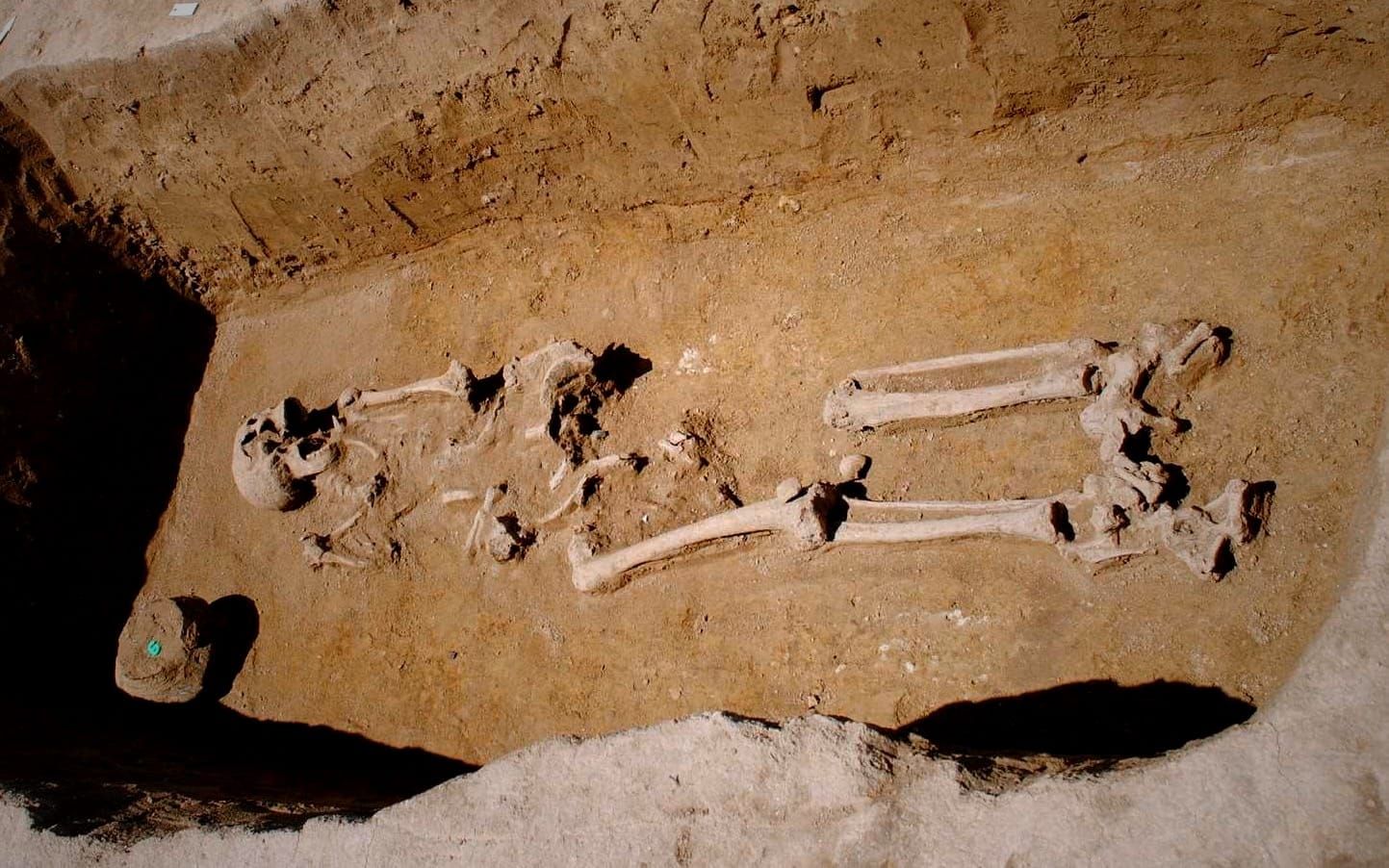
Researchers have compared ancient DNA and burial evidence from seven cemeteries in the Little Hungarian Plain, a region that included part of the Roman province of Pannonia. Their study traces a marked change in ancestry between the late Roman period and the sixth century, while showing that people in neighbouring communities organised family and status in different ways.
The findings, published in Science on 11 June 2026, come from 314 ancient genomes: 68 from two Roman-period sites and 246 from five later sites. The team also studied burial objects, radiocarbon dates and chemical signatures in human remains that can inform questions about diet and movement.
This is a regional account of life after Roman administration withdrew from Pannonia, rather than a genetic explanation for the empire’s collapse. The results add detail to the wider history of the western empire’s final decades by examining people buried beyond the imperial court.
Cemeteries on a former Roman frontier
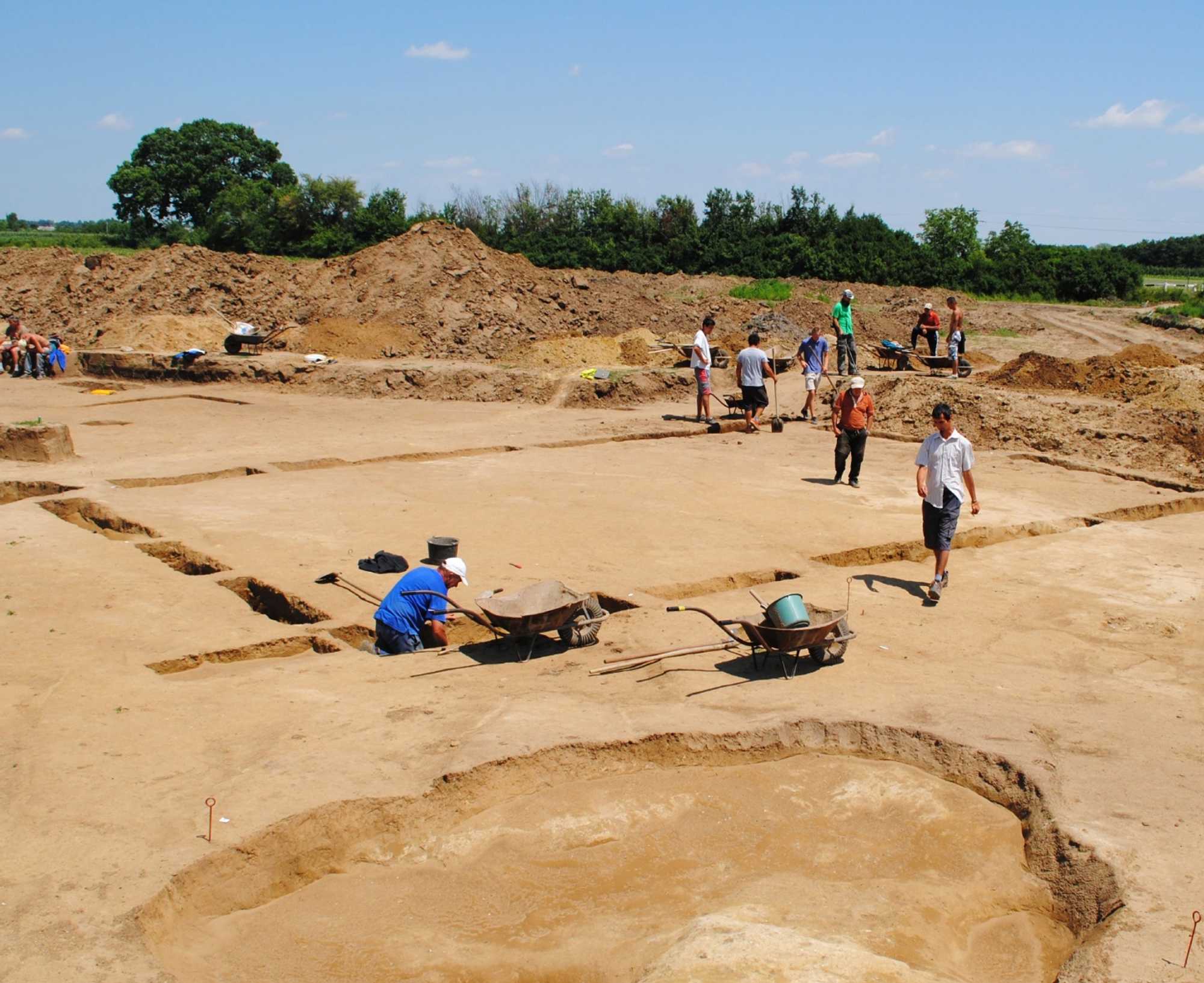
The Little Hungarian Plain lies along the Danube, between the Alps and the Transdanubian Mountains. In the Roman period, towns including Arrabona, now Győr, formed part of a region crossed by the Danube route and the Amber Road. The researchers examined two burial sites near Arrabona, one with two sampled individuals from the third century and the other with 66 from the fourth and fifth centuries.
Five further cemeteries belong to the sixth century. Hegykő and Szeleste, both established around 500, supplied the largest groups of samples. The team also examined smaller burial grounds at Gyirmót, Kóny and Ménfőcsanak. Those later sites were rural communities near earlier Roman infrastructure and urban centres, although the study finds no clear evidence that the Roman towns themselves remained continuously inhabited.
The chronology matters. Written sources and archaeology indicate political changes after Roman administration left the area in the first half of the fifth century, but burials from the middle and later part of that century are scarce. The new cemeteries become visible around 500, within a period associated with the expansion of Lombard power in the Middle Danube region.
A change in ancestry, with continuity
The Roman-period burials in the study show a predominance of genetic ancestry that the researchers model against southern European populations. They also identify a smaller range of ancestry connected to other regions, including parts of Asia and Africa.
In the sixth-century cemeteries, northern European ancestry becomes much more prominent. The team’s analyses support substantial movement into this part of Pannonia. They also identify people whose genetic profiles resemble earlier local or nearby groups. The research's authors therefore reject a picture in which newcomers wholly replaced the previous population.
The timing and geography fit an interpretation connected with the growth of a Lombard kingdom, but the genetic evidence does not isolate one single incoming group or one migration event. Links to populations farther north are spread across several areas. The study also finds genetic connections among sixth-century sites in Pannonia and sites along the later route toward northern Italy, where the Lombards moved in 568.
What bones reveal beyond ancestry
The project examined more than DNA. Strontium isotope values, compared with local environmental ranges, indicate that some people buried in the sixth-century cemeteries had spent part of their lives elsewhere. The proportion varied from site to site, and the team found no simple relationship between an individual’s ancestry and whether their strontium value fell outside a possible local range.
Carbon and nitrogen isotope measurements also suggest changes in diet or food production between the Roman and post-Roman samples. The authors caution that the comparison joins different kinds of communities, including Roman urban contexts and later rural cemeteries. A dietary difference cannot therefore be assigned directly to migrants or to one particular cause.
These measurements help explain why a burial ground cannot be read from grave objects alone. People with different genetic backgrounds could share a cemetery and its material culture, while individuals with similar ancestry could occupy different positions within their communities. However the differences, the data provided can help us determine historical facts, previously unexplained and unexplored.
Hegykő: related families and signs of rank
At Hegykő, the researchers placed 67% of sampled individuals into ten reconstructed family groups. Several of these groups connected across generations; the largest included 13 people. Relatives were often buried near one another, and the larger family groups were mostly composed of people with northern European ancestry.
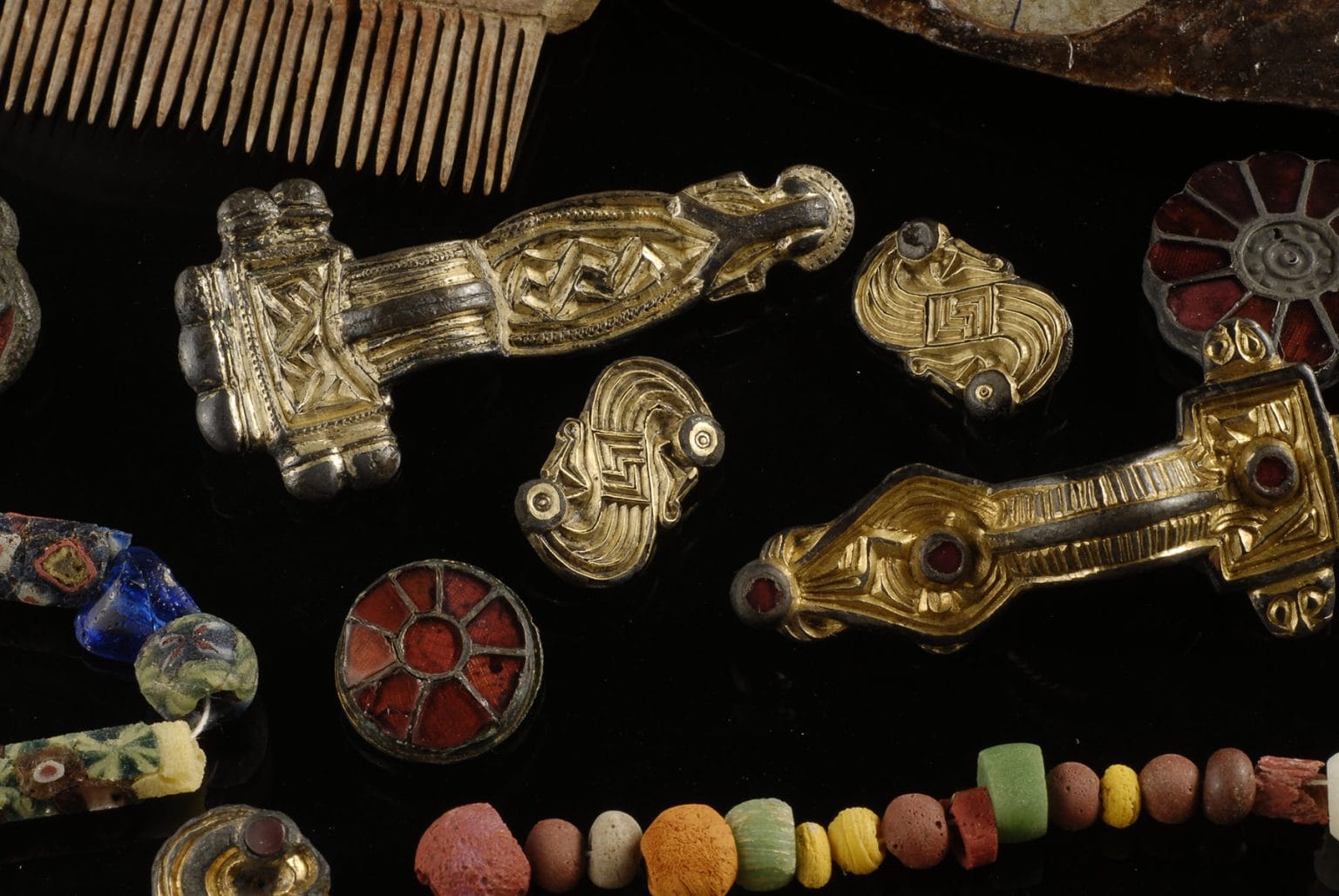
Weapons were concentrated among members of those groups. The researchers interpreted the pattern, alongside burial placement and dietary evidence, as a sign that some families held higher social or economic standing. Men in the large family groups also had isotope values consistent with greater access to animal protein. Grave goods and diet provide indicators of status, but they cannot by themselves 100% establish a person’s formal title or occupation.
The pattern suggests that biological kinship helped structure this cemetery and that standing could persist within families. It does not establish that all sixth-century communities in the region followed the same arrangement. The nearby cemetery at Szeleste provides a different comparison despite broadly similar burial customs and ancestry profiles.
Szeleste and the smaller sites followed other patterns
At Szeleste, 34% of sampled individuals belonged to reconstructed family groups. Those groups were smaller and less tightly connected than at Hegykő. Families could include people with mixed northern and southern ancestry, while weapons were neither confined to extended family groups nor significantly associated with one ancestry profile.
The smaller cemeteries differed again. Gyirmót had only one pair related within the third degree among 32 sampled individuals, and Ménfőcsanak had none among 19. Kóny, with 11 sampled individuals, included two parent-child pairs. The researchers also note that later burial disturbances can affect comparisons of grave goods between sites.
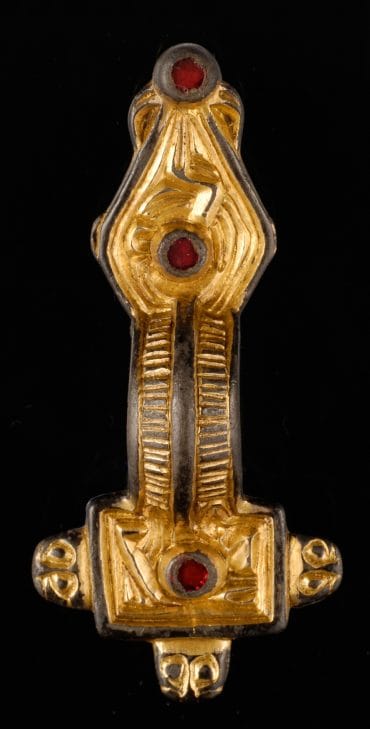
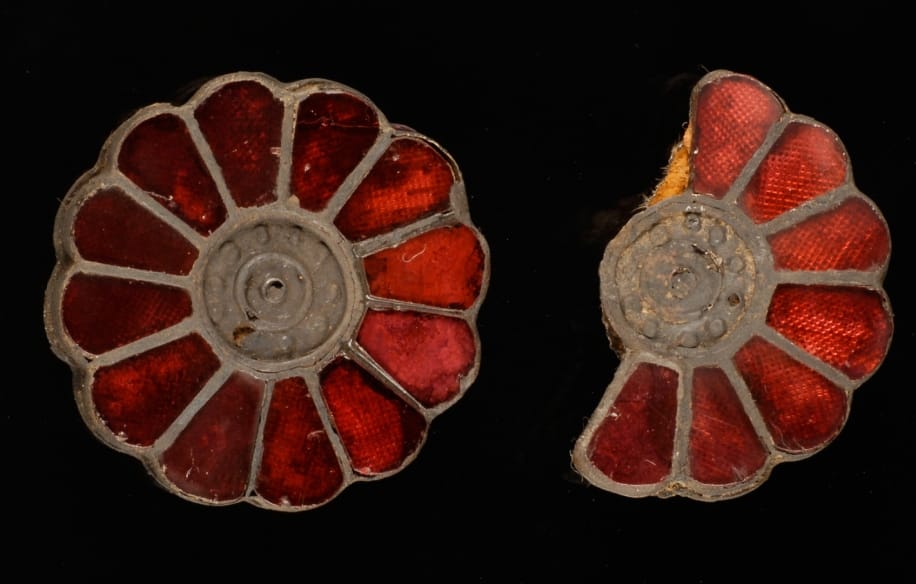
Across these cemeteries, similar objects and broad ancestry patterns concealed different ways of forming communities. Archaeological finds such as brooches indicate shared styles and contacts, while DNA reveals that those similarities did not require an identical family structure. To be 100% clear, neither an artefact style nor genetic ancestry can automatically be equated with a named people.
A local view of the post-Roman transition
The authors interpret the connected but socially varied cemeteries as evidence for an emerging regional polity. Their argument combines the genetic links among people and places with burial practice, material culture and the written history of Lombard expansion. It is an interpretation of several kinds of evidence, not a direct genetic measurement of a kingdom.
Some proposed explanations for the later, less kin-centred cemeteries remain open. The study discusses possible organisation by political or military leaders and also considers wider demographic disruption. Its strongest direct result is the contrast among neighbouring sites: shared regional ancestry did not produce one uniform form of community. If it only provides one insight, it's that of the complexity of the Roman (and other societies) living during those times.
The study therefore places a specific Pannonian case beside broader accounts of Rome’s western collapse and the deposition of the last western emperor. It shows population movement, survival and social reorganisation within one former frontier region. It does not establish a single explanation for the end of Roman rule across the western empire.
Yijie Tian, István Koncz et al., “Unveiling the complexity of post-Roman polity formation in Pannonia using ancient DNA,” Science 392, eaec2634 (2026). Full earlier author preprint consulted for methods, results and qualifications; the published abstract and institutional summaries were checked against it.
Stony Brook University, study announcement, 11 June 2026.
Institute for Advanced Study, study announcement, 11 June 2026.
About the Roman Empire Times
See all the latest news for the Roman Empire, ancient Roman historical facts, anecdotes from Roman Times and stories from the Empire at romanempiretimes.com. Contact our newsroom to report an update or send your story, photos and videos. Follow RET on Google News, Flipboard and subscribe here to our daily email.
Follow the Roman Empire Times on social media: