
Watch: Roman-Era Shipwreck off Turkey Yields Thousands of Luxury Dishes
A cargo of plates, bowls and trays off Adrasan preserves evidence of ancient packing methods and a ceramic trade associated with a name in Cicero’s letters.

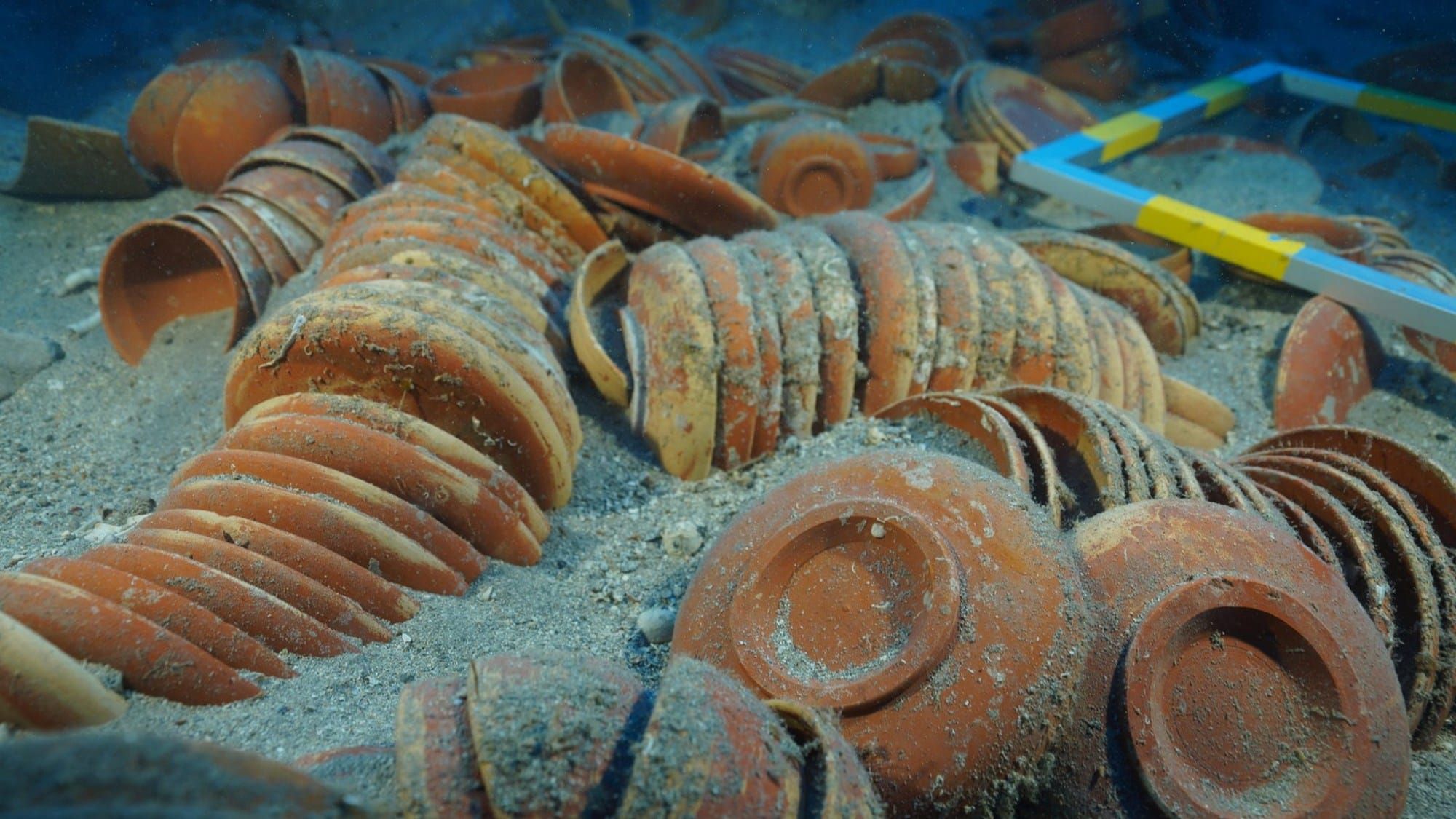
Thousands of ceramic dishes have been recovered from a shipwreck off Adrasan, on Turkey’s Mediterranean coast, including plates and bowls associated with a pottery-producing region known to Roman buyers. The cargo, described by Turkish authorities as roughly 2,100 years old, includes a wide range of tableware preserved beneath the sea.
The latest account of the excavation was announced on September 28, 2026, with further details published by Akdeniz University the following day. Work on the ceramic-laden wreck began in 2025. Archaeologists from the university and Antalya Museum are investigating the site at depths of 42–55 metres, approximately 138–180 feet.
In an October 8 Fox News Digital interview, a Northwestern University historian compared the dishes to fine china, interpreting them as goods for a high-end market. That comparison places them within the costlier end of Roman food and dining across social classes. The objects themselves are ancient ceramic tableware.
Video: Fox News Digital, October 8, 2026. Watch the interview with Taco Terpstra at Fox News.
A cargo arranged for the table
The excavation has identified 122 different forms and sizes among the plates, bowls and trays. The figure describes the range of vessels, rather than the total number recovered. The reported finds include small plates interpreted as dishes for nuts, soup bowls, fish plates and trays in several sizes.
According to the university’s account, the main cargo consists of plates and bowls thought to have been produced around Arsuz, the ancient Rhosus, in today’s Hatay province in southern Turkey. Officials describe these products as luxury tableware that was particularly sought after in Rome and traded through Mediterranean markets.
Amphorae attributed to production centres on Aegean islands were also found with the dishes. Their presence indicates that the vessel carried products from more than one region. Alongside the tableware, these containers place the shipment within the wider history of Roman trade preserved in ceramic containers.
Clay between the dishes
The packing method is a central part of the official explanation for the cargo’s condition. Clay was placed between the ceramic vessels when they were packed into wooden crates. The excavation team considers this protection an important reason why many dishes survived the sinking and remained substantially intact.
An earlier Culture and Tourism Ministry report, dated June 28, 2025, described plates, trays and bowls nested together and coated with raw clay to protect them during transport. It also reported that colours and surface features had survived remarkably well, making the assemblage useful for studying both production and packing techniques.
That earlier report described thousands of plates consolidated into hardened groups at the site. The newly released photographs show rows of vessels still nested together on the seabed, with individual bowls lying nearby. Recovering such groups therefore preserves information about the arrangement of the cargo as well as the shapes of the dishes.
The order in Cicero’s letter
The name Rhosus gives the cargo a connection with a familiar Roman text. In a letter to Atticus written in 50 BC, Cicero mentions an order of Rhosian ware and then jokes about his friend’s meals. His correspondence offers the kind of personal detail discussed in our account of Cicero’s writings about the Roman Republic.
I have ordered the service of Rhosian ware. But, hallo! what are you thinking of? You generally serve us up a dinner of herbs on fern-pattern plates, and the most sparkling of baskets: what am I to expect you to give on porcelain?
The passage belongs to Letters to Atticus 6.1.13. The older English translation’s “porcelain” means earthenware here, a wording specifically corrected in modern scholarship. Cicero sets the vessels against Atticus’s simple food and existing serving dishes, bringing the order into a conversation about how a meal would be presented.
The university links the recovered pottery with the Rhosus products mentioned in that correspondence. This is a proposed connection between the cargo and a named ceramic tradition; there is no evidence identifying the ship as the carrier of Cicero’s own order. His letter supplies a contemporary reference to the ware’s name.
Red-gloss pottery and a debated name
The identification of Rhosian ware has a longer scholarly history. One proposal connects it with Eastern Sigillata A, a fine tableware distinguished by its red surface coating, or slip. The Levantine Ceramics Project places the beginnings of this industry around 140–135 BC in the greater Antioch region, around modern Antakya.
The project’s ceramic evidence shows vessels intended for serving, drinking and dining, including large platters and shallow dishes for group service. The ware circulated widely in the eastern Mediterranean and Aegean before appearing in Italy during the first century BC. Its red finish belonged to a changing market for elegant table settings.
Scholarly discussion of rhosica vasa has considered two hypothetical identifications: Eastern Sigillata A and lead-glazed pottery from the Tarsus region. The debate turns partly on how ancient descriptions of colour and decoration correspond to the appearance of the ceramics. It also examines the wording of Cicero’s request and its relationship to his reference to earthenware.
A shipment heading west
Coins originating from Antioch and dated to the first century BC are among the evidence used to date the wreck. The current excavation account places the ship within a trading network linking Antioch, the Aegean, Greece and the Italian coast around the middle of that century, during the late Roman Republic.
The proposed journey began at Rhosus, with Rome considered the likely destination. Researchers suggest that the vessel struck a shallow area during a storm and sank. The university’s reconstruction of the voyage draws on the ceramics, the coins and the trading connections represented by the recovered objects.
The mixture of tableware and amphorae is part of that reconstruction. The principal ceramic cargo points toward the eastern Mediterranean, while the amphorae suggest connections with Aegean production centres. Together with the coins, these finds provide different kinds of evidence for the commercial setting in which the vessel was operating.
Recovering the cargo piece by piece
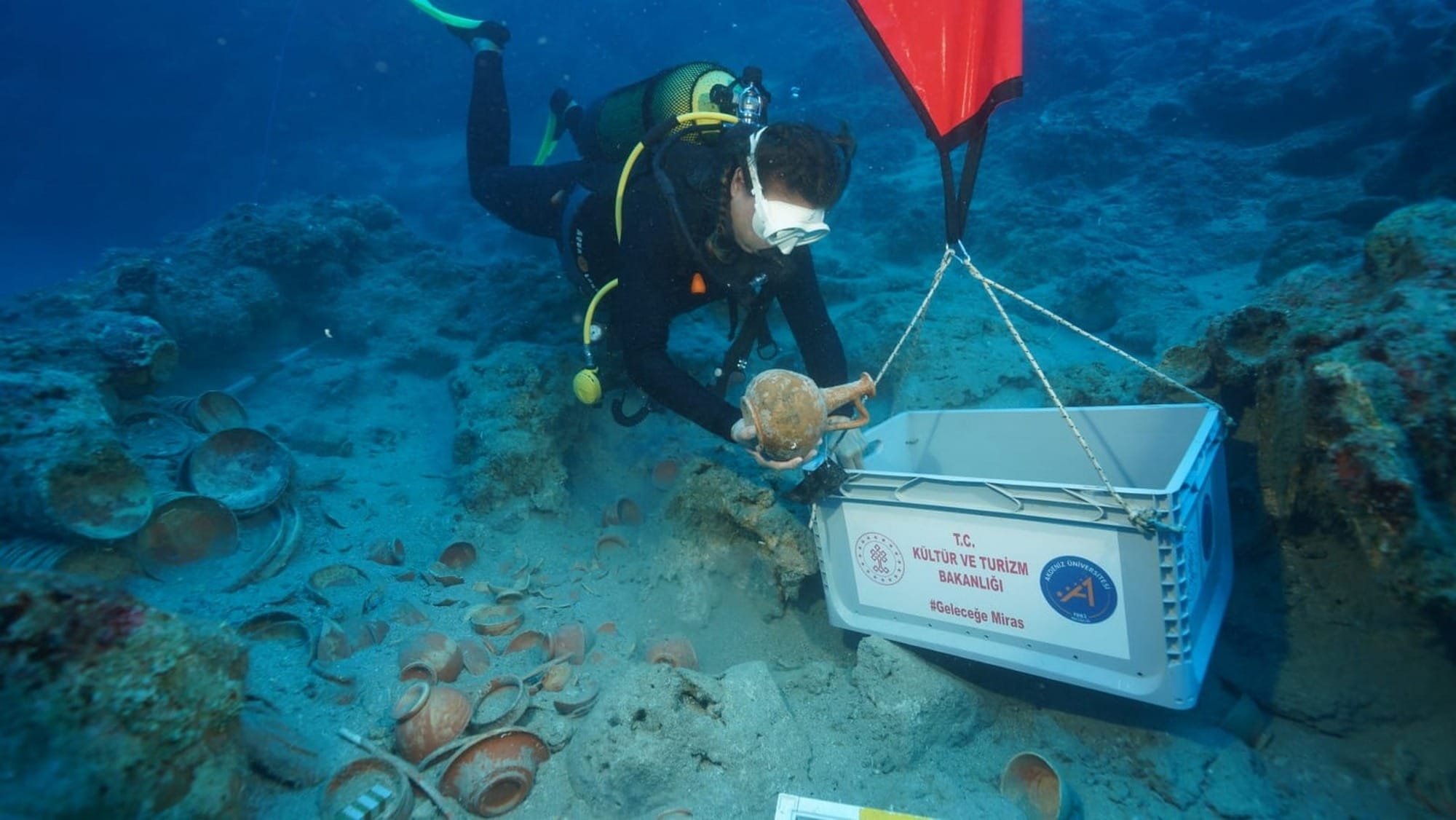
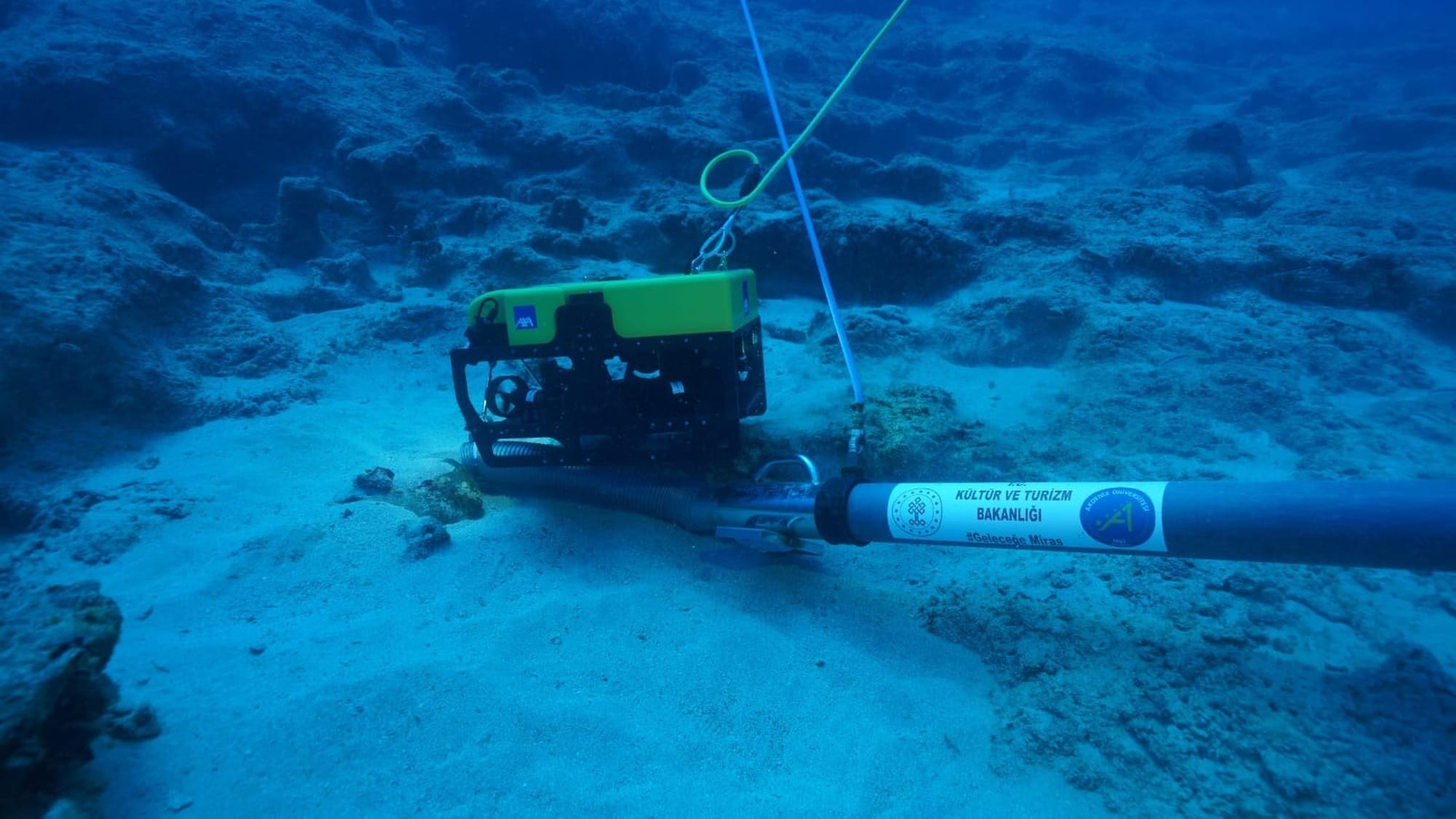
The excavation continues with support from underwater robots. Photographs released by Akdeniz University show equipment working close to the seabed and operators monitoring underwater views from the support vessel. Another image shows a diver handling a ceramic vessel beside a suspended recovery crate, among pottery still lying at the wreck.
Recovery is followed by conservation. In its 2025 account of the work, the ministry said that the finds were being carefully preserved in regional restoration and conservation laboratories. It highlighted the survival of original colours and surface characteristics, which can help researchers examine the vessels’ manufacture as well as their appearance.
The university says the recovered ceramics provide evidence for ancient production techniques, vessel forms and table culture. The continuing excavation brings those questions together with the practical business of shipping fragile dishes: how the cargo was assembled, where its different components originated and how the vessels were packed for their journey.
About the Roman Empire Times
See all the latest news for the Roman Empire, ancient Roman historical facts, anecdotes from Roman Times and stories from the Empire at romanempiretimes.com. Contact our newsroom to report an update or send your story, photos and videos. Follow RET on Google News, Flipboard and subscribe here to our daily email.
Follow the Roman Empire Times on social media: