
What Romans Carried on Their Hands Meant More Than We Think
Some stories survive not through monuments or manuscripts, but through objects so small they could be hidden in a closed hand—yet they carried entire lives upon them.

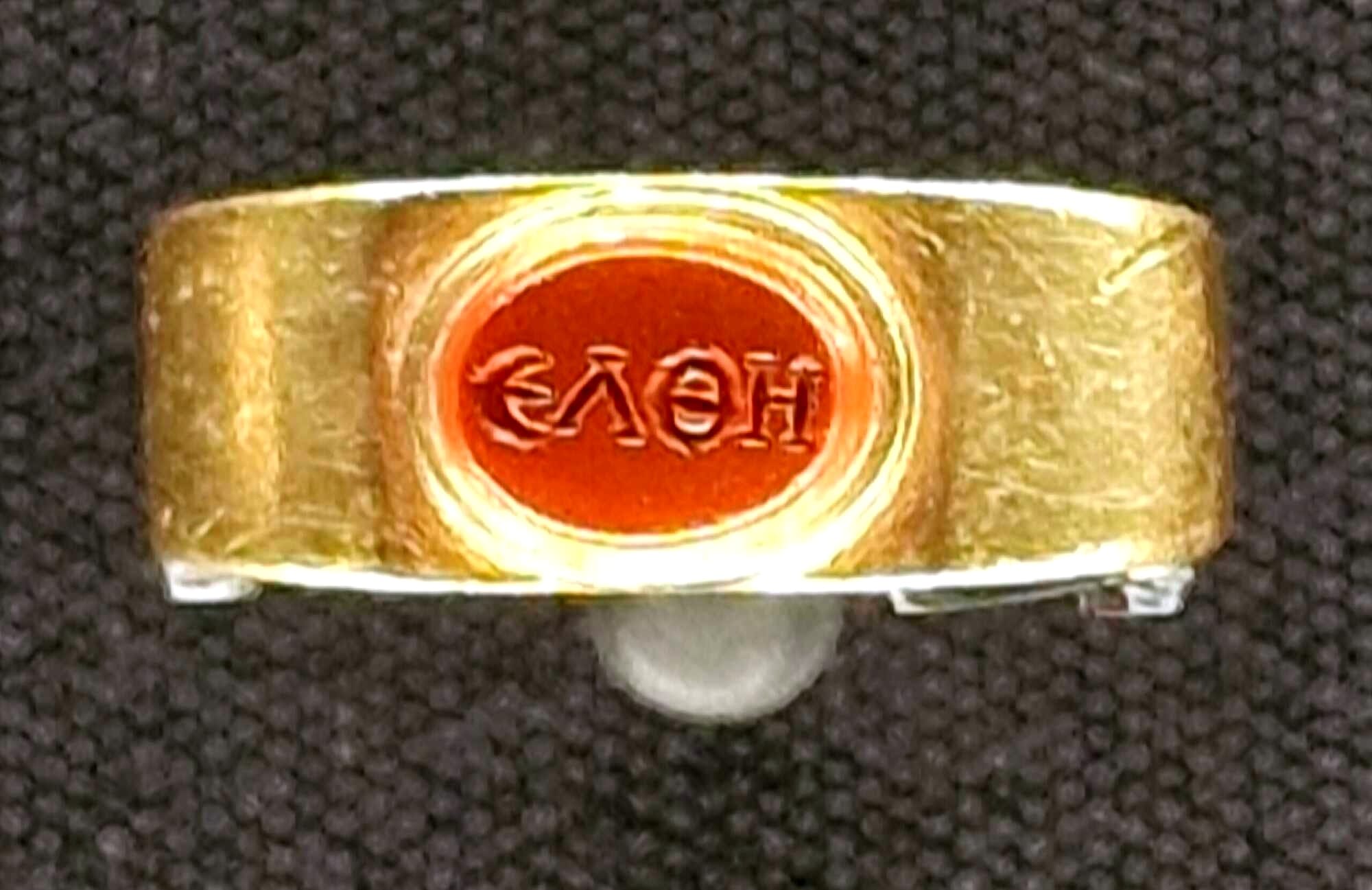
Amid the noise and movement of Roman life existed objects so small they rarely drew notice, yet they accompanied their owners everywhere—from marketplaces to military camps, from banquet halls to the silence of tombs. They were handled, exchanged, guarded, and sometimes lost, carrying with them stories of rank, allegiance, devotion, and the shifting patterns of an empire. In their worn surfaces and carved details lies a record of daily life that survives long after the hands that once shaped or wore them have disappeared.
The Silent Storytellers of Roman Life
Beneath the world of emperors, legions, and marble monuments lay objects so small they rarely earn a place in history books—yet they carried identities, loyalties, affections, and status on their tiny metal frames. These pieces were worn by senators and soldiers, matrons and merchants, inscribed with hopes, warnings, prayers, and the emblems of households. In their surfaces rested the traces of a society held together not only by laws and armies, but by the habits and symbols people carried on their hands.
What survives today is not simply ornament but a parallel record of Roman life, revealing how individuals expressed power, affection, duty, superstition, and memory in the most personal forms imaginable.
Tokens of Status, Law, and Everyday Life
Finger rings in the Roman world served far more than decorative purposes. They appeared in wills, inventories, and legal disputes; they entered family treasuries and passed from one generation to the next. To receive a ring could signify a change in rank, a recognition of service, or the beginning of adulthood.
Families often preserved ancestral rings, keeping them not only as heirlooms but as visible proof of lineage. In descriptions of funerary processions, mourners carried masks and symbols of ancestors; rings were among the objects that testified to the continuity of a household.
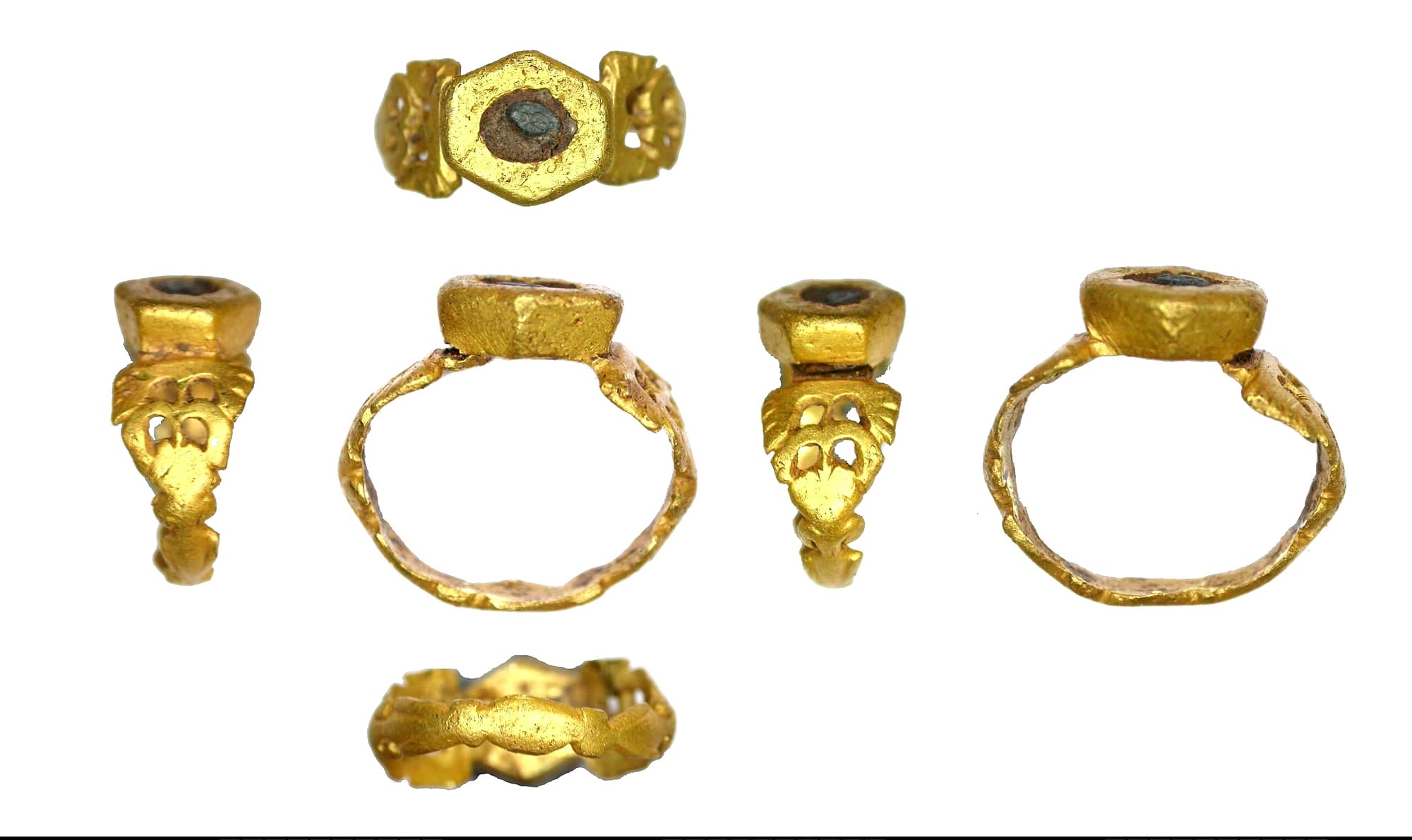
Even the simplest bands had layered meanings. A plain iron ring marked military service, worn when soldiers were still barred from gold. Later, gold rings became emblems of citizenship and respectability, though debates about who deserved the privilege lasted for generations. One law distinguished sharply between freeborn citizens and those of lesser standing by restricting the right to wear gold. Such distinctions mattered. They were visible markers of honor, and a ring could reveal more about a man’s status than his clothing or hairstyle.
Inscriptions give glimpses of personal emotions and expectations. Many rings carried short lines—“Bene vale,” “Amica fidelis,” “Vivas in Deo”—simple phrases expressing goodwill, loyalty, and remembrance. Others bore the names or initials of owners, suggesting that rings served not only as tokens of affection but also as identifiers. A ring inscribed with a name indicated property, affection, or legal claim. If lost, it might still speak for its owner.
The archaeological record contains rings clearly worn for decades, their surfaces softened by daily life. Some bear deep grooves where a tool or repetitive task abraded the metal. Yet others seem scarcely touched, perhaps saved for ceremonies or placed into a grave on the day of burial. Each object reflects the life of the wearer, whether soldier, artisan, freedman, or senator.
The Roman Seal Ring: Authority at the Fingertip
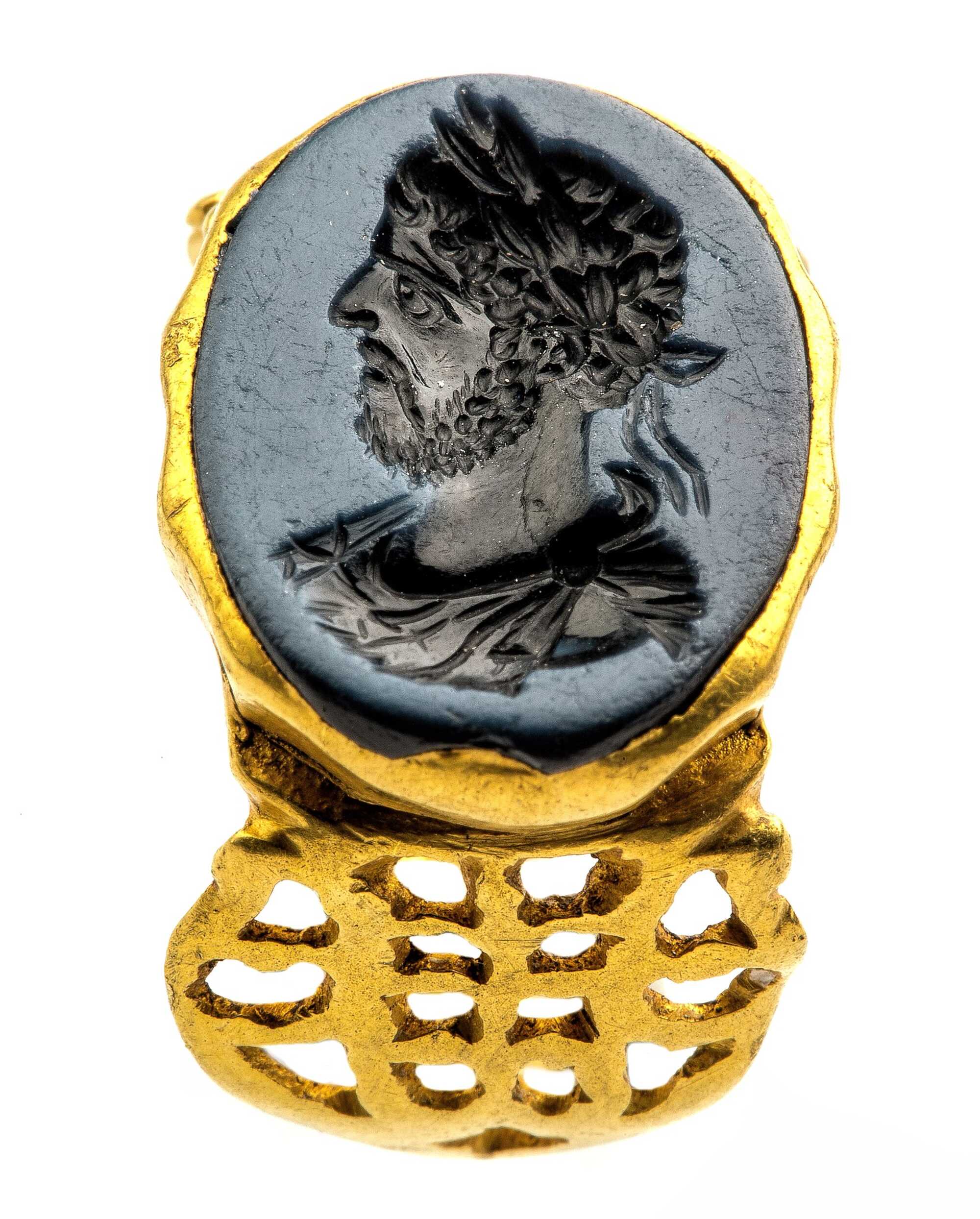
Among the many types of rings worn in Rome, the anulus signatorius stood apart. This signet ring, with its engraved gem, acted as a legal instrument. By pressing the carved bezel into soft wax, a Roman authenticated contracts, validated transactions, or marked correspondence. To lose one’s seal could be disastrous, and ancient writers mention cases in which stolen rings were used to forge agreements or impersonate another person. The seal was an extension of the bearer’s identity, as recognizable as a signature.
One episode illustrates this danger with striking clarity. When Cornutus was sought by hostile forces, his slaves attempted to save him by presenting another man’s corpse as their master’s. They placed a gold ring on the dead man’s finger—enough on its own to confirm the identity—and the soldiers accepted the deception. The ring, rather than the face or the body, carried the authority of recognition.
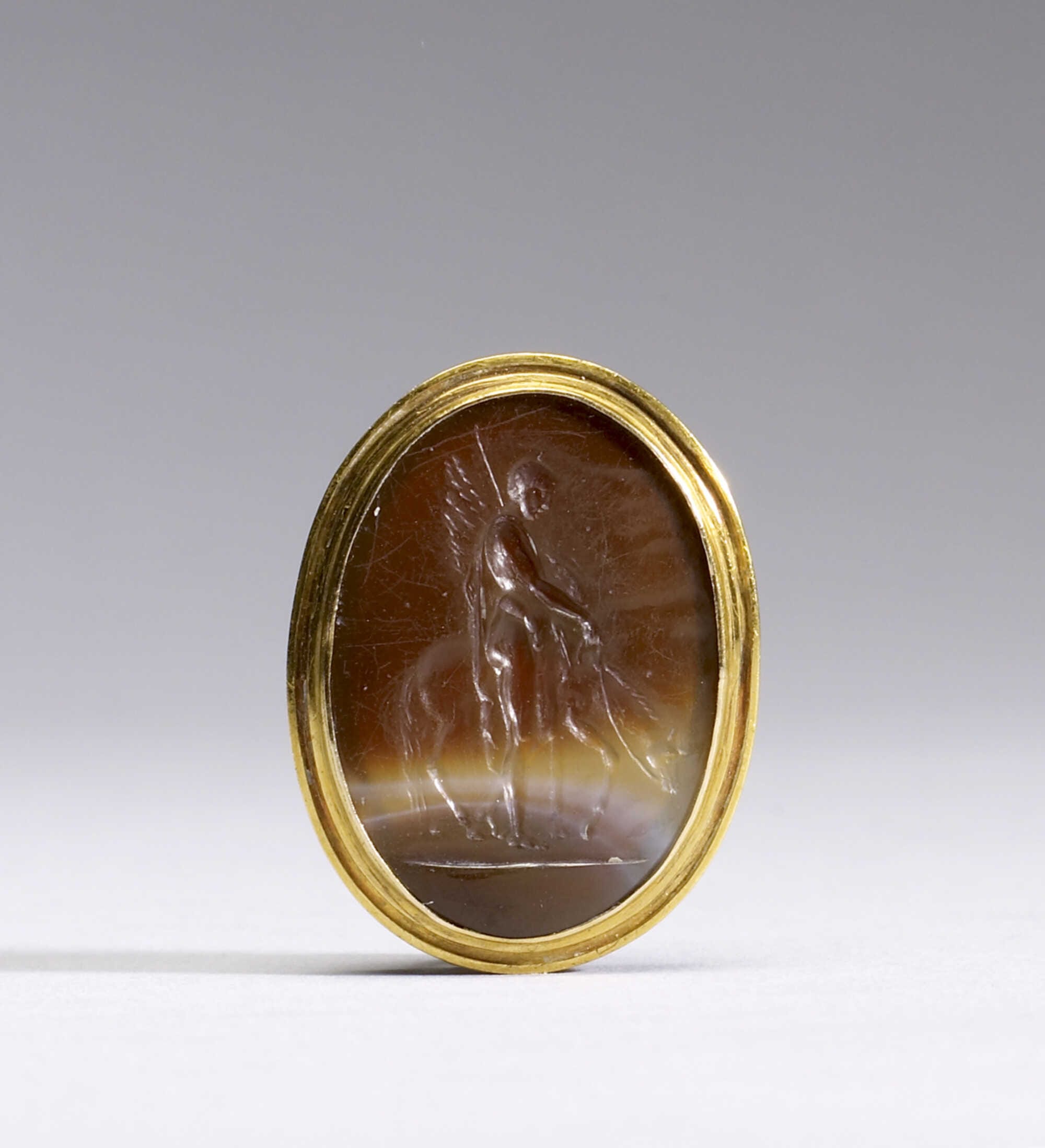
The engraved gems—typically carnelian, jasper, amethyst, or sard—told stories in miniature. Masters of gem carving produced intaglios showing gods, heroes, mythological scenes, portraits, animals, or symbolic devices tied to a family. Some depicted Minerva for wisdom, Hercules for strength, Mercury for commerce, or Fortuna for prosperity.
Others bore abstract emblems known only to the household. The precision of these carvings remains remarkable: tiny drapery folds, minuscule inscriptions, and expressive profiles rendered with astonishing finesse.
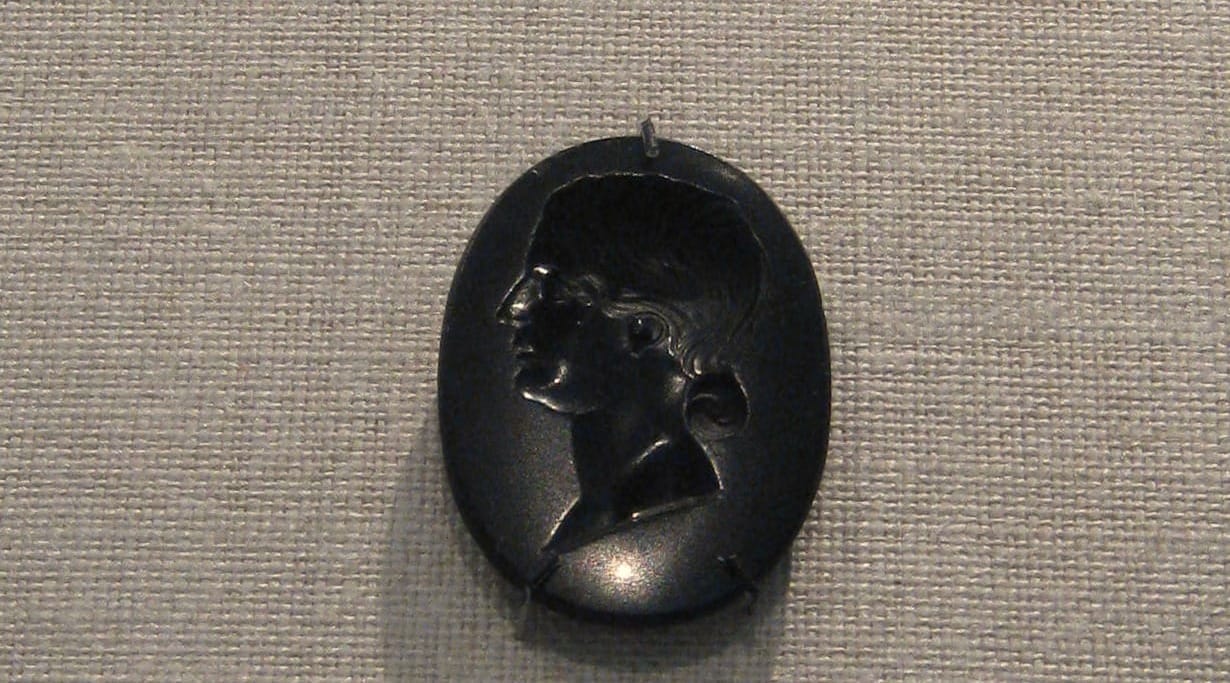
A seal ring could accompany a Roman throughout life. One might wear a formal seal for business and a second for private correspondence. A young man receiving a seal ring marked a transition into adult responsibility. In literature, giving someone a seal ring is treated as a sign of absolute trust. In grave goods, seal rings appear often enough to show how deeply they were tied to personal identity.
Some seals bear traces of repeated use—wax residue clinging to carved lines or slight flattening of the bezel from countless impressions. Others show recutting, where a gem originally engraved with one design was altered to carry another, suggesting inheritance or changing political loyalties. Recutting was common when families wished to maintain continuity without wasting precious materials.
Through these rings, the Roman world formalized agreements, expressed loyalty, and established legal claims. They embodied authority in a society that valued visible, tangible symbols of identity.
Symbols of Love, Faith, and Household Identity
Rings served as tokens of affection long before they became formal emblems of marriage. Romans exchanged rings as signs of partnership, remembrance, and devotion. Some contained linked hands—dextrarum iunctio—a visual representation of trust and unity. Others bore inscriptions of endearment, sometimes so personal that their meaning remains opaque to modern eyes.
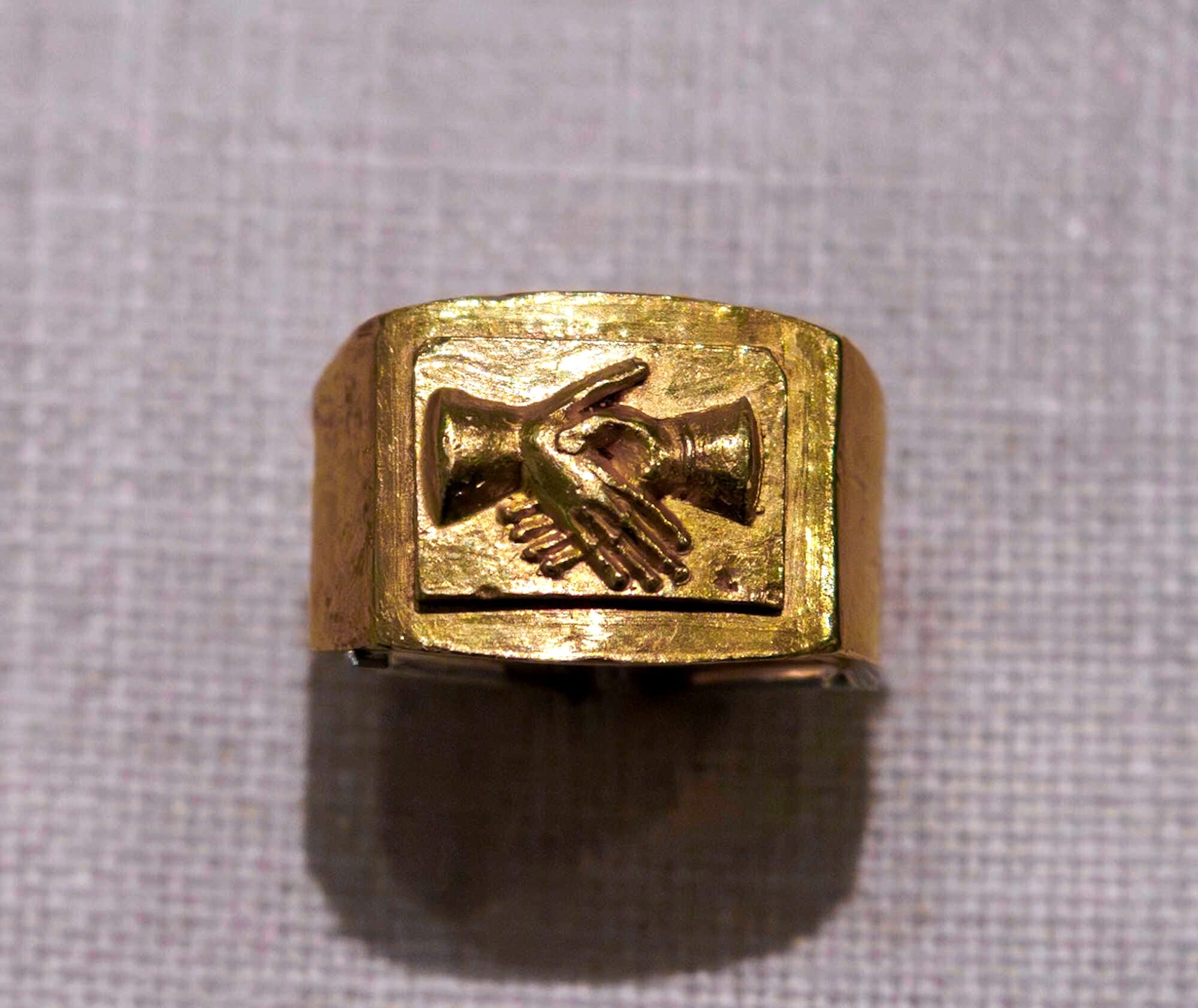
Religious motifs were equally widespread. A ring engraved with Venus might suggest love or beauty, while one showing Hercules symbolized courage or protection. Many bore miniature household gods, carried not as public statements but as private assurances of safety.
Certain stones had protective associations. Green stones were believed to strengthen sight, while red stones guarded against injury. Amber was linked to healing and female virtue, and clear stones were thought to bring mental clarity. These beliefs threaded through Roman daily life, shaping the stones chosen for rings and the functions ascribed to them.
Household identity appeared in initials or monograms. These were not merely decorative; they signaled the social fabric of a family. Rings inscribed with abbreviations or symbols connected wearers to their backgrounds and indicated belonging. Inscriptions such as “DM” (Domino Magistro) or “AVGVSTAE” paired with initials show that rings communicated complex relationships—devotion to patrons, spouses, or households.
These rings extend the emotional vocabulary of the ancient world. They tell of bonds formed in quiet spaces—between lovers, spouses, parents, and children. They mark promises kept and connections preserved across time.
Materials That Marked Status
Roman rings were made from a variety of materials, each indicating social position, economic means, or personal taste.
Gold was the metal of prestige. By the late Republic and early Empire, the ius aureorum anulorum (a legal privilege granting someone—usually an equestrian or someone elevated by imperial favor—the right to wear the gold ring (anulus aureus), the traditional symbol of equestrian rank and high social status ), regulated who could wear gold rings, reserving them initially for senators and equestrians.
Over time, restrictions softened, and successful merchants, officers, and even freedmen gained the right. Still, wearing a gold ring remained a clear declaration of rank.
Silver rings were affordable for many freeborn citizens. They offered a respectable appearance and could house engraved gems of considerable quality. Their widespread use across workshops in Italy and the provinces shows how deeply jewelry was woven into Roman identity.
Bronze and iron served the lower classes. Soldiers often wore iron rings because of early restrictions against gold. Even after such rules relaxed, iron remained common in military contexts, partly due to practicality and partly because rings could be lost easily during campaigns. These rings, though simple, testify to the universality of ornament.
Glass rings and paste gems expanded access even further. Some glass rings imitated precious stones with surprising artistry. Surviving examples with bright colors and smooth polish show that desire for beauty transcended class.
Materials intersected with personal expression. A wealthy woman might own several rings with different stones for different rituals or seasons. A merchant might prefer durable metal for travel. A soldier returning from service might purchase a silver ring engraved with a deity connected to his legion. The diversity of surviving rings demonstrates a society that communicated identity through everyday objects.
Craftsmanship and Engraving: The Art Beneath the Detail
Behind each Roman ring stood specialized labor. Goldsmiths shaped bezels and hollowed bands; gem engravers carved intaglios with drills and abrasives; apprentices polished finished pieces to shine. Workshops across Rome, Pompeii, Alexandria, and provincial centers produced rings of varying quality—from mass-made bronze bands to exquisite gold pieces set with expertly carved stones.
Engraving required immense skill. Hard stones like carnelian or sard resisted cutting, yet Roman artisans achieved precision visible even under magnification. Some engravings depict entire mythological narratives compressed into a few millimeters. Others show lifelike portraits, suggesting that personal likenesses were deeply valued.
Workshops often repeated popular designs—Victories, cupids, dolphins, or heads of gods—but bespoke commissions were common. Inscriptions indicate individualized demands. Many rings also show evidence of repair: replaced bezels, soldered cracks, or recut stones, suggesting lives of long service.
Roman writers note the expertise of gem carvers and the pride associated with high-quality work. The popularity of such artistry spread across the Empire, with certain patterns appearing from Spain to Syria. The diffusion of styles demonstrates both widespread access to ornament and the shared symbolism underpinning Roman society.
Rings in Roman Ritual, Superstition, and Memory
Rings also belonged to the realm of ritual. Some were worn as protective amulets. Stones of particular colors or properties were believed to repel harm or confer blessings. Others bore inscriptions invoking divine guardianship. It was common to dedicate rings at temples, either in thanks or in hope of favor.
Funerary contexts reveal their importance at life’s end. Rings accompany the deceased in many graves, worn on the finger or placed nearby. Their presence suggests they were considered essential markers of identity. In some tombs, rings appear in multiples, hinting that the dead were buried with objects that symbolized the chapters of their lives.
Superstitions attached themselves to rings with symbolic imagery. Snakes indicated renewal, dolphins good fortune, lions strength. Some rings bore single letters or cryptic symbols meant to shield the wearer from misfortune. The belief that gems held powers—promoting health, courage, or insight—added layers of meaning to what might seem simple jewelry.
Throughout their lives, Romans visualized protection through these rings. Whether through the image of a god, the engraving of a phrase, or the choice of a particular stone, people carried fragments of belief on their hands.
The Social Life of a Roman Ring
The “life” of a ring often extended far beyond its first owner. Rings were inherited, gifted, altered, or repurposed. Some were upgraded with new stones; others had their bezels replaced. When styles changed, an older ring might be recut to suit new tastes. Rings also moved with people—merchants carried them along trade routes, soldiers across frontiers, and families through migrations.
Lost rings appear often in ancient anecdotes. Writers mention rings dropped in rivers, stolen in baths, or found unexpectedly. Such mentions reflect how closely rings accompanied daily life.
A Roman ring could live several lives: as a new ornament, a seal of authority, a token of affection, a repaired heirloom, and eventually an archaeological artifact. Each layer of use added to its story, allowing modern observers to glimpse not only craftsmanship but also the personal histories behind them.
Anecdotes of Lost and Miraculous Rings in Ancient Literature
Ancient writers filled their works with stories of rings lost, stolen, or returned in uncanny ways, each tale reflecting how deeply these objects were woven into daily life. One of the most famous accounts appears in Herodotus, who tells how Polycrates of Samos threw his cherished signet ring — a gold seal set with an emerald — into the sea to appease the gods who resented his good fortune.
Days later, a fisherman presented Polycrates with a large fish as a gift, and inside its belly lay the lost ring. The episode became a moral emblem of inescapable fate. Pliny the Elder repeats the story in his Natural History, treating it as evidence of divine intervention and the peculiar destinies attached to precious objects.
Other anecdotes revolve around theft, especially in the public baths, where the shedding of clothing made valuables vulnerable. Martial jokes about bathhouse thieves slipping rings from fingers slick with oil, while Juvenal warns that even wealthy Romans avoided wearing jewelry there for fear of its disappearance. The baths, he suggests, made everyone equal—not in rank, but in the shared risk of being robbed.
Stories of rings lost to water recur often. Aulus Gellius recounts an instance of a ring dropped into a river and found long afterward by chance, still bearing the intact seal that once validated legal acts. Cicero, too, refers to cases in which stolen rings were used to imitate another man’s authority, forging commitments or altering correspondence—a reminder that losing one’s seal was more than a matter of property; it threatened one’s legal identity.
In another tale preserved by later compilers, a ring vanished at sea only to return years later inside a fish sold at market, echoing the pattern of Polycrates’ story and showing how widely the motif circulated.
Across these accounts, from Herodotus to Pliny, Gellius, Cicero, Martial, and Juvenal, the same pattern emerges: rings, whether signets or ornaments, accompanied Romans everywhere, and their loss or recovery became the stuff of legend, wit, and moral reflection.
Credits: Produced by The Online Distributed Proofreading Team at https://www.pgdp.net (This file was produced from images generously made available by The Internet Archive)
Across centuries of Roman history, rings carried meanings that touched every part of life—law, affection, belief, status, and personal memory. Their surfaces held identities as surely as any inscription carved in stone, yet they remained objects of daily use, worn into familiarity by hands long vanished. In the weight of their metal and the delicacy of their engravings lies a record of Roman society that endures quietly, one small circle at a time.




About the Roman Empire Times
See all the latest news for the Roman Empire, ancient Roman historical facts, anecdotes from Roman Times and stories from the Empire at romanempiretimes.com. Contact our newsroom to report an update or send your story, photos and videos. Follow RET on Google News, Flipboard and subscribe here to our daily email.
Follow the Roman Empire Times on social media: