
Petronius Probus: One of the Most Powerful Men in the Roman Empire
He was one of Rome’s wealthiest and most influential aristocrats, admired for his generosity but accused of ruthless ambition. Petronius Probus left behind two very different reputations.

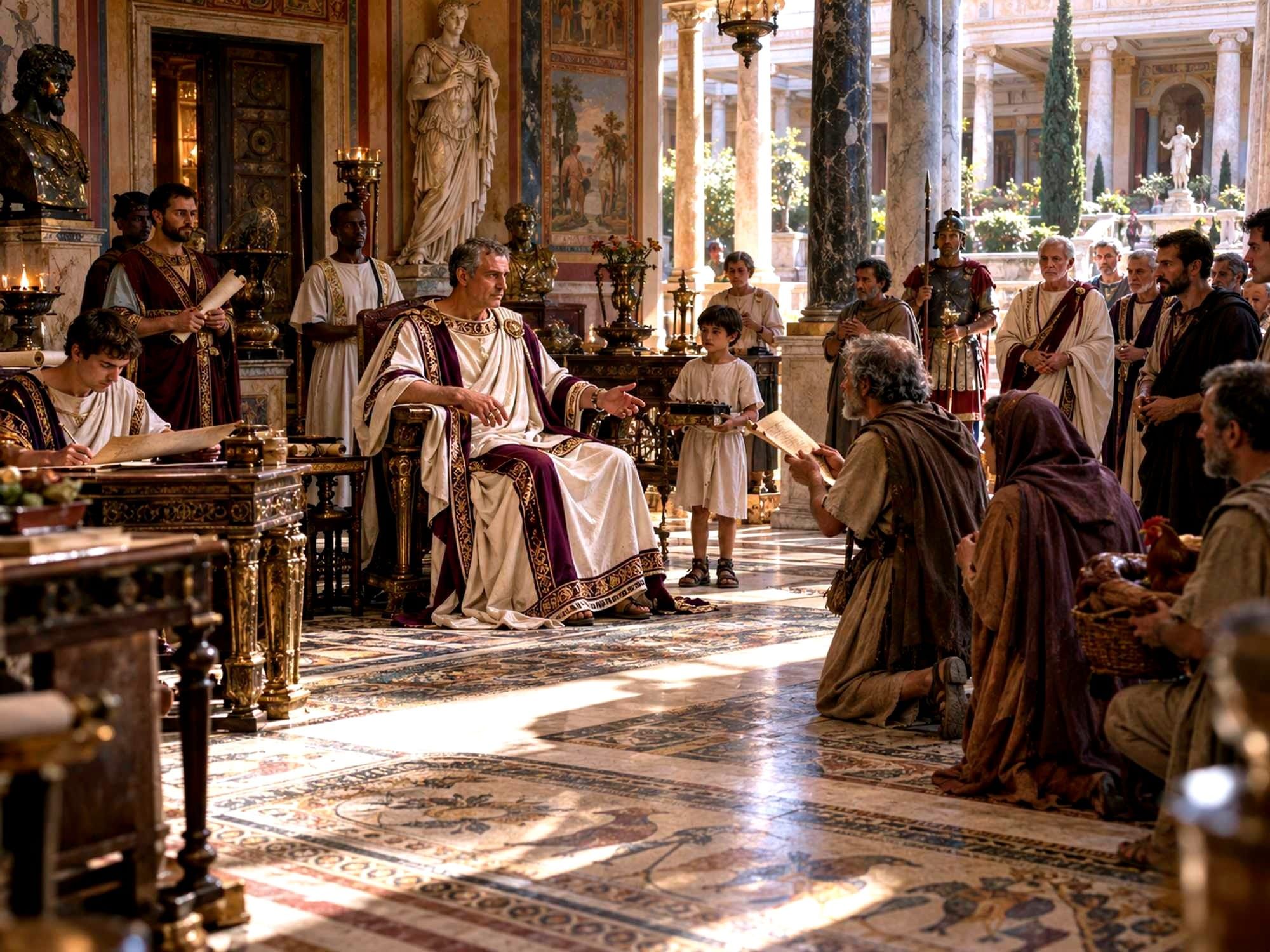
Sextus Petronius Probus was among the wealthiest and most influential Roman aristocrats of the fourth century. His estates extended across the Empire, his relatives occupied important government positions, and his political connections reached successive emperors. He became consul alongside the young emperor Gratian in AD 371 and held the praetorian prefecture four times, an exceptional distinction among the Roman aristocracy.
His contemporaries, however, left very different descriptions of him. Some celebrated his generosity, eloquence and public service, while others accused him of excessive ambition, oppressive taxation and protecting associates who abused his influence. The historian Ammianus Marcellinus left a particularly hostile portrait of Probus, including accounts of political intrigue, an impending military attack and an emperor who came to despise him.
A Fortune Spread Across the Empire
Probus belonged to a distinguished senatorial family. His grandfather, Petronius Probianus, had been consul in AD 322, and his father, Petronius Probinus, followed in AD 341. Both had also held the urban prefecture of Rome. Probus married Anicia Faltonia Proba, connecting his family to the influential Anician house.
Ammianus introduces Probus in AD 368, when he was summoned from Rome to succeed the deceased praetorian prefect Vulcacius Rufinus. By then, his ancestry, influence and inherited fortune had made him famous throughout the Roman world. His extensive estates were spread across numerous provinces, although the historian declined to determine whether the whole fortune had been acquired legitimately.
Wealth brought Probus considerable influence through the clients, dependants and relatives who looked to him for financial assistance, protection and advancement. His political position helped members of his extended family obtain important appointments. His father-in-law, Clodius Hermogenianus Olybrius, held the urban prefecture of Rome, while another relative, Clodius Hermogenianus Caesarius, subsequently occupied the same office.
Ammianus describes Probus as capable of great generosity toward his friends but relentless toward his enemies. He could appear confident and intimidating when dealing with people who feared him, only to become submissive when confronted by someone more powerful. His attachment to public office prompted one of the historian's most memorable comparisons:
"And as fishes, when removed from their natural element, cannot live long on the land, so he began to pine when not in some post of authority" — Ammianus Marcellinus, Roman Histor*, 27.11.3
Ammianus connected this desire for office with pressure from Probus's clients, accusing some of his dependants of using their patron's protection to escape punishment for wrongdoing. The historian nevertheless acknowledged that Probus did not instruct his servants or clients to commit unlawful acts. Instead, he accused the prefect of protecting them afterwards and preventing investigations into their conduct.
He was equally severe in his description of Probus's personality:
"He was a man of a suspicious temper, self-relying, often wearing a bitter smile"— Ammianus Marcellinus, Roman History, 27.11.5
Ammianus also described him as unforgiving and inclined to conceal hostility beneath an appearance of friendliness. Once he had resolved to harm someone, requests for mercy supposedly had little effect. Even when he had accumulated exceptional wealth and honours, Probus remained anxious and frequently troubled by minor illnesses.
The Confidential Letters That Reached Maximinus
One incident recorded by Ammianus concerns Aginatius, a senior official at Rome, and Maximinus, an ambitious administrator who enjoyed the favour of Valentinian I. Maximinus had openly displayed contempt for Probus, while Aginatius resented Maximinus's growing influence and the preferential treatment he received in judicial affairs.
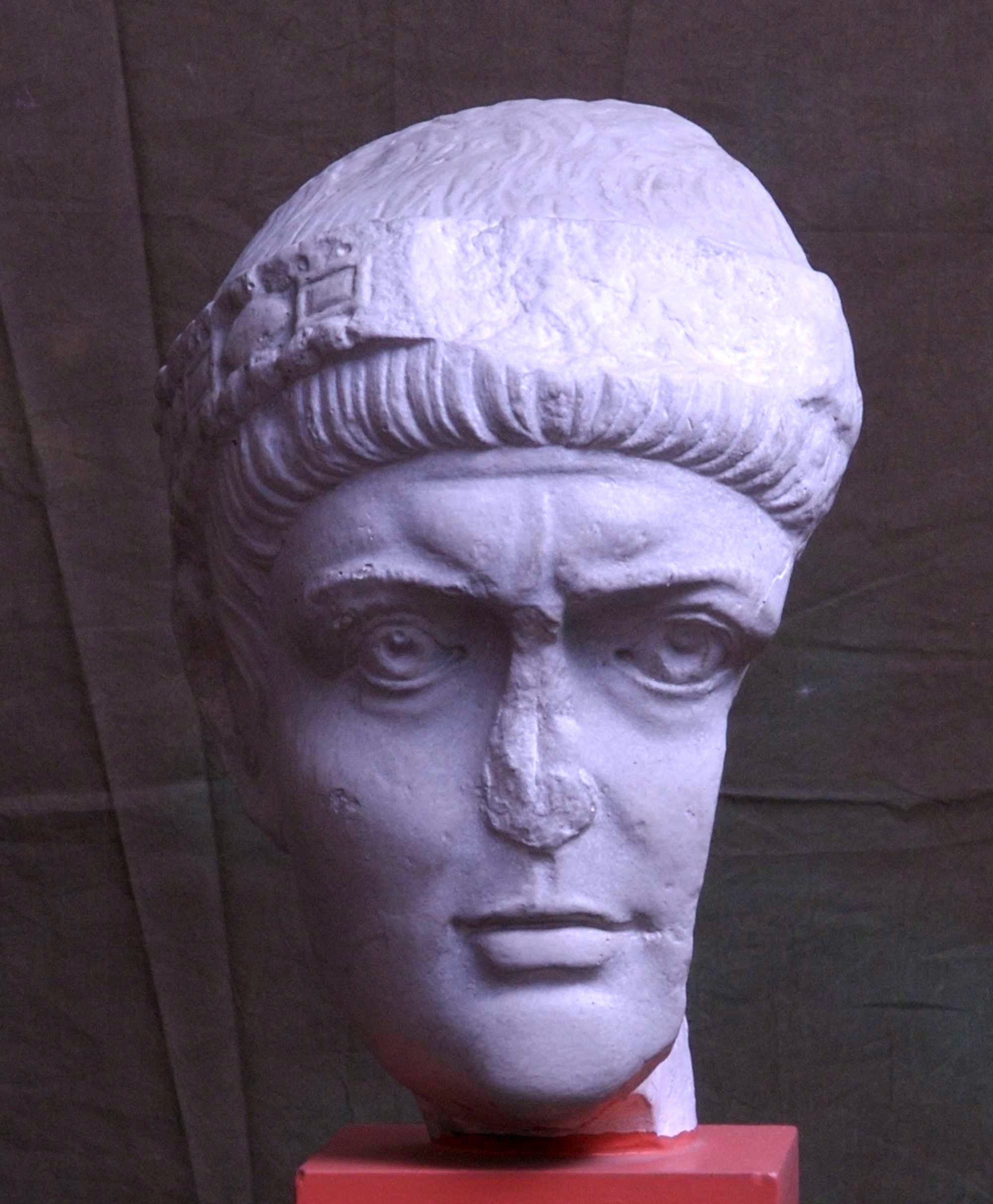
Aginatius approached Probus privately, suggesting that Maximinus could easily be removed if the powerful prefect wished to act against him. The approach included confidential correspondence concerning their mutual rival.
According to a report preserved by Ammianus, Probus forwarded Aginatius's letters to Maximinus himself because he feared the latter's influence over Valentinian. Only the messenger was supposedly aware of the transaction. When Maximinus read the correspondence, he became furious and began seeking opportunities to destroy Aginatius.
Other events subsequently contributed to Aginatius's downfall. A separate dispute involving an inheritance, the widow Anepsia and further accusations eventually led to proceedings against him. Maximinus became directly involved, using his influence to press the case against his opponent.
The affair culminated in a nighttime interrogation during which slaves were tortured and Aginatius was condemned without being allowed to defend himself. He and Anepsia were executed. Ammianus attributed the alleged forwarding of the correspondence to reports circulating about Probus, while describing the separate accusations and judicial proceedings that ultimately resulted in Aginatius's death.
The Mansion That Overflowed with Clients
Probus's wealth received a very different treatment from the poet Claudian, who celebrated the joint consulship of his sons Probinus and Olybrius in AD 395. Claudian presented their father as a man who distributed his riches liberally, describing a household crowded with petitioners and people seeking assistance.
"The thick cloud of his generosity was ever big with gifts, full and overflowing with clients was his mansion"— Claudian, Panegyric on the Consuls Probinus and Olybrius, 43–45
The poet continued by describing poor petitioners entering the mansion and departing enriched. Elsewhere in the poem, he praised Probus for refusing to hide away his wealth, instead portraying his generosity as one of the family's greatest distinctions.
The clients and dependants who crowded his household also feature in Ammianus's account. The historian associated them with the pressure placed on Probus to seek government appointments and the protection he allegedly extended to associates accused of wrongdoing. Both descriptions place his enormous wealth and extensive personal relationships at the centre of his influence.
His education and eloquence were likewise celebrated. Ausonius praised Probus's command of language, comparing his rhetorical abilities with those of distinguished speakers from Greek epic and Roman tradition. Inscriptions erected during his lifetime also praised his learning and public speaking.
His reputation extended beyond the western provinces. Paulinus of Milan records an unusual visit by two learned Persians who travelled to meet Ambrose. After questioning the bishop about religious matters, they continued to Rome, where they wished to acquaint themselves with the celebrated Probus and his extraordinary standing.
The Night Probus Considered Fleeing Sirmium
In AD 374, Probus faced an emergency very different from the political manoeuvring of the imperial court. Quadi and Sarmatian forces had crossed into Roman territory, attacking settlements and carrying away prisoners and livestock. Probus was residing at Sirmium, an important administrative centre in Illyricum, when the surrounding region came under threat.
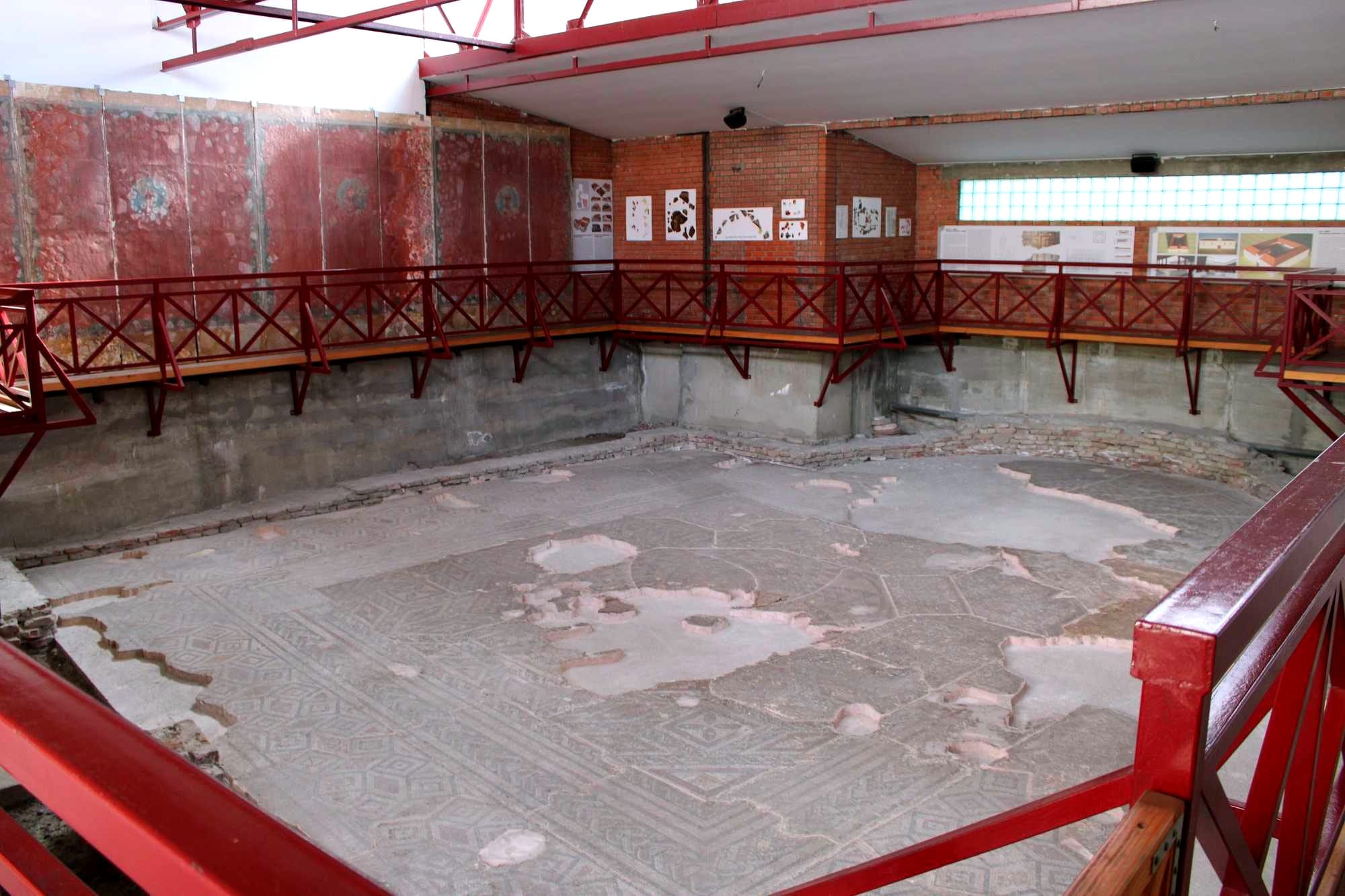
According to Ammianus, the prefect was overwhelmed by fear. Unaccustomed to military emergencies, he initially arranged for swift horses and considered escaping during the night. He changed his mind after receiving advice and learning that many of the inhabitants and defenders intended to follow him. Their departure would have left Sirmium dangerously exposed.
Probus remained in the city, although Ammianus says he initially took no action. Once his fear diminished, he began organising preparations for its defence.
"Presently, after his terror had been a little moderated, he applied himself with some activity to do what was most pressing"— Ammianus Marcellinus, Roman History, 29.6.11
He ordered defensive ditches, long obstructed by accumulated debris, to be cleared. Damaged sections of the city walls were repaired and restored, while resources previously gathered for the construction of a theatre were redirected to the work. Probus also summoned a cohort of mounted archers from a nearby military station to strengthen the defenders in case the city came under siege.
The fortifications were repaired rapidly. The attacking forces subsequently abandoned their intention of besieging Sirmium, partly because of the strengthened defences and their difficulties in conducting a siege while burdened with plunder. Ammianus recorded both Probus's initial panic and the defensive measures the prefect eventually organised.
A Philosopher's Unwelcome Report to Valentinian
Probus maintained a difficult relationship with Valentinian I, who reportedly treated him with particular hostility. Ammianus accused the prefect of accommodating the emperor's demands for revenue rather than attempting to moderate them. The resulting taxation placed considerable pressure on provincial communities, while some wealthy families lost their possessions or fled their homes.
Others were imprisoned after becoming unable to satisfy the demands imposed upon them. The historian also reported cases of people taking their own lives after suffering financial ruin. Jerome made a similarly severe accusation in his Chronicle, describing Probus as having exhausted the provinces of Illyricum through taxation before they were devastated by invading forces.
Another incident recorded by Ammianus involved a philosopher named Iphicles. According to the historian, Probus had compelled provincial communities to send delegations expressing gratitude for his administration. The people of Epirus selected Iphicles, a man whom Ammianus describes as courageous and unwilling to undertake the assignment.
When he appeared before Valentinian, the emperor recognised him and asked about the purpose of his visit. Iphicles explained that he had come as a provincial representative. Valentinian then asked whether the people who had sent him genuinely approved of Probus.
Instead of repeating the expected compliments, Iphicles revealed that the provincials had sent him unwillingly and with bitter complaints. His answer disturbed Valentinian, who began questioning the philosopher about several prominent inhabitants of the region, asking what had happened to men he knew.
Iphicles reported that one had been executed by hanging, another had been driven into exile overseas, and a third had died, with accounts differing as to whether he had taken his own life or succumbed to torture. Valentinian became furious, while Leo, his master of the offices, encouraged his anger. Leo was himself seeking appointment to the praetorian prefecture.
Despite this confrontation, Probus retained considerable influence, and Valentinian died in AD 375 without removing him from office. Probus continued to hold important positions under Valentinian's successors. His four praetorian prefectures are confirmed by inscriptions, although their exact dates and territorial responsibilities have been reconstructed differently from the surviving evidence. His appointments extended into the 380s.
He also became closely associated with the government of the young Valentinian II. Rufinus connects Probus with the emperor's accession, while Socrates describes his substantial administrative authority during the young ruler's minority. When Magnus Maximus advanced into Italy in AD 387, Sozomen included Probus among those who accompanied Valentinian II and his mother Justina to Thessalonica.
Probus and the Rise of Ambrose
Probus also played a part in the early career of Ambrose, who would become bishop of Milan. According to Paulinus of Milan, Ambrose first distinguished himself through his abilities as a legal advocate. His eloquence attracted Probus's attention, and the prefect selected him to serve among his advisers.
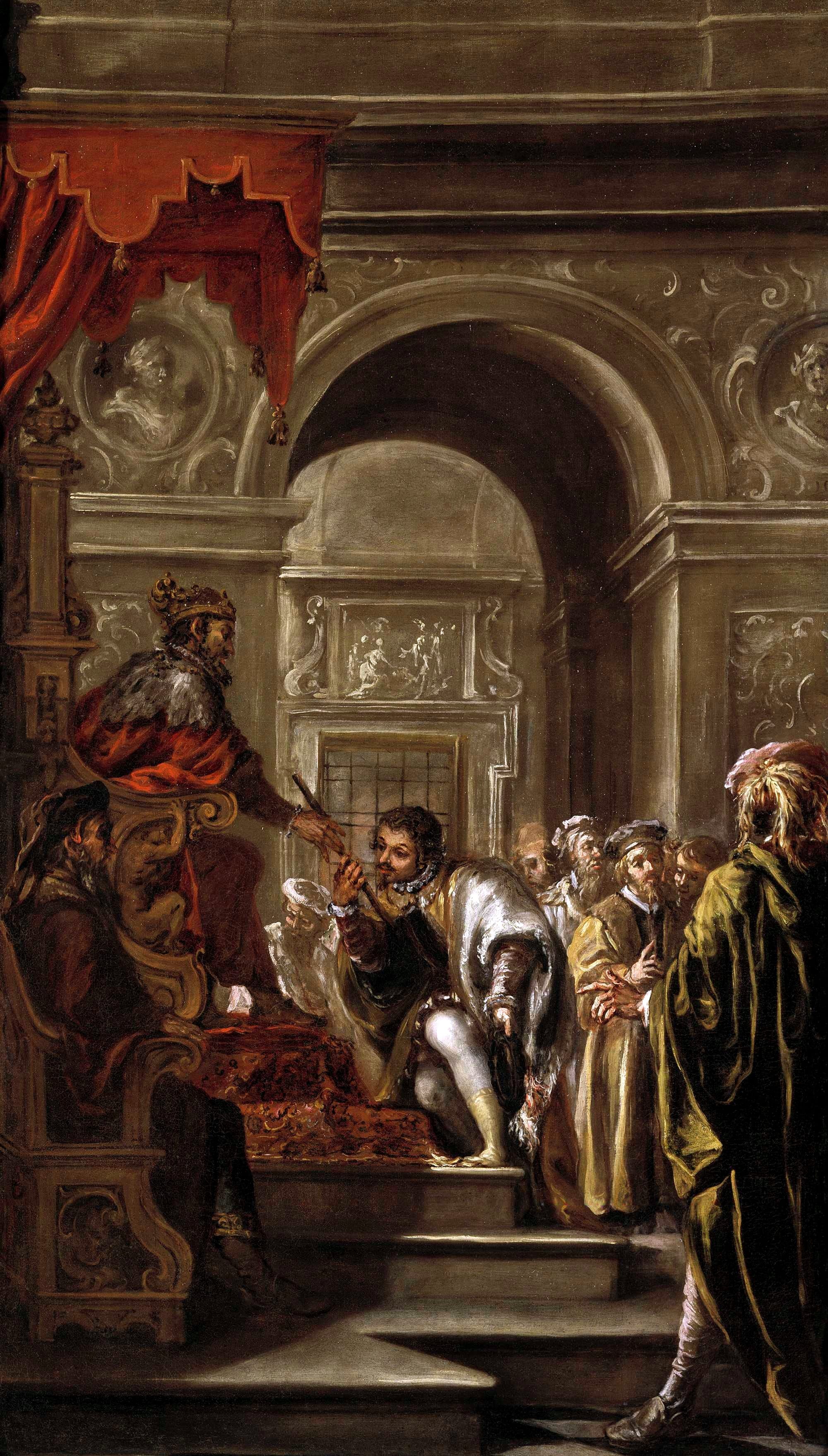
Ambrose subsequently received the governorship of Liguria and Emilia, an appointment that placed him within the provincial administration. Paulinus preserved an instruction attributed to Probus when Ambrose departed to assume his governorship: he was to act not merely as a judge, but as a bishop.
When Ambrose was chosen as bishop of Milan in AD 374, Probus welcomed the news. Paulinus associated the election with the prefect's earlier words and described his satisfaction at the appointment.
Probus's relationship with Ambrose continued to be remembered in accounts of the bishop's life. The provincial governorship he had received through Probus was his final major secular appointment before entering the Church.
Statues, a Splendid Tomb and Two Different Poems
Probus received an exceptional number of public honours during his lifetime. Inscriptions commemorated him in Rome, elsewhere in Italy and in provinces across the Roman world. One particularly elaborate marble dedication survives in the Capitoline Museums. Erected on 8 August AD 378 by representatives of Venetia and Histria, it was discovered on the Pincian Hill in Rome, in an area associated with Probus's aristocratic residence.
The inscription celebrates his nobility, eloquence, authority, administrative abilities, humanity and moderation. Its dedicators honoured him as their distinguished patron and described their special relationship with him. Greek inscriptions also record honours awarded to Probus at Gortyn in Crete. One celebrated him as a benefactor and saviour of the people, while another recorded his achievements as consul and praetorian prefect.
The lost Verona inscription listed several of his prefectures and celebrated his eloquence, education and distinguished ancestry. The surviving epigraphic evidence also records the honours Probus accumulated over a career that extended across several imperial reigns.
Probus died around the age of sixty, before his sons' joint consulship in AD 395. His family commemorated him with an elaborate funerary monument immediately beside the apse of Old St Peter's basilica in Rome. Its position placed his burial exceptionally close to the tomb of the apostle Peter.
The mausoleum was demolished in 1452 during work on the basilica. Before its destruction, the humanist Maffeo Vegio recorded two lengthy Latin funerary poems from its marble inscriptions. He also described a carved marble sarcophagus discovered during the demolition, reportedly containing substantial amounts of gold from threads woven into the deceased's garments.
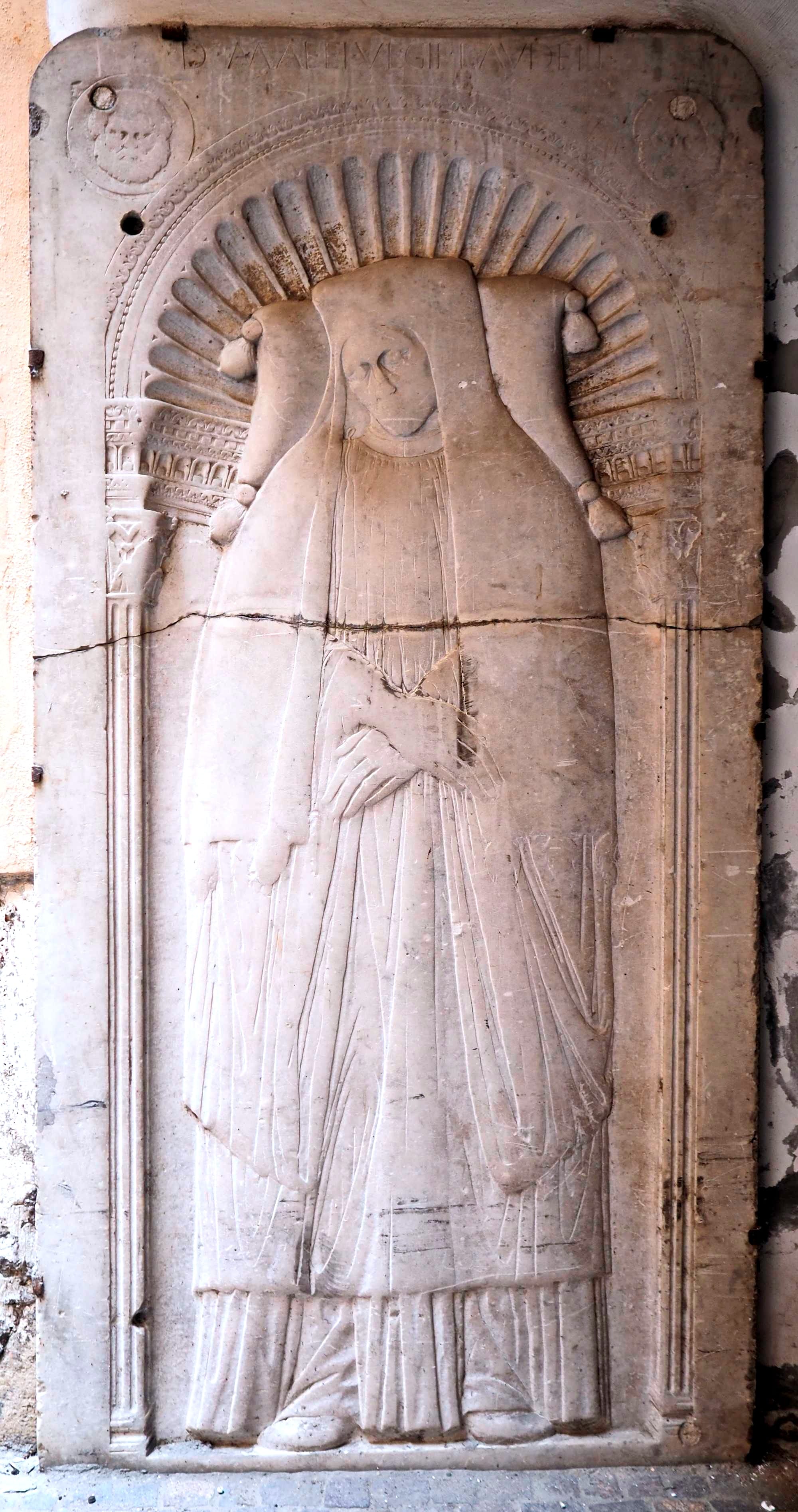
The two funerary poems celebrated different aspects of Probus's life. The first contained eighteen verses praising his ancestry, offices, wealth and generosity. It recalled his four praetorian prefectures, his consulship and the honours attained by his family, while presenting his death as a loss to Rome itself. The poem also expressed his widow's consolation in the prospect of eventually sharing his burial.
The second was longer, containing thirty verses devoted to his Christian faith and salvation. It celebrated his baptism and portrayed him as enjoying a new existence in the presence of Christ and the saints. His worldly distinctions, including the honours he had received from emperors, were placed below the greater honour of Christian salvation.
The poem closed with a prayer asking Christ to receive Probus and protect his wife and descendants. Its language has been associated with baptism late in life, although it does not establish precisely when Probus was baptised.
His sons Probinus and Olybrius became joint consuls in AD 395, while further monuments honouring their father were commissioned by members of the family. Those dedications celebrated his four prefectures, consulship and position within the Anician house.
Cameron, Alan. “Polyonomy in the Late Roman Aristocracy: The Case of Petronius Probus.” The Journal of Roman Studies 75 (1985): 164–182.
Seyfarth, Wolfgang. “Sextus Petronius Probus: Legende und Wirklichkeit.” Klio 52 (1970): 411–425.
Tamas, Hajnalka. “From Persecutor to Arbitrator of Orthodoxy: The Changing Face of Sextus Petronius Probus between the Fourth and the Fifth Century.” In The Fifth Century: Age of Transformation, edited by Jan Willem Drijvers and Noel Lenski, 297–306. Bari: Edipuglia, 2019.
Wang, Banban. “Intriguing Career of a Late-Antique Senator: Base for a Statue Honouring Sex. Petronius Probus (con. 371) by His Own People.” Undated research paper.
Porena, Pierfrancesco, et al. *PPRET Inscriptions: Inscriptions Pertaining to the Praetorian Prefects from 284 to 395 AD*. Roma Tre Press, 2025.
Ammianus Marcellinus, Res Gestae, 27.11.1–7; 28.1.30–56; 29.6.9–12; 30.5.4–10.
Jerome, Chronicle, entry for AD 372.
Ausonius, Epistles, poem addressed to Petronius Probus.
Claudian, Panegyric on the Consuls Probinus and Olybrius, especially 31–54
Paulinus of Milan, Life of Ambrose, 5, 8, 25.
Rufinus, Ecclesiastical History, 11.12
Socrates Scholasticus, Ecclesiastical History, 5.11
Sozomen, Ecclesiastical History, 7.13.
Corpus Inscriptionum Latinarum, V 3344; VI 1751–1753, 1756.
Inscriptiones Creticae, IV 312, 318.
About the Roman Empire Times
See all the latest news for the Roman Empire, ancient Roman historical facts, anecdotes from Roman Times and stories from the Empire at romanempiretimes.com. Contact our newsroom to report an update or send your story, photos and videos. Follow RET on Google News, Flipboard and subscribe here to our daily email.
Follow the Roman Empire Times on social media: