
Marble Torso Linked to Rome’s First Emperors Heads to Possible $12 Million Auction
A first-century marble torso returns to auction on 21 October. Its sun chariot and Victories are clear; the emperor it represented and its exact setting are still debated.

A marble torso made in the first half of the first century CE will be offered at Sotheby’s in New York on 21 October. The auction house estimates the 110-centimetre sculpture at $8 million to $12 million and describes its armoured figure as probably representing a ruler from the Julio-Claudian dynasty. Its separately made portrait head is gone, leaving the emperor’s identity open.
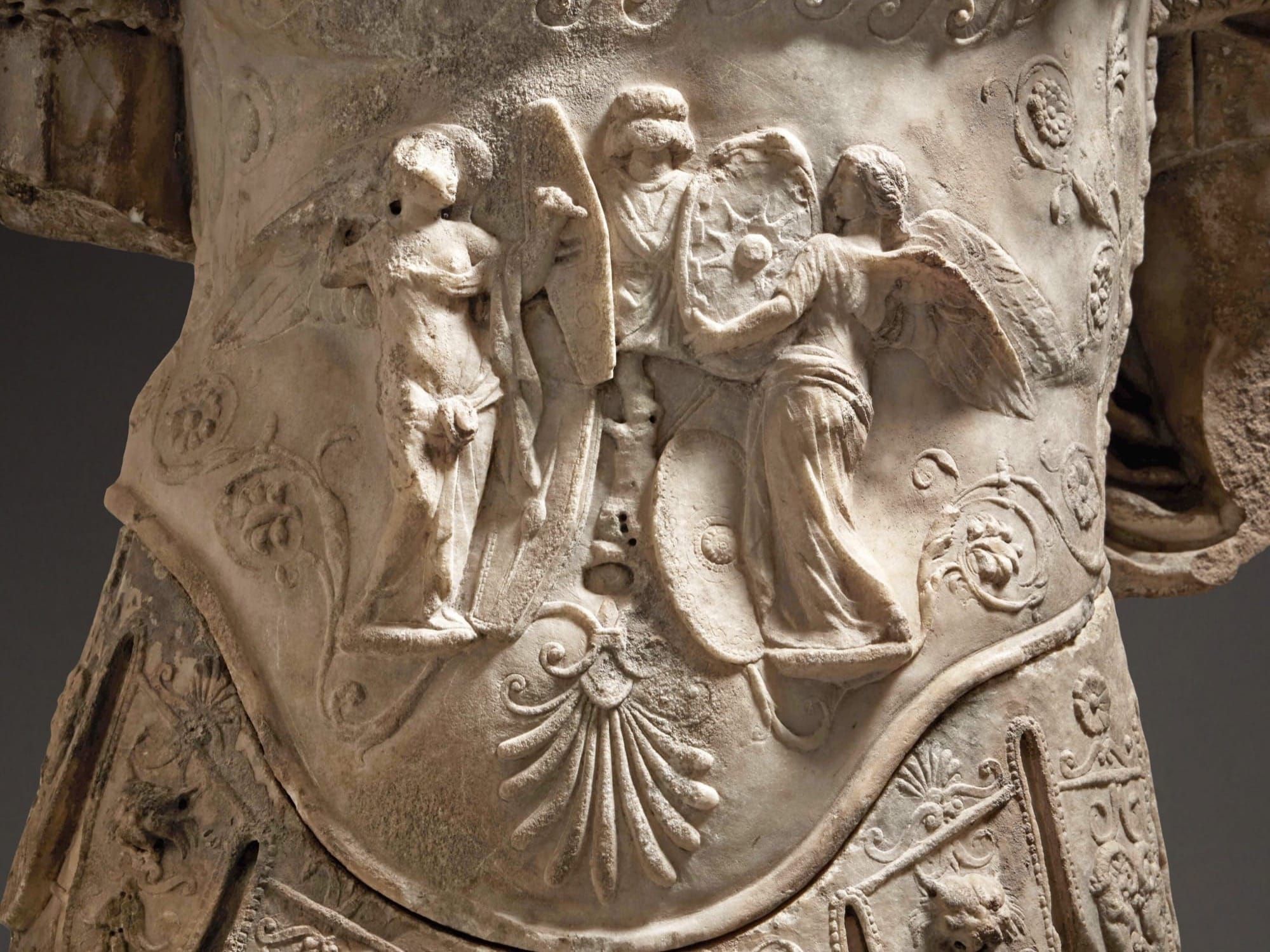
The breastplate supplies the sculpture’s most vivid evidence. Sol, the sun god, rises in a four-horse chariot above a pair of winged Victories fastening captured armour to a trophy. The figure wears a military cloak and a carved cuirass over a tunic. It presents command through images of divine order and victory, even without the face that once named its subject.
Sotheby’s associates the torso with Salona, the Roman city near modern Split in Croatia, and proposes a temple beside its forum. A specialist study of the same sculpture traces the Salona attribution to a nineteenth-century collecting tradition and examines several possible settings within the city. The auction therefore brings an unusually detailed work of early imperial sculpture back into view alongside questions about its first audience.
The auctioned marble torso, shown in Sotheby’s official video. Video: Sotheby’s.
A new sale for a long-known sculpture
The torso is lot 8 in Sotheby’s Magnum Opus evening auction, scheduled for 21 October in New York. The catalogue dates the work to the first half of the first century CE and calls the stone marble; Sotheby’s accompanying analysis identifies it more specifically as marble from Paros in the Aegean.
The surviving section stands 110 centimetres high, or 43¼ inches. The auction description says it was carved in two parts and shows the figure bearing weight on his right leg. A cloak, or paludamentum, falls from his left shoulder across the back. The military dress gives the body an imperial bearing while the reliefs make the armour itself a field of imagery.
The torso returns to auction after Sotheby’s last sold it in June 2010. Since then, according to its exhibition record, it has been lent to the Metropolitan Museum of Art, Yale University Art Gallery and the J. Paul Getty Museum. Those public displays help explain why the sculpture is known to scholars as well as collectors.
The sun and victory on the breastplate
The chest relief shows Sol emerging from water in a frontal quadriga, a chariot drawn by four horses. On the abdomen, two Victories stand beside a trophy of captured arms and hang shields upon it. These figures occupy the largest fields of the cuirass, linking the ruler’s military dress with the language of conquest and divine favour.
The carving continues in smaller registers. A large inverted palmette, acanthus scrolls and rosettes fill the area below the Victories. The upper row of armour flaps alternates feline heads with paired rams’ heads; the lower row includes Medusa heads and palmettes. Their fine relief makes the sculpture’s message visible at several distances, from the central chariot to the decorated edges.
Sotheby’s interprets this combination as an assertion of imperial power and cosmic order. The scholarly discussion of the torso records attempts to connect its trophy to the wars of Tiberius in the Balkans, alongside readings of the scene as a broader emblem of victory. Both readings begin with the same prominent arrangement of Sol, Victories and captured arms.
The missing portrait and the first dynasty
The neck was hollowed to receive a separately made portrait head. That construction explains why the surviving body cannot, by itself, settle the emperor’s name. Sotheby’s catalogue leaves the attribution at “one of the Julio-Claudian emperors,” the family that ruled from Augustus through Nero. The date and imagery place the work in the first decades of imperial rule, but the missing portrait removes the strongest means of naming its subject.
An attribution to Tiberius has a history. One early reading related the trophy to his military successes in Pannonia and Dalmatia; later comparisons have also allowed a date into the reign of Claudius. The specialist study treats Tiberius as possible while considering those later stylistic features. Our account of Tiberius’s campaigns and imperial rule gives the political background to the proposed identification.
The study describes the statue as a work assembled from several pieces, a method that could serve production and installation. Portraits mattered greatly to the dynasty’s public image: the distribution of likenesses extended beyond reigning emperors to prospective heirs, as seen in portraits of Augustus’s dynastic heirs.
Salona, its forum and an uncertain findspot
Salona was the principal Roman city of Dalmatia, near present-day Solin and Split. Its forum provided a public setting for civic and political life. Sotheby’s lists the torso as “said to be from Salona” and places it probably in one of two temples at the forum’s northeastern corner. That phrasing preserves a claim of origin while signalling that the exact display position is reconstructed.
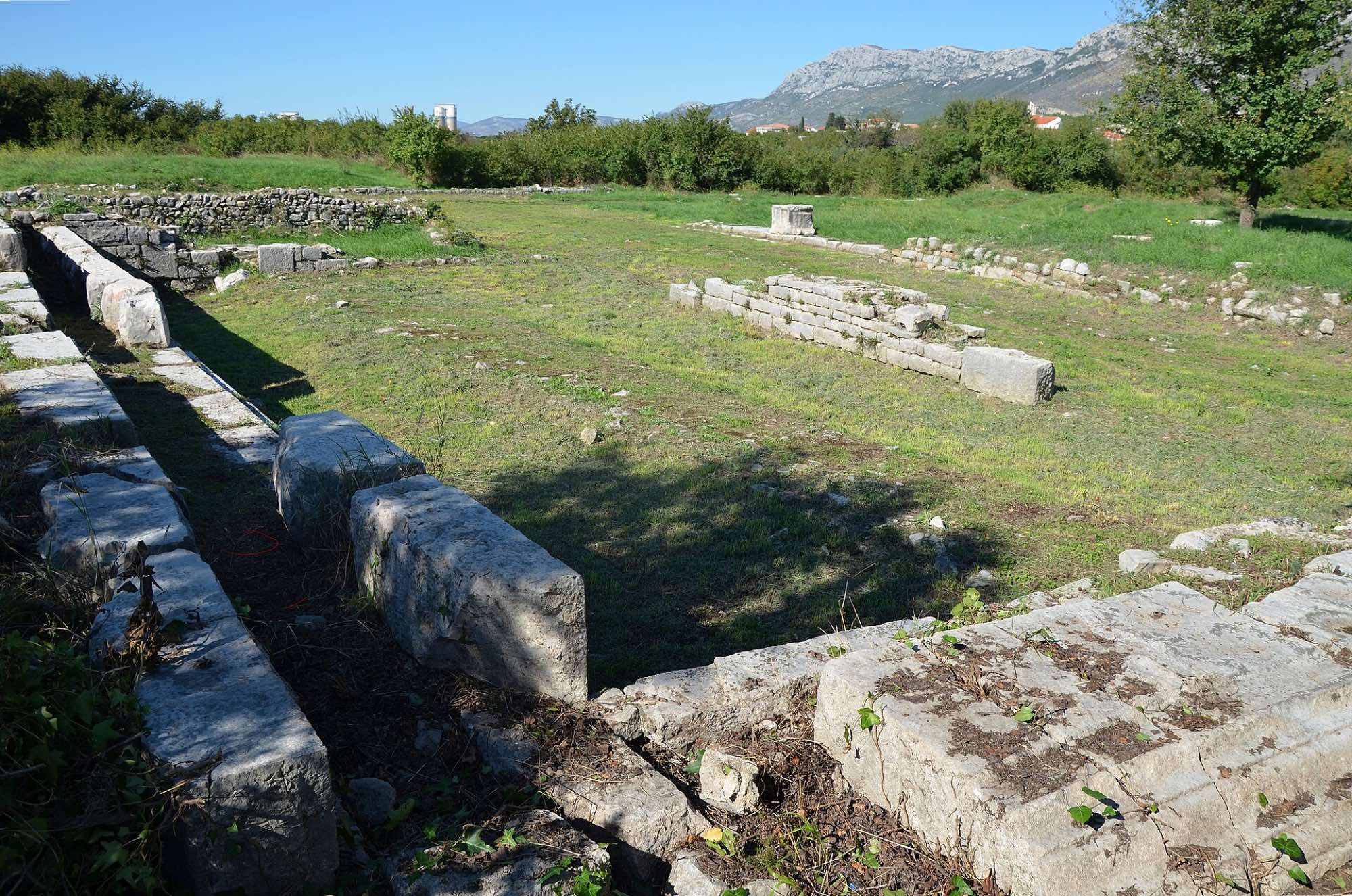
The collecting trail begins in Split in the mid-nineteenth century. Aloys Maximilian Neumann of Graz acquired the sculpture there, according to the auction provenance. The scholarly study notes that the Salona story came through an earlier owner and that no excavation record fixes the statue’s findspot. It challenges the later certainty with which one of the forum temples came to be named as its home.
The same study considers the forum area plausible but also discusses other public buildings, including a council house or baths farther north. For a work intended to be seen in an urban setting, the difference changes how we imagine its first viewers. A temple would place it within a cultic setting; another public building would frame the emperor’s image differently. The surviving record supports Salona as a reported origin and leaves the precise setting open.
A sculptural language of Roman rule
Imperial armour statues joined a recognisable body type to a carefully chosen portrait and a decorated breastplate. The celebrated Augustus of Prima Porta, now in the Vatican Museums, offers an early comparison: its cuirass carries a different central scene, the return of Roman standards by a Parthian, within a larger programme of symbolic figures. The Salona torso belongs to the same visual tradition of imperial figures in military dress.
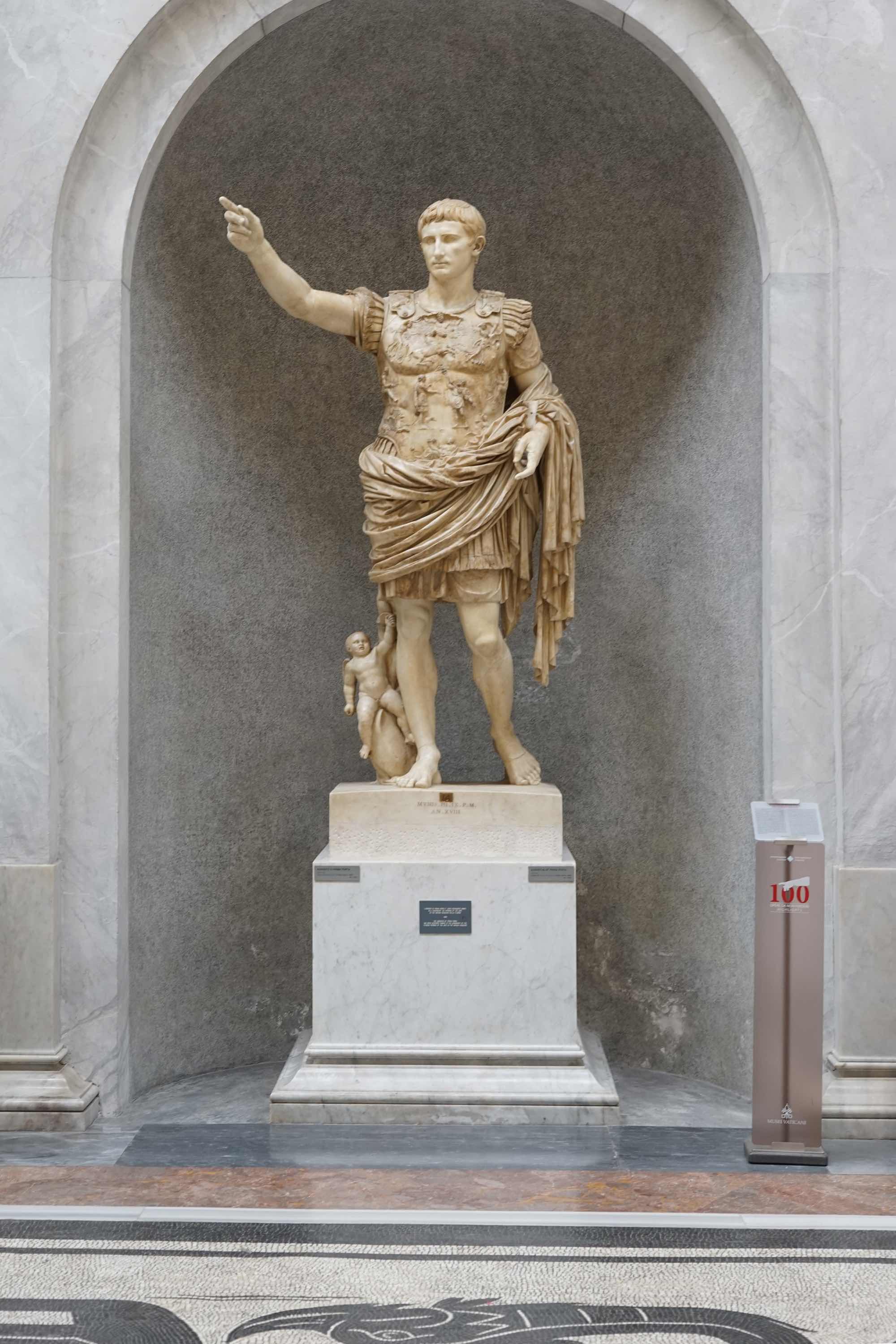
Augustus’s rise established the first imperial dynasty and its public vocabulary of command. Our account of Augustus’s rise from Octavian follows the political change behind that imagery. The torso’s Sol, Victories and trophy show how an armoured imperial figure could make authority legible through the body and its decoration, whether viewed in Salona or later in a collection.
The torso belongs to the early imperial period, when rulers and patrons were developing images for a new form of personal power. Its armour places the sun god above two Victories and a trophy, joining cosmic and military themes on the body of a probable emperor. The arrangement gives the sculpture a clear place in the visual culture of Rome’s first imperial dynasty.
From Graz to New York
After Neumann acquired the sculpture in Split, it passed through his family in Austria. Sotheby’s records its sale from the family collection in New York on 11 June 2010, followed by its acquisition by the present collector. The auction house’s essay adds a family story about the torso being hidden in a Graz wall during the upheaval of 1945 and later rediscovered; that account is presented as family history, separate from the documented nineteenth-century acquisition.
The museum loans put the object before audiences in New York, New Haven and Los Angeles between 2011 and 2024. They also provide a modern record of where the torso was exhibited after its return to the market. Its current catalogue gathers photographs, an exhibition history and earlier scholarship, allowing its imagery and collecting history to be examined together.
The 21 October sale brings the torso and its richly carved imagery back into public view. Its likely first-century date places it in the era of Rome’s earliest imperial dynasty, while its collecting history connects Split, Graz and New York. The open question is which emperor the sculpture represented and where it first stood in Roman Dalmatia.
Sotheby’s, “A Marble Torso of an Emperor,” sale catalogue, lot 8 (2026)
Dražen Maršić, “On Iconography and Attribution of the Loricatus of Salona,” Tusculum 7 (2014)
Alexandra Olsman, “Rome Becoming Rome,” Sotheby’s (2026)
Carole Raddato’s Salona forum photograph, Wikimedia Commons (CC BY-SA 2.0)
Fabrizio Garrisi’s Augustus of Prima Porta photograph, Wikimedia Commons (CC BY-SA 4.0)
Sotheby’s, official video of the auctioned torso (2026)
Vatican Museums, “Augustus from Prima Porta,” New Wing object description
.jpg?ref=romanempiretimes.com)

About the Roman Empire Times
See all the latest news for the Roman Empire, ancient Roman historical facts, anecdotes from Roman Times and stories from the Empire at romanempiretimes.com. Contact our newsroom to report an update or send your story, photos and videos. Follow RET on Google News, Flipboard and subscribe here to our daily email.
Follow the Roman Empire Times on social media: