
The Empire Below the Surface
Among the overlooked features of Roman daily life were elements that carried a weight out of proportion to their silence, linking distant landscapes through routines repeated year after year.

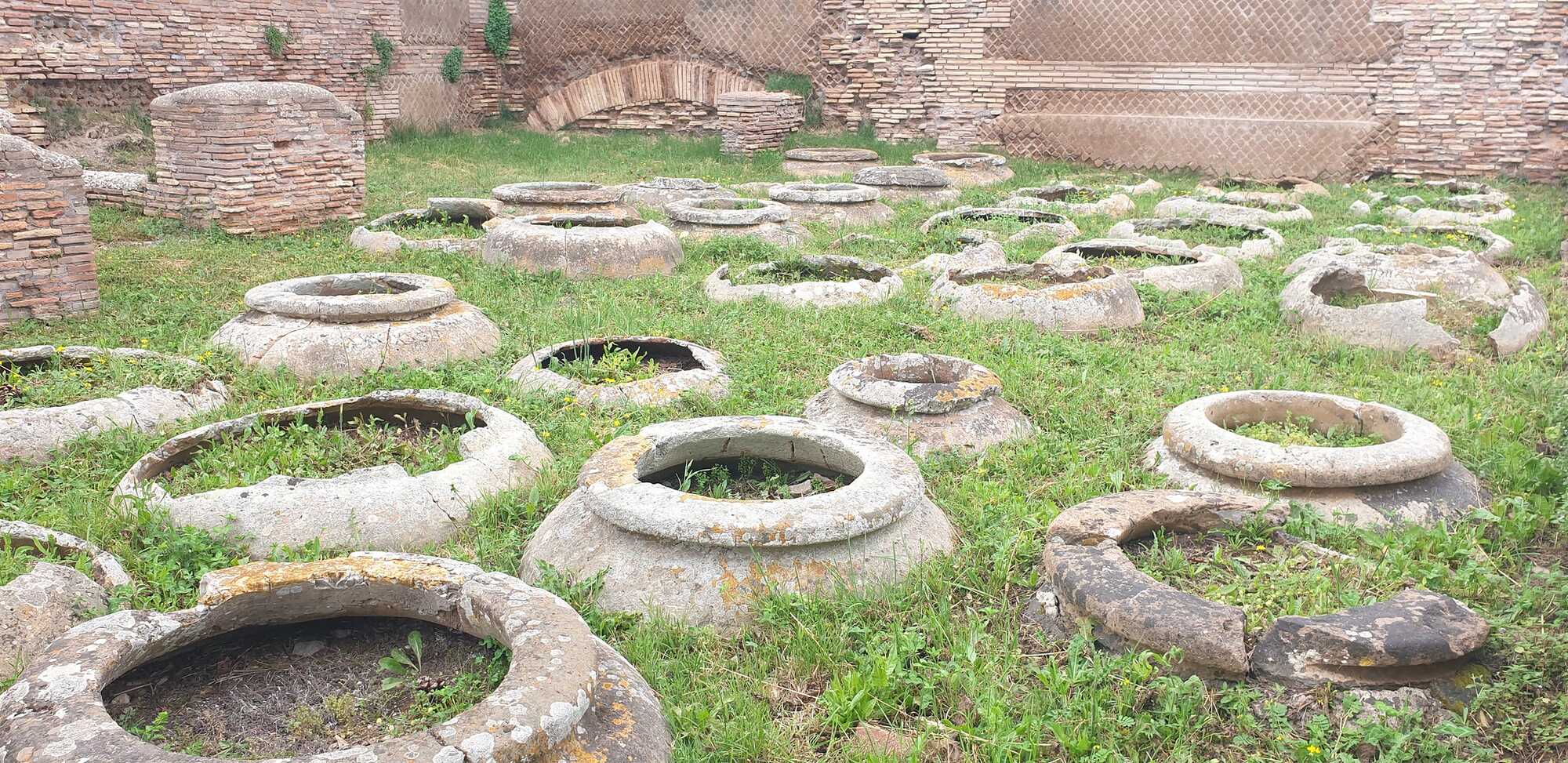
Beneath the surface of Roman life lay structures rarely noticed and seldom celebrated—objects too ordinary to be heroic, yet too essential to ignore. They stood at the edge of fields, sunken in courtyards, clustered in workshops, and hidden behind the walls of estates, holding more than they revealed. In their stillness, they shaped production, movement, and the everyday rhythms that sustained the empire, forming a quiet system without which Rome’s abundance would have been impossible.
A City That Consumed More Than It Produced
Two thousand years ago, the people of Rome drank such vast quantities of wine that the amount consumed in a single year would have filled the Pantheon beyond capacity. Yet almost none of this wine came from Rome itself. The metropolis was too crowded and intensely occupied to generate its own supplies, and its population relied on a far-reaching system that provided food and drink not only to the capital but also to the expanding territories of the empire.
Moving and safeguarding such quantities presented a considerable challenge in a world without climate-controlled transport. Expectations added further pressure: wine was wanted throughout the year, but harvesting grapes and producing wine took place only once annually, beginning in the autumn, and could take much longer when aging was involved. Ensuring a steady supply for a large population required not only abundant production but storage on an exceptional scale.
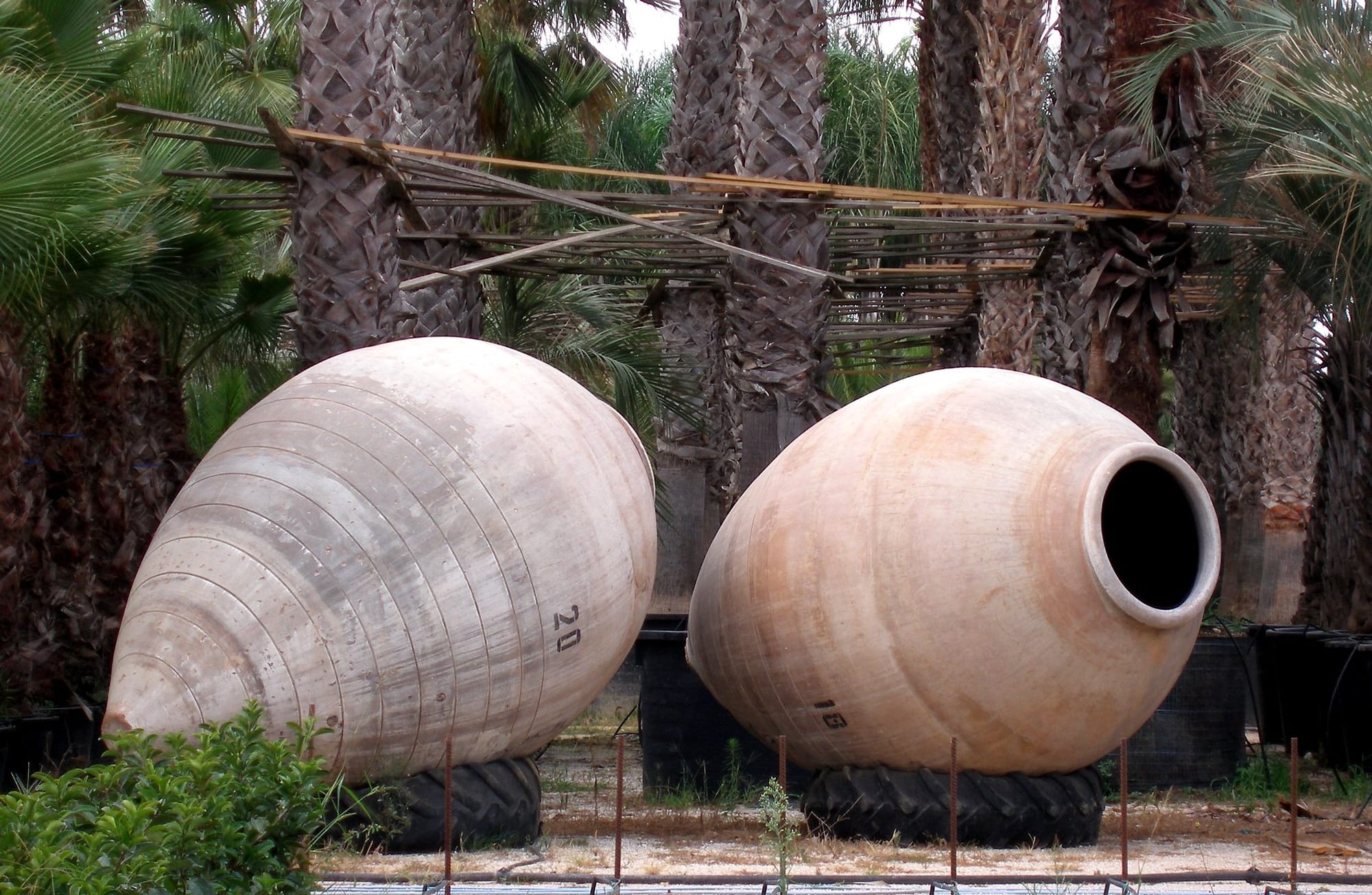
Across the empire, storage technology and infrastructure developed to unprecedented levels. Massive warehouses, or horrea, lined rivers and coastlines and marked the landscape of the ancient capital as well as many other urban and military sites. The output of vineyards, farms, and rural villas was increased through the use of extensive wine cellars that housed dolia (singular dolium), enormous ceramic vessels whose scale was rarely matched after the Roman period.
The Scale and Reach of Rome’s Largest Vessels
Dolia were by far the largest containers produced in antiquity. Their capacity ranged from several hundred liters to as much as three thousand, and many stood higher than an adult. They were used mainly for storing wine, though at times they held other goods such as oil, grain, or fish sauce. Olive oil appears only intermittently in connection with dolia, as their use for oil in central Italy was limited; the region’s relatively low yields and consumption of olive oil, together with the availability of other storage options and prevailing production patterns, meant that dolia were not the primary choice for that commodity.
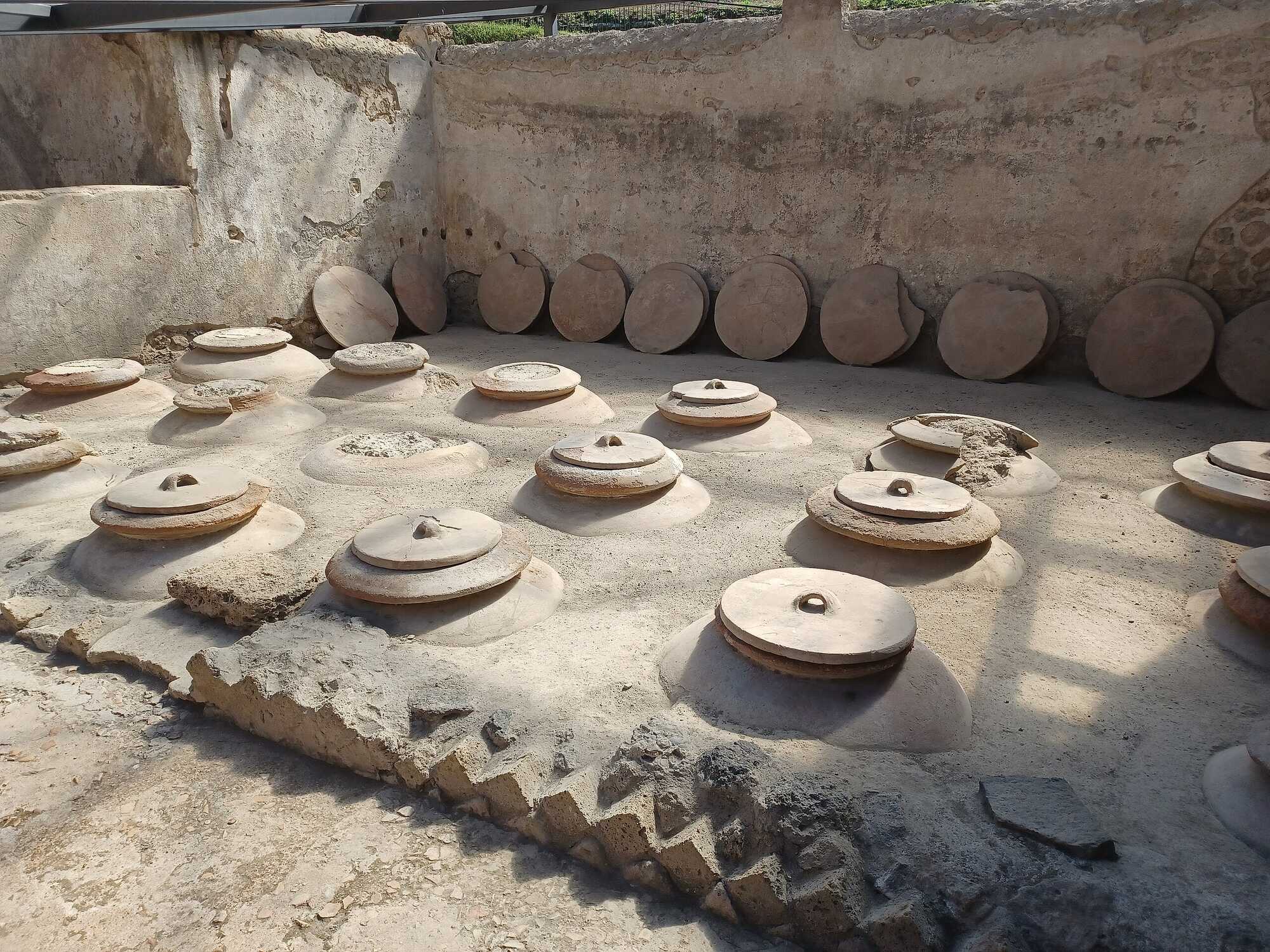
Thousands of dolia defossa, vessels buried up to their shoulders to maintain a cool temperature, survive in ancient houses, farms, warehouses, and port complexes, often in dedicated storerooms known as cellae. Some examples were even set permanently into the hulls of ships. Their widespread use means that dolia appear across the Roman world, and numerous complete assemblages remain in situ, offering direct evidence for how wine and, at times, olive oil were stored in antiquity.

When a Storage Jar Became Something More
Although dolia survive in large numbers and are often well preserved, they remain insufficiently studied. One obstacle to a comprehensive understanding is the absence of agreement on what a dolium actually is. The term is frequently used informally for any very large jar that defies easy identification, and dolia are often confused with other oversized vessels. A clear distinction is therefore needed, separating dolia from the broader tradition of large storage jars that preceded them.
Among these earlier containers were pithoi (singular pithos), which for centuries played an essential role in storing food in the Mediterranean. Holding several hundred liters, pithoi were substantial terracotta jars used for cereals, legumes, wine, and olive oil. Their thick walls protected contents by keeping them cool and dry and by shielding them from fluctuating temperatures, humidity, moisture, and pests.
Usually cylindrical or pear-shaped, they had wide rims for easy access and were set on the ground or partly buried to stabilize them. Many bore geometric or figural decoration, especially in the early Iron Age, and some featured ornamental, nonfunctional handles, since the vessels were far too heavy to lift by such attachments. Pithoi carried symbolic significance as well, associated with surplus, sustenance, and life itself, and were used as status objects in households, communities, and even burials.
Their usefulness ranged widely, serving domestic, communal, and palatial needs. In the Aegean Bronze Age, scholars have identified pithoi as essential to the palace system’s ability to gather, store, and redistribute agricultural surplus. Their contribution extended to central Italy as well: recent work on Etruscan pithoi has shown that these vessels supported large-scale economic growth and urban development in Etruria during the seventh to fifth centuries BCE by increasing agricultural productivity and enabling towns and cities to sustain their populations.
Despite this long tradition of using large ceramic jars for food storage, dolia were not simply pithoi under a different name. Determining the moment when potters began producing dolia as distinct vessels is impossible, as the evidence is sparse. Their development was likely gradual, arising as skills expanded and demand grew.
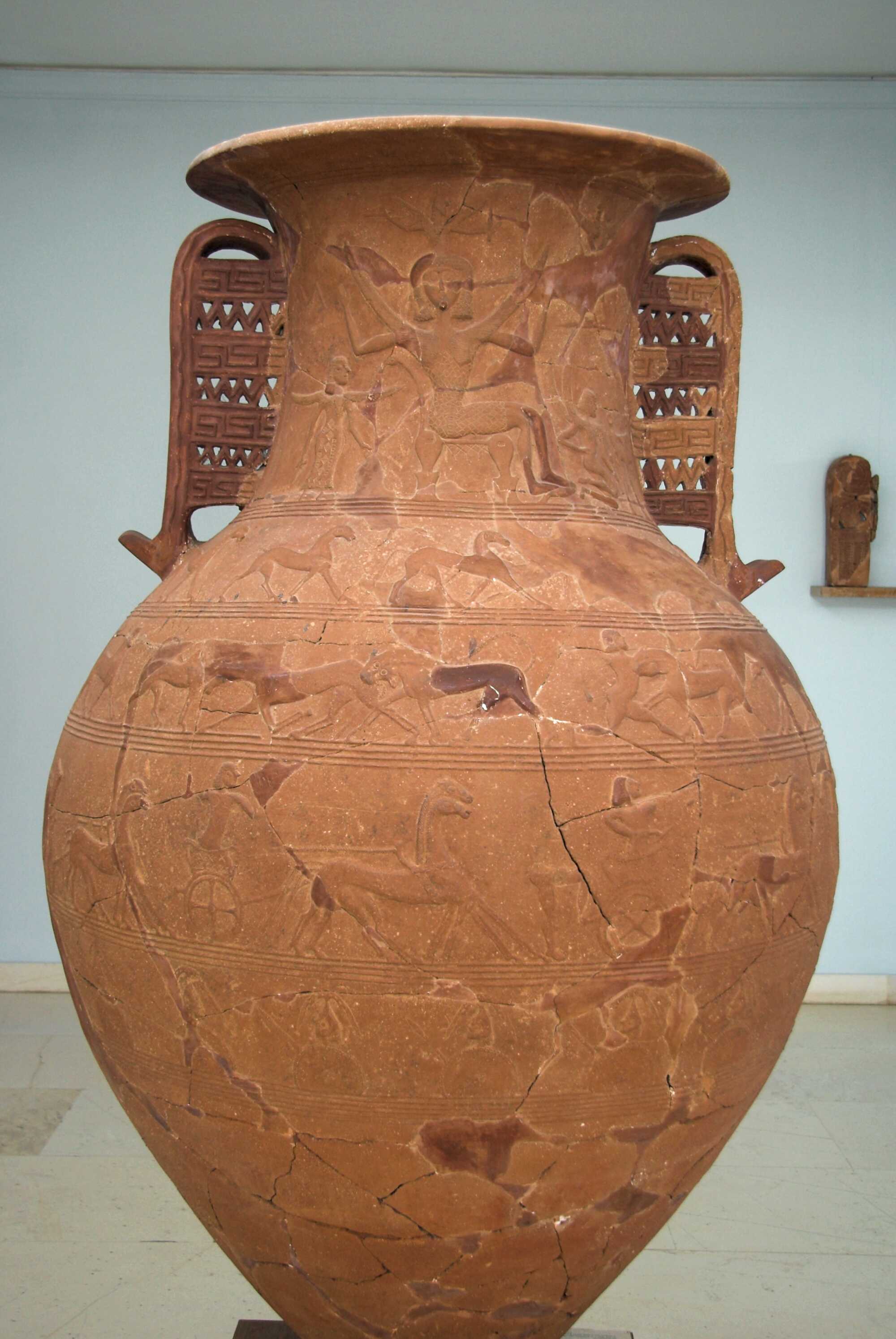
Distinguishing dolia from pithoi can also be difficult because Latin authors often used dolia and Greek authors pithoi in overlapping ways to denote very large ceramic containers.
Even so, differences existed. In antiquity, dolium referred to a specific kind of ceramic storage vessel designed for wine, and although dolia varied in size, ancient writers and archaeological evidence indicate that they commonly held around 550–750 liters. The Greek term pithos, by contrast, described a general storage jar not tied to any single product.
The word dolium appears relatively late, first attested in Plautus’ Pseudolus and in Cato’s De Agri Cultura. Marcus Cato’s instructions for managing a farm included extensive lists of equipment, prominently featuring dolia for wine and oil cellars. In Pseudolus, the enslaved protagonist remarks that “we are loading words into a perforated dolium,” reflecting the expression ingerere aliquid in pertusum dolium, meaning to waste one’s effort.
By the early second century BCE, dolia were well enough known to appear in everyday speech and proverbial expressions. Varro records that before the term dolium, an older word, calpar, was used for a wine vessel; calpar derived from the Greek kalpis, a vessel for sacrificial wine and associated with “new wine.”
About a century later, Pliny the Elder wrote that dolia were “invented for wine” (doliis ad vina excogitatis). A dolium was therefore designed primarily for storing wine.
Archaeological evidence supports the idea that dolia had a particular form and emerged as a distinct type by the late third or early second century BCE. Whereas pithoi tended to be more cylindrical, dolia were strawberry-shaped or spherical and left undecorated to facilitate wine fermentation. Their thick ceramic walls and their partially buried placement (dolia defossa) kept wine cool.
The earliest securely identified dolia come from mid-Republican contexts. The production of dolia in regions such as Latium, Tuscany, and Campania is not clearly attested before the third century BCE, and only a few possible production sites earlier than this have been tentatively identified.
Elite villas with dolia do not appear in significant numbers until the second century BCE. Taken together, literary and archaeological evidence shows that dolia formed a distinct category of vessel with a specific design and purpose, first developed by specialized potters around the third century BCE for a rapidly expanding Italian wine industry.
By the time dolia emerged in their mature form, they were no longer simply jars but fixtures woven into the fabric of Roman agricultural space.
More Than a Container: A Fixed Element of the Roman Farm
Dolia were unlike ordinary pottery: their immense size meant they were not portable and were treated as fixed elements of a property, legally comparable to architectural features. They were produced in the same heavy-terracotta workshops that supplied bricks and tiles, and they often remained in use for decades, showing signs of repair that extend their working life.
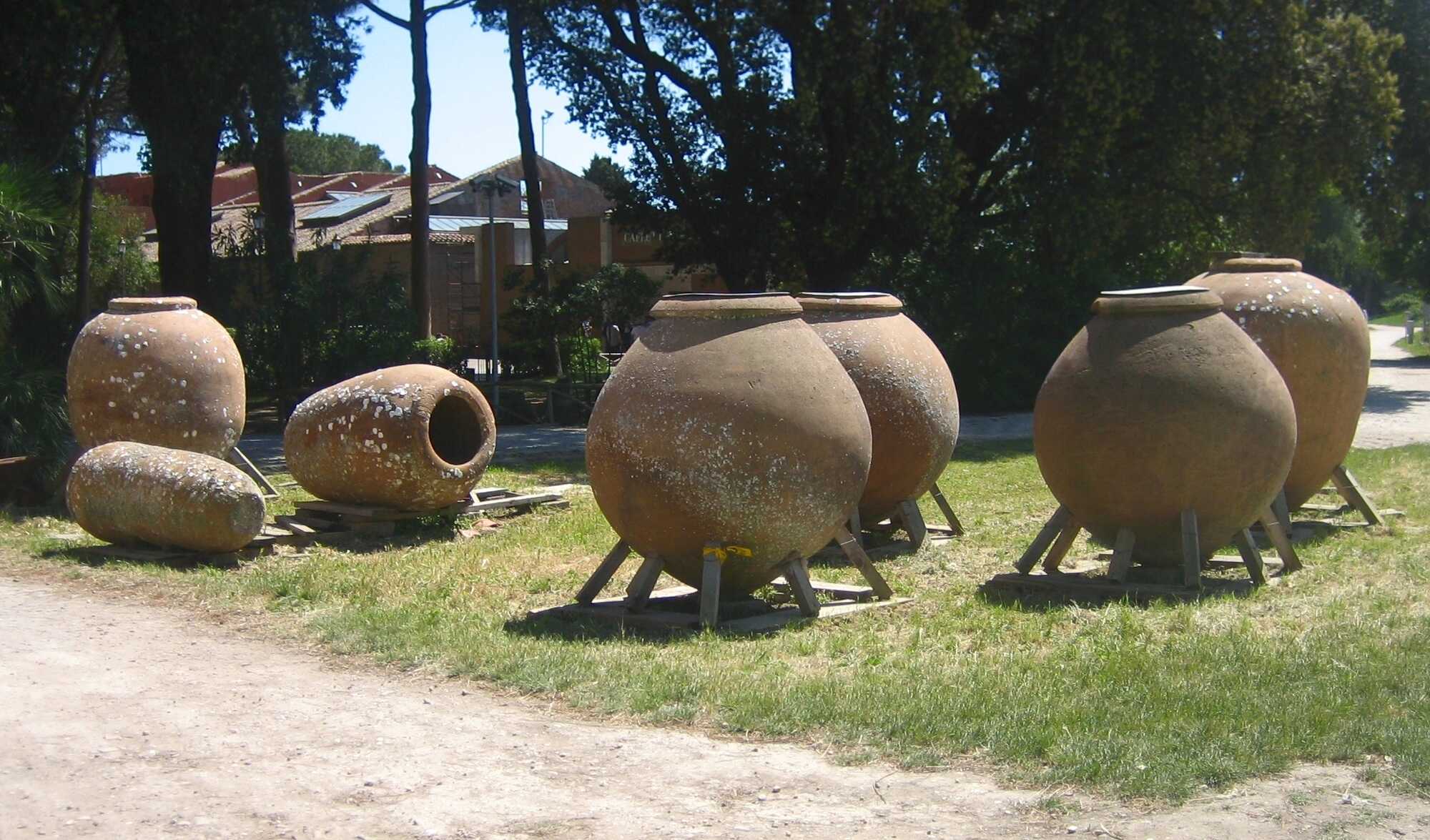
Although usually overlooked in economic studies, dolia provide important evidence for the scale and organization of Roman wine production and storage. Their increasing number across central Italy and the Mediterranean reflected broader economic expansion, especially in the wine trade.
Each dolium carries its own history, and details such as construction methods, transport, installation, use, repair, and eventual repurposing offer insight into the labor and skills involved.
The Most Demanding Craft in Roman Ceramic Production
Producing a dolium was the most challenging and specialized form of ceramic work in antiquity. Although classed as the largest type of pottery, dolia were not made simply by enlarging the methods used for ordinary vessels. Their size and distinctive form required mastery of different materials and techniques. The evidence for dolium manufacture makes it possible to consider not only how these vessels were constructed but also the skills and difficulties involved.
Some ancient texts allude to the status of the craft, the high cost of the vessels, and the considerations a buyer should keep in mind when selecting one, but no surviving account describes the risks or demands of the process from the maker’s viewpoint. To reconstruct the steps, archaeological remains are combined with ethnographic studies of large ceramic vessels still produced today for fermentation—such as Greek pithoi, Georgian qvevri, Spanish and Portuguese tinajas and talhas, and Korean onggi.
The few surviving traditions of this scale help illuminate ancient construction methods and logistical strategies. Dolium manufacture required specific clay mixtures, skilled shaping, and proper firing to produce a vessel suitable for wine, and these technical concerns remained consistent across time.
Dolia were the most expensive ceramic objects available in antiquity. According to Diocletian’s Price Edict of 301 CE, they cost 1,000 denarii—approximately 2,500 times the price of ten lamps, which sold for 4 denarii. A new dolium would have been inaccessible to most people: its cost amounted to at least forty days’ wages for farm workers earning 25 denarii per day, and more than eighty days’ wages for weavers earning 12–16 denarii per day.
Their high price reflected not only the large quantity of clay required—hundreds of kilograms—but also the expertise, time, and risks associated with their production. Only experienced specialists made dolia. As early as around 380 BCE, Plato’s Socrates referenced the difficulty of such work:
“In truth would it not be ridiculous that men should come to such folly that, without first practicing privately, sometimes with indifferent results, sometimes with success, and so getting adequate training in the art, they should, as the saying is, attempt to learn pottery by starting on a pithos, and attempt public service themselves and summon others of their like to do so?”
The passage implies that a potter progressed through increasing levels of difficulty, with pithos production at the highest stage of training. Dolia exceeded pithoi in size, and their strawberry-like, top-heavy shape posed even greater manufacturing challenges, with increased risk of failures such as collapsing walls, cracking, or other flaws.
Experimental work has shown that poorly made vessels could be overly porous, resulting in aeration, excessive oxygen exposure, unhygienic conditions, and losses of wine.
The required knowledge extended to the earliest stages of production, beginning with clay collection. Gathering and preparing the raw material drew on practical experience and followed a seasonal rhythm similar to that for brick and tile manufacture. Clay was generally dug between late summer and early autumn and then left to weather until spring, making it more workable and less prone to later defects.
Weathering broke down the clay minerals, allowing for tempering and processing, including the removal of large impurities and the addition of stable ballast. The coarse clay bodies used for dolia—rich in alumina and silica and often containing ground-up fired material such as discarded pottery, bricks, and tiles—provided strength and resistance to warping.
However, a single impurity could lead to radiating cracks during air-drying or firing. Workshops developed their own clay mixtures, incorporating additives such as grog, sand, or plant fibers to improve workability and structural integrity.
Shaping a dolium was laborious and required advanced skill. Ancient and modern evidence indicates that these vessels were too large to throw on a standard wheel and were instead coil-built over several days or even weeks. The fourth-century CE writer Anatolios, included in the Geoponika, observed that:
“potters do not raise all pithoi on the wheel, only the small ones; they build up the bigger ones placed on the ground in a warm room day by day, and make them large.”
Dolia from the House of Stabianus in Pompeii—found freestanding at the time of the eruption—provide some of the clearest indications of this technique. Cracks and seams show that dolium makers constructed them gradually with coils on a slow-turning wheel or turntable. The potter began with a clay disc forming a small base six to ten centimeters thick, then added hand-shaped or rolled coils, likely only one or two per day, allowing each layer to dry sufficiently before adding the next.
A good clay body allowed faster work and reduced the likelihood of flaws. Areas difficult to reach reveal that potters normally smoothed the seams between coils as the vessel rose and sometimes paddled or scored the surfaces to encourage adhesion. If one coil failed to bond properly with the next, horizontal cracks could develop or the vessel could break apart entirely.
Once the body was complete, the potter formed the rim—typically thick and sturdy to support heavy lids. The rim offered the most variation: the potter might build a smaller coil and shape the lip after scoring, or form a coil for the rim and pull or fold part of it to create the finished edge.
Installing and Using Dolia in Roman Wine Production
Dolia were primarily used for storing and fermenting liquids, though they could be repurposed for dry goods once no longer suitable for wine or oil. Their shape made it easy to retrieve remaining liquid, and a two-part lid system insulated and protected the contents. Proper installation was essential, with dolia spaced and positioned according to their intended function, and wine and oil rooms designed with different environmental needs in mind.
In winemaking, must was transferred into vats or dolia for fermentation, a process that could be forceful enough to damage vessels. Varro notes that after new wine was stored,
“not only the large vessels used in Spain but also dolia used in Italy are burst by the fermentation of the must,”
illustrating the risks involved. Dolia were shaped to manage circulation, temperature, and gas expansion, and their resin coatings contributed to characteristic Roman wine flavors. Ancient advice also distinguished which vessel sizes were best suited to different stages of fermentation and wine quality. (“Dolia. The containers that made Rome an empire of wine” by Caroline Cheung)

How Dolia Shaped Roman Winemaking and Wine Quality
The evidence suggests that dolia were not simply storage jars but vessels deliberately engineered for the different stages of Roman winemaking. Their form, placement, and material properties created conditions suitable for fermenting, maturing, and aging wine at considerable scale. Their buried position helped stabilize temperature, while their thick ceramic walls and interior treatments contributed to regulating the wine during fermentation.
The combination of shape, size, and installation allowed dolia to manage the circulation of the must, the escape of gases, and the development of the wine’s texture.
The oenological effects of dolia can also be inferred through the sensory characteristics reported by ancient authors. Features such as micro-oxygenation through the ceramic walls, resin coatings applied for sealing, and the interaction between the vessel’s volume and its contents help explain ancient descriptions of wine that was darker, more robust, and capable of long keeping.
In many cases, must remained in contact with its skins, stems, and solids during fermentation, producing wines with deeper color and higher tannin levels than those familiar today. This prolonged maceration, together with the vessel’s controlled environment, resulted in wines with considerable stability—qualities that enhanced their suitability for storage, transport, and distribution.
Ancient writers also refer to a surface layer known as flos vini, which formed during fermentation. This layer is consistent with the action of flor yeasts and suggests that oxidative processes took place within the vessels. Literary descriptions indicate aromas and flavors that align with these conditions, including notes that modern chemistry associates with compounds such as sotolon, which produces nutty or spicy characteristics. These observations show how the vessel’s environment shaped the organoleptic profile of Roman wine.
The practice of pitching dolia is confirmed by both textual and archaeological evidence. Coatings of resin or pitch waterproofed the interior and added further aromatic elements, influencing how the wine aged and how long it could be kept. Chemical analyses of residues support the presence of these treatments, demonstrating a consistent approach to preparing dolia for use.

The shape and capacity of dolia also played a significant role. Their volume varied widely, from moderate to extremely large sizes, and this variation affected fermentation temperatures, extraction levels, and the overall behavior of the wine. Larger vessels facilitated slow, stable fermentation, while their wide shoulders and narrow bases helped manage the expansion of gases and minimized risks associated with the process. The vessel’s geometry thus worked together with its installation and material to create controlled winemaking environments.
These characteristics illustrate the role dolia played in producing stable wines suited for long-term storage and large-scale transport. The stability and durability of wines made in dolia supported the organization of Roman wine distribution, from estate-level production to broader commercial networks.
Their technical design and the wine profiles they produced therefore contributed directly to the system that sustained Rome’s extensive wine consumption and trade. ("Making wine in earthenware vessels: a comparative approach to Roman vinification" by Dimitri Van Limbergen and Paulina Komar)
Much of what sustained Rome unfolded out of sight, carried by forms that demanded skill, labour, and long experience. Their presence marked workshops, farms, and storehouses, linking distant regions through routine practices repeated season after season. In their scale, their permanence, and their capacity to hold the products of the land, they stood at the centre of a system that supported the empire’s daily needs and the wider patterns of its economy.



About the Roman Empire Times
See all the latest news for the Roman Empire, ancient Roman historical facts, anecdotes from Roman Times and stories from the Empire at romanempiretimes.com. Contact our newsroom to report an update or send your story, photos and videos. Follow RET on Google News, Flipboard and subscribe here to our daily email.
Follow the Roman Empire Times on social media: