
The Roman Emperor Whose Name Got Eclipsed by a Historian
Between Aurelian and Probus came Marcus Claudius Tacitus, an emperor whose brief reign became entangled with Senate legends, Gothic warfare and a much more famous name.

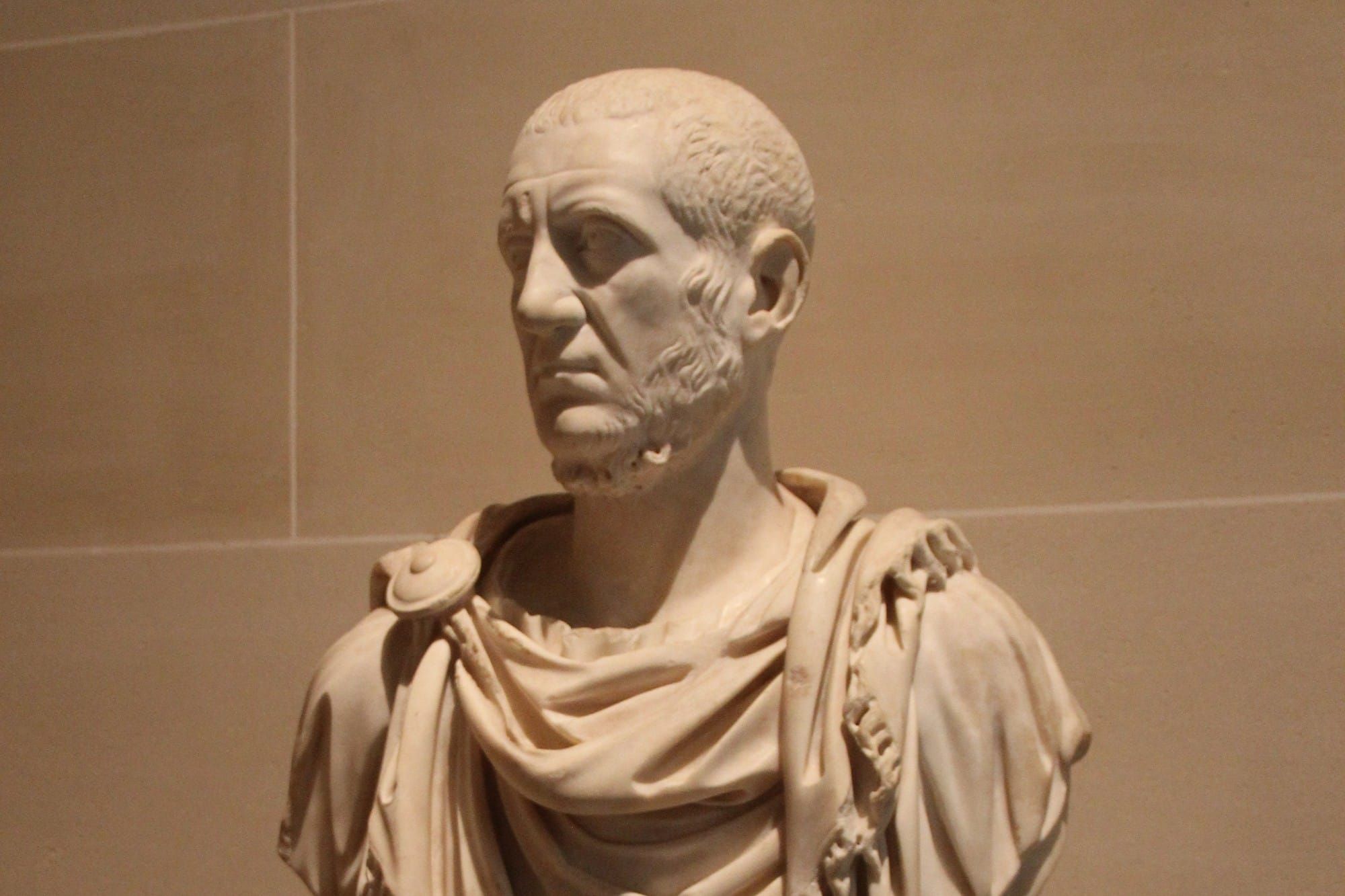
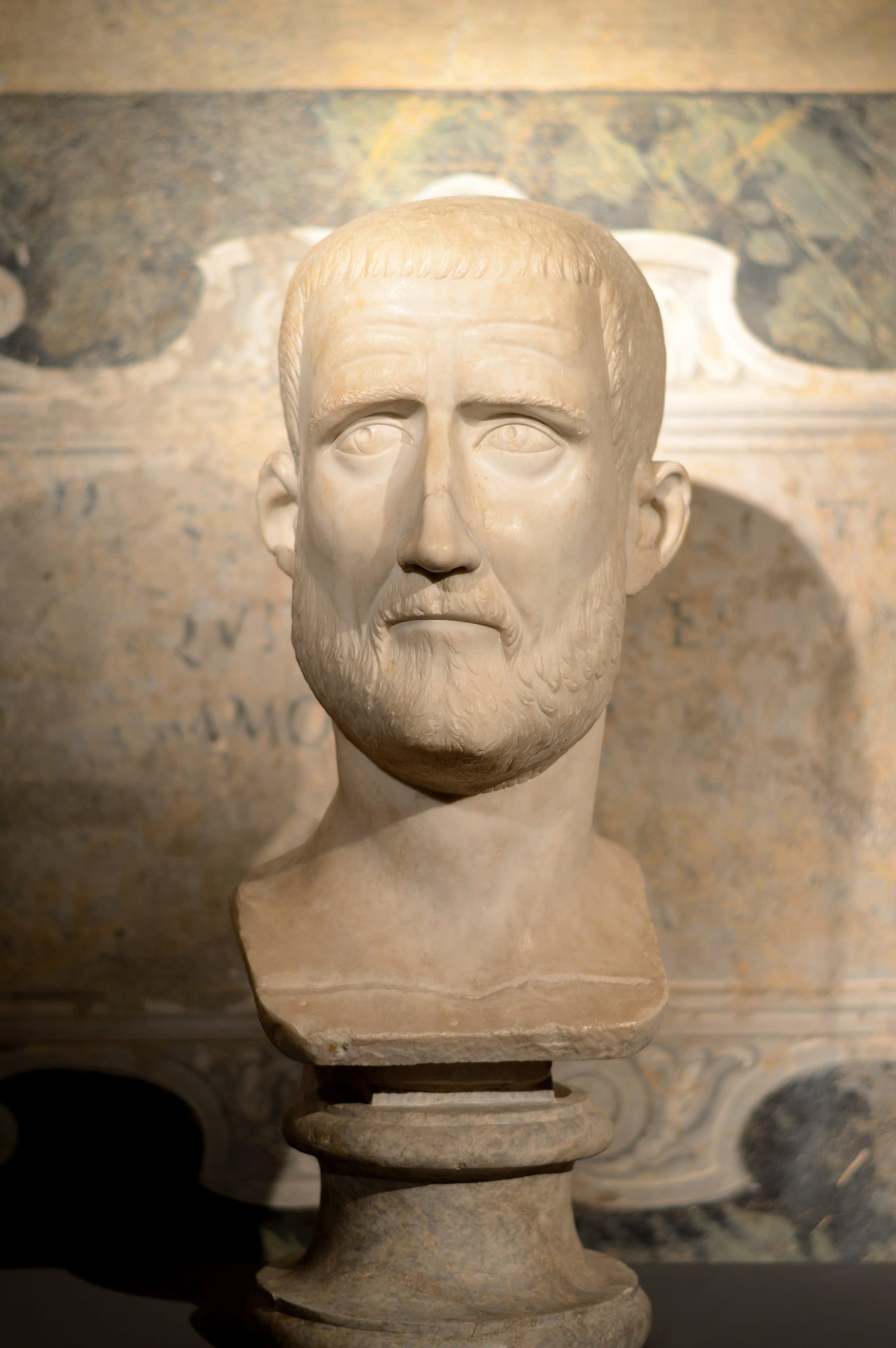
Marcus Claudius Tacitus ruled the Roman Empire in 275–276 CE, between the assassination of Aurelian and the brief reign of Florianus. His namesake, Cornelius Tacitus, wrote the Annals and Histories about a much earlier imperial world. The emperor belonged to the troubled later third century, when military commanders could reunite provinces, defeat invading armies and still lose their lives to men within their own entourage.
Tacitus inherited an empire recently brought back together by Aurelian. The eastern territories held by Palmyra and the western provinces governed by the Gallic emperors had returned to imperial control. Maintaining that settlement required armies, money and a successor whom competing centres of power would recognise. The new ruler’s short tenure became the setting for an enduring story about the Roman Senate recovering its authority to choose an emperor.
His reign also included a campaign against invaders in Asia Minor, public honours, a substantial coinage and another violent struggle over the succession. Those events explain why his life needs to be reconstructed from several kinds of material: terse ancient narratives, an elaborate later imperial life, inscriptions and coins struck while he was alive.
The Tacitus Who Wore the Purple
The name on the imperial record is Marcus Claudius Tacitus. He has traditionally been identified with the consul Tacitus who served with Julius Placidianus in 273, although that identification is disputed. His earlier career has produced different reconstructions. The familiar portrait is an elderly senator drawn into government from retirement; a competing reconstruction makes him a senior military figure with experience in the western provinces, especially on the German victory celebrated in his imperial coinage.
The historically reported age of seventy-five comes from literary tradition but is a reported age, since his birth date remains uncertain. The Historia Augusta repeatedly makes old age central to his presentation: Tacitus protests that his body is unequal to a soldier’s duties, while senators insist that they need his judgment. Modern scholarship has examined how this contrast serves the work’s ideal of a mature ruler guided by civic responsibility.
The connection with Cornelius Tacitus, author of the Annals and Histories, belongs to that same literary portrait. The Historia Augusta says the emperor claimed the historian as a relative and ordered ten copies of his works to be produced annually for libraries. It is an attractive story about an emperor preserving his namesake’s writing, but the alleged family relationship and copying programme lack independent confirmation – perhaps an attempt at a clever early marketing trick?
Ancient literary models also shaped the emperor’s supposed speeches. The advice that he should choose a capable successor rather than favour his sons resembles discussions of Nerva and the adoption of Trajan. The resemblance has been interpreted as borrowing by the later writer; if we are to take this as canon, the speeches reveal how their original author wanted a good emperor to behave.
Aurelian’s Murder Reopened the Succession
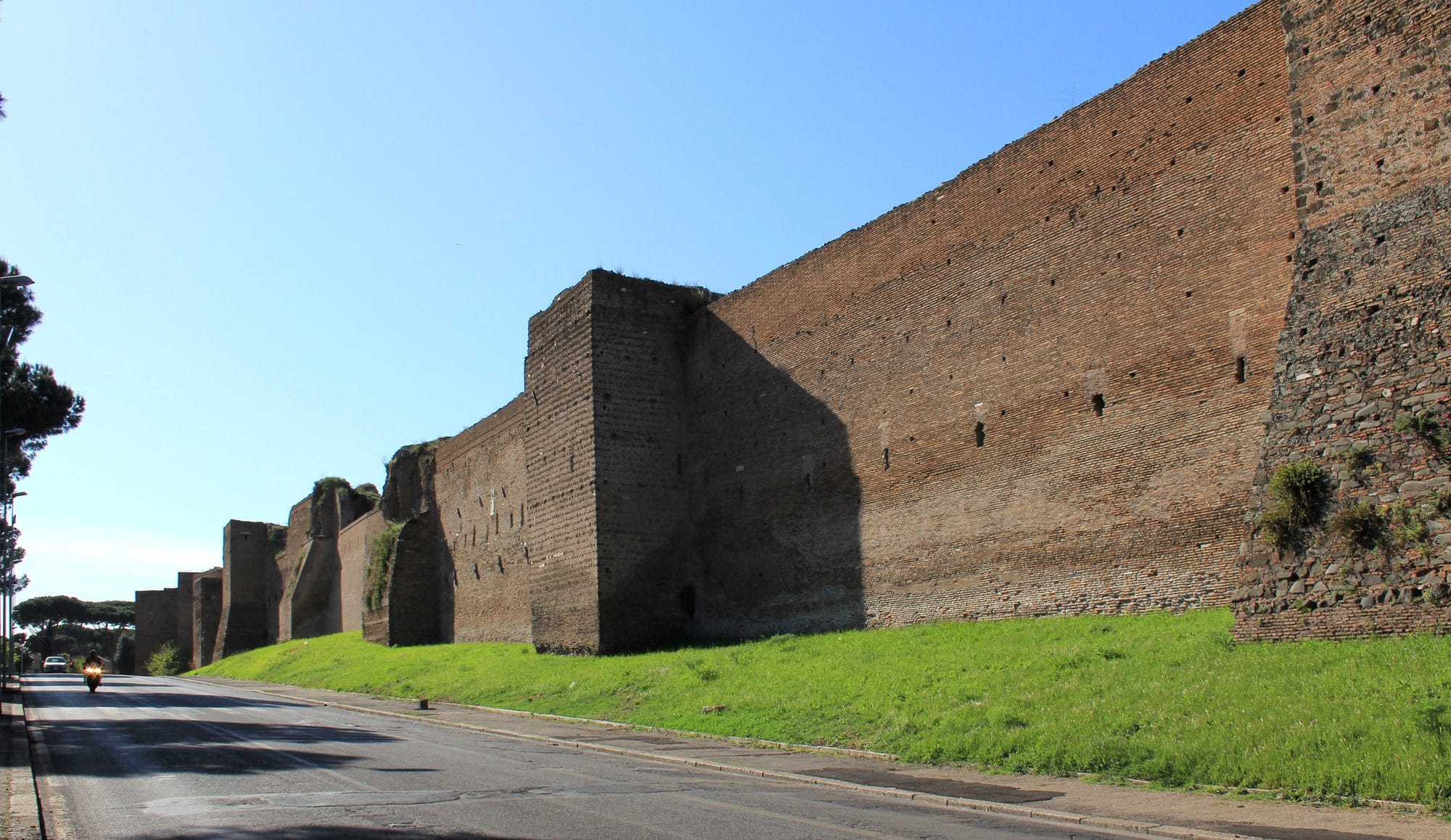
Aurelian’s reunification of the empire supplied the immediate background to Tacitus’s accession. In the East, Aurelian had overcome Zenobia’s Palmyrene power; in the West, he had ended the separate rule of Tetricus. Eutropius remembers both defeated rulers in Aurelian’s triumph. Rome itself received a major defensive circuit, while the emperor’s temple of the Sun and changes to the coinage expressed the authority of a government ruling across the reunited territories.
Aurelian was killed in Thrace in the autumn of 275, at Caenophrurium on the road between Byzantium and Heraclea. Ancient narratives explain the conspiracy through a forged list of intended victims. In Zosimus’s telling, a member of the imperial staff who feared punishment imitated the emperor’s handwriting and persuaded officers that their lives were threatened. They attacked Aurelian before discovering the deception. This is the transmitted explanation of the murder; the political consequence was an unexpected vacancy at the head of the army and empire.
The Historia Augusta transforms the interval into six months of repeated, courteous exchanges between soldiers and senators, each inviting the other to choose a ruler. The chronology reconstructed from papyri and coins places Tacitus’s accession in late 275, commonly around November, leaving a much shorter interval after Aurelian’s death. Its precise sequence remains debated. The famous picture of an empire patiently awaiting a Senate election belongs to a literary narrative that greatly enlarges the transition.
Aurelian’s wife, Ulpia Severina, also appears in the discussion. Issues bearing her name have been interpreted as evidence that she maintained authority during the vacancy. That reconstruction gives the empress a potentially important role in preserving continuity while a successor was found. Whatever the exact division of responsibility, the transition brought together the imperial household, the mints, the troops and Rome’s civic institutions; Tacitus finally emerged as the recognised emperor.
The Senate’s Comeback Became a Literary Event
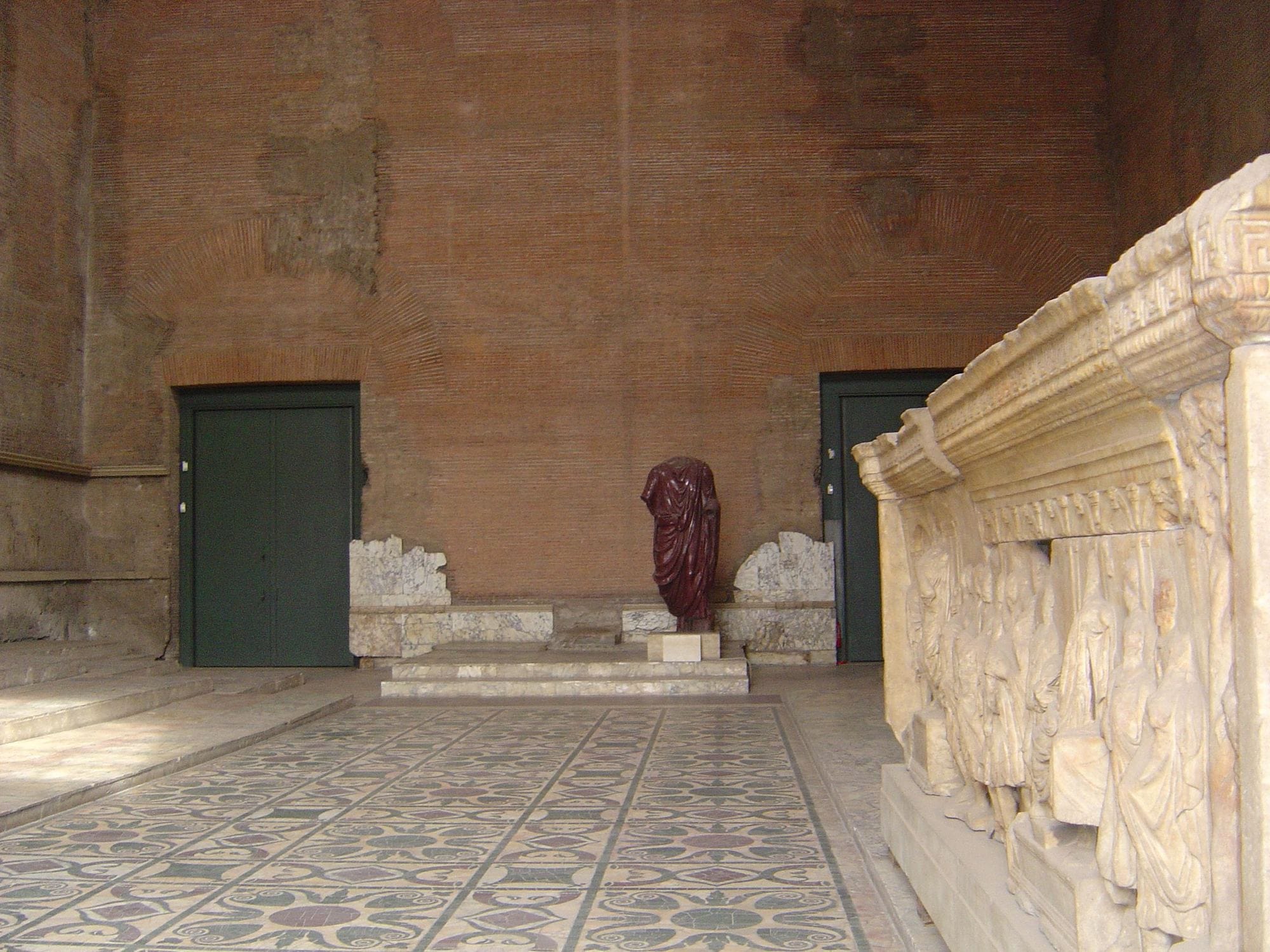
The fullest account of Tacitus’s selection places the Senate at the centre of proceedings. In the Historia Augusta, senators acclaim an unwilling consular, praise his experience and contrast a ruler’s wisdom with a soldier’s physical strength. Their speeches look back to exemplary earlier emperors. The assembly appears as the guardian of public welfare, choosing a man whose age and standing will restrain the recklessness associated with younger rulers. It is an unusually expansive constitutional scene for such a short reign.
One sentence captures the author’s ideal of succession. A senator’s speech in the Historia Augusta, Tacitus 6.9, declares:
“It is a great glory to a dying prince to love the commonwealth more than his own sons.”
The line belongs to the work’s constructed senatorial speech, rather than to a surviving transcript. It places the commonwealth above a ruler’s family and connects Tacitus with the model of choosing an able adult heir. The same work later condemns Florianus for treating the throne as a family possession. Its account of the accession and its account of the succession thus advance a consistent view of how imperial power ought to be transmitted.
The work begins even further back, comparing the interval after Aurelian with the vacancy following the death of Romulus. It describes early Roman arrangements for a temporary regency before turning to the third-century soldiers and senators. In the later episode, the unusual feature is harmony: the army supposedly refrains from elevating one of its own officers, while the Senate hesitates to impose a candidate upon the troops.
The long history of the Senate’s changing place under the emperors helps explain the attraction of this story. Even scholarship sympathetic to a modest revival of senatorial prestige has rejected the sweeping restoration of judicial, administrative and military powers described in the later life. Other scholarship allows a meaningful role for negotiation and civic recognition. Senatorial dignity and legal revolution are separate claims: the first remains plausible within the accession debate, while the second requires evidence beyond the work’s speeches and letters.
Coins Put the New Emperor Before His Subjects
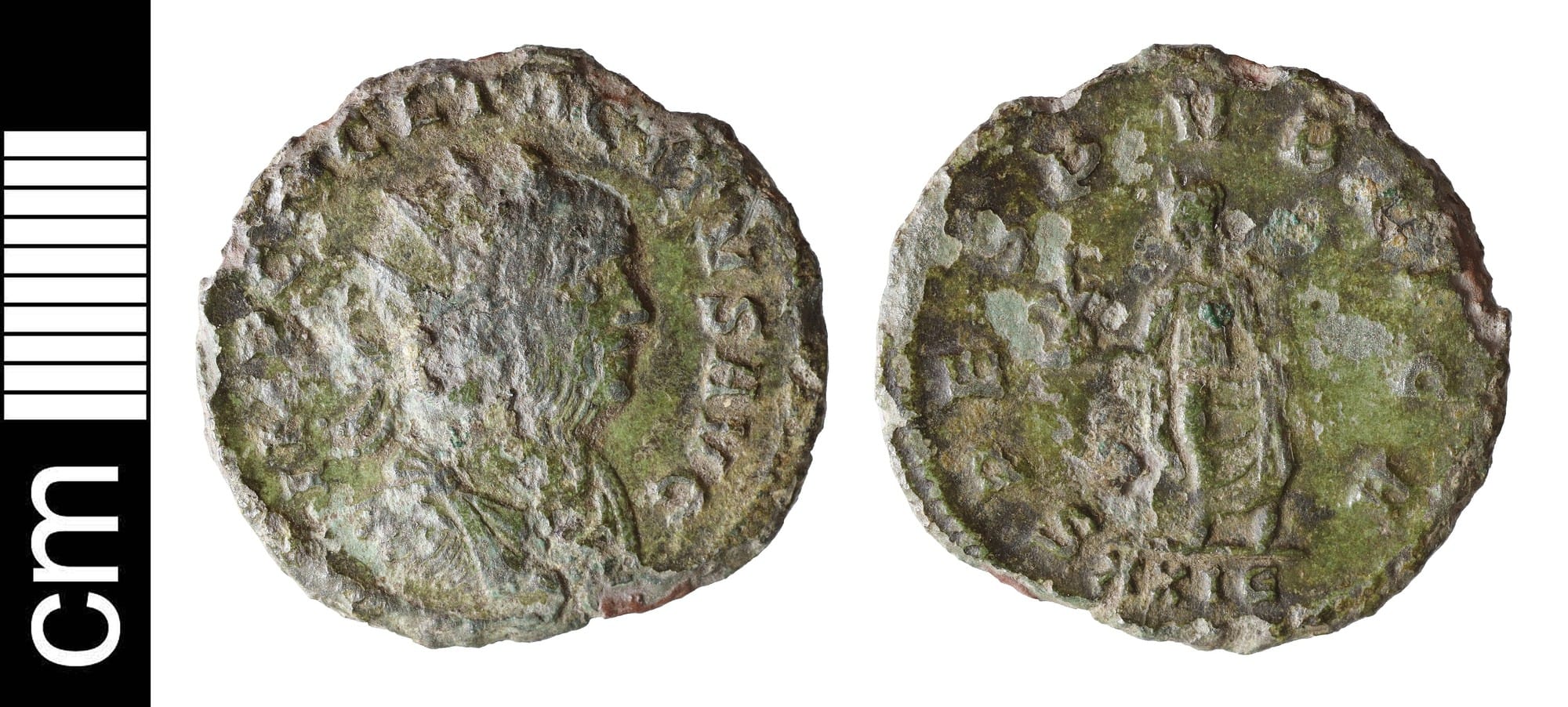
Tacitus’s coinage presents a ruler performing both civic and military roles. Portraits show him in the radiate crown familiar on third-century silvered currency, while other issues use consular dress or martial attributes. The reverse designs invoke such qualities as peace, piety and providence. A prominent place for Rome in the gold coinage has been interpreted as an emphasis on civic legitimacy, including at mints outside the capital. The imagery offered several complementary descriptions of a single imperial office.
Careful readings have changed some older arguments about that imagery. A supposed LIBERTAS AVG issue used to support a senatorial restoration was a misreading of UBERTAS, abundance. Another legend once expanded as the security of the Roman people is now understood as an engraver’s error in a conventional formula. These corrections remove apparently precise proofs of a constitutional programme.
The coins also register Tacitus’s consulship in 276 and celebrate victory and largesse. The Ticinum issues, from the mint at modern Pavia in northern Italy, are particularly important to the reconstruction of his movements before the eastern campaign. Armed busts and ceremonial images accompany the presentation of consular authority. Seen together with the ordinary currency, these special issues place the emperor among troops and office-holders as well as before the wider public through Roman coin portraits and reverse designs.
Eutropius gives Tacitus a favourable personal judgment in Abridgment of Roman History 9.16:
“After him TACITUS succeeded to the throne; a man of excellent morals, and well qualified to govern the empire.”
He then passes rapidly to the emperor’s death. The fuller Historia Augusta supplies a much longer catalogue of frugality, gifts and regulations, including measures concerning baths, sexual commerce and the treatment of slaves in legal proceedings. These details belong to its exemplary portrait and require separate corroboration before becoming a list of enacted reforms. For the public government of Tacitus, dated titles, imperial issues and provincial honours provide firmer points of contact with the months of his actual rule.
The Eastern Campaign Reached Across Asia Minor
The major military undertaking of Tacitus’s reign was the response to groups invading Asia Minor, in what is now Turkey. Zosimus describes their advance through Pontus towards Cilicia, from the Black Sea region to the south of the peninsula. Ancient writers use broad labels such as Scythians and Maeotidae, the latter referring to the region of Lake Maeotis, the Sea of Azov; modern discussions identify Gothic and Herulian groups within these movements.
Tacitus took part in the operations with Florianus, his praetorian prefect. That office placed Florianus close to imperial command, and Zosimus gives him responsibility for part of the fighting. The narrative records Roman success, while the emperor’s Gothic victory title and associated coinage place the campaign within his public presentation. Across the short reign, military achievement was therefore part of his claim to rule alongside the civil honours celebrated at the beginning of 276.
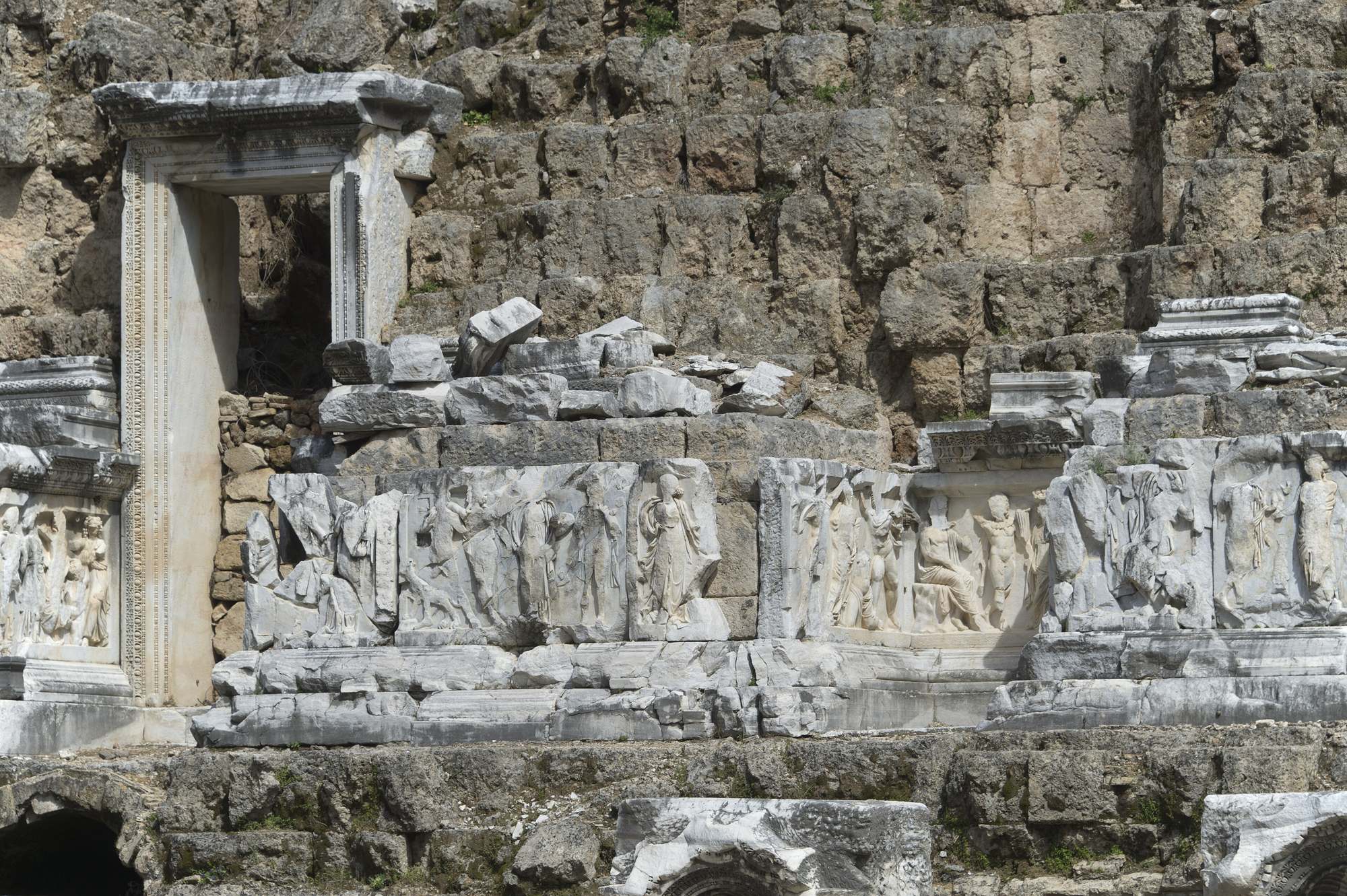
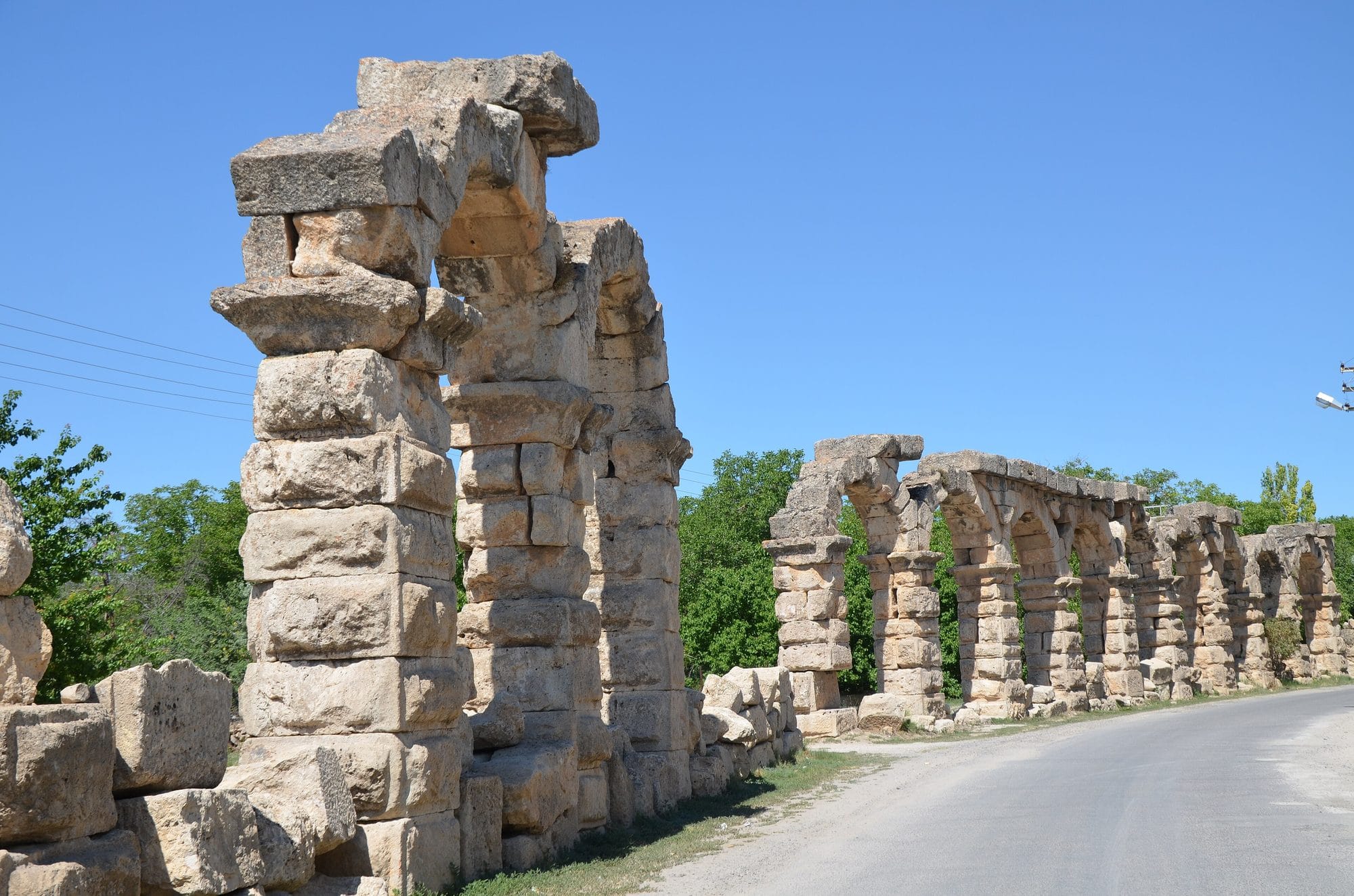
At Perge in Pamphylia, near the southern coast of modern Turkey, Tacitus established a headquarters for the campaign. A military treasury operated alongside the existing imperial treasury, the fiscus, and the emperor granted the city the title Metropolis of Pamphylia. A civic hymn carved on two pillars north of the market building celebrated the new distinction. The city speaks in the first person, placing its imperial recognition beside its earlier honours.
The city’s acclamations retained older distinctions beside the new imperial honour. One referred to its imperial-cult standing dating back to Vespasian; another praised its place among centres where judicial hearings were held. The text also linked Perge with a sacred military standard and silver currency. These honours appeared together with games and public shows sponsored by men of consular rank. The repeated acclamations placed Tacitus’s presence within the city’s competition for status, religious prestige and imperial favour in Pamphylia.
Public celebration also took the form of a festival patterned on Rome’s Capitolia, named Tacitios Metropolitios Isokapetolios. In the theatre, acclamations honoured a benefactor called Cornelianus for work associated with the festivities. Some were preserved on inscribed slabs subsequently reused in a protective barrier around the orchestra, the open area before the stage. Archaeological analysis connects changes in this part of the theatre with wild-animal displays, including a passage beneath the seating. The record joins imperial campaigning to civic honours, construction and public entertainment during Tacitus’s reign.
Florianus continued operations after Tacitus’s death. Zosimus says he had brought the invaders into a difficult position near the Bosporus before the challenge of Probus drew him away. The campaign and the succession struggle consequently overlap in the narrative: the commander who had been fighting for the reigning emperor turned to defending an imperial claim of his own. The movement of armies within Asia Minor links Tacitus’s military activity directly to the civil conflict that followed him.
A Sudden Death Left Competing Explanations
Tacitus died in 276, usually placed in June, after only a few months in power. The geographical traditions associate his end with Asia Minor, including Tyana in Cappadocia. Ancient summaries differ in the duration they assign to the reign, and the explanations of his death divide between illness and assassination. A broad chronology from late 275 into the summer of 276 is more secure than an exact accession anniversary calculated from any single literary statement.
Zosimus gives a specific chain of murders. Tacitus had placed his relative Maximinus in charge of Syria. Maximinus’s harsh treatment of the local elite provoked hostility, and a conspiracy killed him. The same narrative connects the attackers with men involved in Aurelian’s death and says they then killed Tacitus as he prepared to return towards Europe. This version makes the emperor’s death part of the continuing danger from conspirators whose positions had become insecure after the earlier assassination.
The Historia Augusta preserves both a military plot and death from disease as alternatives. Its brief notice contrasts with the length of the speeches surrounding his accession. Eutropius also compresses the reign into a few sentences, praising the emperor’s character while judging that death prevented any outstanding achievement. These ancient summaries helped make Tacitus appear as a short interval between more celebrated rulers, explaining his "anonymity", even though the campaign and the contemporary imperial record establish activity during those months.
After the civil conflict, Zosimus has Probus punish the men responsible for the attacks on Aurelian and Tacitus. He describes an invitation to a banquet used to bring them within reach of loyal soldiers. The episode presents the new emperor as an avenger of his predecessors. The punishment belongs to the new ruler’s consolidation of power after the rival imperial claims of 276.
Florianus and Probus Contested the Inheritance
Florianus became emperor after Tacitus. The literary tradition often makes him the dead ruler’s brother or maternal half-brother, although that relationship is disputed. His role as praetorian prefect and fellow commander supplies a clearer connection to the preceding government. Ancient writers also disagree over the legitimacy of his accession: the Historia Augusta portrays a private seizure of power, while another tradition allows senatorial recognition. His imperial coinage and recognition across western territories show that his claim had substantial practical support.
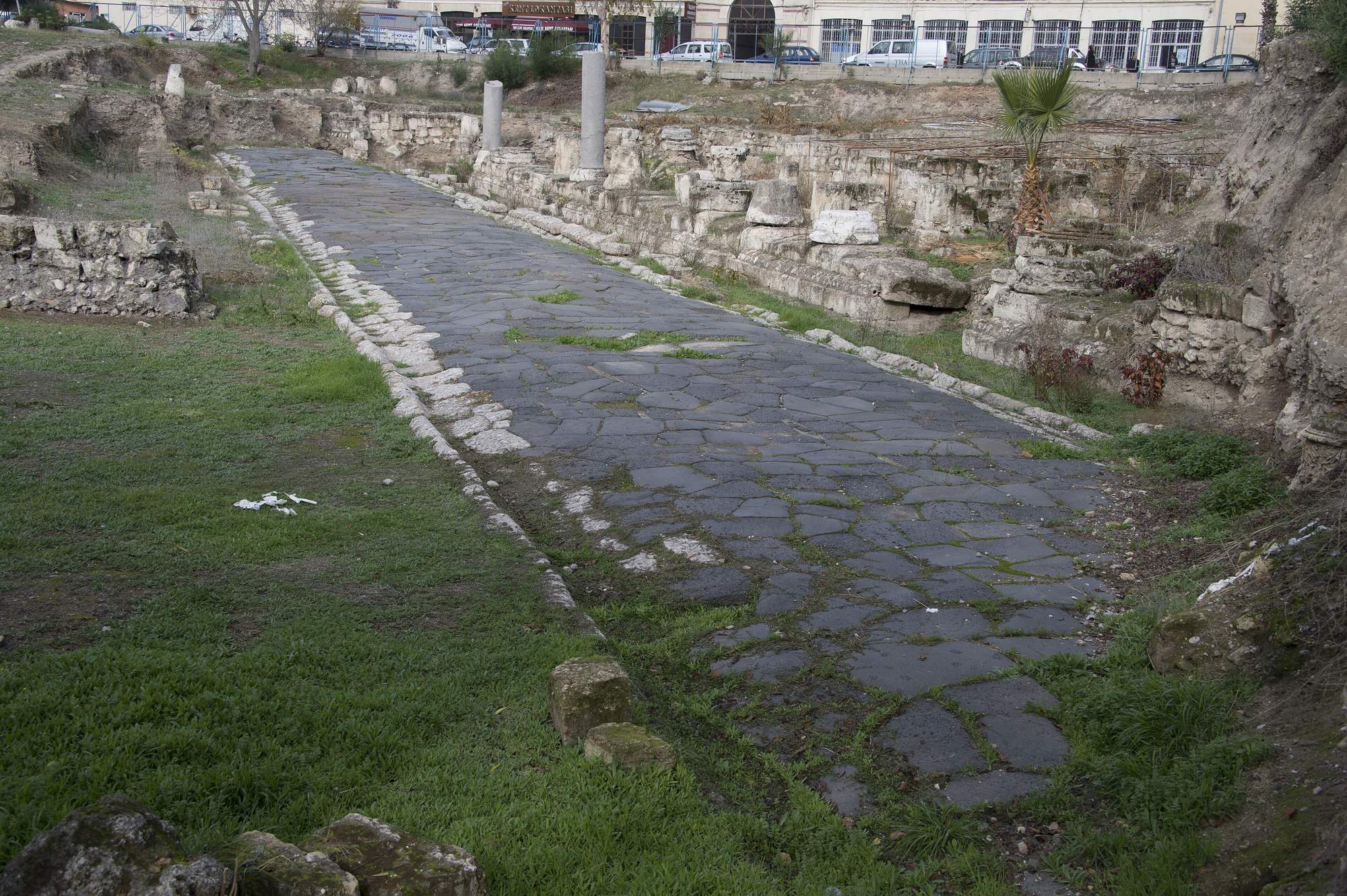
Probus was proclaimed in the East, creating another division between rival emperors. Zosimus assigns Syria, Phoenicia, Palestine and Egypt to him, while Florianus held a much wider western zone. The rivals confronted one another near Tarsus in Cilicia. In Zosimus’s narrative, heat and sickness weakened Florianus’s army while Probus delayed the decisive encounter. The account then describes deposition, uncertainty over an arrangement to share power and, finally, Florianus’s killing by his own troops after the intervention of Probus’s messengers.
The outcome left Probus in control later in 276. Florianus’s tenure, like Tacitus’s, was measured in months; Eutropius assigns him two months and twenty days. The abrupt sequence explains the later habit of treating the two reigns almost as an interregnum between Aurelian and Probus and also preserves a revealing contrast within the sources: The Senate-centred ideal of choosing an emperor, stands beside an actual succession fought over by armies and resolved in the camp.
Tacitus’s most securely documented place in that sequence is as Aurelian’s recognised successor, a ruler celebrated on coins and in provincial honours, and an emperor involved in defending Asia Minor. His death opened the contest between Florianus and Probus before a lasting settlement could take shape. The continuing historical question concerns how soldiers, civic institutions and imperial continuity combined to bring him to power. His namesake wrote about emperors; Marcus Claudius Tacitus briefly became one, leaving a reign whose evidence reaches well beyond the shared name.
🏛️ Sources used:
Sylviane Estiot and Jérôme Mairat, Monnaies de l’Empire Romain / Roman Imperial Coinage, historical studies for 275 and 276, CNRS MER-RIC project.
Eutropius, Abridgment of Roman History, book 9, translated by John Selby Watson (London, 1886).
Zosimus, New History, book 1, anonymous English translation (London: W. Green and T. Chaplin, 1814).
Inge Mennen, Power and Status in the Roman Empire, AD 193–284 (Leiden and Boston: Brill, 2011).


About the Roman Empire Times
See all the latest news for the Roman Empire, ancient Roman historical facts, anecdotes from Roman Times and stories from the Empire at romanempiretimes.com. Contact our newsroom to report an update or send your story, photos and videos. Follow RET on Google News, Flipboard and subscribe here to our daily email.
Follow the Roman Empire Times on social media: