
Roman Camp in Slovakia Reveals Human Remains and Military Gear
A 7.4-hectare camp near Šurany has yielded human remains, armour and weapons. Five entrances and an unusual gate add to its second-century story.

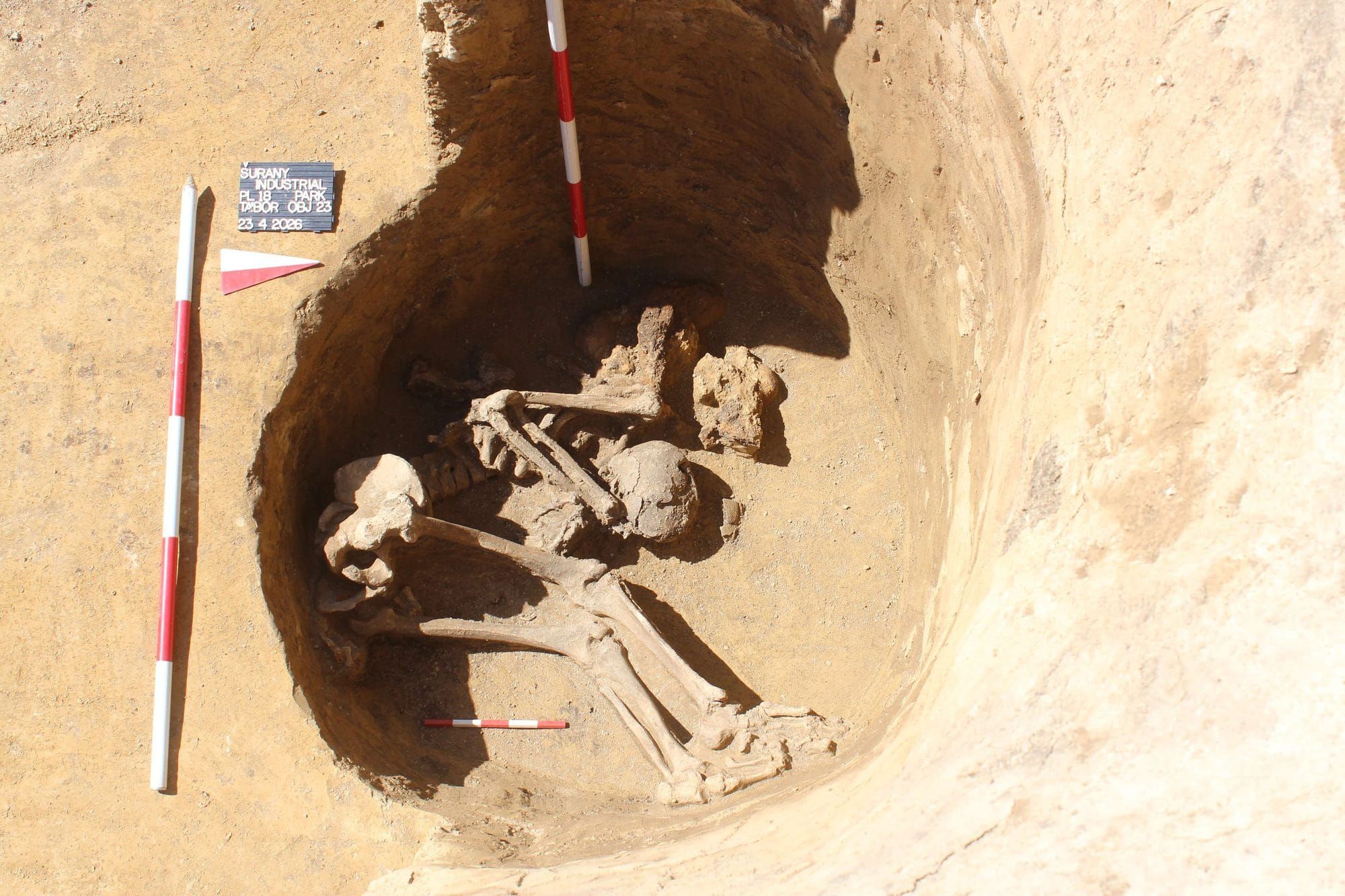
Archaeologists in southern Slovakia have excavated a Roman military camp containing human remains, weapons and pieces of armour. The camp lies near Šurany, north of the Danube, in the area of a planned industrial park. Its excavators date it provisionally to the second half of the second century AD, during the reign of Marcus Aurelius.
The Archaeological Institute of the Slovak Academy of Sciences announced the find on 21 July 2026. Its team has traced a camp covering about 7.4 hectares, including an unusual gate arrangement. The discoveries place people and their equipment within the excavated camp and its defences.
The date places Šurany in the era of the Marcomannic Wars, when Roman forces operated beyond their Danube frontier. The excavation provides a rare, detailed view of a temporary Roman military position in the Nitra region and of the people found within its defences.
A camp with five entrances
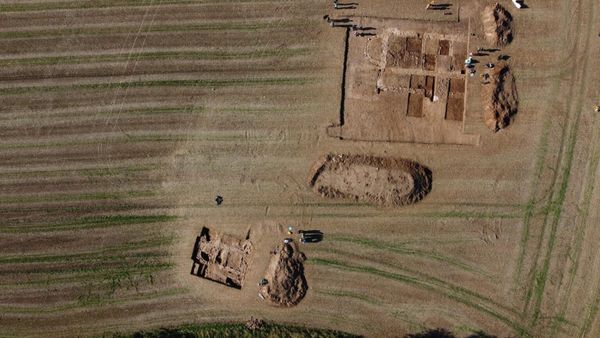
The camp was identified during archaeological work across the roughly 150-hectare Šurany Industrial Park area. Its measured 7.4-hectare footprint is a small part of that wider survey. According to the institute, this is the first Roman military camp excavated in the Nitra region, extending the documented map of Roman operations north of the Danube.
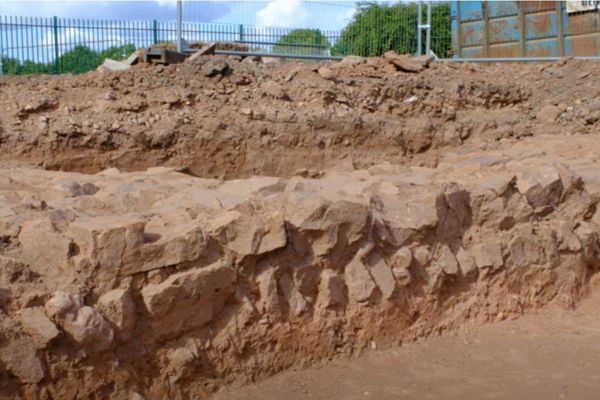
The defences have an irregular outline instead of the familiar rectangular plan of many Roman camps. Investigators have identified five entrances. At one of them, a curved extension of the ditch and bank formed a clavicula, a device that controlled the approach to a gate. The team describes it as the first example of this particular gate form identified in Slovakia.
These earthworks are especially useful because they show how the camp was laid out on the ground. Their relationship to the entrances gives the excavators a way to reconstruct movement into the enclosure. Roman armies could establish temporary positions during a campaign; our overview of the Roman army’s changing structure provides wider context for the force that built such installations.
Human remains in ditches and pits
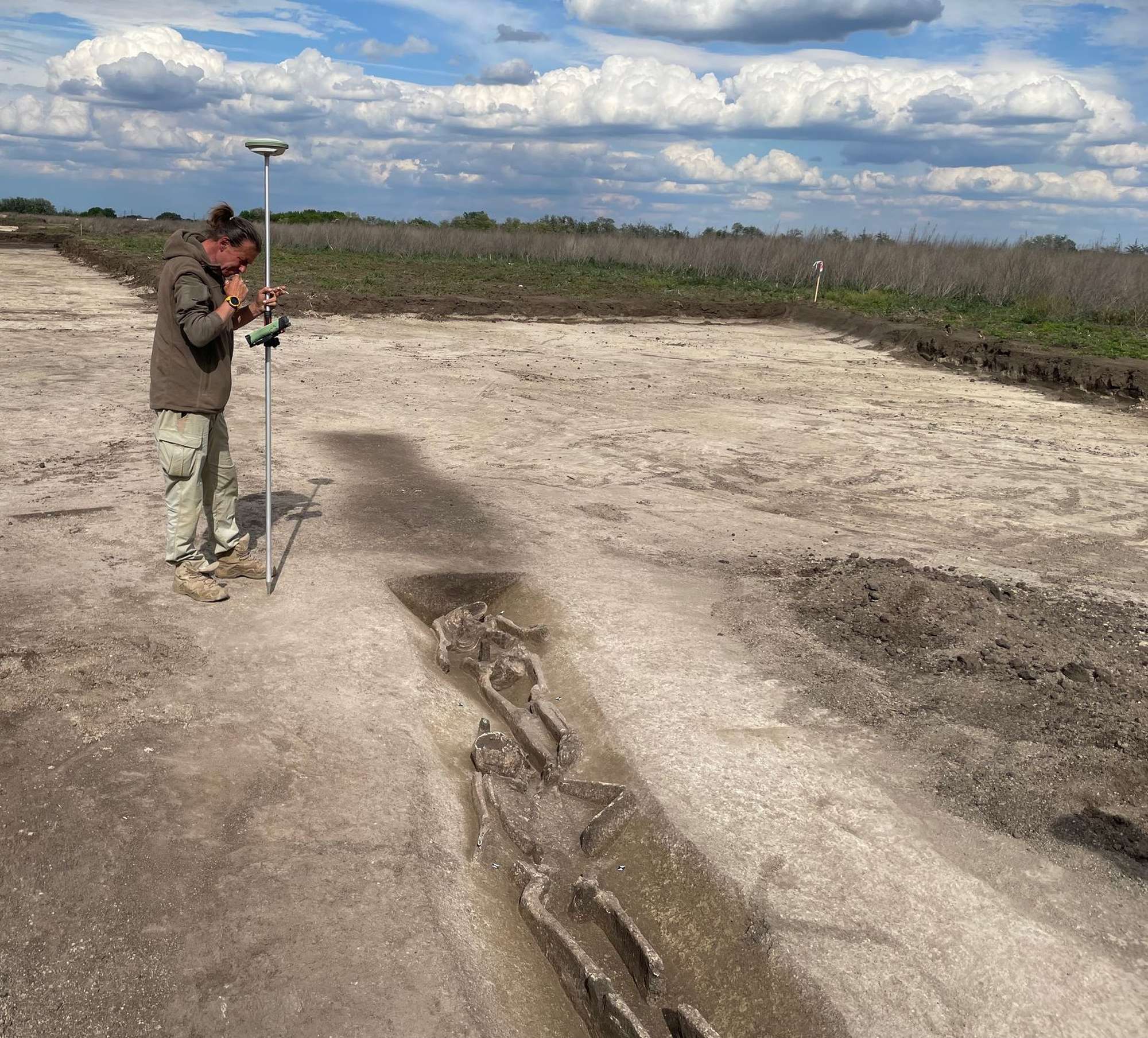
Human remains appeared in the defensive ditches, in shallow graves and in deep pits or wells within the excavated area. The range of settings makes the discovery more complex than a single cemetery. Photographs released by the archaeological team show remains still in their excavated positions, with surrounding soil and nearby finds retained for study.
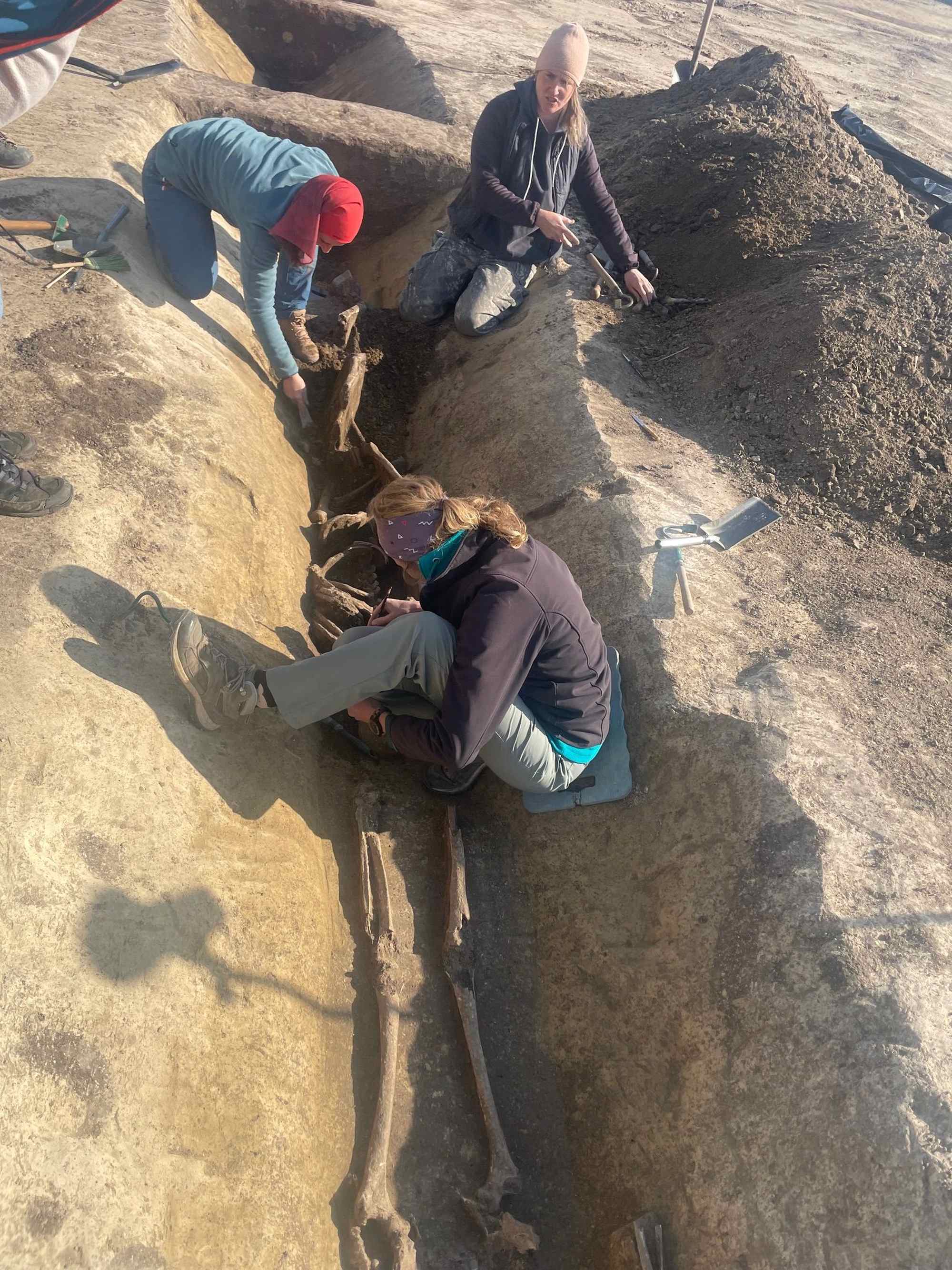
The institute’s preliminary assessment is that most of the dead were Roman soldiers. It bases that reading on the military objects found with the remains, including spearheads, arrowheads, helmet pieces, armour and equipment from hobnailed footwear. That association is central to the report, while individual identities and the circumstances of death await further study.
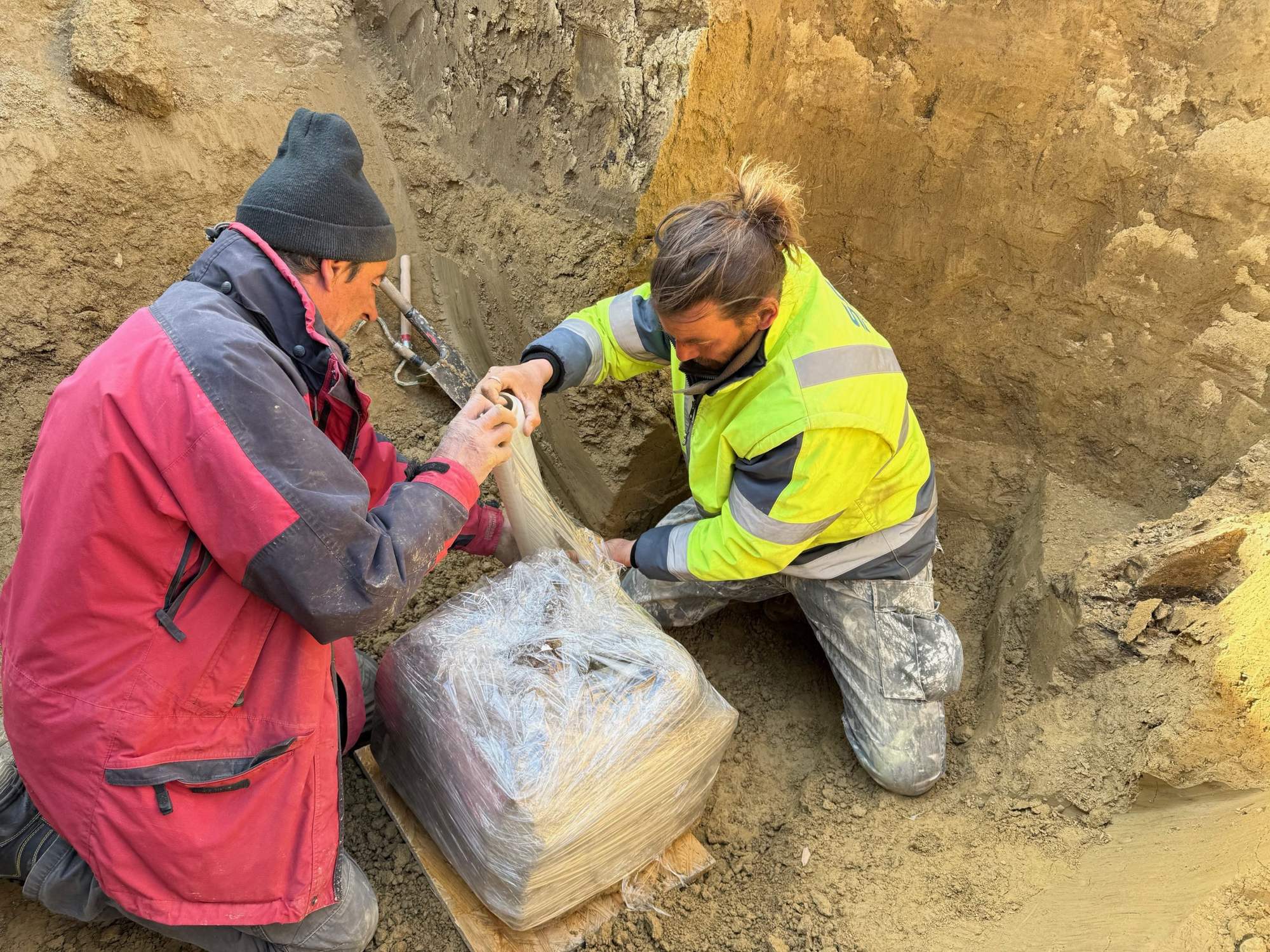
One set of remains was excavated in the northern defensive ditch; another photograph shows bones within a deep feature at the site. The researchers have also lifted some fragile finds together with blocks of surrounding earth, allowing their positions to be examined during conservation. Those procedures preserve details that can be lost when objects are removed separately.
Armour, shoes and small finds
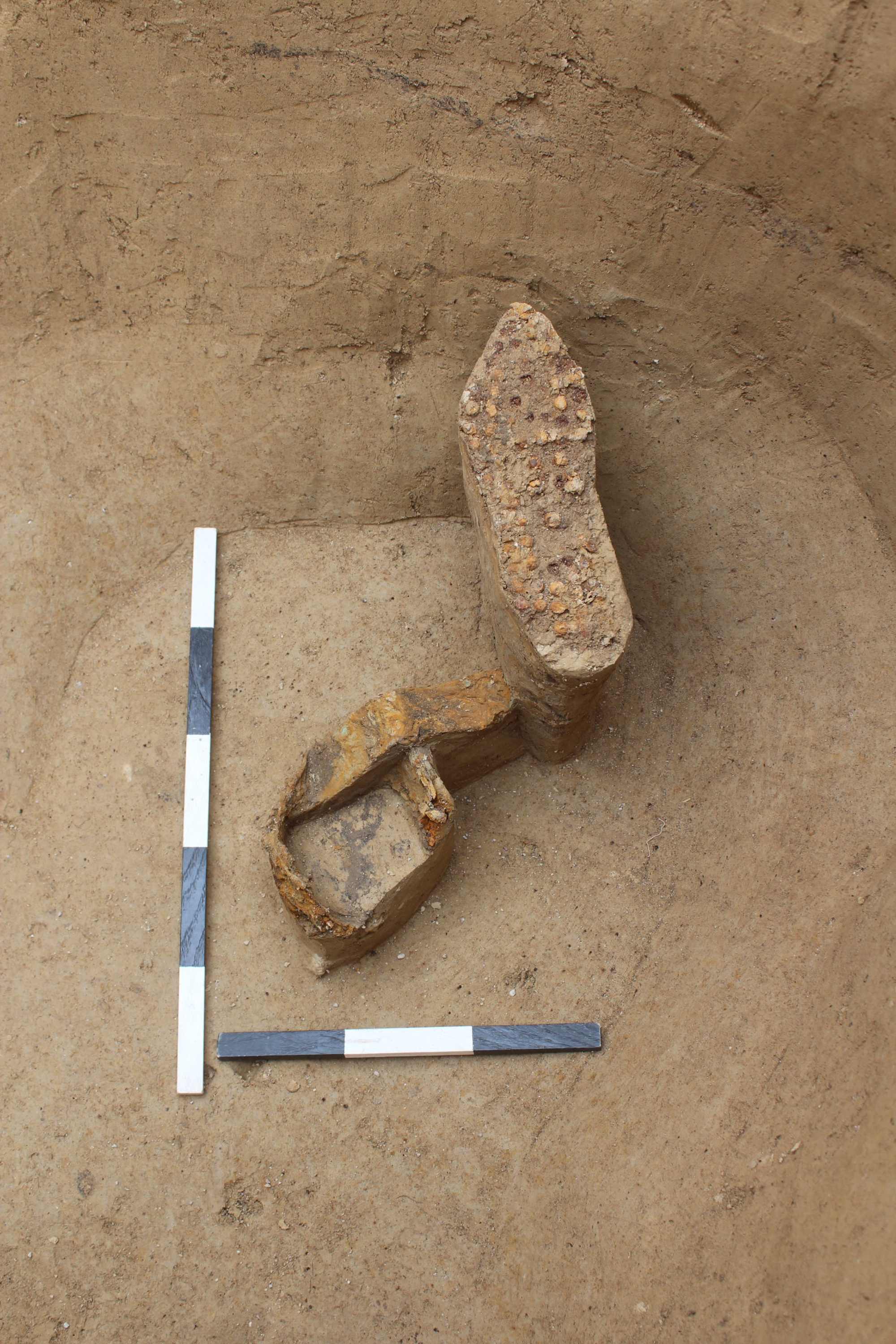
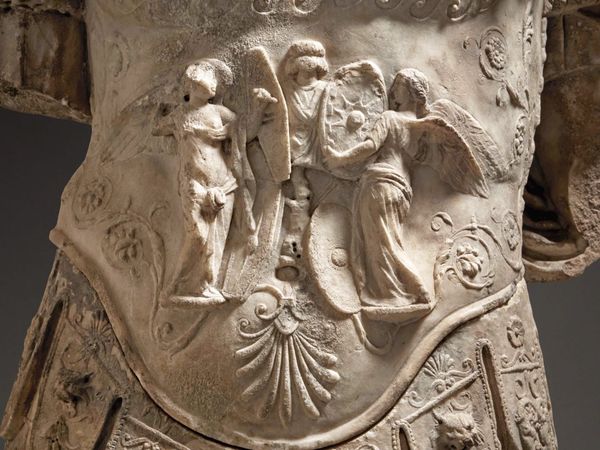
The military assemblage includes fragments of segmented and scale armour, pieces of helmets, spearheads and arrowheads. Both armour types have distinct constructions: segmented armour used articulated metal strips, while scale armour consisted of overlapping plates. The different forms of Roman military armour provide a wider picture of the equipment represented at the site.
One official excavation photograph shows hobnails from a Roman military shoe beside a fragment of segmented armour in feature 16. The iron nails can survive after the leather has decayed, leaving a recognisable trace of footwear. Roman leatherworking and military footwear offer useful context for what those small metal pieces once held together.
The institute also lists brooches associated with legionaries, coins, an axe, a cutting tool and a gaming die among the finds. These are objects from different parts of a soldier’s life, from dress and equipment to possible leisure. Their precise positions and associations are part of the archaeological record now being assessed.
Marcus Aurelius’s northern frontier
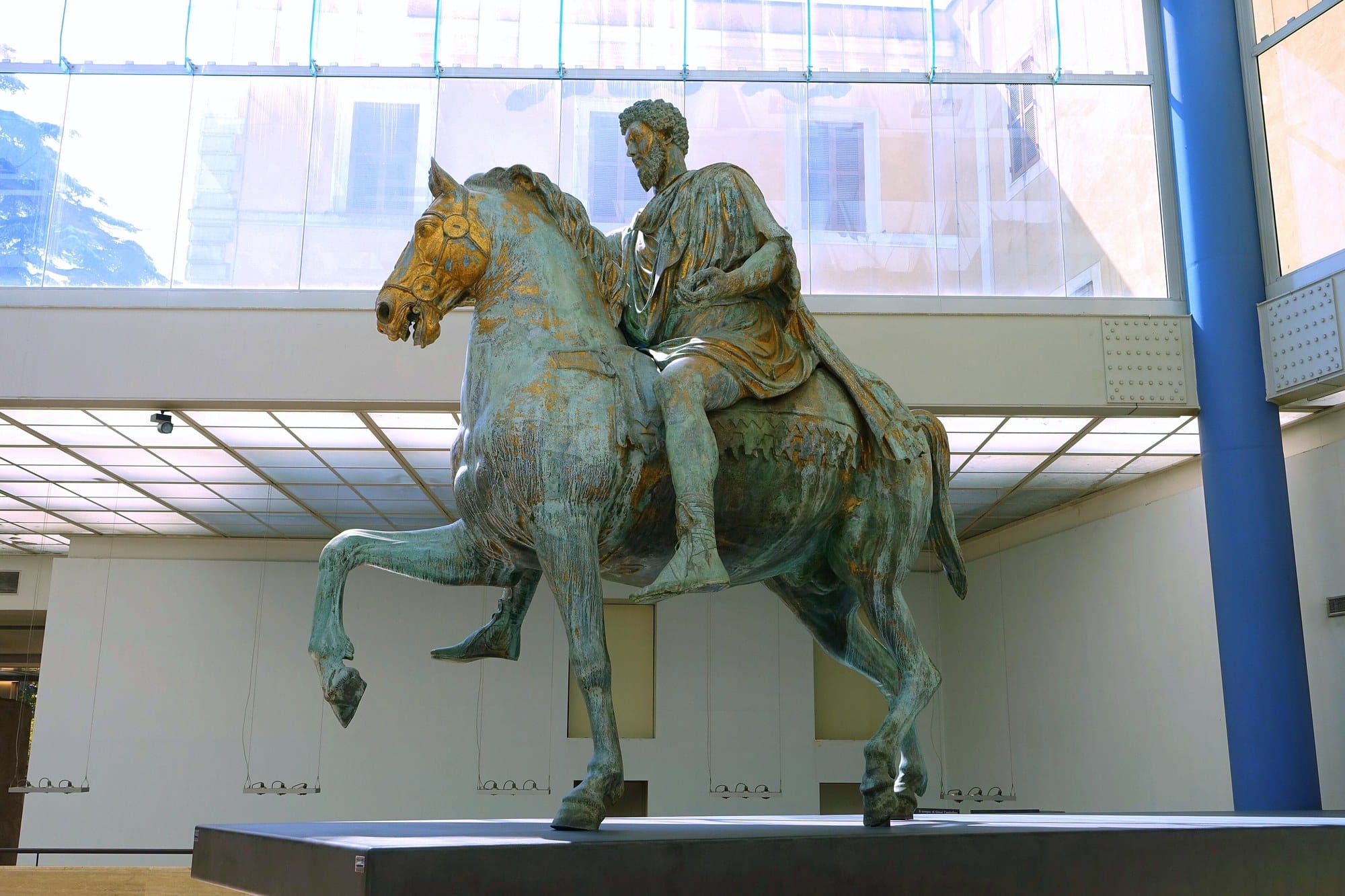
The institute places the site in the second half of the second century and considers a connection with the Marcomannic Wars likely. These conflicts brought Roman armies into territories north of the middle Danube during Marcus Aurelius’s reign. The emperor’s name supplies the historical period; the excavated camp supplies the direct evidence for activity at Šurany.
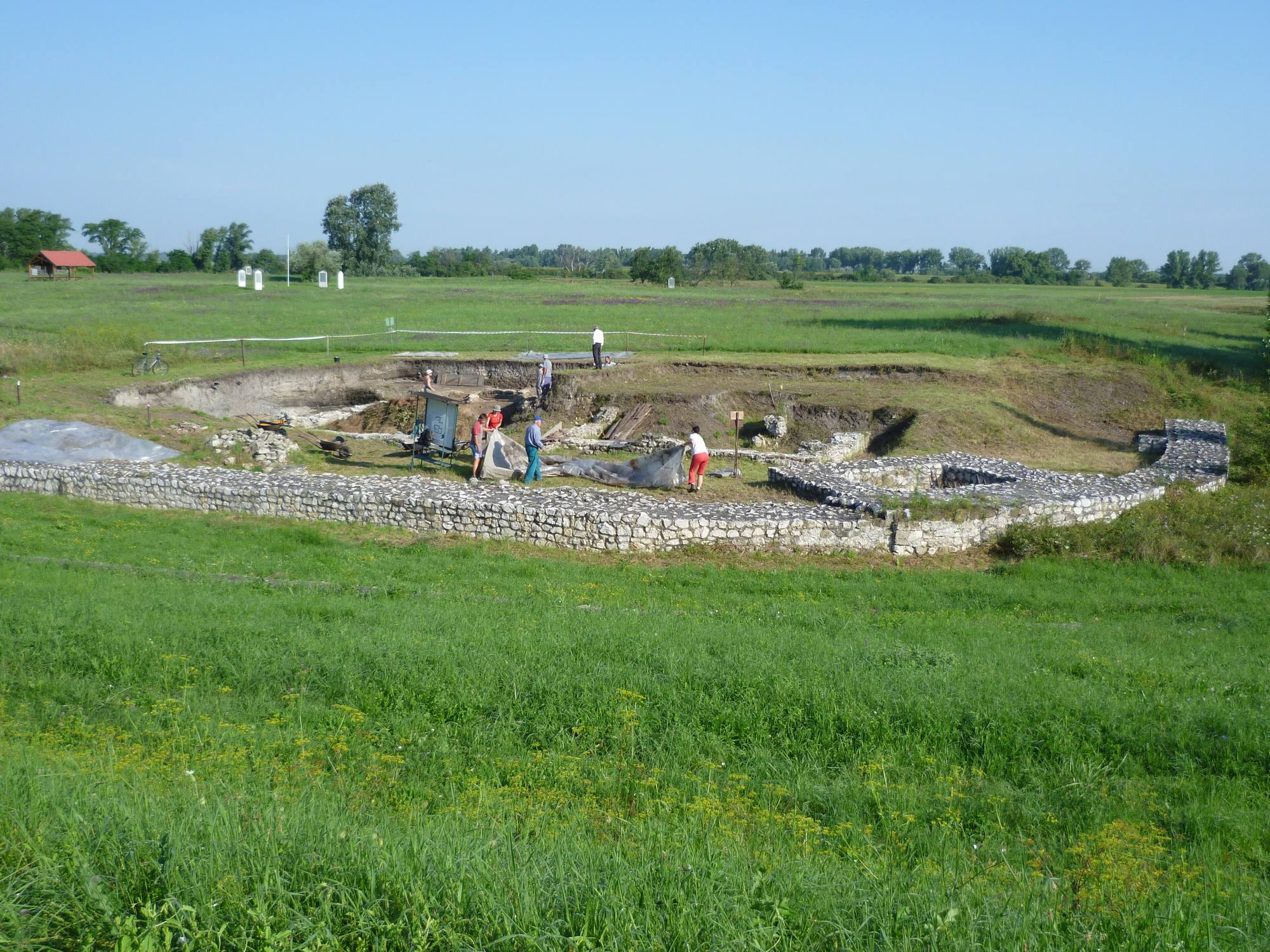
Temporary camps are known elsewhere in the wider region. A peer-reviewed study of discoveries at Jevíčko in Moravia discusses Roman campaign sites in Moravia and southwestern Slovakia, while identifying the timber-and-earth fort at Iža, opposite Brigetio, as a late-second-century frontier installation. Šurany adds a newly excavated position farther into the landscape north of that frontier.
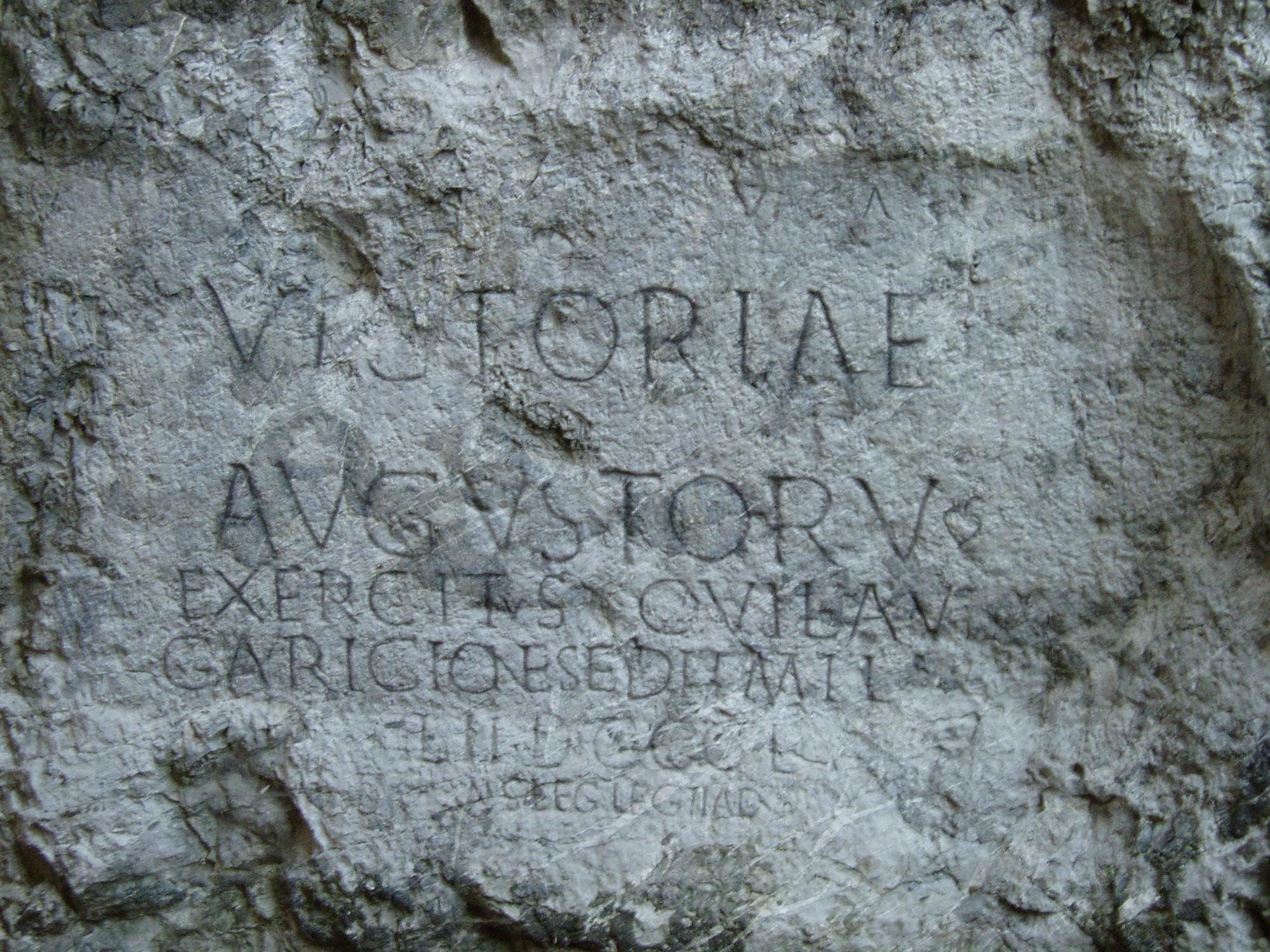
The wider Roman presence also survives in the inscription at Trenčín, a separate site in present-day Slovakia associated with campaigns in Marcus Aurelius’s reign. The evidence at Šurany is distinctive because its earthworks, objects and human remains can be studied together.
How the finds are being studied
Some of the most delicate discoveries were removed in soil blocks for conservation. In the institute’s photograph, large sections of earth remain around the material, keeping the relative positions of finds intact. This method gives conservators and archaeologists more control over cleaning and documenting material that could fragment during a hurried lift.
The research programme includes radiocarbon dating, soil micromorphology, archaeogenetics and isotope analysis. These methods address different questions: the dating of organic material, the formation of deposits, biological relationships and aspects of individual life histories. The institute expects the combined results to take years as it refines the chronology and investigates the individuals.
The researchers are also examining the camp layout and the distribution of objects within it. Five entrances and the curved gate defence can be mapped now; the sequence of activity across the enclosure will require further work. The combination of field recording, conservation and laboratory analysis is what can turn this remarkable concentration of finds into a more precise account of the camp.
What the Šurany find adds
The find documents a Roman camp where the army’s built defences and personal equipment remain in close association with human remains. That combination is unusually informative for a campaign setting. It allows the team to study the enclosure, deposits and people as parts of a single excavated site.
The published evidence already establishes the size and unusual outline of the camp, the five gateways, and the presence of bodies and military gear in several excavated contexts. The proposed Marcomannic-War dating gives those discoveries their historical setting, while the laboratory programme will test the chronology and examine the people more closely.
Šurany thus adds a substantial new location to the archaeology of Rome’s northern campaigns. Its most arresting questions concern the people in the ditches and pits and how they came to be there. As conservation and scientific study continue, the camp’s unusual plan and tightly recorded finds will remain the firm basis for answering them.
Archaeological Institute, Slovak Academy of Sciences, Šurany camp excavation report, 21 July 2026
MH Invest, joint announcement and excavation photograph, July 2026
Eduard Droberjar, “Marcomannic wars and new Roman period discoveries in Jevíčko,” Archeologické rozhledy 72 (2020), 479–522
Leibniz Centre for Archaeology, Roman temporary camps north of the middle Danube
Daderot, Marcus Aurelius equestrian statue photograph, Wikimedia Commons, CC0
Agapito, Iža-Leányvár fort photograph, Wikimedia Commons, CC BY-SA 3.0
Matros~commonswiki, Trenčín Roman inscription photograph, Wikimedia Commons, public domain


About the Roman Empire Times
See all the latest news for the Roman Empire, ancient Roman historical facts, anecdotes from Roman Times and stories from the Empire at romanempiretimes.com. Contact our newsroom to report an update or send your story, photos and videos. Follow RET on Google News, Flipboard and subscribe here to our daily email.
Follow the Roman Empire Times on social media: