
In case you had doubts, Christ was Actually a Real Person, Suggest Ancient Roman Texts
Did Roman writers ever mention Jesus? The surviving evidence is brief and later than many readers expect, but it is not silent. Tacitus, Suetonius, Pliny, and Josephus together show why historians do not treat Jesus as a fictional invention.

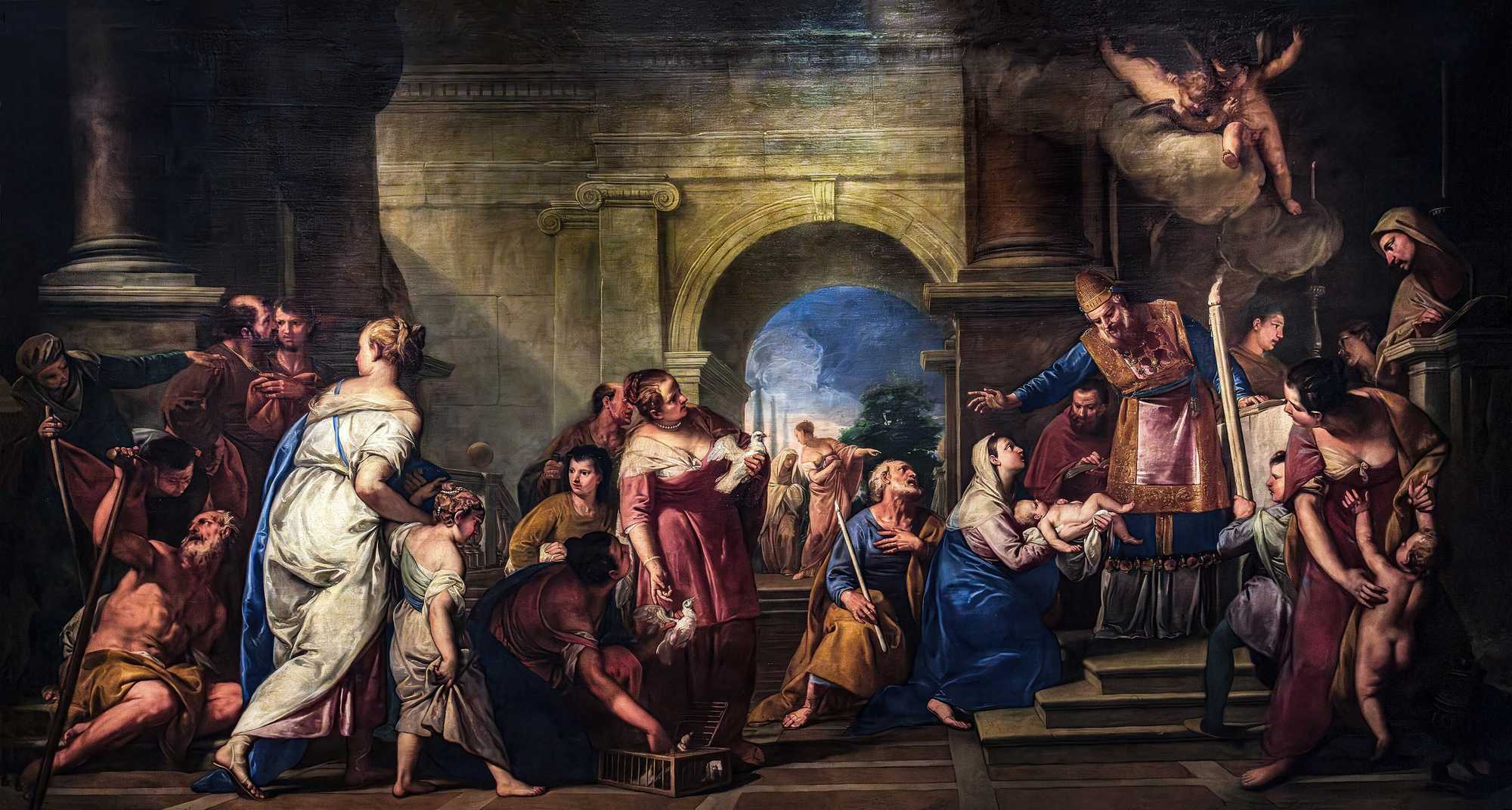
Did Roman writers ever mention Jesus? The question matters because it sits at the center of a modern argument that is often louder than the evidence itself. Jesus is one of the best-known figures in world history, yet the surviving references to him outside Christian writing are brief, scattered, and later than many readers expect. That has allowed doubt to flourish. But the ancient record is not silent. It is simply narrower, rougher, and more difficult than popular debate usually admits.
What the Surviving Roman Record Actually Looks Like
The first point has to be stated plainly: there is no surviving Roman source written during Jesus’ lifetime that describes him directly. No trial transcript from Pontius Pilate survives, no provincial report to Rome names him in real time, and no imperial archive has come down to us recording his execution.
That fact often drives modern doubt, because people expect someone as important as Jesus to appear in a clear Roman file. But ancient history rarely works that way, especially for events in a distant province. The absence of a surviving contemporary Roman record is a limitation in the evidence, not proof that Jesus was invented.
The earliest surviving texts about Jesus are instead Christian, especially the letters of Paul, written within a couple of decades of his death. Those letters are not biographies, and they do not answer the Roman-source question by themselves. What they do show is that Jesus was already being treated as a recent historical figure by the middle of the first century, and that Paul knew people tied to Jesus’ own circle.
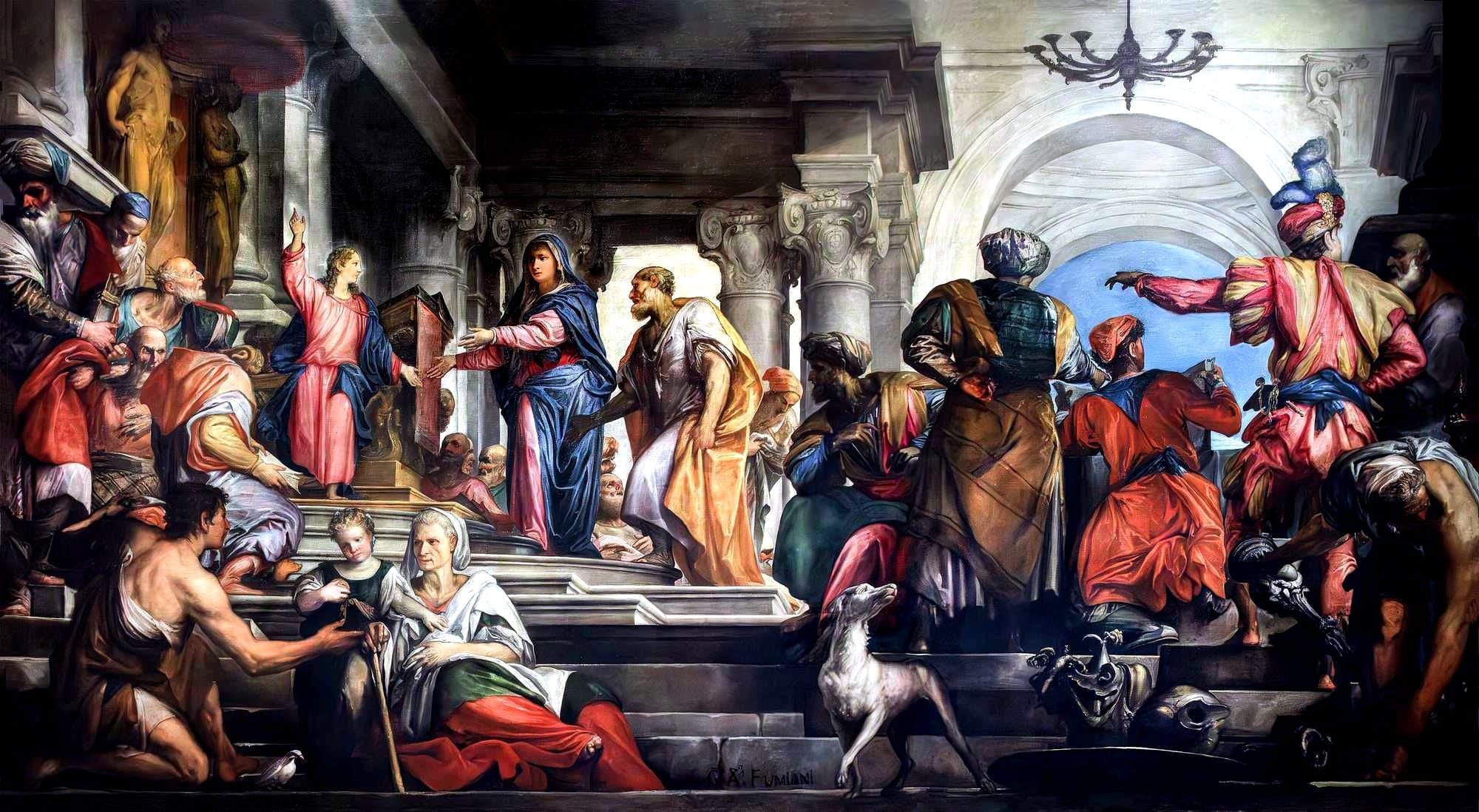
By the time Roman writers mention Christ or Christians, they are stepping into a world in which the movement already exists and is already spreading
Tacitus and the Sharpest Roman Statement
The strongest Roman passage is in Tacitus, Annals 15.44. Writing in the early second century about Nero’s response to the fire of Rome, Tacitus explains who the Christians were by tracing the name back to its founder. His wording is unusually direct:
“Christus, from whom the name had its origin,” he says, “suffered the extreme penalty during the reign of Tiberius.”
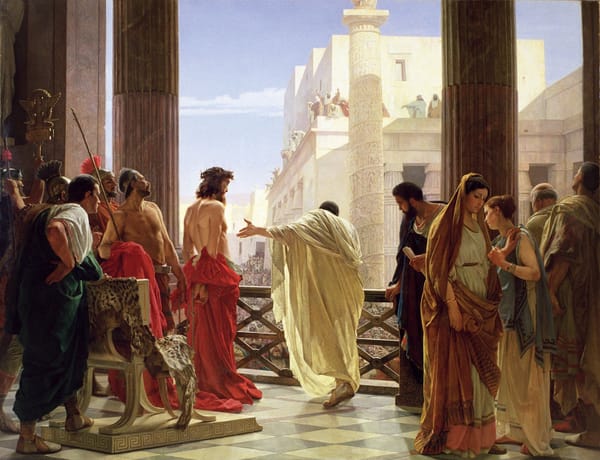
Tacitus then places that execution “at the hands of … Pontius Pilatus.”
This is why Tacitus matters so much. He is not a Christian writer and he is not friendly to Christianity. He presents the movement as a dangerous superstition and mentions Christ only in the course of explaining Nero’s treatment of Christians.
The value of the passage lies precisely there: it is a hostile Roman witness that still takes Christ for granted as a real person executed under Pilate in Tiberius’ reign. Tacitus is not trying to prove Jesus existed. He simply assumes it as part of the background to Nero’s persecution.
That does not mean the passage is beyond all discussion. Some modern scholars have argued that Tacitus may have depended, at least in part, on information circulating among Christians or on material mediated through Pliny. Even so, the passage remains the strongest Roman reference because it gives the essential historical frame in one place: Christ, Christians, Tiberius, Pilate, and execution. On this question, Tacitus is the central Roman text.
Suetonius and the More Ambiguous Evidence
Suetonius is useful, but much less precise. In Nero 16 he writes briefly that
“punishment was inflicted on the Christians,”
describing them as followers of a new and harmful superstition. That line clearly shows that Roman writers recognized Christians as a distinct group. It does not, however, tell us much about Jesus directly.
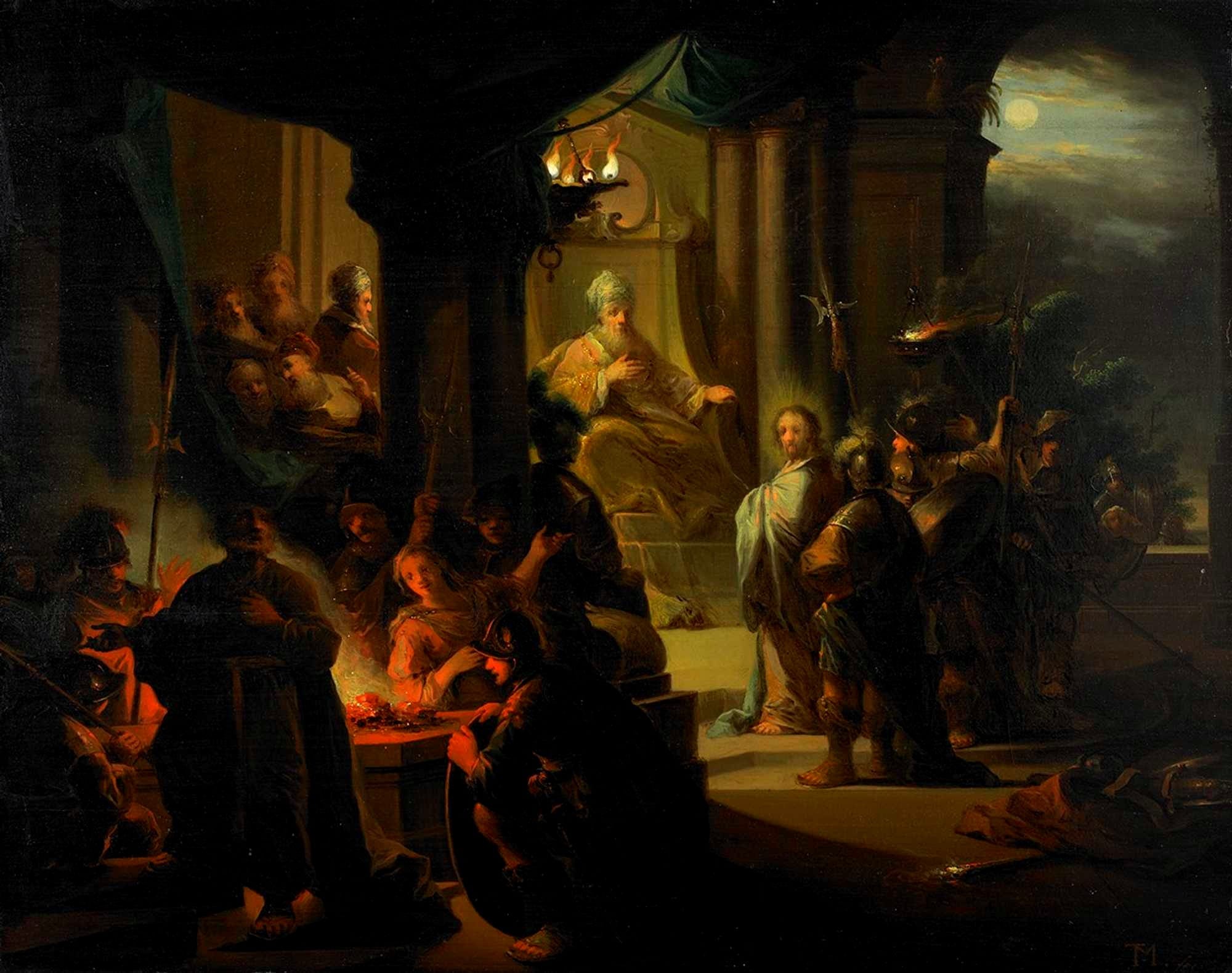
The more debated Suetonius passage appears in Claudius 25, where he says that Claudius expelled Jews from Rome because they were making disturbances
“at the instigation of one Chrestus.”
This line has long been discussed because many readers think it preserves a confused Roman notice of disputes about Christ among Jews in Rome. But the passage is not certain. Chrestus could be a mistaken rendering of Christus, or it could refer to another individual altogether. That means it is suggestive, but not decisive. It cannot bear the same historical weight as Tacitus.
So Suetonius adds something important, but not the whole answer. He shows that Roman authors knew Christians and saw them as troublesome. He may also preserve an echo of Christ-related unrest in Rome. But if the question is whether a Roman author clearly and directly mentions Jesus, Tacitus remains much stronger.
Pliny and the Visibility of Christ in Roman Administration
Pliny the Younger belongs in the discussion for a different reason. He is not telling his readers who Jesus was, and he does not narrate events from Judaea. What he does show is that by the early second century Christ had become central enough to Christian identity that a Roman governor had to ask the emperor how to handle people who refused to renounce him.
In his letter to Trajan, Pliny says that Christians gathered before dawn and sang
“a hymn to Christ as to a god.”
That sentence is brief, but it is revealing. It shows that Christ was not a vague memory at the edge of the movement. He was the focus of worship, oath-taking, and communal identity. Pliny’s problem was not literary theory or theological doctrine. It was legal administration.
He was trying to decide what to do with people whose allegiance to Christ put them at odds with Roman expectations. As evidence, then, Pliny does not help much with the details of Jesus’ life, but he is valuable for showing how quickly and firmly the movement centered on Christ had become visible to the Roman state.
Josephus and the Strongest External Name-Link
Although he was not Roman, Josephus is too important to omit. Writing in the late first century, he gives one of the strongest non-Christian references to Jesus when he mentions
“James, the brother of Jesus who was called Christ.”
That line matters because it is short, matter-of-fact, and widely treated as authentic. Josephus is not making a theological confession. He is identifying James by reference to a Jesus already known as “the one called Christ.”
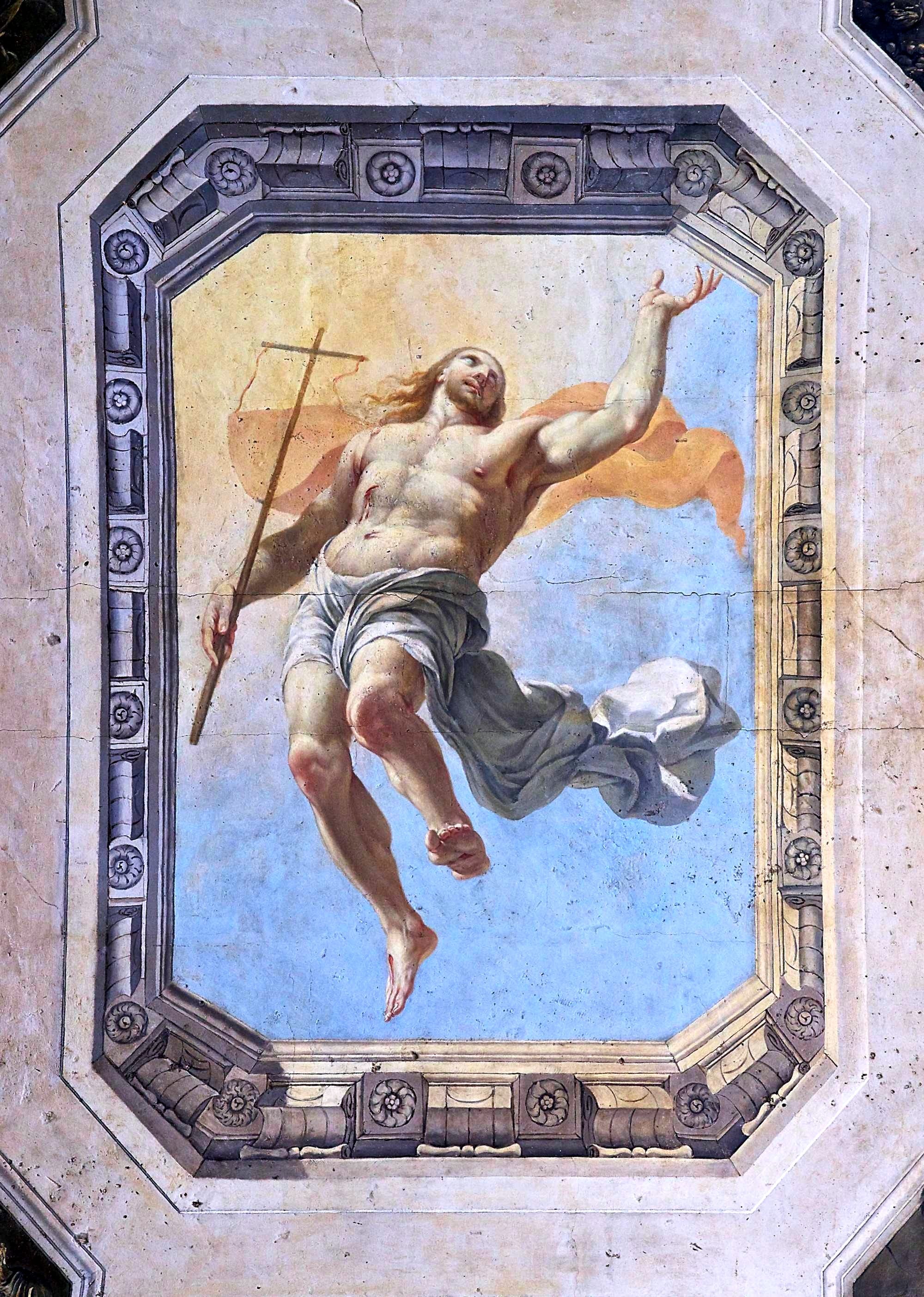
The longer Josephus passage, the Testimonium Flavianum, has to be handled more carefully. In its surviving form it contains clearly Christian-sounding language, which is why most modern discussion sees it as a passage that has been altered in transmission. Even so, one line often retained in reconstructions of the earlier core is that Pilate
“condemned him to the cross.”
That longer passage should not be quoted as though every word were secure. The shorter James passage is safer and more useful for a restrained historical case.
What the Roman Material Can and Cannot Prove
The Roman material is not large, and it does not give us everything. It does not produce a full biography of Jesus. It does not prove Christian doctrine. It does not remove every question about the channels through which Roman authors learned what they knew.
What it does give us is a set of external notices that are difficult to reconcile with the claim that Jesus was merely a late myth or literary invention. Tacitus treats Christ as the executed founder of the Christians. Suetonius recognizes Christians as a group and may preserve an echo of disputes about Christ in Rome. Pliny shows Christians worshipping Christ in a way that had already become a matter of imperial administration. Josephus, from outside the Roman tradition proper, ties Jesus to James in a brief and widely accepted notice.
So the argument is cumulative rather than singular. There is no one Roman text that settles everything. But there is also no serious reason to say that the Roman world was silent. It was not silent. It was sparse, later, and uneven — but not silent.
That is why mainstream historians do not usually treat Jesus as a fictional character. The evidence is limited, yet it still places him firmly enough in the historical landscape that the older question is no longer whether he existed, but what exactly can be known about him from the kinds of sources antiquity has left behind.
The Roman evidence is not abundant, and it was never going to be. Jesus was not an emperor, senator, or general whose life would naturally fill state archives. But the surviving references are enough to show that he was not simply a character floating free in legend.
Roman writers knew of Christians, knew the name Christ, and in Tacitus’ case linked him directly to execution under Pilate in Tiberius’ reign. The record is limited, but it is real, and it is one reason the question of Jesus in history has never rested on belief alone.

About the Roman Empire Times
See all the latest news for the Roman Empire, ancient Roman historical facts, anecdotes from Roman Times and stories from the Empire at romanempiretimes.com. Contact our newsroom to report an update or send your story, photos and videos. Follow RET on Google News, Flipboard and subscribe here to our daily email.
Follow the Roman Empire Times on social media: