
The Story Rome Wanted to Hear
In an age exhausted by civil war, Rome did not want debate—it wanted certainty. Velleius Paterculus offered a history that moved fast, closed wounds, and presented the new order not as rupture, but as recovery.

Rome did not lack historians. By the early first century CE, its past had been written, rewritten, and fought over for generations. Civil wars had fractured memory as much as politics, and competing narratives of blame, virtue, and legitimacy still lingered beneath the surface of public life.
What Rome needed now was not another argument about what had happened, but a version of the past that felt settled—coherent, confident, and free of doubt. A history that did not reopen wounds, but closed them. One finally emerged, composed with remarkable clarity, speed, and certainty. It was a history that aligned perfectly with the world as it now existed—and with the future Rome had already chosen.
A History That Moves Without Hesitation
Velleius Paterculus tells Rome’s past with remarkable speed.
Generations pass in a handful of sentences; centuries are compressed into decisive moments. Kings appear, institutions take shape, wars are fought, and the Republic expands—all with a sense of inevitability that leaves little room for pause.
This is not a narrative built on accumulation or exhaustive detail. What matters is direction. Events are selected, arranged, and propelled forward to maintain momentum rather than to linger on complexity. Conflict is acknowledged, but rarely examined at length. Even civil wars, though present, are treated as episodes to be moved past rather than wounds to be reopened.
The tone is confident and assured. Rome’s history unfolds as a continuous process rather than a fractured one, marked more by recovery than rupture. Moments of crisis do not destabilize the narrative; they are absorbed into it, presented as necessary trials rather than existential threats.
What the reader encounters is not uncertainty, debate, or moral hesitation. The past is shaped into a coherent sequence that leads forward, not sideways. The effect is stabilizing. Rome’s story appears intelligible, purposeful, and ultimately resolved.
It is a history that asks for acceptance rather than interrogation.
A story told not to unsettle its audience, but to reassure it. (From Velleius Paterculus: Making History, edited by Eleanor Cowan; chapter “Velleius Paterculus as Senator: A Dream with Footnotes” by Barbara Levick.)
The Ground on Which History Stands
Italy occupies a privileged position in Velleius Paterculus’ historical vision. His narrative does not treat it merely as a geographical unit or administrative core of the empire, but as the temporal and moral center of Roman history. Events are consistently framed in relation to Italy’s fortunes, its crises, and its recovery, giving the peninsula a central role in the unfolding of Rome’s past.
Velleius’ sense of time is closely bound to place. Italian history becomes the measuring point against which wider imperial developments are assessed. Civil wars, foreign campaigns, and political change acquire meaning insofar as they affect Italy—either by destabilizing it or by restoring order within it. The end of conflict is marked not simply by victory abroad, but by the reestablishment of security and continuity at home.
This perspective shapes Velleius’ treatment of the late Republic. Periods of disorder are described as moments when Italy itself is endangered—politically fragmented, socially strained, and morally exhausted. Violence is not presented as an abstract constitutional crisis, but as something that directly wounds the Italian heartland. The repeated emphasis on devastation, fear, and uncertainty underscores Italy’s vulnerability during civil conflict.
Against this background, the Augustan settlement acquires particular significance. For Velleius, the defining achievement of Augustus is not territorial expansion but the restoration of Italy’s stability. Peace is measured by the absence of war on Italian soil, the normalization of civic life, and the reassertion of traditional hierarchies and values. Time itself seems to change: the chaotic acceleration of the civil war years gives way to a calmer, ordered historical rhythm.
Italy thus functions as both subject and symbol. It represents Rome’s collective identity, its shared past, and its claim to moral authority over the wider empire. By anchoring his narrative in Italy, Velleius presents Roman history as a story of recovery rather than transformation—a return to balance rather than a radical break. The principate appears not as a revolutionary system, but as the necessary framework that allows Italy, and therefore Rome, to endure.
This Italian-centered chronology also explains Velleius’ selective emphasis. Events that stabilize Italy are foregrounded; those that do not contribute to its security or cohesion are compressed or passed over. The result is a history written with a clear sense of priority, in which time moves toward consolidation, and the meaning of the past is defined by the preservation of Italy as Rome’s political and moral core. (From Velleius Paterculus: Making History, edited by Eleanor Cowan; chapter "Time for Italy in Velleius Paterculus" by Edward Bispham)
The Imperial Republic
For Velleius Paterculus, the collapse of the Republic was not a constitutional tragedy but a moral and civic catastrophe. Civil war, in his view, inflicted damage deeper than any foreign enemy could achieve, because it corroded the internal fabric of the state. As he bluntly observes,
“Civil wars are always more destructive than foreign wars, for they ruin not only the body of the state but its spirit” (Historia Romana 2.89.1).
The crisis Rome faced was therefore not merely political, but existential.
It is from this premise that Velleius constructs his vision of what modern scholarship has termed an “imperial republic.” The solution to Rome’s self-destruction was not the preservation of Republican forms at all costs, but the restoration of order through concentrated authority. Augustus appears not as an innovator overthrowing tradition, but as a restorer compelled by circumstance. The state, Velleius writes,
“exhausted by civil discord, was recalled to order by the authority of one man” (Historia Romana 2.89.3).
The phrasing is revealing: authority is not seized, but exercised in response to exhaustion.
Crucially, Velleius insists that this transformation did not amount to a wholesale rejection of Rome’s past. Instead, he frames it as a minimal intervention dictated by necessity rather than ambition.
“Nothing was changed except what the times themselves demanded” (Historia Romana 2.89.4).
Republican institutions, laws, and magistracies are presented as surviving, not abolished — albeit operating now within a stabilizing framework that prevented their self-destruction.
Peace, in this schema, becomes the ultimate measure of political legitimacy. Velleius offers one of his clearest statements of Augustan achievement when he notes that
“peace was restored to the world, the laws regained their force, the courts their authority, and the magistracies their dignity” (Historia Romana 2.89.5).
The emphasis falls not on ideology, but on function: law works again, justice operates, and public office regains meaning. This is not monarchy justified by theory, but by results.
The same logic governs Velleius’ portrayal of Tiberius, whose reign he describes in language carefully chosen to emphasize restraint rather than domination. Under Tiberius, he claims,
“justice is firm, discipline exact, and authority free from cruelty” (Historia Romana 2.126.3).
Elsewhere he reinforces the point:
“There was nothing harsh in his power, nothing arrogant in his command” (Historia Romana 2.126.4).
These are not the words of a detached observer, but of a senator writing within the political system he describes, attempting to articulate a form of rule that preserves order without abandoning Roman values.
Velleius is explicit about his own position in this historical narrative. He does not claim neutrality in the modern sense. On the contrary, he grounds his authority in participation and experience:
“I have set down not rumors, but what I saw and took part in” (Historia Romana 2.104.4).
His history is shaped by proximity to power, by service, and by memory — a perspective that explains both the urgency and the compression of his narrative.
He is equally candid about the limits and purpose of his work. Faced with an overwhelming abundance of events, Velleius acknowledges that selection is unavoidable:
“I am constrained by the limits of brevity and the abundance of events” (Historia Romana 1.16.1).
What he chooses to include, therefore, reflects not ignorance, but judgment. His history is not meant to catalogue everything, but to convey meaning.
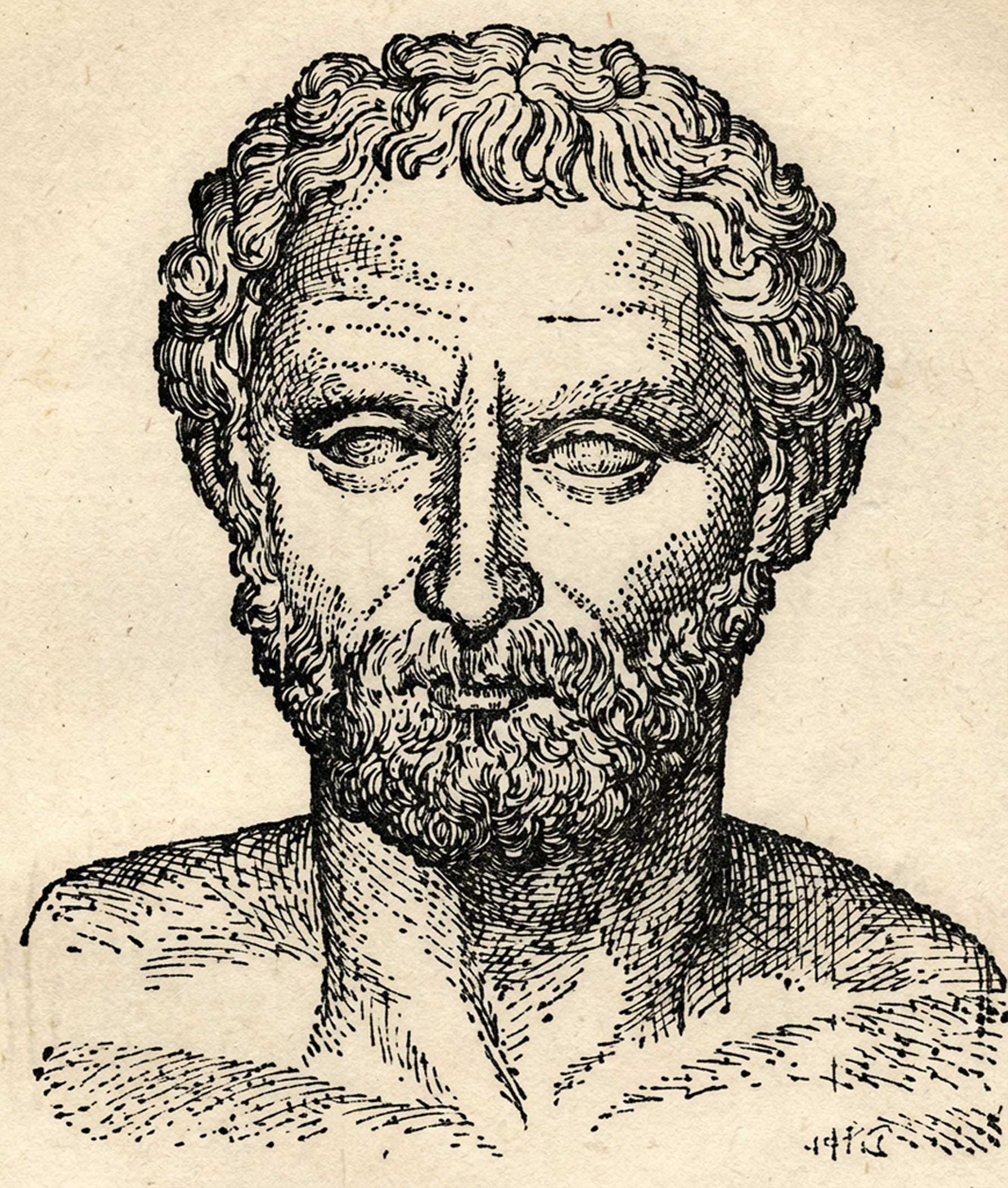
Seen in this light, Velleius’ “imperial republic” is neither naïve nor servile. It is an attempt to explain — and defend — a political reality in which peace, continuity, and restraint matter more than formal labels. The Republic, in his telling, survives not because its institutions remain unchanged, but because its values are preserved under conditions that no longer allow them to function on their own. ("The Imperial Republic of Velleius Paterculus" by Alain M. Gowing)
This political logic becomes clearer once Velleius’ own career is taken into account.
The Soldier Behind the Senator
Velleius Paterculus presents himself as a senator writing history, but his narrative habits betray a deeper formative identity. Long before he wrote Historia Romana, Velleius had served as an officer on Rome’s most unstable frontiers, campaigning in Germany and Pannonia under Tiberius. This experience left a permanent mark on how he understood power, order, and peace.
Modern scholarship has increasingly emphasized that Velleius’ apparent contradictions—his praise of Augustan stability alongside his harsh language toward Rome’s enemies—are not the result of confusion or incompetence. They arise instead from the tension between two roles he inhabited simultaneously: that of the loyal senator of the Principate and that of the professional soldier shaped by years of frontier warfare. His history reflects both perspectives, sometimes uneasily, but never accidentally.
This duality is especially visible in his treatment of peace. Velleius formally celebrates the end of civil war and the restoration of order under Augustus, yet peace itself remains a fragile and morally ambiguous condition in his narrative. He repeatedly associates prolonged peace with decline, softness, and vulnerability, particularly when Rome’s enemies are concerned. Military vigilance, not civic harmony, is presented as the true guarantor of Roman survival.
The closure of the Temple of Janus illustrates this tension. Augustus famously advertised the closing of Janus’ doors as proof that Rome was finally at peace. Velleius records the event, but his emphasis subtly shifts its meaning. He minimizes the number of closures and reminds the reader how rarely Rome has known peace at all, reinforcing the idea that war—not tranquility—is Rome’s natural state. The gesture becomes less a triumph of pacification than a brief interruption in an otherwise continuous history of conflict.
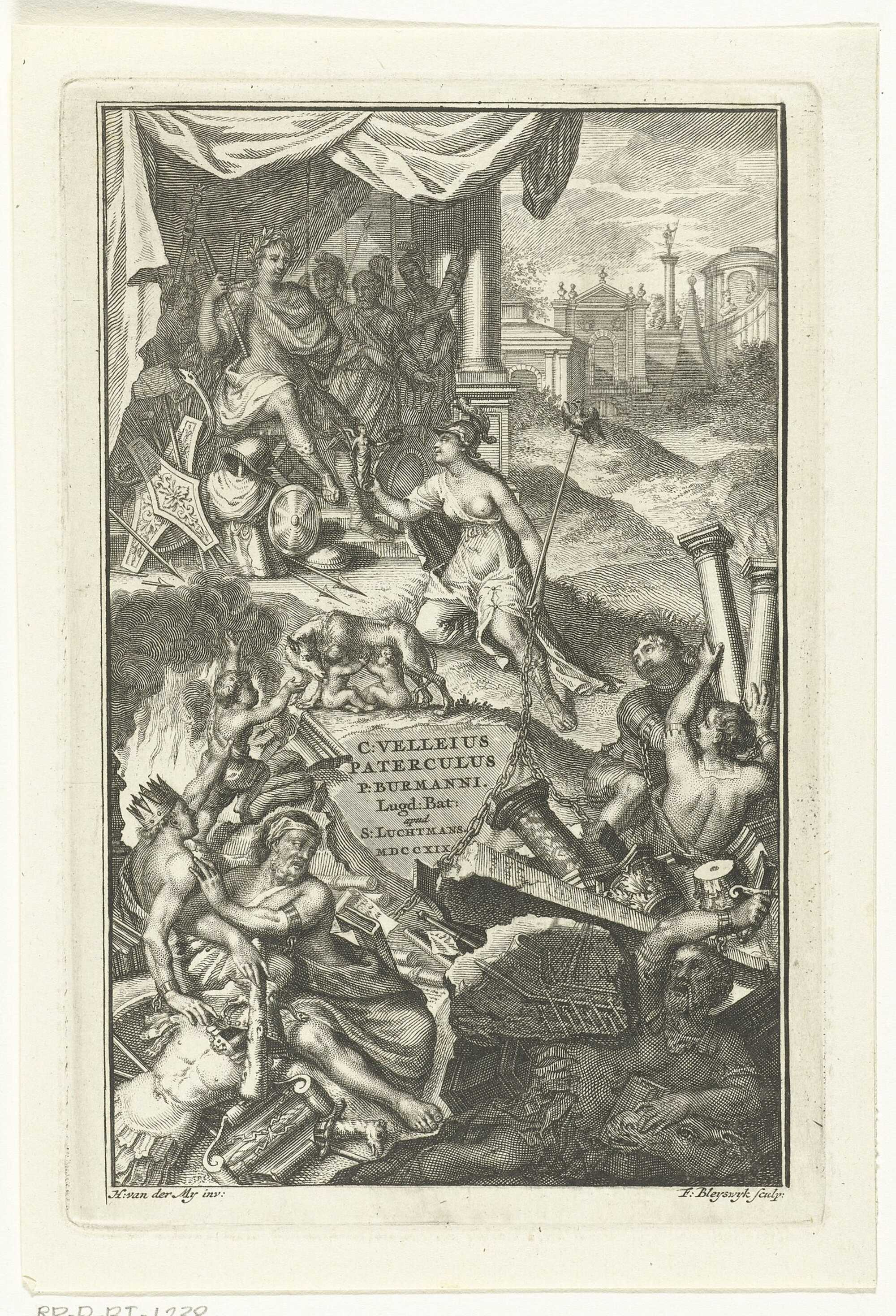
This soldierly perspective also shapes Velleius’ moral vocabulary. Virtus remains the supreme Roman quality, consistently praised and never problematized. Clementia, by contrast, is treated with caution. Mercy is appropriate within Rome and toward fellow citizens, but it becomes dangerous when extended to external enemies.
His language hardens noticeably when describing non-Romans, who are often portrayed as treacherous, undisciplined, or inherently violent. One does not reason with such opponents; one subdues them.
The contrast is particularly sharp in his assessment of commanders. Those who impose discipline and act decisively earn admiration, while figures who attempt to govern frontier populations with urban restraint are condemned. The disaster of Varus in Germany is not framed as a failure of military strength but as a failure of judgment: an excess of trust where suspicion was required. Peace, in such contexts, is not a moral achievement but a strategic error.
Velleius’ own words underscore this outlook. Reflecting on Rome’s enemies, he describes their destruction without hesitation or regret, noting moments when they were “slaughtered almost like cattle” (prope ad internecionem caesi). The phrasing is deliberate. Violence is not justified through ideology or necessity; it is presented as the expected outcome of imperial defense.
Yet this does not make Velleius an opponent of the Augustan order. On the contrary, his loyalty to the Principate is genuine. What his history reveals instead is a conception of imperial rule grounded in perpetual readiness for war. Augustus’ achievement lies not in ending conflict forever, but in managing it, channeling it, and preventing it from turning inward once again.
Seen in this light, Velleius’ history is neither simple propaganda nor veiled dissent. It is the product of a man who accepted the new political reality while remaining deeply skeptical of the moral language that surrounded it. His Rome is stable, but never safe; victorious, but never at rest. Peace may be celebrated, but it is always provisional. ("Velleius Paterculus: The Soldier and the Senator" by Robert T. Connal)

About the Roman Empire Times
See all the latest news for the Roman Empire, ancient Roman historical facts, anecdotes from Roman Times and stories from the Empire at romanempiretimes.com. Contact our newsroom to report an update or send your story, photos and videos. Follow RET on Google News, Flipboard and subscribe here to our daily email.
Follow the Roman Empire Times on social media: