
Emperor Julian the Apostate: The Philosopher Who Became Rome’s Last Pagan Emperor
He loved philosophy more than power, yet became one of Rome's most unusual emperors. Julian's ambitions would put him at odds with the world around him.


When Julian became sole ruler of the Roman Empire in AD 361, he was still only about thirty years old. His father had been killed in the violence that followed Constantine the Great's death, his older half-brother had been executed on the orders of their imperial relative Constantius II, and much of his own youth had been spent under supervision. An education centered on classical literature and philosophy had seemed to offer him a future far removed from imperial command. Instead, he had become a successful general in Gaul, where his victories and popularity with the army eventually brought him into conflict with Constantius himself.
Julian's reign lasted less than twenty months. During that time, he took an active interest in government, attempted to restore the worship of the traditional gods, challenged privileges enjoyed by the Christian clergy, and prepared a major expedition against Persia. His efforts to change the empire's religious direction met resistance, while his military ambitions ended with his death during the Persian campaign in June 363.
Later Christian writers remembered him as Julian the Apostate, a name reflecting his abandonment of Christianity. His own writings reveal a more complicated figure: a man deeply attached to Greek philosophy, convinced of the value of traditional worship, proud of his military achievements, and unusually willing to answer public criticism in writing. His abilities attracted admiration even from writers who questioned some of his decisions.
A Childhood Marked by Violence
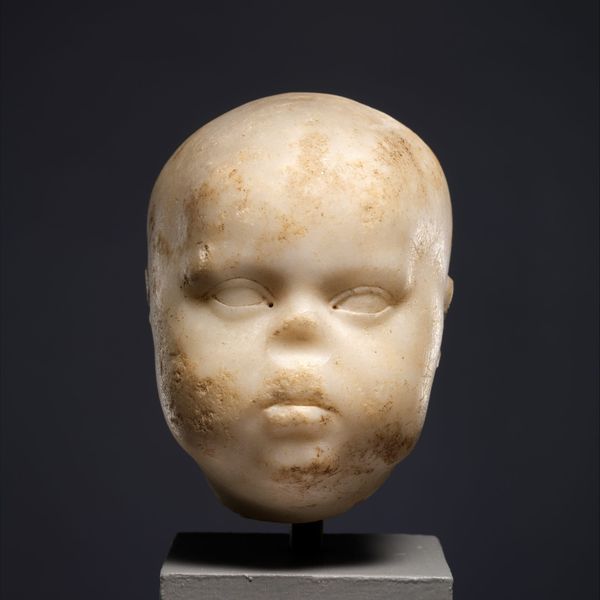
Julian was born in AD 331 or 332 into the family of Constantine the Great. His father, Julius Constantius, was Constantine's half-brother, placing Julian among the younger members of the imperial dynasty. That relationship became dangerous after Constantine died in 337, when several male relatives of the deceased emperor were killed during the struggle surrounding the succession.
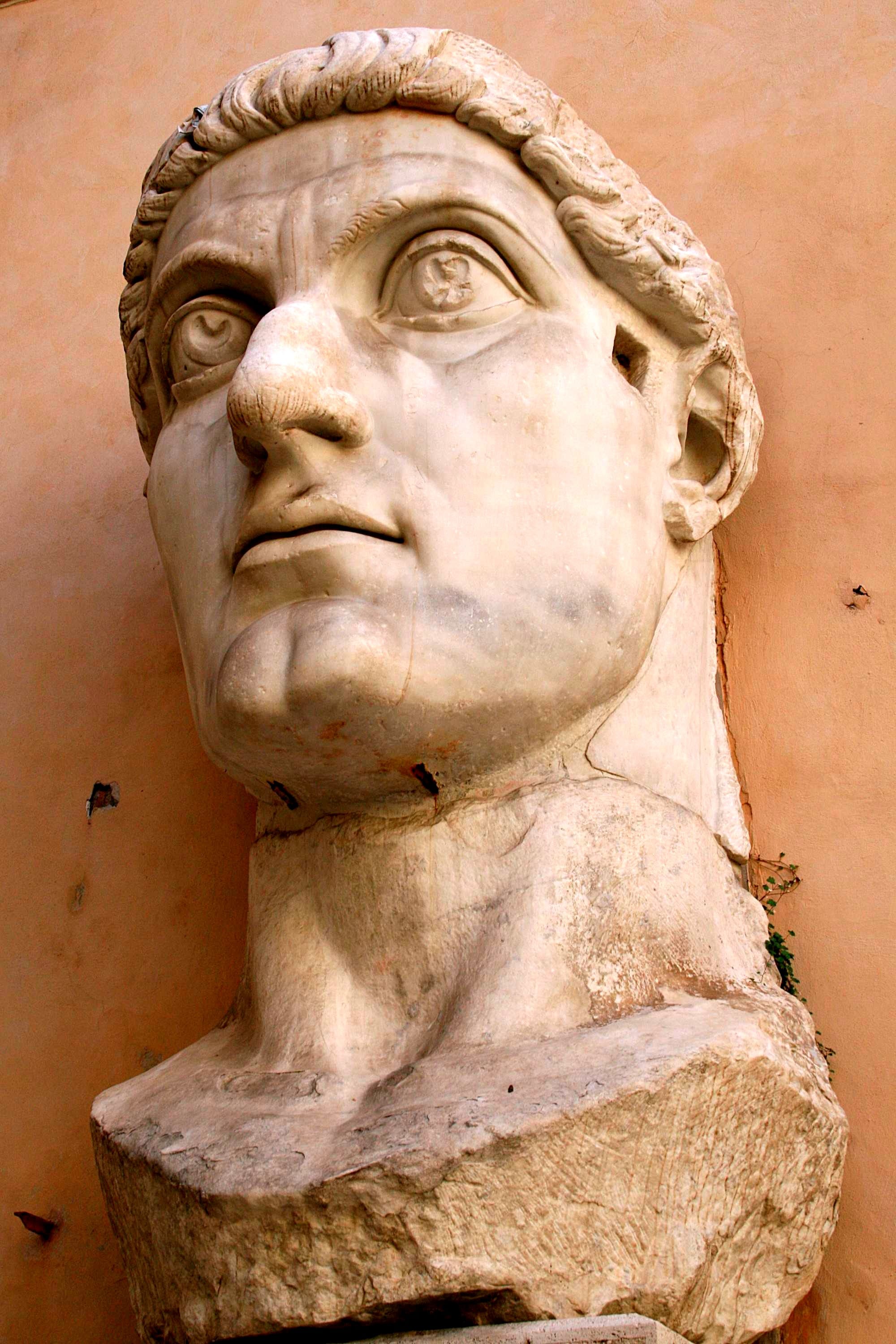
Julian's father was among the victims. The young Julian and his older half-brother Gallus survived, although the precise circumstances of their survival are not entirely clear. Later accounts, including Julian's own recollections, linked the killings to the consolidation of power by Constantine's sons. The personal responsibility of Constantius II remains disputed, and Julian's accusations against him cannot by themselves settle the question.
The surviving brothers remained under imperial supervision. Julian received an education that combined Christian instruction with extensive study of Greek literature. His early teachers included Mardonius, whose influence he would remember long after becoming emperor.
In Misopogon, a satire written near the end of his life, Julian recalled how Mardonius tried to keep him away from public entertainments. When the boy wanted to attend horse races, his tutor directed him to the racing scenes in Homer. The same approach applied to music and theatrical performances: Julian was encouraged to encounter such pleasures in literature rather than through the spectacles themselves.
Julian presented this upbringing as an explanation for the habits that later irritated his subjects. His recollection was written as part of a literary quarrel with Antioch, so it cannot be treated as an impartial account of his childhood. Nevertheless, it establishes how he himself understood the influence of Mardonius upon his adult behavior.
Julian and Gallus also spent several years at Macellum, an imperial estate in Cappadocia. They had access to education and the material advantages appropriate to their rank, but their freedom of movement and contact with the wider world were restricted. Julian's subsequent accounts convey his dissatisfaction with the circumstances in which he had been raised.
His Christian education was substantial. He became familiar with scripture and Christian religious practice, and his later rejection of Christianity should not be presented as an attitude he had held unchanged from childhood.
During his youth, Julian developed an increasingly strong interest in Greek philosophy and the traditional gods. His association with Maximus of Ephesus, around AD 351, became especially important to his religious development. The philosophical teaching he embraced connected intellectual study with ritual practices and a conviction that divine powers governed the order of the universe.
These interests could not be pursued openly without regard for the political circumstances. Constantius II supported Christianity, and Julian remained a member of a family whose internal struggles had already cost several of his relatives their lives.
In 354, his position became especially dangerous. Gallus, who had been appointed Caesar in the East, fell into conflict with Constantius and was executed. Julian also came under suspicion, although he escaped his brother's fate.
The intervention of Empress Eusebia played an important part in Julian's subsequent treatment. In an address written in her praise, Julian credited her with helping him obtain an audience with Constantius and permission to resume his studies. Eusebia's involvement allowed Julian to leave the immediate difficulties at court and eventually continue his education in Athens.
Julian was eventually allowed to travel to Athens, where he continued his philosophical education and associated with intellectual circles. He regarded the opportunity with considerable enthusiasm, having long wanted to pursue the studies to which he was most attracted.
His stay did not last. In 355, Constantius summoned him back to the imperial court and appointed him to an office for which his education had provided little practical preparation.
The Philosopher Who Became Caesar
On 6 November 355, Julian was appointed Caesar and given responsibility in Gaul. Constantius remained the senior emperor, while Julian received the task of helping restore Roman authority in provinces exposed to serious military pressure along the Rhine.
The appointment placed a man with little experience of command in a difficult situation. Roman settlements had suffered attacks, defensive positions had been lost or damaged, and armies needed supplies that could not always be transported securely through the affected territory.
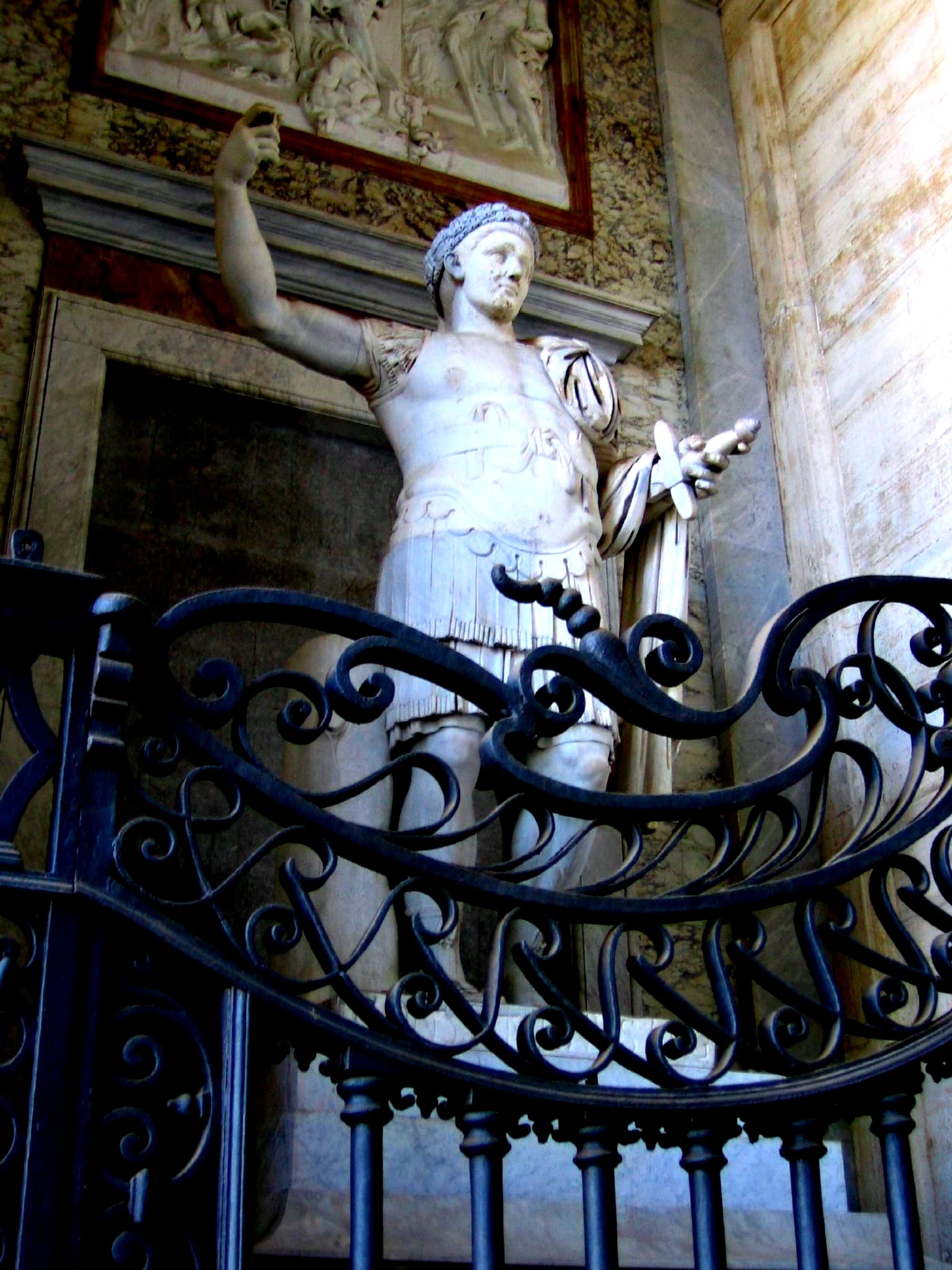
Julian also married Helena, the sister of Constantius, adding another dynastic connection between the two emperors. Yet the marriage did not alter the fact that Constantius controlled the senior military appointments and retained ultimate political authority.
During Julian's first years in Gaul, he had to work alongside commanders and officials whose responsibilities sometimes overlapped with his own. The arrangement could complicate decisions about operations, provincial finances, and the distribution of resources.
His military experience developed through campaigning. Roman forces sought to recover settlements and restore defensive positions along the frontier, while Julian became increasingly involved in directing operations and responding to the movements of Germanic groups.
The recovery of Cologne, which had fallen into enemy hands, was among the successes he later recalled in his Letter to the Athenians. That letter was written during his political dispute with Constantius and was intended to defend his conduct, but the broader recovery of Roman positions is also reflected in other ancient accounts.
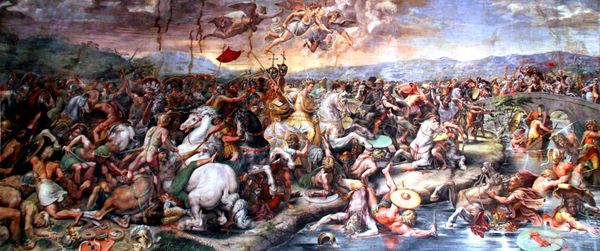
Julian's most celebrated victory came in 357, when his army confronted an Alamannic coalition near Strasbourg.
Julian's Victories in Gaul
The opposing forces at Strasbourg included Alamannic kings led by Chnodomarius. Ammianus Marcellinus, whose account provides the fullest surviving narrative of the battle, gives the Roman army's strength as approximately 13,000 men.
The fighting placed serious pressure on the Roman army. Its cavalry encountered difficulties, and parts of the infantry had to withstand determined attacks. Ammianus describes Julian encouraging his soldiers and intervening when the formation came under strain.
The Romans ultimately won the battle, and Chnodomarius was captured. The victory strengthened Julian's military reputation and provided an important success for Roman efforts to secure the Rhine frontier.
Julian later described sending the captive king to Constantius rather than exhibiting him throughout Gaul. In his Letter to the Athenians, he complained that Constantius received public recognition for a victory won by an army he had not personally commanded. Ammianus also reports that Constantius claimed the credit, supporting the existence of this dispute between the two emperors.
The victory at Strasbourg did not end Julian's work in Gaul. His subsequent campaigns included further operations across the Rhine, negotiations with communities beyond the frontier, and efforts to recover captives and restore Roman control over threatened districts.
Julian gave an extensive account of these achievements in his Letter to the Athenians. He claimed to have crossed the Rhine three times as Caesar, recovered large numbers of captives, and restored numerous towns.
The logistical work carried out during these campaigns is better established. Ammianus describes the repair of fortified settlements, the construction of granaries, and the transportation of grain from Britain to supply Roman troops.
Julian himself claimed to have assembled 600 vessels, including 400 constructed in less than ten months. The precise total differs in other ancient accounts, so it is safer to distinguish the figure Julian reported from the supply operation itself. Ammianus independently confirms the arrival of grain from Britain and the restoration of facilities needed to store it.
Securing provisions was a substantial undertaking. Soldiers stationed along the frontier required food, transport routes had to be protected, and damaged positions needed to be repaired before they could again support military operations. The campaigns therefore involved sustained organizational work alongside engagements with enemy forces.
Julian also intervened in provincial financial affairs. He objected to heavy tax demands and came into conflict with the praetorian prefect Florentius over the burdens placed on communities in Gaul.
By 360, Julian had acquired both an established military reputation and a close relationship with the troops under his command. His position was now considerably stronger than when Constantius had appointed him Caesar five years earlier, and events soon brought the relationship between the two men into open crisis.
From Caesar to Augustus
The immediate dispute concerned an order to transfer troops from Gaul to the eastern frontier, where Constantius was engaged in conflict with Persia. Removing experienced units threatened to weaken the defenses Julian had worked to restore, while some soldiers objected to being sent far from the regions in which they had been serving.
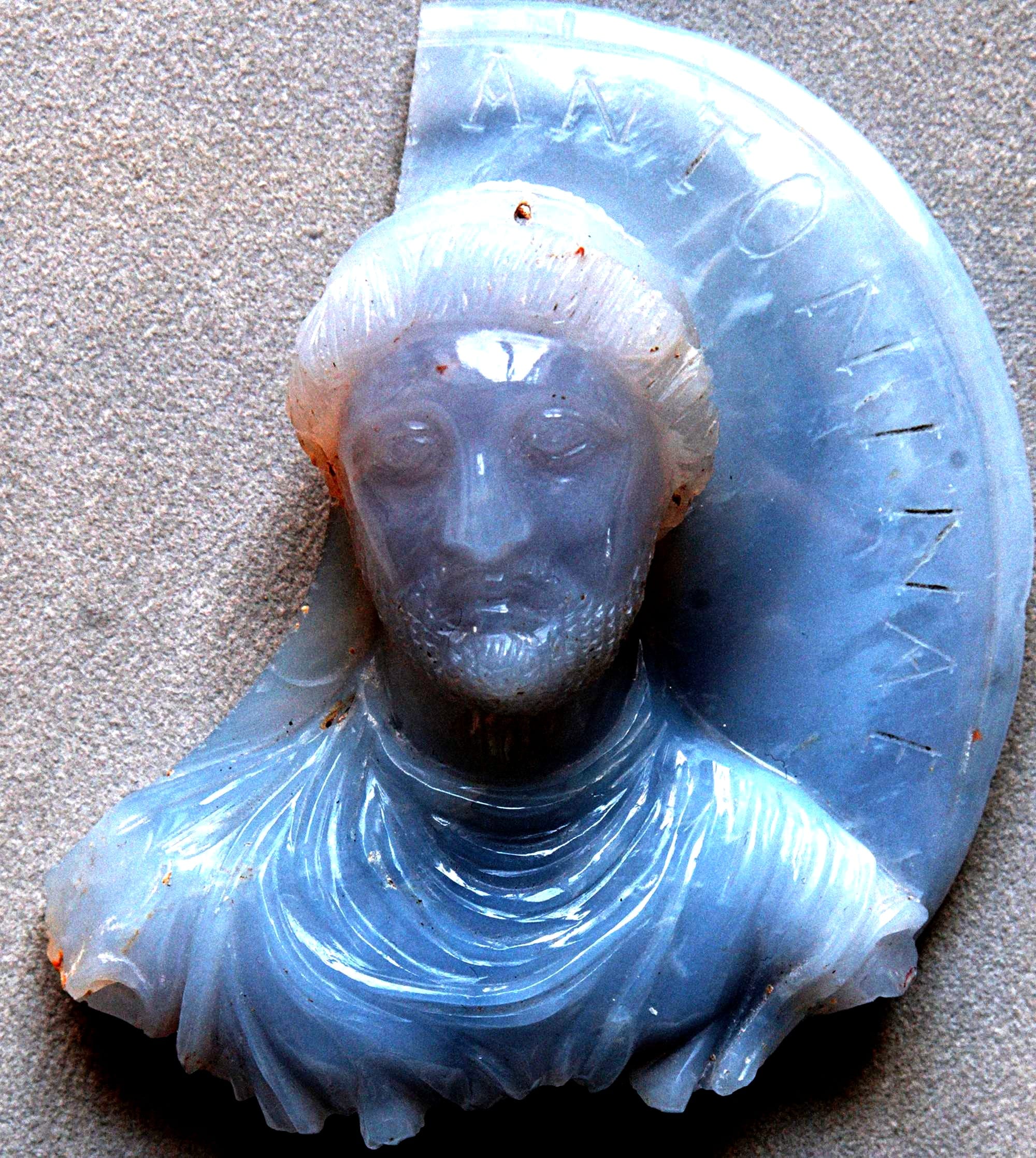
The confrontation reached a decisive point at Lutetia, the Roman settlement that became Paris. In 360, soldiers proclaimed Julian Augustus, raising him to the rank held by Constantius.
Julian later maintained that the soldiers had proclaimed him Augustus without his encouragement. Whether he had any part in arranging the acclamation remains uncertain.
Attempts at accommodation followed, but neither emperor was prepared to surrender his position. Julian defended his actions and sought recognition, while Constantius faced the existence of another Augustus supported by an army.
The disagreement also revived earlier grievances. Julian's Letter to the Athenians, contains accusations about the treatment of his family and complaints concerning his own service in Gaul. Its account of Constantius is sharply different from the flattering descriptions Julian had written while dependent upon the imperial court.
In 361, Julian began moving east. His forces advanced through important strategic positions, and he travelled by way of the Danube region as preparations for a possible conflict continued.
The anticipated civil war was avoided by Constantius's death on 3 November 361. Julian became sole emperor without having to fight a decisive battle against his cousin, and he entered Constantinople on 11 December.
He now had the authority to introduce changes that went beyond the military and administrative responsibilities he had exercised in Gaul. He also began to express openly the religious convictions he had previously pursued with greater discretion.
An Emperor Determined to Change Rome
Julian took an active interest in the ordinary business of imperial government after arriving in Constantinople. Accounts of his first months describe his attendance at Senate meetings, participation in judicial matters, and interventions concerning municipal finances and the operation of the imperial administration.
He reduced expenditure associated with the palace and dismissed some members of the imperial household. He also addressed abuses involving official travel arrangements and sought to restore certain municipal properties and revenues.
These measures show an emperor concerned with matters extending well beyond military command and religion. They do not, by themselves, establish that every reform succeeded or that the problems he confronted were permanently resolved during his short reign.
Julian's religious policy nevertheless became the most distinctive aspect of his rule. He openly practiced the worship of the traditional gods, encouraged sacrifice, and ordered temples reopened. He also supported the recovery of temple properties that had been confiscated or diverted under previous rulers.
His personal convictions were informed by the philosophical interests developed during his youth. He attached particular importance to Helios and composed religious works that joined philosophical argument with prayer and ritual. For Julian, the restoration of traditional worship involved more than reopening sanctuaries; it required a change in religious conduct and the organization of priesthoods.
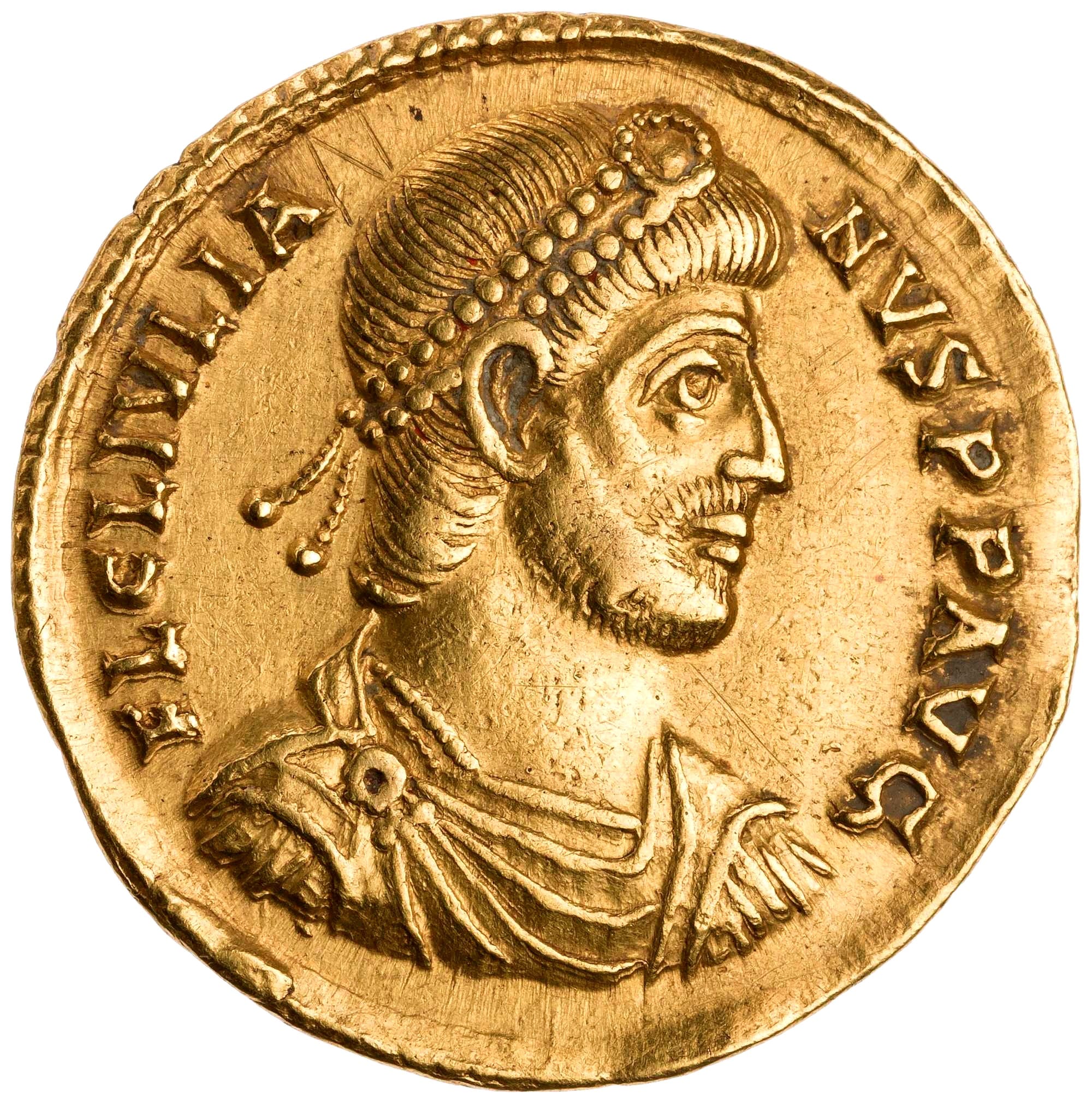
He expected priests to maintain disciplined lives and to avoid behavior that might discredit their offices. In his instructions concerning priestly conduct, he discussed standards of personal behavior, religious duties, and the treatment of other people.
Julian was particularly concerned by the charitable work carried out by Christians. In a letter to Arsacius, the high priest of Galatia, he criticized pagan communities for failing to care adequately for strangers and the poor. He called for establishments to assist those in need and proposed allocations of grain and wine to support the effort.
His attitude toward Christianity combined opposition to the religion with a stated rejection of unjust violence against its followers. In a letter to Atarbius, he wrote:
I affirm by the gods that I do not wish the Galilaeans to be either put to death or unjustly beaten, or to suffer any other injury; but nevertheless I do assert absolutely that the god-fearing must be preferred to them. Julian, Letter to Atarbius, Letter 37.
The letter makes clear that Julian did not consider Christians and worshippers of the traditional gods equally deserving of imperial favor. He rejected violence in principle while explicitly calling for preferential treatment of those who shared his religious commitments.
His legislation reflected that preference. Christian clergy lost exemptions from certain costly civic obligations, while measures concerning religious property and municipal status altered the privileges previously enjoyed by different communities.
One of his most controversial decisions concerned teachers. A law issued in June 362 required those teaching literature and rhetoric to meet standards of character and learning, with imperial approval forming part of the process. A separate explanation by Julian made clear how he intended the measure to apply to Christians.
He argued that teachers who rejected the gods described by Homer, Hesiod, and other classical authors could not sincerely instruct students in their works. Christian teachers consequently faced exclusion from the traditional literary curriculum unless they abandoned the religious convictions Julian considered incompatible with their profession.
The restrictions did not formally prohibit Christian children from studying classical literature. Their direct target was the professional role of Christian teachers. Even Ammianus, who otherwise greatly admired Julian, condemned the measure.
The restoration of traditional worship was accompanied by religious disputes in several cities. Julian permitted bishops who had previously been exiled to return, although ancient writers disagreed about his intentions. Some viewed the policy as a means of weakening Christianity by intensifying disagreements among rival Christian groups.
Events in Alexandria demonstrated the difficulties he faced. In December 361, a crowd killed Bishop George of Cappadocia. George had previously possessed a library from which Julian had obtained books, giving the incident a personal connection with the emperor's earlier life.
Julian rebuked the violence but did not punish its perpetrators as severely as the circumstances might have warranted. His response has to be considered alongside his written opposition to attacks on Christians.
Other disputes involved direct penalties imposed through imperial authority. At Edessa, Julian ordered the confiscation of church property following conflict among Christians, defending the action with an ironic reference to Christian praise of poverty.
These episodes distinguish Julian's religious policy from both the ideal of complete toleration and the later portrayal of an emperor directing an empire-wide campaign of executions against Christians. His surviving orders demonstrate religious discrimination and material penalties.
The Emperor Who Quarrelled with Antioch
Julian arrived in Antioch in the summer of 362 to prepare for his planned war against Persia. The city was an important political and military center, and his presence brought the imperial court and soldiers into an already crowded urban environment.
His relationship with the inhabitants deteriorated during the months that followed. Religious disagreements contributed to the tension, but they were not its only cause.
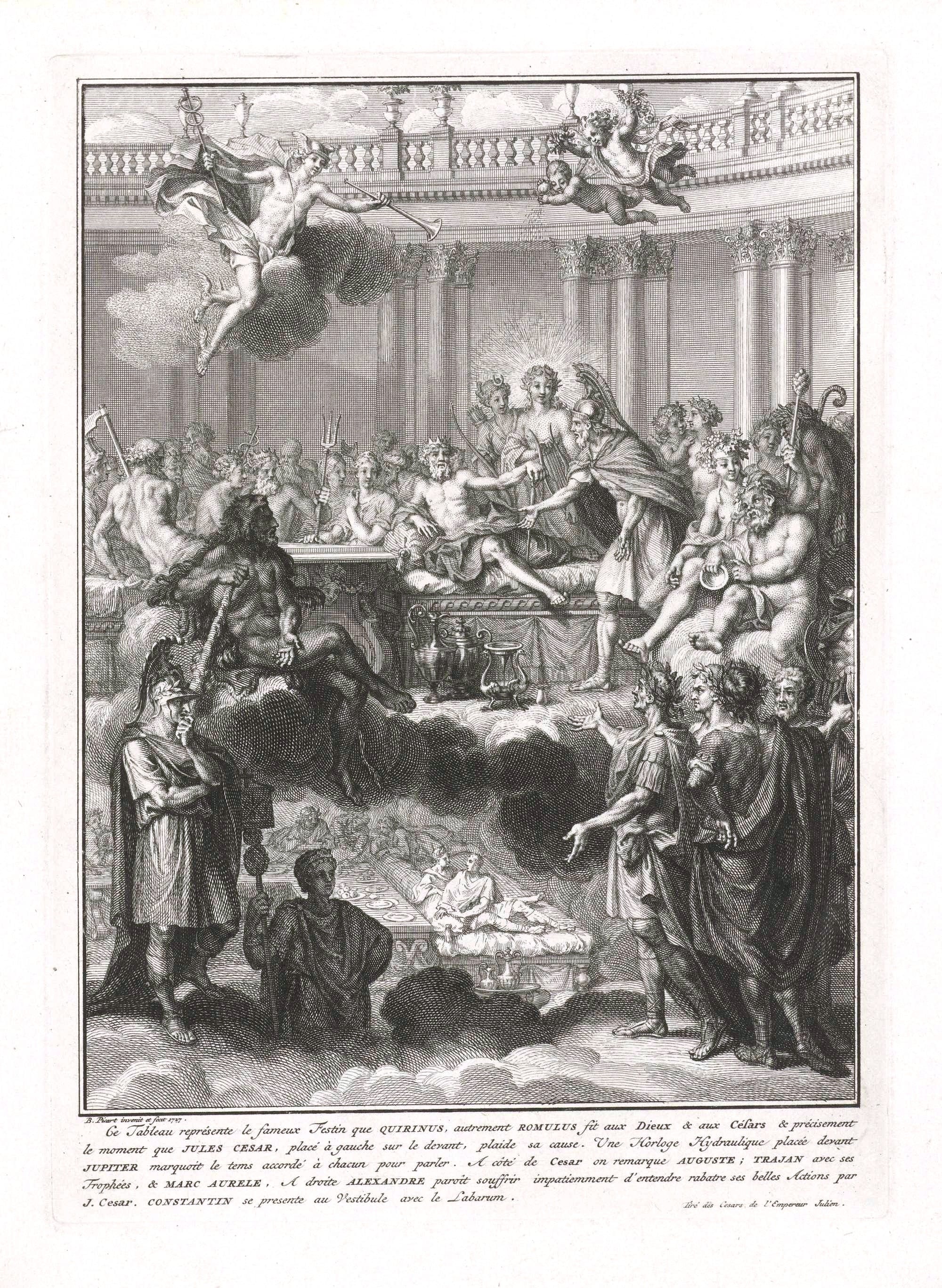
Antioch had an established culture of public entertainment and festivals. Julian's personal preferences were markedly different. He avoided many public spectacles, cultivated the appearance of a philosopher, and devoted considerable attention to sacrifice and traditional worship.
His beard became an object of ridicule. Julian's refusal to adopt a more conventional imperial appearance contributed to the jokes directed against him, and he was sufficiently irritated by the criticism to respond publicly.
The city also faced more immediate problems. The presence of soldiers placed pressure on local resources, while grain shortages and high prices created serious dissatisfaction. Julian intervened in the food market, but his measures failed to bring the improvement that inhabitants expected.
In his own account, Julian had also made concessions concerning taxation and increased the membership of the city council. He complained that the citizens had failed to appreciate these actions and criticized the way municipal appointments were handled.
The disagreements over religious practice became particularly visible at Daphne, outside Antioch, where stood a sanctuary of Apollo. Julian expected substantial public participation in worship at the shrine but encountered a level of support far below what he considered appropriate.
The site was also connected with the remains of Babylas, a Christian martyr whose relics had been placed near the sanctuary. Julian ordered their removal, believing their presence interfered with the religious functions of Apollo's temple.
In October 362, fire destroyed the temple. Julian suspected deliberate wrongdoing, but the cause was disputed even in antiquity. Ammianus Marcellinus, a well-known ancient Roman historian, considered the possibility that candles or lamps had accidentally caused the blaze, while Christian accounts offered other explanations.
No secure conclusion about responsibility emerges from the surviving evidence. Julian nevertheless reacted against the Christian community, including by ordering the closure of Antioch's principal church.
His differences with the city's inhabitants eventually produced one of the most unusual works written by a Roman emperor. Instead of confining his complaints to official orders, Julian composed Misopogon, or Beard-Hater, a satire directed at the people of Antioch.
The work combines self-mockery with sustained criticism of the city's customs. Julian ridiculed his own beard and austere habits while accusing the inhabitants of placing excessive importance on pleasure and entertainment.
Misopogon reveals how Julian wanted his conduct to be understood. He presented austerity, religious devotion, and concern for public duties as qualities deserving respect, while the city's mockery suggested that many of its inhabitants judged him by different standards.
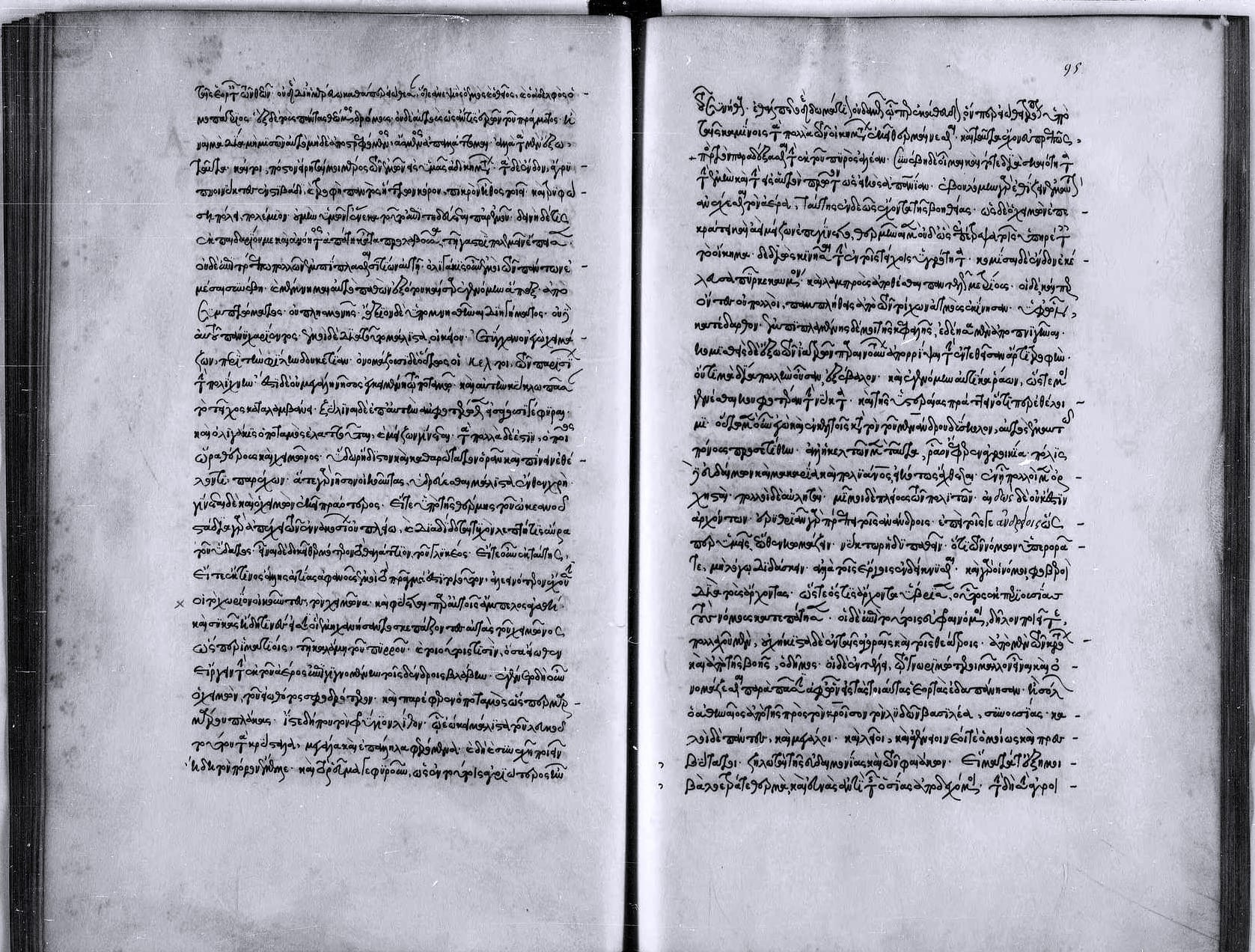
The conflict therefore involved food supplies, soldiers, municipal administration, religious ceremonies, and public expectations of imperial behavior. It was not simply a quarrel over Julian's rejection of Christianity.
When he left Antioch on 5 March 363, the relationship between emperor and city remained badly strained. His attention now turned to the expedition against Persia, for which he had been gathering men and supplies during his residence in the city.
The Persian Campaign and Julian's Death
The eastern frontier had been a major concern throughout the reign of Constantius II. The Sasanian king Shapur II had conducted a long struggle against Rome, and Julian decided to launch a substantial offensive rather than continue with the existing defensive arrangements.
The preparations involved troops, provisions, and a large fleet intended to support movement along the rivers of Mesopotamia. Julian's plans were ambitious, and not all his advisers agreed with the timing of the expedition.
Sallustius, one of his trusted associates, urged him to postpone the campaign. Julian did not accept the advice, and his army departed Antioch in March 363.
Religious observances continued throughout the march. Julian performed sacrifices and participated in ceremonies associated with the gods he worshipped, maintaining the practices that had become so prominent during his reign.
The initial operations were successful. Roman forces advanced through Persian territory, attacked fortified settlements, and secured victories as they approached Ctesiphon, one of the principal centers of Sasanian royal power.
Near the city, Roman troops defeated Persian forces, but Ctesiphon itself remained strongly defended. Ammianus records that Julian's officers advised against attempting a siege, particularly because of the city's defenses and the danger that Shapur's main army might arrive.
Julian accepted the recommendation not to besiege the city. He then decided to continue operations away from the river route that had supported the advance.
A large part of the accompanying fleet was destroyed on his orders. According to Ammianus, twelve smaller vessels were preserved for possible use in constructing bridges, while the remaining ships were burned.
The decision was intended to prevent the Persians from acquiring the vessels and to avoid the burden of maintaining a fleet that could not readily accompany the army inland. It also removed much of the transport capacity on which the expedition had depended.
Ammianus reports that Julian attempted to stop the destruction after the consequences became apparent, but the order came too late. His account also describes problems caused by unreliable guidance.
As the army continued, obtaining provisions became increasingly difficult. Persian forces destroyed crops and forage, while the Romans were unable to secure the supplies or assistance required for their intended advance.
The destruction of the fleet contributed to these difficulties, but it was not the only cause of the deteriorating situation. Hostile operations, unfamiliar territory, and failures in obtaining provisions combined to make continued campaigning increasingly difficult.
The army eventually turned back. Its retreat took place under persistent pressure from Persian forces, which used cavalry, archers, and attacks on vulnerable parts of the Roman formation.
The Romans remained capable of winning engagements, but the strain on the expedition was considerable. Ammianus describes Julian moving among his troops, supervising the defense, and maintaining personal habits of austerity despite the worsening circumstances.
During the retreat, he reportedly shared provisions intended for himself with hungry soldiers. Ammianus also describes his continued attention to intellectual pursuits, including writing at night when the pressures of command permitted.
On 26 June 363, Persian attacks again threatened the Roman army. Julian moved to reinforce troops engaged in the fighting, but in the urgency of the moment he had not put on his breastplate.
A cavalry spear struck his side and caused a severe wound. According to Ammianus, Julian attempted to draw the weapon out and injured his fingers on its blade. The wound affected his liver, and he was carried from the fighting.
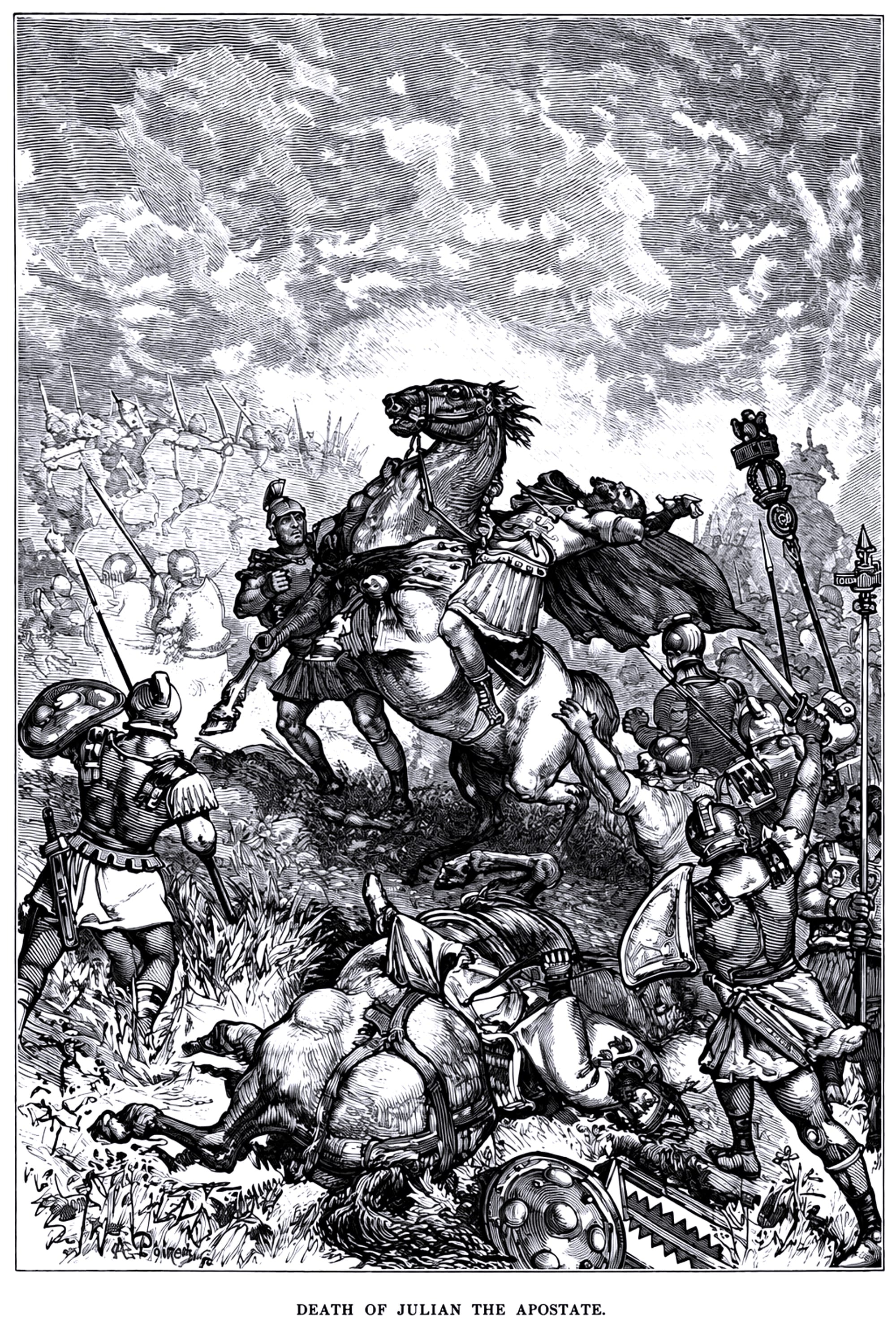
He initially wanted to return to the soldiers and requested his horse and weapons, but his injuries made that impossible. His attendants brought him to his tent, where he remained surrounded by companions as his condition deteriorated.
Ammianus preserves an account of Julian's final conversations, including a discussion of the soul with the philosophers Maximus and Priscus. The narrative reflects Julian's philosophical interests.
Julian died that night, aged approximately thirty-one. He had not designated a successor, leaving the army to make an immediate decision while it remained deep in Persian territory and short of supplies.
Jovian was chosen as the new emperor. The retreat continued, and an agreement with Shapur II required Rome to surrender important territories and strategic positions as the army sought to return safely.
Julian's death also brought an abrupt change in imperial religious policy. Jovian was Christian, and the measures through which Julian had promoted traditional worship did not continue in the same form.
Reactions to Julian's death differed sharply. Some Christian communities celebrated the end of his rule, while admirers mourned an emperor they regarded as an unusually capable commander and devoted servant of the traditional gods.
Ammianus's assessment combined admiration with criticism. He praised Julian's courage, intellectual abilities, and dedication to his responsibilities, but also recorded faults that he considered difficult to overlook.
He was a frequent talker, rarely silent. Ammianus Marcellinus, Res Gestae 25.4.17.
Ammianus also criticized Julian's excessive reliance on divination, the frequency of his sacrifices, and his appetite for public praise. His account preserved admiration for the dead emperor without concealing behavior that had troubled even some of Julian's supporters.
Julian was buried at Tarsus. The army he had led into Persia returned under Jovian, and the government that succeeded him followed a different religious direction.
Teitler, H. C. *The Last Pagan Emperor: Julian the Apostate and the War against Christianity*. Oxford University Press, 2017.
Ammianus Marcellinus. *Res Gestae*, Books XV–XXV, particularly XVI.12, XVIII.2, XXIV.7, and XXV.2–4.
Julian. The Works of the Emperor Julian, Volume I. Harvard University Press / William Heinemann, 1913.
Julian. The Works of the Emperor Julian, Volume II. Harvard University Press / William Heinemann, 1913.
Julian. The Works of the Emperor Julian, Volume III. Harvard University Press / William Heinemann, 1923.

About the Roman Empire Times
See all the latest news for the Roman Empire, ancient Roman historical facts, anecdotes from Roman Times and stories from the Empire at romanempiretimes.com. Contact our newsroom to report an update or send your story, photos and videos. Follow RET on Google News, Flipboard and subscribe here to our daily email.
Follow the Roman Empire Times on social media: