
What truly happened with the Sabine Women?
The story of the abduction of the Sabine women is part of the Roman Mythology, which especially during the Renaissance was a loved topic of expression.

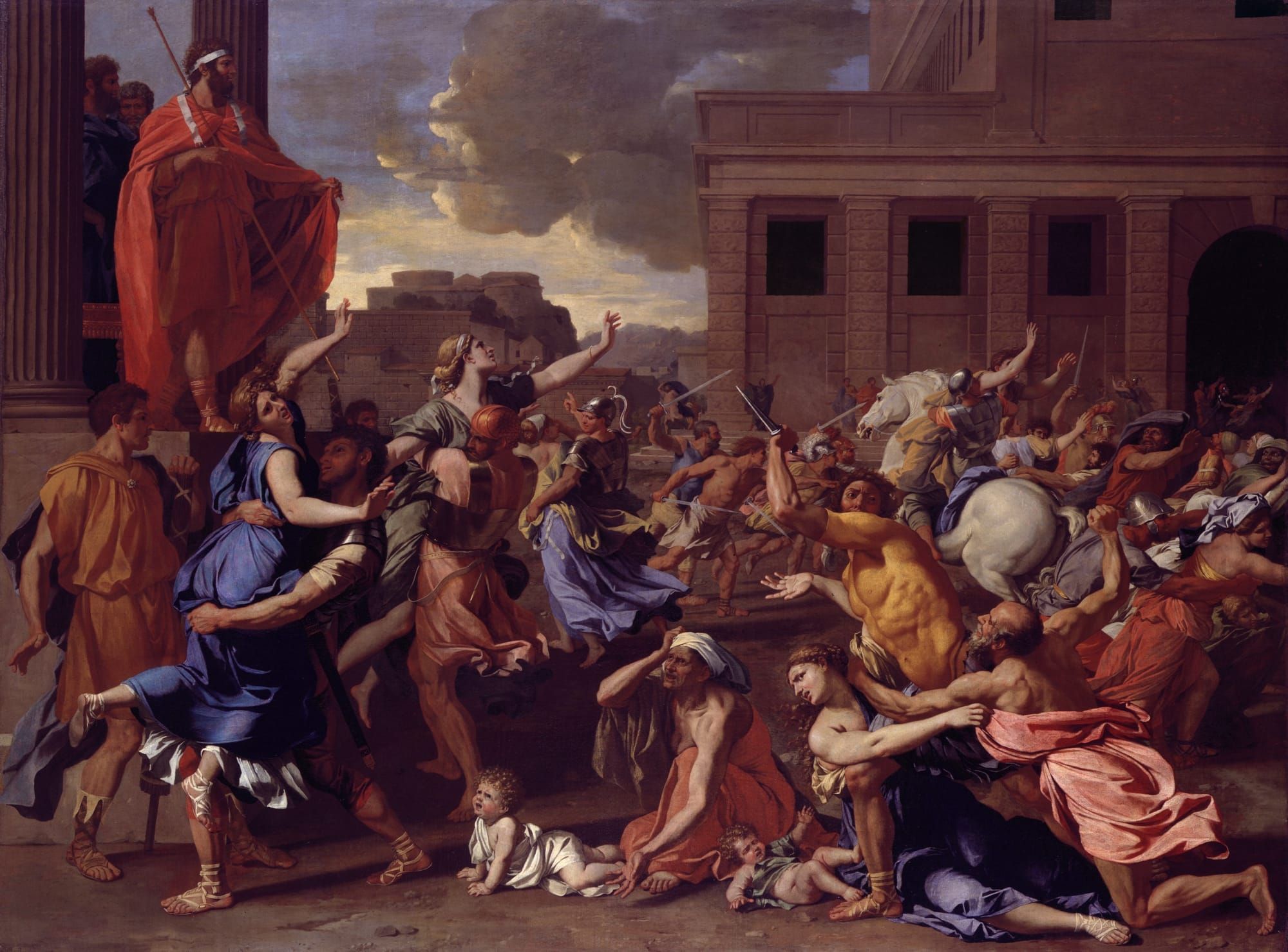
The tale of the abduction of the Sabine Women is one of the darkest of Roman history. But is it true, or a myth? And if it is true, what has really happened? While it is evident that the story forms a part of Rome's founding mythology, its historical accuracy is disputed. Many historians consider it unlikely to have occurred as described, if at all.
Who were the Sabines?
During the Iron Age, the inhabitants of Central Italy transitioned from living in isolated hilltop settlements to forming larger communities. This shift often involved merging several older settlements into one larger group. In coastal areas with easy access to the sea and plains, this process led to the development of true cities, such as Antium, Satricum, archaic Rome, Praeneste, Veii, and Caere.
In the more rugged interior regions, this consolidation into larger political units, often termed "tribal" due to a lack of a better term, occurred at a slower pace. From north to south, four distinct groups emerged: the Sabines in the Tiber River valley, the Aequi, the Hernici in the Tolerus (modern Sacco) River valley, and the Volsci.
The Sabines, who likely spoke an Osco-Umbrian language, are frequently mentioned in early Roman history, notably in the legend of the Rape of the Sabine Women. Various conflicts between the Romans and Sabines are recorded, including the rule of two Sabine kings in Rome: Romulus' co-ruler Titus Tatius and his successor, the wise Numa Pompilius. Additionally, King Ancus Marcius had Sabine ancestry.
While powerful Roman kings like Tarquin the Proud managed to keep neighbouring tribes at bay, the collapse of the Roman monarchy in the late sixth century BCE led to the Aequi and Volsci migrating to the plains. The Sabines largely did not participate in this migration, with the exception of the Claudii family, who settled in Rome and became one of the key patrician families in the history of the Roman Republic.
Was it an abduction, or rape?
The Rape of the Sabine Women (Sabinae raptae in Latin) literally means 'the kidnapped Sabine women’ and it is also referred to as the Abduction of the Sabine Women or the Kidnapping of the Sabine Women and it is a significant event in the legendary history of Rome.
This incident involved the mass abduction of young women from the neighbouring cities by Roman men. It has been a popular theme for painters and sculptors, especially since the Renaissance.


About the Roman Empire Times
See all the latest news for the Roman Empire, ancient Roman historical facts, anecdotes from Roman Times and stories from the Empire at romanempiretimes.com. Contact our newsroom to report an update or send your story, photos and videos. Follow RET on Google News, Flipboard and subscribe here to our daily email.
Follow the Roman Empire Times on social media: