
How Greece Is Restoring a Roman Monument to Its Former Glory
Greece has launched a major restoration of the Odeon of Herodes Atticus beneath the Acropolis, combining structural reinforcement, architectural conservation, and infrastructure upgrades to secure the Roman monument’s future as both heritage site and performance venue.

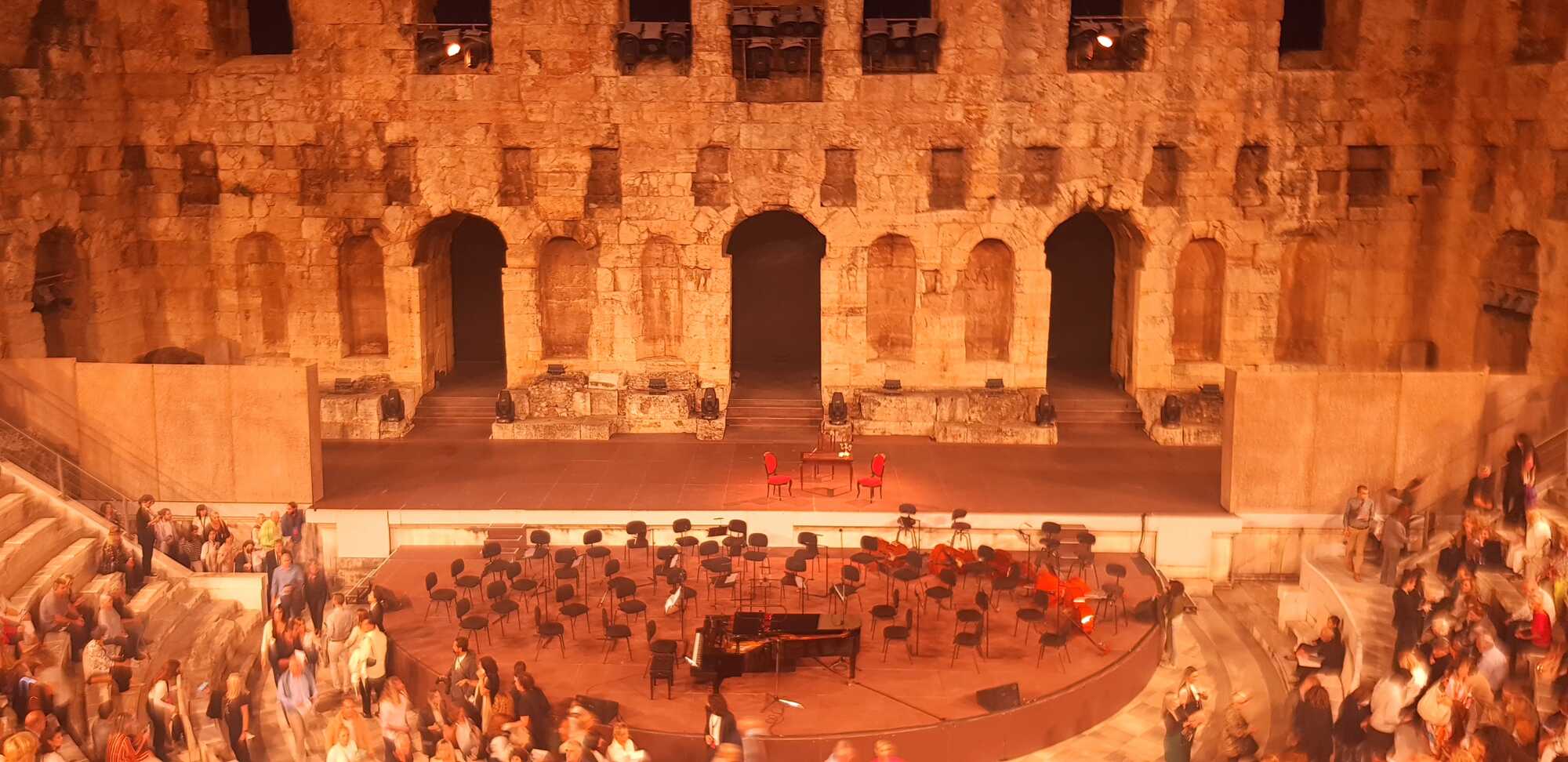
Beneath the southern slope of the Acropolis, one of Athens’ most recognisable landmarks is entering a new phase of renewal. The Odeon of Herodes Atticus – the monumental Roman theatre built in 161 CE – is undergoing a carefully planned restoration designed to stabilise its structure, conserve its marble fabric, and recover aspects of its original architectural clarity.
Nearly nineteen centuries after its construction, Greece is working to ensure that this enduring symbol of Roman Athens continues to stand – and perform – with renewed strength and dignity.
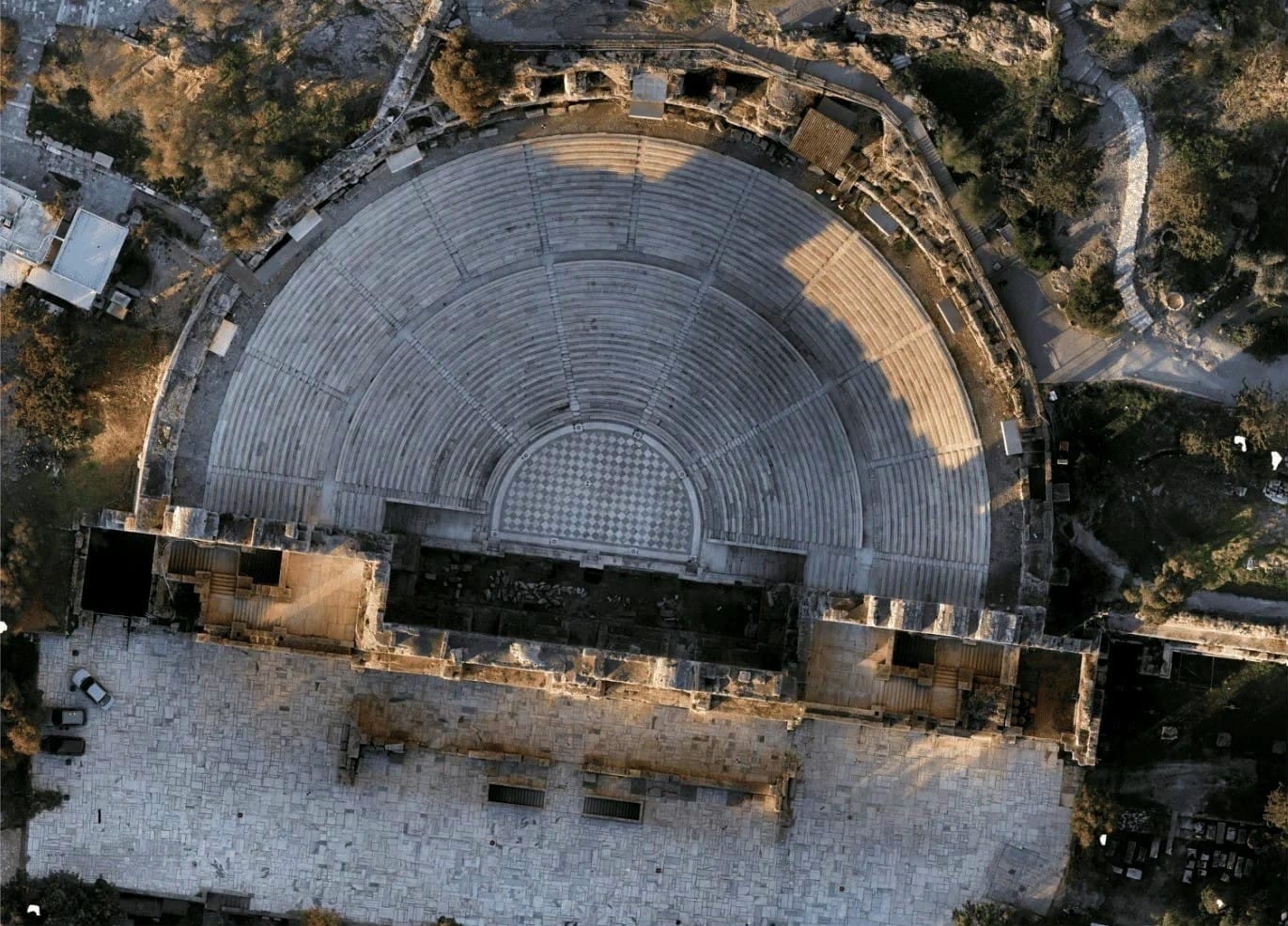
In July 2025, Greece’s Ministry of Culture, through its Directorate for the Restoration of Ancient Monuments, commissioned the National Technical University of Athens to undertake a comprehensive research programme focused on the protection and enhancement of the Odeon of Herodes Atticus on the southern slope of the Acropolis.
The project centres on the preparation of interdisciplinary studies, bringing together specialists from multiple fields to ensure both the monument’s long-term preservation and its careful presentation to the public.
A Comprehensive Restoration Strategy
The Ministry of Culture’s objective is the full restoration of the monumental complex of the Odeon of Herodes Atticus, alongside the upgrading of its operational infrastructure so that it integrates harmoniously with both the natural landscape of the Acropolis and the surrounding built environment.
Minister of Culture Lina Mendoni emphasised that the Odeon is a major cultural asset for Athens, of profound historical importance and significance beyond the local level. These qualities, she noted, define the framework within which all studies and contemporary interventions must be carried out. The proposed works adhere to internationally recognised principles for the protection of monuments, while also respecting the demands of a living performance venue.
The conservation, restoration, and infrastructure upgrades are expected to last at least three years from the start of works, during which time the monument will remain closed to the public. According to the Ministry, the Odeon currently faces structural challenges that require immediate attention. These include deterioration of the upper arcade of the façade, stone loss and cracking, minor deformations, and areas showing early signs of structural instability.
In addition, biological erosion has been observed in several areas, caused by the growth of microorganisms in cavities where water accumulates, as well as root systems developing within joints. Some earlier restoration interventions have also proven inadequate and now require correction.
The goal, once the works are completed, is to ensure that the monument is sufficiently protected against both natural and human-induced deterioration. At the same time, the restoration aims to improve the monument’s architectural legibility and fully upgrade its infrastructure to meet the functional requirements of contemporary cultural events – most notably those of the Athens Epidaurus Festival.
Alongside the restoration and archaeological works, a new operational framework will be drafted by a designated team of scientists and artists. This regulation will take the form of a formal institutional document, ensuring both the high quality of future performances and the maximum protection of the monument.
Preservation with Minimum Intervention
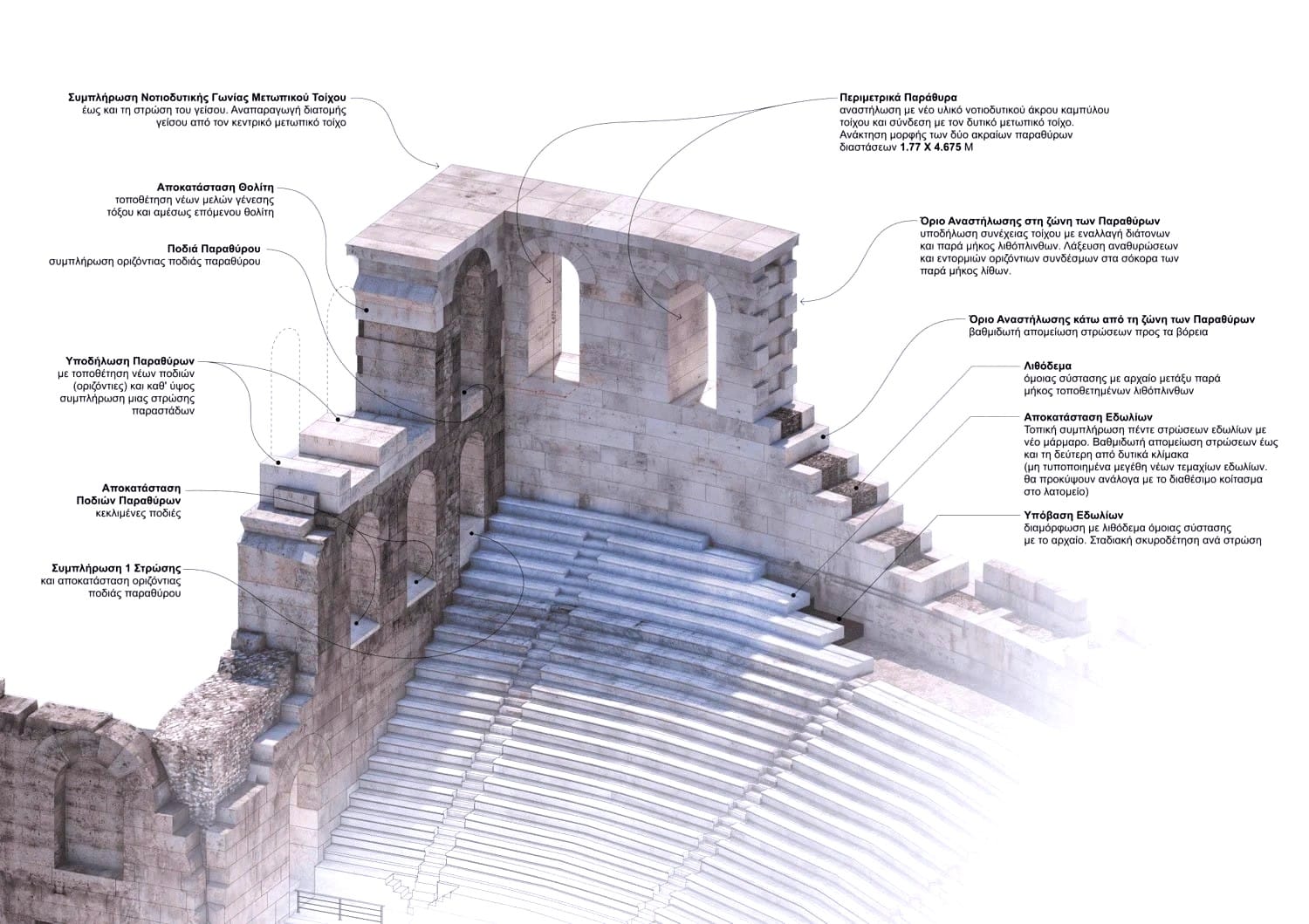
The overarching restoration philosophy is grounded in safeguarding all surviving structural and architectural elements of the Odeon. Only strictly necessary reinforcements, additions, or reconstructions of lost sections will be carried out.
The intention is not reconstruction for visual effect, but long-term protection: ensuring structural stability, durability, functionality, improved clarity of the monument’s form, and its continued educational value for future generations.
The Scope of the Studies and Technical Planning
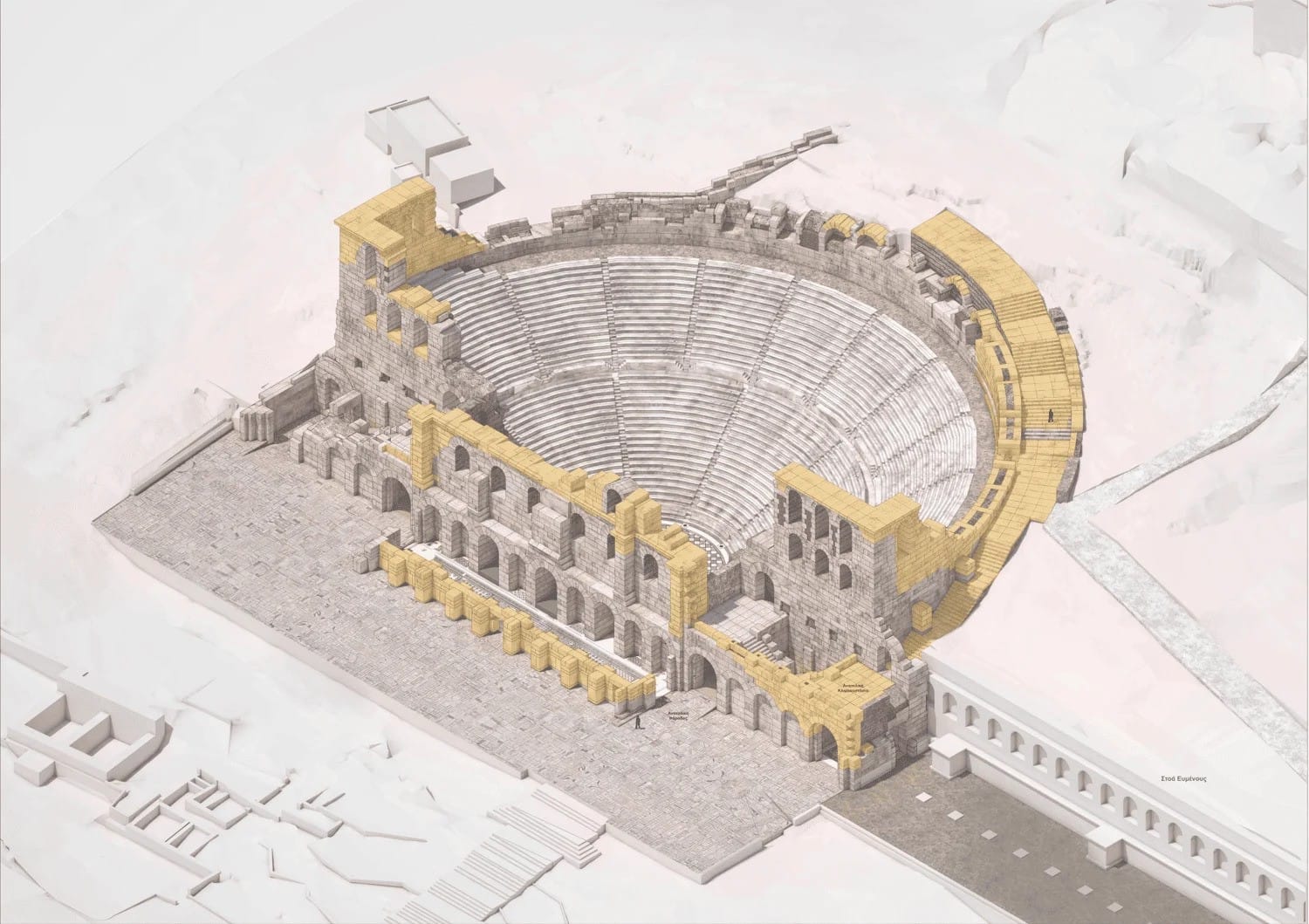
The restoration programme is supported by an extensive body of specialised studies. These include:
- An architectural restoration study
- A structural adequacy and structural rehabilitation study
An architectural study for additional contemporary interventions (including upgrades to the stage building area, infrastructure for the Athens Epidaurus Festival, renovations of dressing rooms and sanitary facilities, works in the forecourt, ticketing areas, refreshment facilities, and related spaces):
- Structural design for all architectural interventions
- A mechanical engineering study (external water supply and drainage networks)
- A dedicated acoustic study
Together, these studies form the technical backbone of the project, ensuring that conservation, functionality, and safety are addressed in a coordinated and scientifically grounded manner.
Structural Rehabilitation and Anastylosis
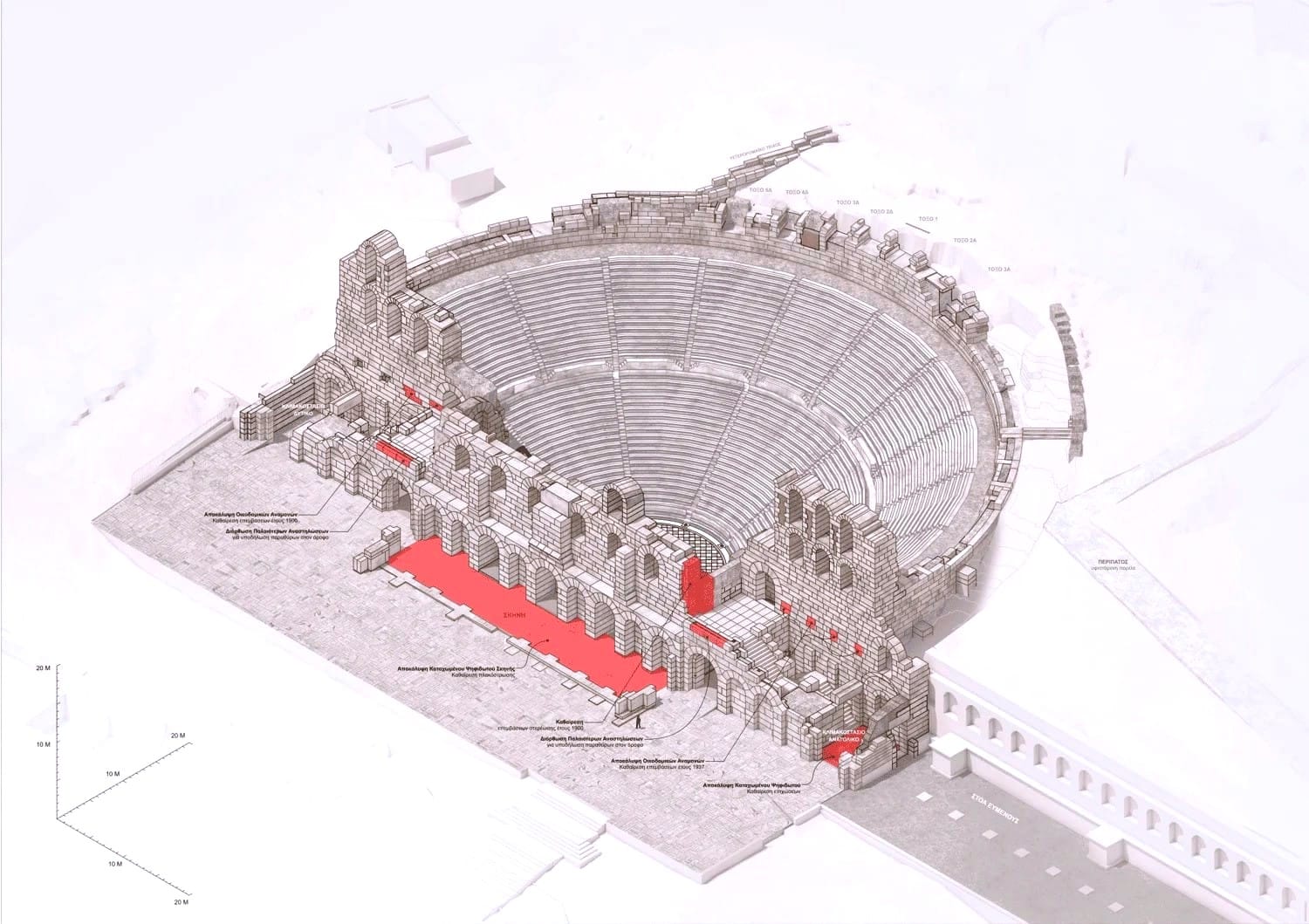
The structural restoration works include the removal of incompatible modern materials, consolidation and bonding of stone elements, replacement of severely deteriorated components, filling of voids, and correction of minor deformations.
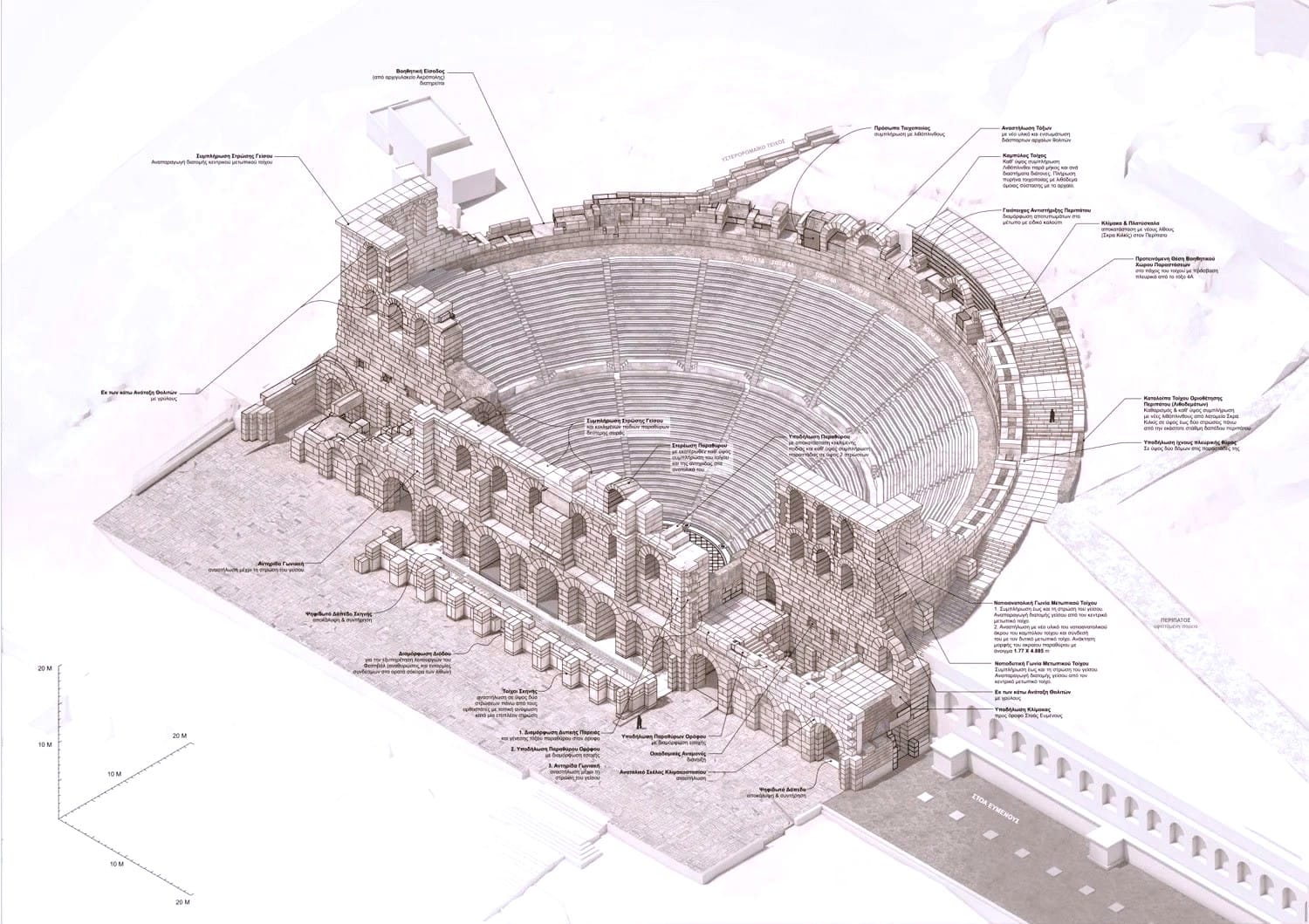
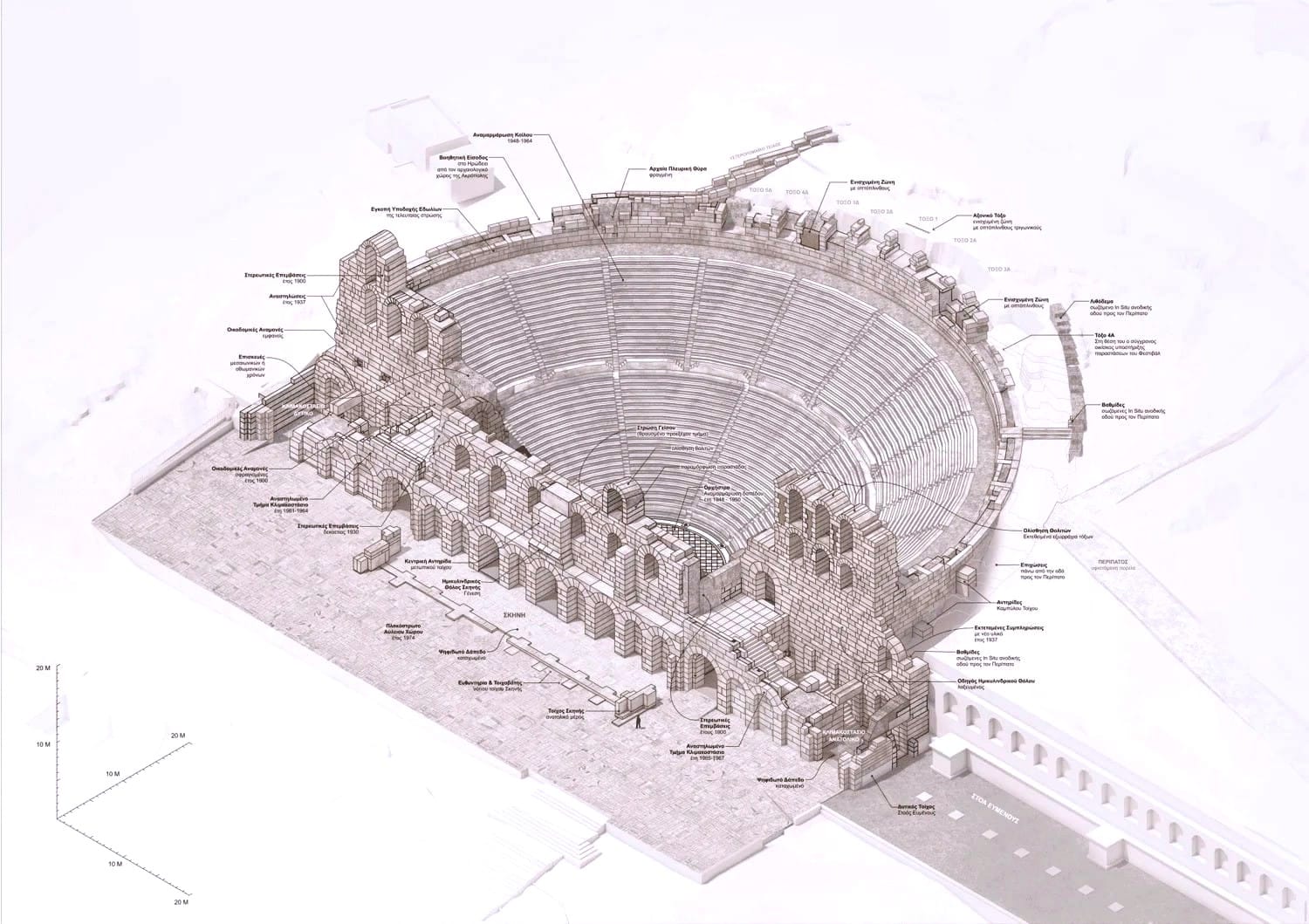
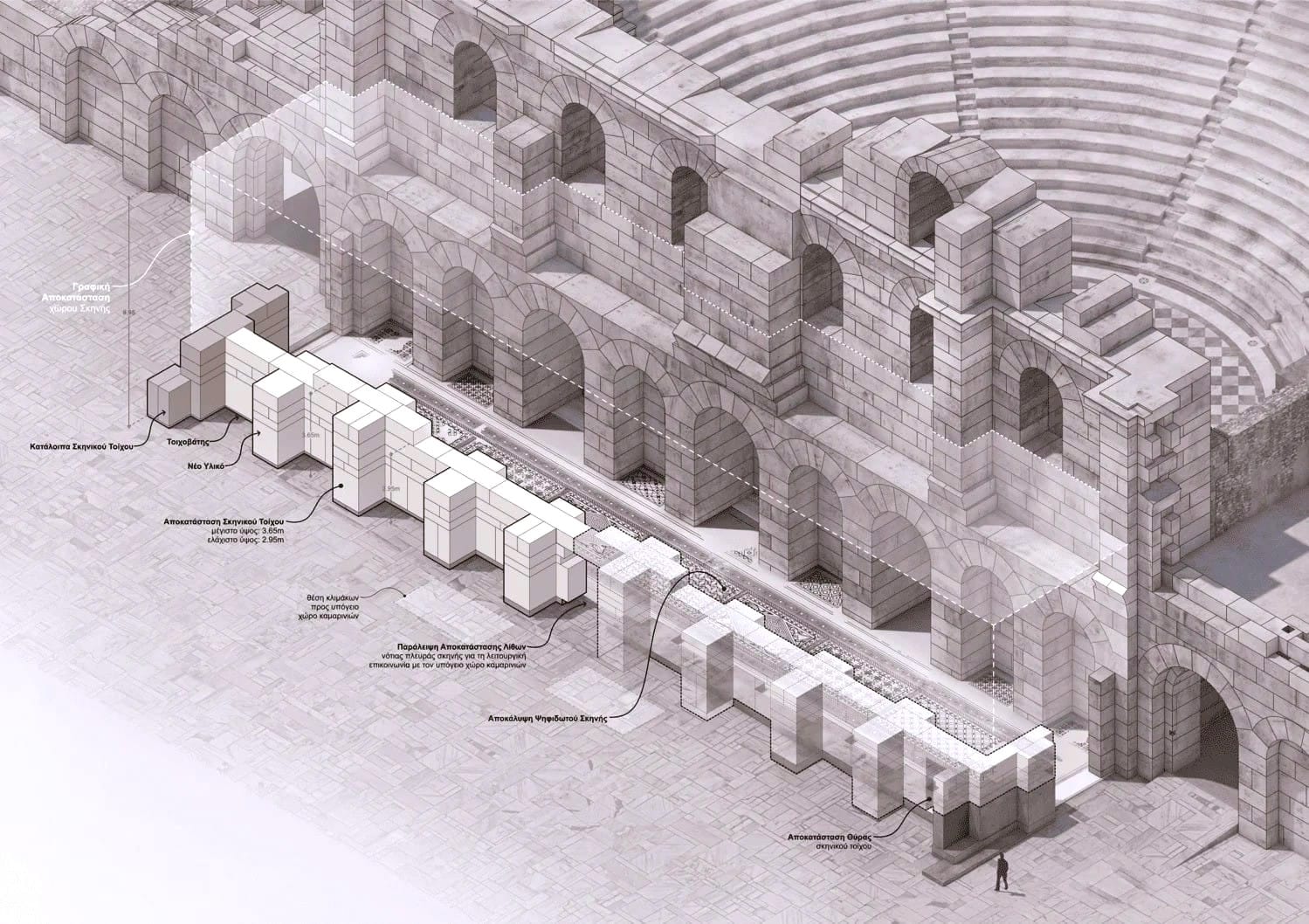
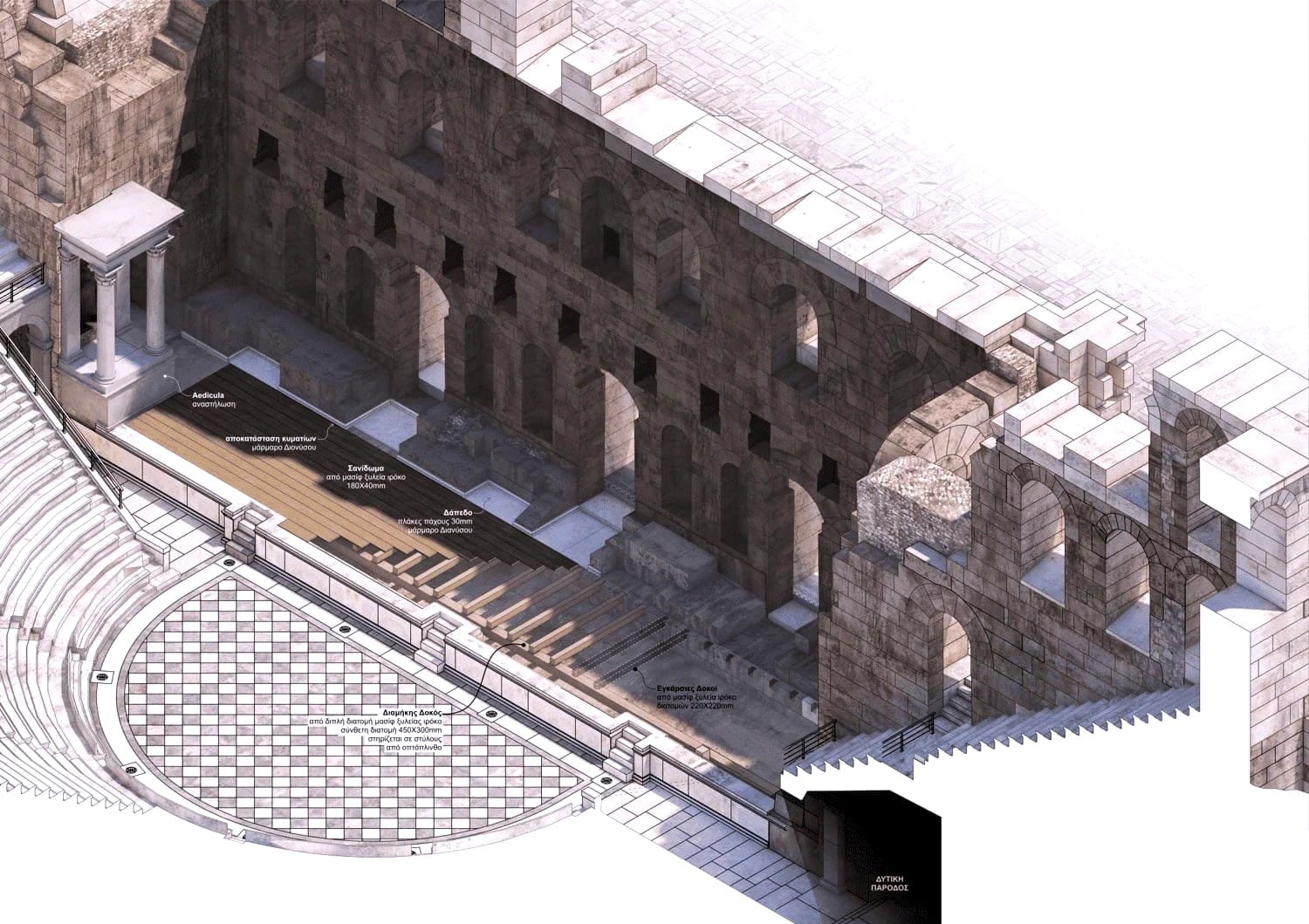
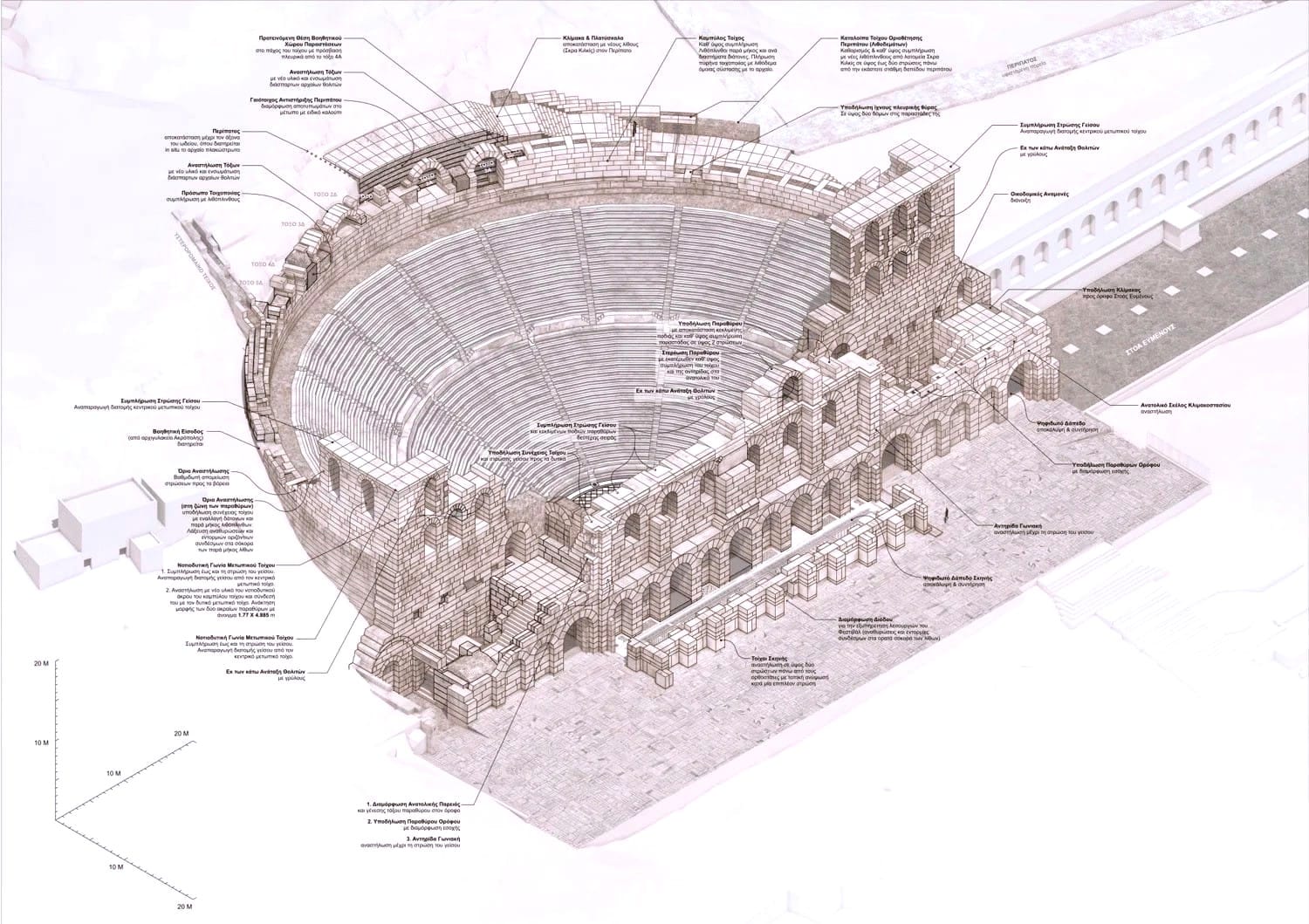
Anastylosis interventions are also planned. These involve the partial recovery of walls and structural elements, restoration of the vault and staircases, conservation and repositioning of architectural members, stabilization of the south wall of the stage building, and reconstruction of the logeion (stage platform) together with its surrounding wall.
In addition, the structural stability of sections restored during the 1950s – along with subsequent repair works – will be reassessed to ensure long-term safety.
Revealing Hidden Architectural Elements
Particular emphasis is placed on the unveiling and presentation of the stage building and its mosaic floors, which are currently not visible to the public.
The project also includes an evaluation of the monument’s exposure to acoustic stress caused by performances. Rainwater drainage across the monument and its surrounding area will be redesigned, electrical and mechanical networks reorganised, fire protection systems studied, and the sewage infrastructure upgraded.
Architectural Interventions for Clarity and Function
The architectural study proposes targeted reconstructions and masonry completions intended to clarify the monument’s structural logic and restore its functional coherence.
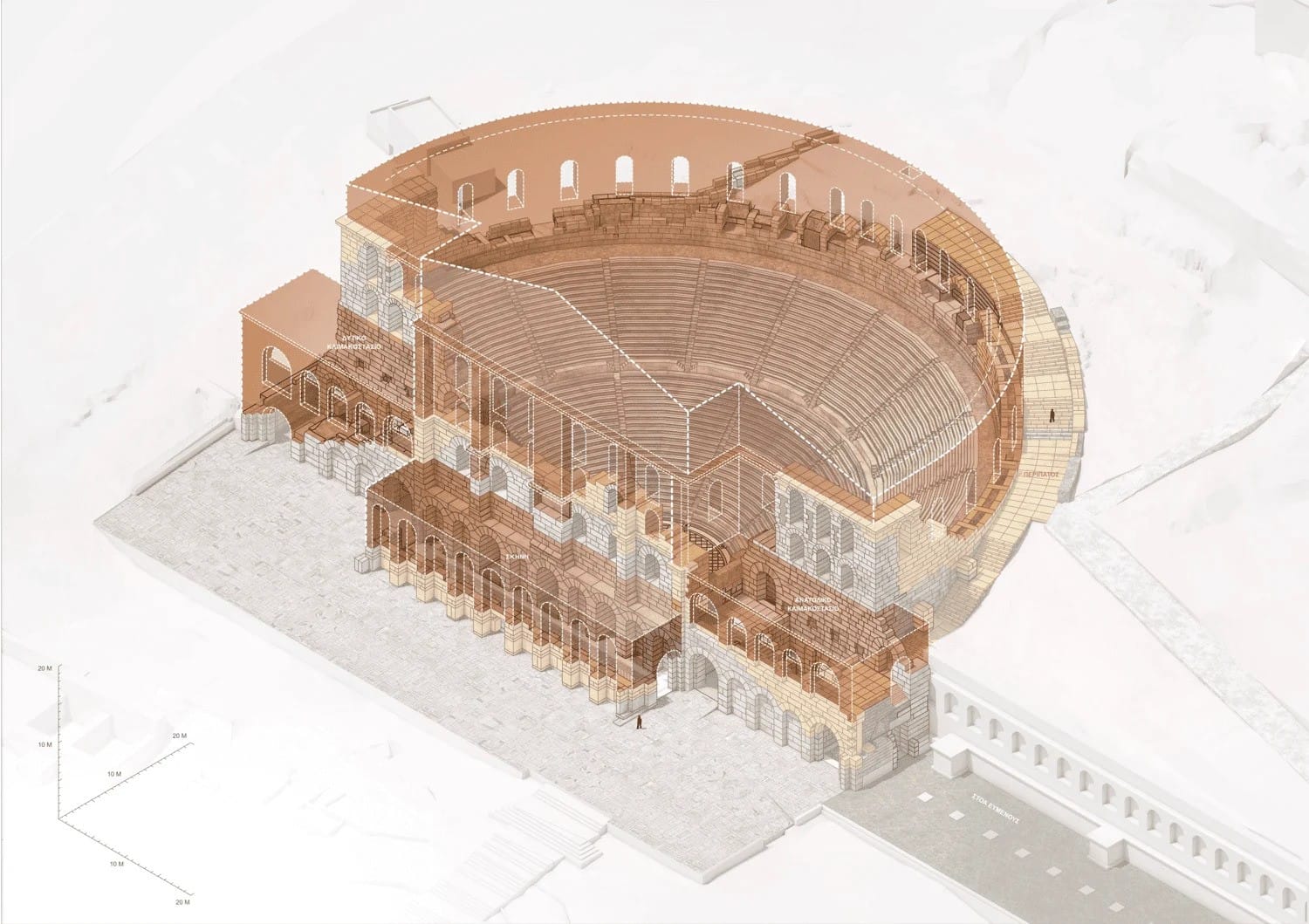
Planned interventions include:
- Stage Hall (Skene): Partial restoration of its outline to a height sufficient to re-establish its three-dimensional presence, while accommodating temporary stage structures used during performances.
- Proscenium: Interventions to ensure safety and accessibility, and to render its architectural form legible and educational.
- Parodoi Arches: Structural and conservation works.
- Central Façade Wall: Protective additions to safeguard the wall and unify fragmentary surviving elements of the façade.
- Eastern and Western Façade Walls: Targeted conservation and structural interventions.
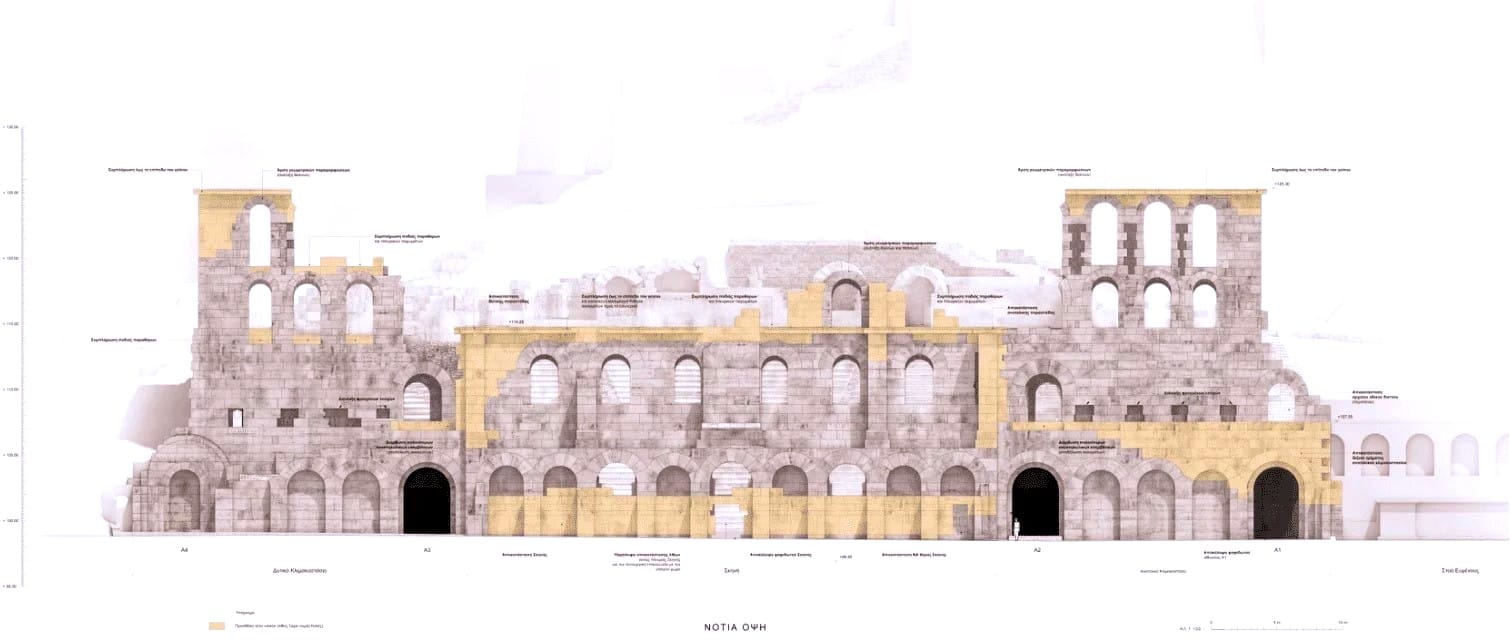
- Eastern Staircase: Restoration to re-establish circulation between the Odeon, the Stoa of Eumenes, and the ascending route toward the Peripatos walkway.
- Curved Perimeter Wall: Reconstruction of its original outline and geometry, highlighting authentic architectural features and reactivating movement along the Peripatos, while supporting performance operations.
- Cavea (Seating Area): Continued conservation of original marble seating blocks and selective completion of damaged seats affected by audience use.
- The restoration of the Peripatos walkway aims to redirect visitor movement away from vulnerable archaeological remains west of the Asclepieion.
Reinstating the eastern staircase and ascending pathway restores the monument’s original functional connection with the Stoa of Eumenes.
Reorganising the Forecourt and Surrounding Grove
Interventions in the forecourt and the landscaped area surrounding the Odeon aim to free the plaza from temporary support uses and improve both functionality and aesthetics.
The project includes expansion of the forecourt through the creation of an elevated platform with a covered substructure housing refreshment facilities, ticket offices, and electromechanical installations. Renovation of sanitary facilities at the western end is also planned, alongside redesign of the parodoi entrances and the construction of discreet masonry and sheltered support spaces within the grove.
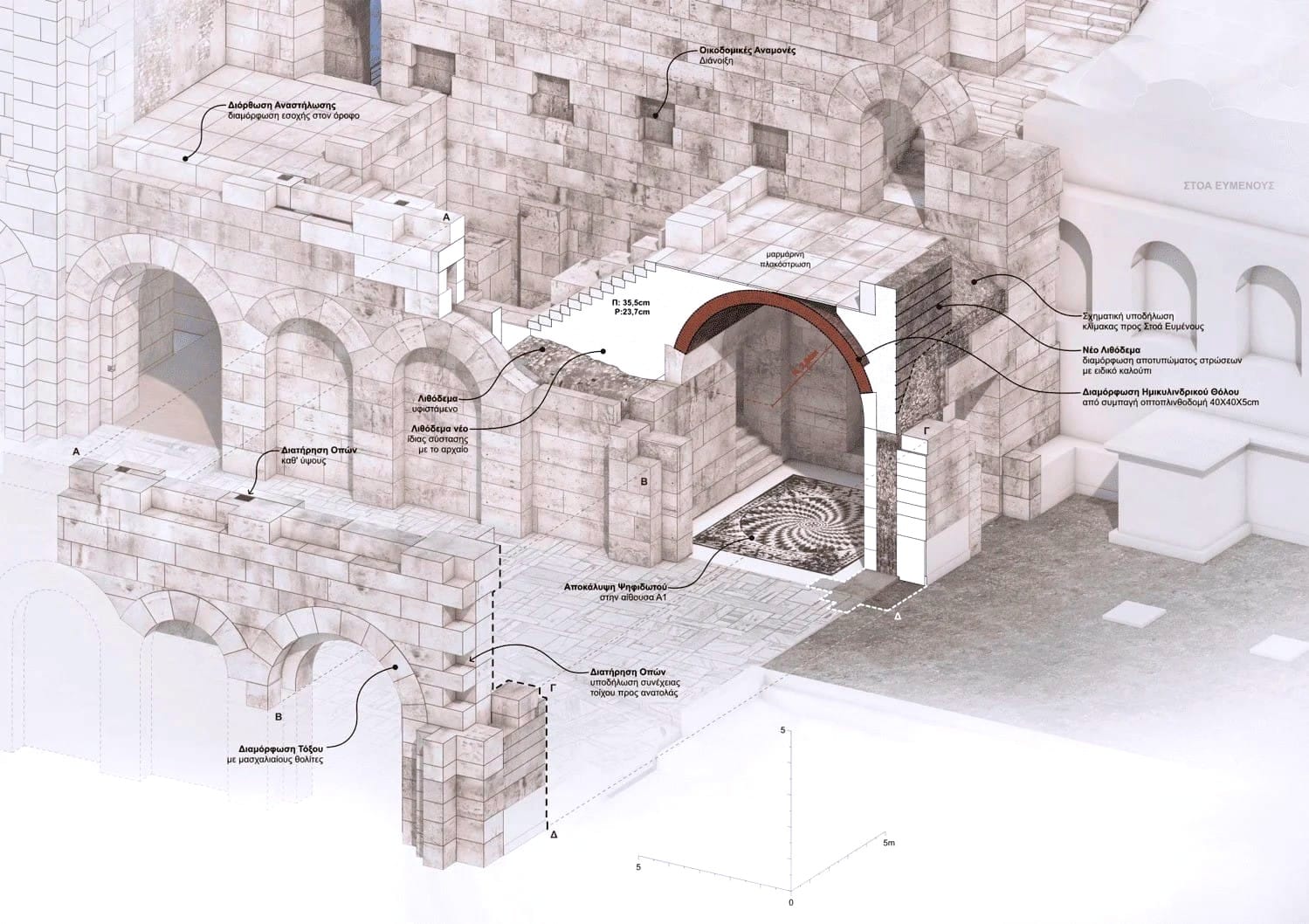
All architectural interventions are designed to balance functionality, visual harmony, and respect for both the monument and its natural environment. Mechanical installations will be discreetly integrated, and interventions will remain reversible wherever possible.
Lighting, Infrastructure, and Acoustic Protection
A new independent, semi-circular lighting and technical support structure will replace existing scaffolding systems. The design seeks both aesthetic integration with the monument and rational organisation of stage lighting.
The water supply system will be fully upgraded and connected to dressing rooms and sanitary facilities, while the external sewage network will be completely reconstructed.
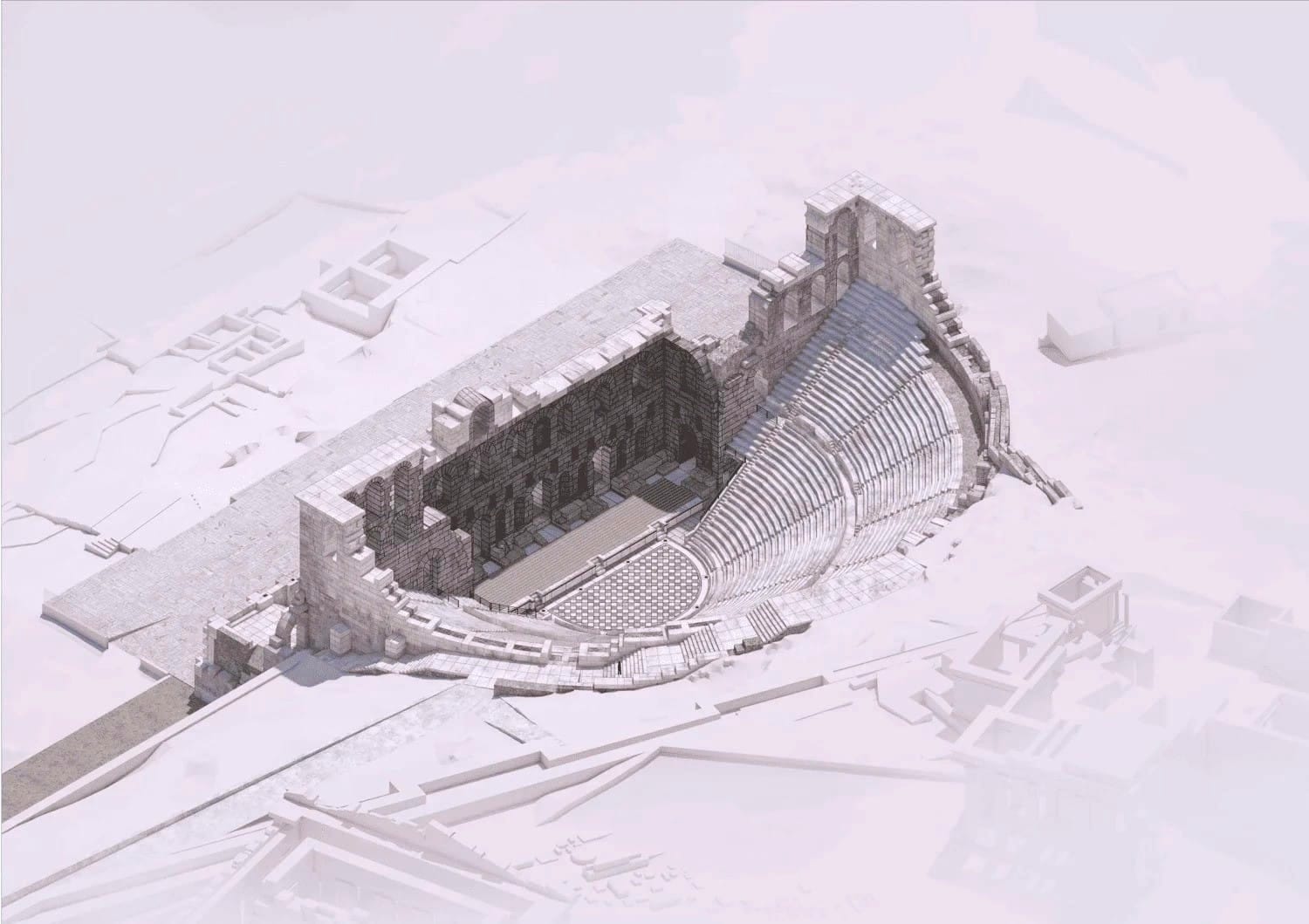
The acoustic study focuses particularly on whether the south wall of the Odeon is affected by both natural and amplified sound during performances. Because there are no widely established methodologies or universally accepted safety thresholds for assessing the “acousto-structural” behaviour of such a monument, a tailored and original research methodology was developed and implemented to allow objective and reproducible evaluation of potential impacts.
Nearly nineteen centuries after Herodes Atticus commissioned the theatre in memory of Regilla, the Odeon remains both monument and stage. The current restoration does not seek to reinvent it, but to stabilise, clarify, and safeguard it. When the works are completed, the Herodion will stand more resilient – structurally secured, architecturally legible, and prepared to continue its role in Athens’ cultural life for decades to come.
About the Roman Empire Times
See all the latest news for the Roman Empire, ancient Roman historical facts, anecdotes from Roman Times and stories from the Empire at romanempiretimes.com. Contact our newsroom to report an update or send your story, photos and videos. Follow RET on Google News, Flipboard and subscribe here to our daily email.
Follow the Roman Empire Times on social media: